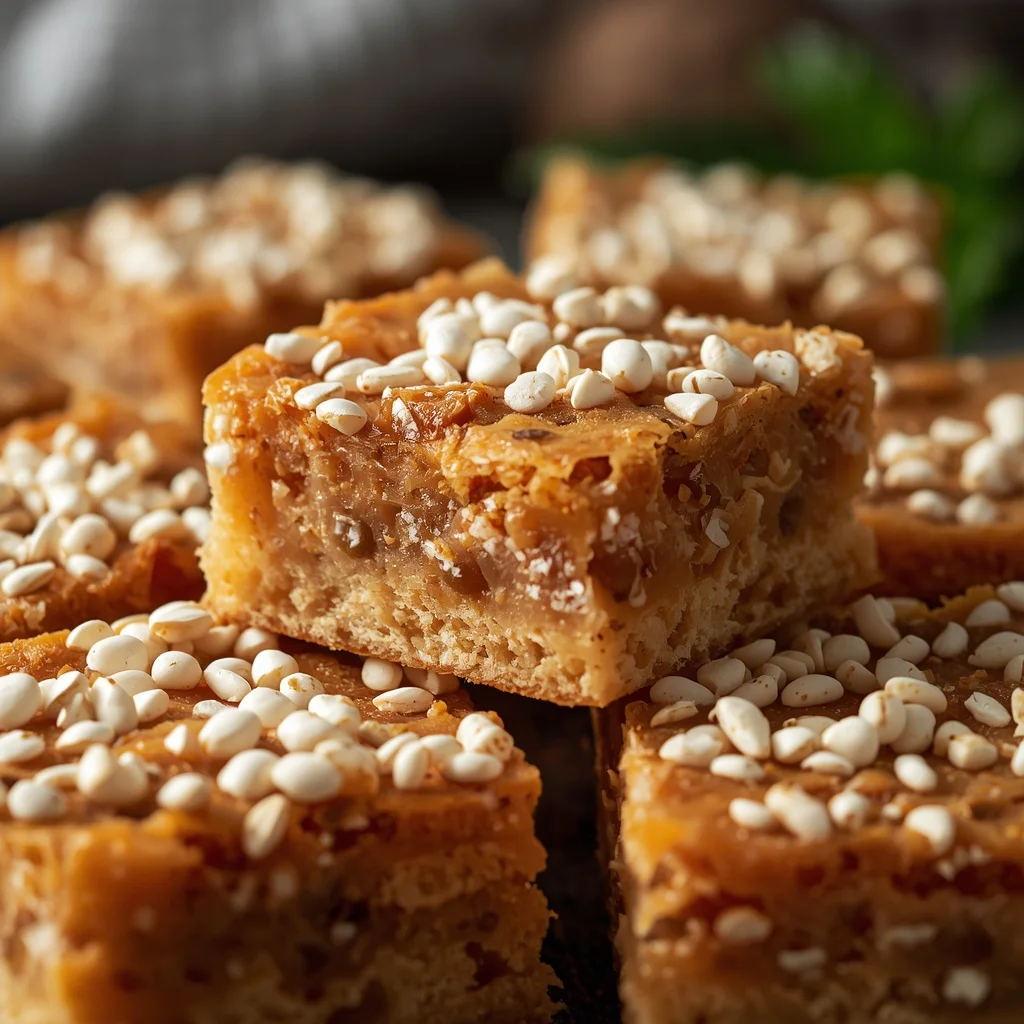
There is a unique thrill in modern baking when two completely different, world-class desserts collide into one unforgettable masterpiece. If you have been searching for a sweet treat that bridges the gap between classic European spiced cookies and the ancient, honey-soaked traditions of the Middle East, then you are in for an absolute treat. Today, we are diving deep into the ultimate recipe for Biscoff baklava blondies, a dessert that is rapidly capturing the hearts of bakers across the globe. This unique creation takes the rich, buttery, chewiest qualities of a classic blonde brownie and marries them with the crunchy, nutty, syrup-soaked layers of traditional Mediterranean pastry, all while introducing the caramelized warmth of Belgian speculoos cookie butter.
When you introduce Biscoff baklava blondies to your kitchen, you are choosing to create an extraordinary sensory experience. It is a dessert that challenges the norm, proving that rich, fudgy textures can live in perfect harmony with a crisp, flaky crunch. The sheer beauty of this bake lies in its complexity of textures, yet the process of making it is entirely approachable for home bakers. Whether you are looking to impress guests at an upscale dinner party, elevate your weekend baking ritual, or create a show-stopping addition to a holiday dessert table, this comprehensive guide will walk you through every single detail. We will explore the fascinating origins, master the layer-by-layer technique, and ensure your final bake achieves a level of culinary perfection that easily surpasses anything you would find in a commercial bakery.
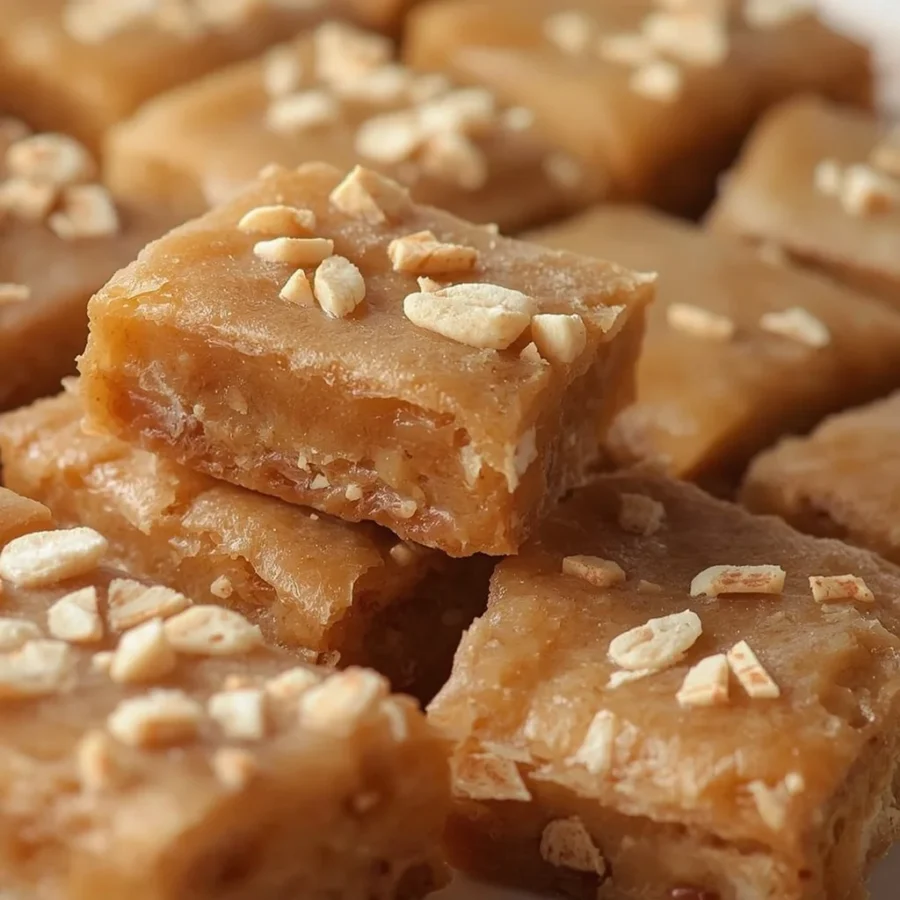
What is a Biscoff Baklava Blondie?
To understand the magic of this dessert, we first need to break down the anatomical marvel that is the Biscoff baklava blondie. This is not a simple matter of throwing random ingredients into a bowl; it is a highly calculated, multi-tiered confection where every single layer has a specific job to do. At the base of the entire structure is a rich, dense, and deeply caramelized blondie batter. Unlike a traditional chocolate brownie, a blondie relies heavily on brown sugar and melted butter to create a flavor profile that tastes strongly of butterscotch and vanilla. This provides a soft, fudgy foundation that keeps the dessert grounded and beautifully moist.
Directly resting on and woven through that fudgy base are the unmistakable elements of classic baklava. This involves a deeply aromatic mixture of finely chopped walnuts or vibrant green pistachios, heavily spiced with ground cinnamon. To truly mimic the architectural wonder of the traditional pastry, sheets of paper-thin phyllo dough are layered together, brushed gently with melted butter, and nestled right into the center of the bake. This creates a brilliant, shatteringly crisp interior ribbon that completely breaks up the density of the surrounding blondie.
The final element that sends this dessert into the realm of pure decadence is the integration of smooth speculoos cookie butter. This Belgian spread, made from deeply spiced, caramelized biscuits, introduces a warm, comforting note of ginger, nutmeg, and clove. When slightly warmed and swirled between the nutty baklava elements and the rich blondie batter, it creates a gooey, molten layer that binds the crispy elements to the soft elements. To finish, the entire bake is showered in a hot, glistening honey syrup infused with lemon juice and spice, which slowly seeps into every single crevice, locking in moisture and creating a glossy, magnificent finish.
Origin of the Culinary Masterpieces Bound in biscoff baklava blondies
The story behind Biscoff baklava blondies is a fascinating tale of global migration, cultural fusion, and the borderless nature of modern baking. To fully appreciate how these flavors ended up in the same baking pan, we have to travel across centuries and continents, tracking the evolution of three distinct sweet traditions that eventually found each other in the contemporary kitchen.
The Deep Roots of Baklava
The oldest ancestor in this recipe is undeniably baklava. While its exact origin is often a subject of friendly debate across the Eastern Mediterranean, historians generally agree that the dessert as we know it today was perfected within the imperial kitchens of the Topkapi Palace in Istanbul during the height of the Ottoman Empire. It was a luxury food, crafted by master pastry chefs who vied to see who could roll the thinnest, most translucent sheets of dough. These layers were stacked high with regional nuts, baked until golden, and instantly drenched in a cooling honey or sugar syrup to preserve the crispness of the pastry while infusing it with deep sweetness. It was a dish reserved for major celebrations, religious holidays, and royal banquets.
The Evolution of the American Blondie
On the other side of the Atlantic, the blondie was developing along a completely different timeline. Long before chocolate became the dominant flavor in American baking, home cooks in the nineteenth century relied on molasses and brown sugar to sweeten their dense, cake-like bars. These treats, often called molasses brownies or goldies, predate the modern chocolate brownie by several decades. Over time, as granulated sugar and cocoa became more widely available, the dark molasses profile evolved into a rich, butterscotch-forward bar flavored with heavy amounts of vanilla and real butter. The blondie became a beloved staple of home baking due to its simplicity, reliable texture, and its ability to act as a blank canvas for various mix-ins.
The Rise of Belgian Speculoos
Meanwhile, in Europe, the countries of Belgium and the Netherlands were perfecting a very specific type of spiced biscuit known as speculoos. Traditionally baked to celebrate Saint Nicholas Day in early December, these thin, crunchy cookies were stamped with intricate images and packed with a proprietary blend of warming spices. In the early twenty-first century, an ingenious culinary invention transformed these hard biscuits into a smooth, spreadable paste known globally as cookie butter. This spread took the world by storm, introducing a brand-new way to experience the nostalgic flavor of caramelized spice.
When modern bakeries and creative home cooks began experimenting with cross-cultural desserts, the idea to combine the honeyed crunch of Ottoman baklava with the dense comfort of the American blondie was born. By introducing the spiced warmth of Belgian cookie butter, bakers found the perfect bridge to unite the nutty, spiced notes of the East with the buttery, vanilla notes of the West, resulting in the spectacular hybrid we are mastering today.
Ingredients and Quantities for biscoff baklava blondies
Achieving the perfect balance of chew, crunch, and moisture requires precise measuring. Gather these specific components before you begin your baking session.
The Decadent Blondie Base
-
One cup of high-quality unsalted butter, completely melted and cooled slightly (this equals two hundred and twenty-five grams)
-
One cup of packed dark or light brown sugar, which provides the essential moisture and chew (two hundred grams)
-
One half of a cup of granulated white sugar, to help create a beautiful shiny top crust (one hundred grams)
-
Two large farm-fresh eggs, kept at room temperature to ensure seamless emulsification
-
Two teaspoons of pure vanilla extract, for a deep aromatic background
-
One and one half cups of unbleached all-purpose flour, spooned and leveled carefully (one hundred and ninety grams)
-
One half of a teaspoon of baking powder, to provide just a touch of lift
-
One quarter of a teaspoon of fine sea salt, to balance the heavy sweetness
The Textural Baklava Layer
-
One cup of finely chopped raw walnuts or shelled pistachios (pistachios offer an authentic color and flavor)
-
One teaspoon of ground Ceylon cinnamon
-
Six to eight sheets of high-quality phyllo pastry, completely thawed if previously frozen
-
Three tablespoons of unsalted butter, gently melted for brushing between the delicate pastry sheets
The Molten Biscoff Ribbon
-
Three quarters of a cup of smooth Biscoff cookie butter spread
-
Two to three tablespoons of whole milk, slightly warmed to gently loosen the spread for effortless drizzling
The Glistening Spiced Syrup Topping
-
One third of a cup of raw, clear honey
-
Two tablespoons of light brown sugar
-
One tablespoon of filtered water
-
One half of a teaspoon of freshly squeezed lemon juice, which prevents the sugars from crystallizing
-
One quarter of a teaspoon of ground cinnamon
Step by Step Direction and Preparation Method: biscoff baklava blondies
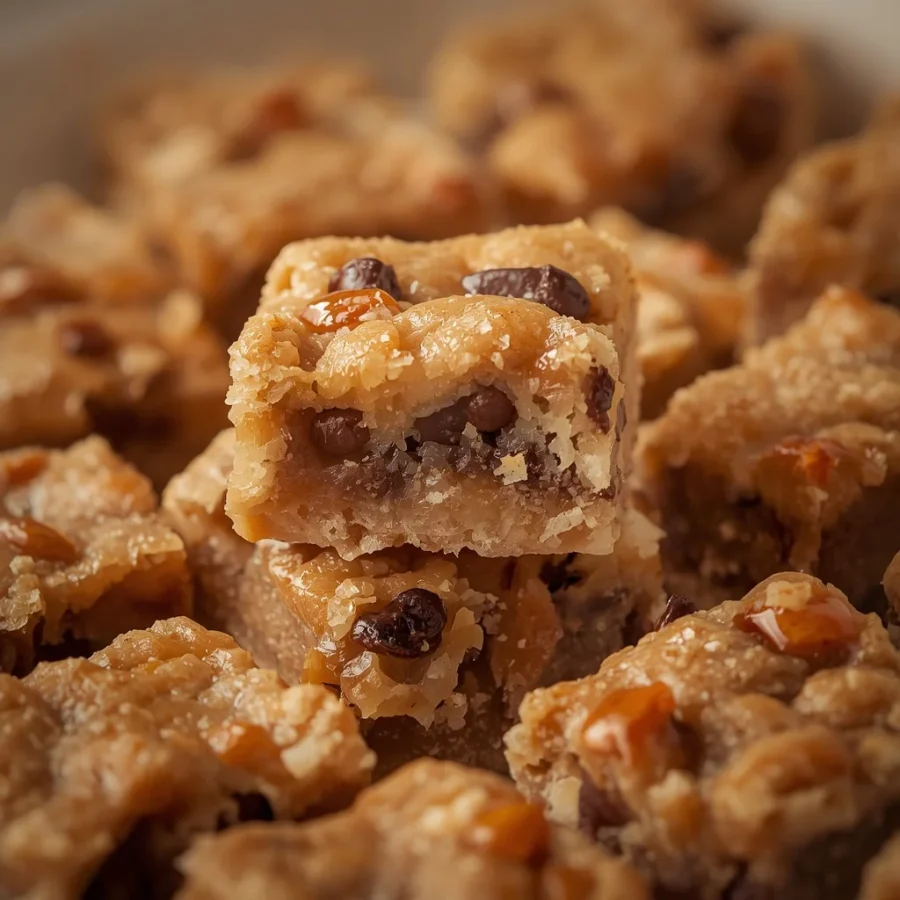
Creating these multi-layered Biscoff baklava blondies is an incredibly rewarding process. Follow these detailed steps to guarantee a flawless execution from the base to the syrup finish.
Step One: Preparing Your Baking Sanctuary
Before you mix a single ingredient, set your kitchen up for success. Position an oven rack right in the center of your oven and preheat the appliance to three hundred and fifty degrees Fahrenheit, which converts to one hundred and seventy-five degrees Celsius.
Take a square eight-by-eight-inch metal baking pan and lightly grease the interior walls. Cut a piece of parchment paper long enough to line the bottom of the pan and extend up over two opposite sides, creating a sling. This paper sling will allow you to lift the delicate, syrup-soaked bars out of the pan easily once they are cool.
Step Two: Whipping Up the Fudgy Blondie Batter
In a large mixing bowl, pour your one cup of melted unsalted butter. Add the one cup of packed brown sugar and the one half cup of granulated white sugar. Use a sturdy whisk to combine these ingredients vigorously for about sixty seconds. You want to make sure the sugars are beginning to dissolve into the warm butter, which is the secret to getting that highly coveted shiny, crinkle-top surface on your bars.
Next, crack your two room-temperature eggs into the mixture one at a time, whisking thoroughly after each addition until the batter looks completely smooth, glossy, and slightly pale. Stir in the two teaspoons of pure vanilla extract.
In a separate smaller bowl, whisk together the one and one half cups of all-purpose flour, one half teaspoon of baking powder, and one quarter teaspoon of salt. Switch to a flexible silicone spatula and gently fold the dry ingredients into the wet butter mixture. Stop folding the very instant you see the last streak of white flour disappear. Over-mixing at this stage will develop the gluten, turning your beautifully fudgy blondies into a tough, bread-like texture.
Step Three: Laying the Foundation
Take exactly one half of your prepared blondie batter and drop it into the bottom of your lined baking pan. Use an offset spatula or the back of a spoon to spread the batter into an even, smooth layer that reaches all four corners of the pan. The batter will be quite thick and sticky, which is completely normal. If you struggle to spread it, lightly spray your spatula with a tiny bit of non-stick cooking oil.
Step Four: Crafting the Crunchy Baklava Core
In a medium bowl, toss your one cup of finely chopped nuts with the one teaspoon of ground cinnamon until the nuts are evenly spiced. If you are using the recommended phyllo pastry to give your bars an authentic crunch, place a damp kitchen towel over your sheets of phyllo to keep them from drying out and shattering while you work.
Take one sheet of phyllo, lay it flat, and brush it lightly with a small amount of your three tablespoons of melted butter. Fold the sheet to fit the dimensions of your baking pan and place it directly on top of the raw blondie base. Repeat this process with the remaining sheets, stacking them neatly on top of each other with a light brushing of butter between each layer. Once your pastry stack is in place, scatter your cinnamon-spiced nut mixture evenly over the top of the phyllo sheets.
Step Five: Infusing the Cookie Butter Ribbon
Place your three quarters of a cup of smooth Biscoff spread into a microwave-safe bowl and heat it for about fifteen to twenty seconds just until it becomes fluid. Stir in your two to three tablespoons of warmed milk until the spread becomes a perfectly smooth, pourable consistency.
Slowly drizzle this warm cookie butter evenly over the entire layer of spiced nuts. Use the back of a spoon to gently smooth it out, creating a rich, golden blanket that locks the nuts into place.
Step Six: Sealing the Masterpiece
Carefully drop the remaining half of your blondie batter in small dollops over the cookie butter layer. Because the cookie butter and nuts are loose, you cannot simply dump the heavy batter and drag it across the pan.
Instead, use your fingertips or a small oiled spatula to gently pat and merge the dollops of batter together until the entire top surface is completely sealed and smooth, hiding the magical layers beneath.
Step Three: Baking to Fudgy Perfection
Slide your assembled pan into the preheated oven. Bake for thirty-five to forty minutes. Because this is a multi-layered dessert with a wet center, you want to look for specific visual cues rather than relying solely on a timer. The edges of the blondie should be deeply golden brown and beginning to pull away slightly from the sides of the parchment paper. The center should look set and no longer jiggle when you gently shake the pan.
If you insert a toothpick into the center, it should come out with a few moist crumbs attached, but no raw batter. Do not over-bake, as the blondies will continue to firm up considerably as they cool down and absorb the syrup.
Step Eight: Cooking the Aromatic Honey Syrup
While the blondies are enjoying their final ten minutes in the oven, it is time to make the spiced finishing syrup. In a small saucepan, combine the one third cup of raw honey, two tablespoons of brown sugar, one tablespoon of water, one half teaspoon of fresh lemon juice, and one quarter teaspoon of ground cinnamon.
Place the saucepan over medium heat and bring the liquid to a gentle simmer, stirring constantly until the brown sugar is completely dissolved. Let the syrup bubble softly for two to three minutes until it thickens slightly into a glossy, pourable amber glaze. Remove it from the heat.
Step Nine: The Dramatic Pour and the Cooling Ritual
The moment your hot blondies emerge from the oven, place the pan on a heatproof surface. While the bars are still piping hot and sizzling, slowly pour your warm honey syrup evenly over the entire surface. You will hear a beautiful crackling sound as the hot pastry and warm blondie base greedily drink in the liquid.
Now comes the hardest part of the entire recipe: patience. Let the pan sit undisturbed on a wire cooling rack until it reaches complete room temperature. Once cool, cover the pan and let it rest for several hours, or ideally overnight. This extended resting period allows the honey syrup to fully penetrate the dense blondie base and soften the phyllo sheets just enough to create that classic, sticky, authentic baklava chew.
Creative Variations to Explore: biscoff baklava blondies
Once you have mastered the foundational recipe for these Biscoff baklava blondies, you can easily begin tweaking the elements to suit your personal cravings or match the seasons.
If you want to experiment with different nut profiles, you can easily swap the traditional walnuts or pistachios for other varieties. Raw, unsalted pecans offer a deeply buttery flavor that complements the brown sugar in the blondies beautifully. Alternatively, using toasted slivered almonds creates a much lighter flavor profile that pairs elegantly with the floral notes of a high-quality orange blossom honey used in the syrup.
For those who want an even deeper spice experience, you can incorporate additional elements into the blondie batter itself. Folding a half cup of crushed Biscoff biscuit pieces directly into the blondie batter before assembly adds an extra layer of unexpected crunch throughout the fudgy base. You can also increase the ground cinnamon in the nut mixture or add a tiny pinch of ground cardamom and cloves to mimic the intense, aromatic spice profiles found in traditional Turkish and Greek bakeries.
If you prefer a dessert that plays with the balance of sweet and savory, consider adding a flaky salt variation. Sprinkling a generous amount of coarse Maldon sea salt flakes over the top of the wet honey syrup right after pouring creates a stunning visual contrast and cuts through the intense sweetness, highlighting the complex caramelized notes of the cookie butter.
Frequently Asked Questions: biscoff baklava blondies
Can I make this biscoff baklava blondies ahead of time for a special occasion?
This is actually one of those rare, wonderful desserts that tastes significantly better when made a day or two in advance. When fresh out of the oven, the syrup can make the bars feel a bit too wet. However, after sitting for twenty-four hours, the blondie base completely absorbs the honey glaze, the cookie butter settles into a fudgy layer, and the spiced nuts meld with the pastry. They keep beautifully at room temperature in an airtight container for up to five days, making them the ultimate stress-free treat for entertaining.
What should I do if my phyllo pastry is dry and keeps breaking?
Phyllo dough has a reputation for being intimidating because it dries out within minutes of being exposed to the air. The best way to handle this is to keep a clean, lightly damp kitchen towel draped over your stack of pastry sheets while you assemble the layers. If a sheet does rip or shatter as you lift it into the pan, do not panic and do not throw it away. Because this pastry is buried inside the center of a dense blondie, no one will ever see if a sheet is in perfect pieces or patched together like a puzzle. Just brush the broken pieces with butter and lay them down—they will still bake up into a perfectly crisp layer.
Is it possible to make biscoff baklava blondies without the phyllo pastry sheets?
Yes, you can absolutely skip the phyllo sheets if you cannot find them at your local grocery store or want to simplify the recipe. Without the pastry, the bars will lose that distinct, paper-thin flakiness, but they will still be incredibly delicious. To compensate for the loss of texture, simply toss your chopped nuts with a tablespoon of melted butter along with the cinnamon, scatter them over the first layer of blondie batter, and proceed with the cookie butter drizzle. The result will be a slightly denser, extra fudgy bar that still carries all the incredible flavors of classic baklava.
How do I get clean, perfect square cuts when serving these bars?
Because these blondies are incredibly rich, fudgy, and coated in a sticky honey syrup, cutting them cleanly can sometimes be a bit tricky. To get those beautiful, picture-perfect bakery squares, ensure the dessert has cooled completely and chilled in the refrigerator for at least one hour before cutting. Use your parchment paper sling to lift the entire block out of the metal pan and place it on a large cutting board. Take a long, very sharp chef’s knife and run the blade under hot tap water, then wipe it completely dry. Make one clean, decisive slice through the bars. Wipe the blade completely clean with a warm cloth and repeat the process for every single cut.
Conclusion: biscoff baklava blondies
Baking a tray of Biscoff baklava blondies is a magnificent reminder of how exciting modern dessert creation can be when we step outside of our traditional comfort zones. By respecting the core principles of an authentic Ottoman baklava, embracing the reliable, comforting chew of an American blondie, and enhancing the entire experience with the revolutionary warmth of Belgian cookie butter, you create something far greater than the sum of its parts. It is a dessert that satisfies every single craving at once, offering chewiness, crunch, spice, and sweetness in every single bite. The next time you want to treat your friends, family, or yourself to a truly exceptional baking experience, embrace the beautiful layers of this cross-cultural masterpiece and enjoy the unforgettable rewards of a truly spectacular homemade bake.
Print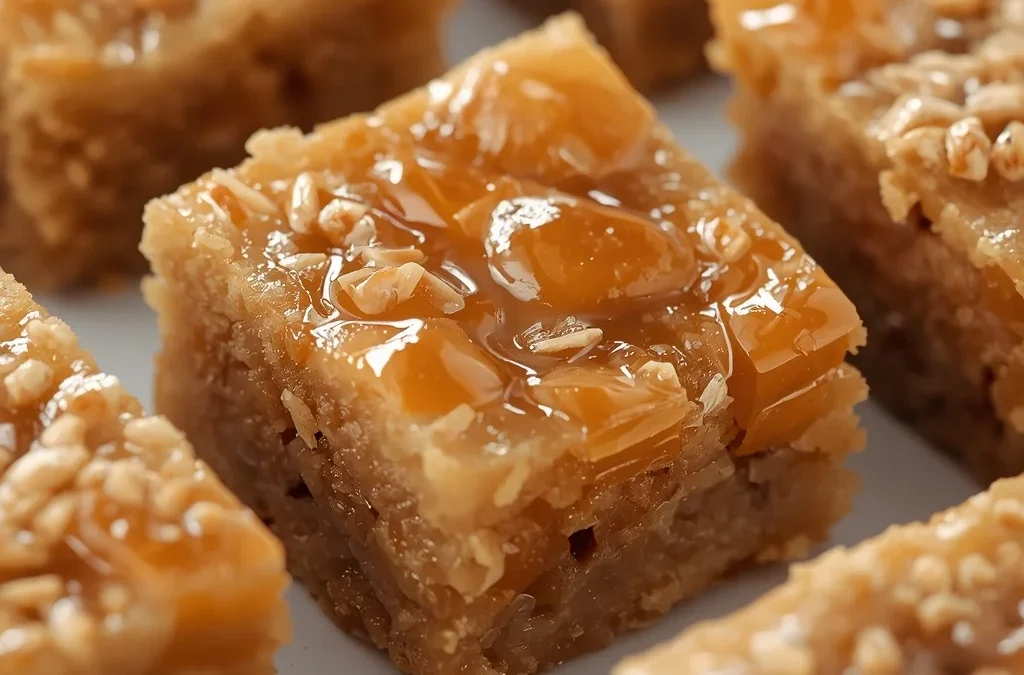
How to Bake Indulgent Biscoff Baklava Blondies
- Total Time: 1 hour 5 minutes
- Yield: 16 squares 1x
- Diet: Vegetarian
Description
To understand the magic of this dessert, we first need to break down the anatomical marvel that is the Biscoff baklava blondie. This is not a simple matter of throwing random ingredients into a bowl; it is a highly calculated, multi-tiered confection where every single layer has a specific job to do. At the base of the entire structure is a rich, dense, and deeply caramelized blondie batter. Unlike a traditional chocolate brownie, a blondie relies heavily on brown sugar and melted butter to create a flavor profile that tastes strongly of butterscotch and vanilla. This provides a soft, fudgy foundation that keeps the dessert grounded and beautifully moist.
Ingredients
Blondie Base
- 1 cup (225 g) unsalted butter, melted
- 1 cup (200 g) brown sugar
- ½ cup (100 g) granulated sugar
- 2 large eggs
- 2 tsp vanilla extract
- 1 ½ cups (190 g) all-purpose flour
- ½ tsp baking powder
- ¼ tsp salt
Baklava Layer
- 1 cup chopped walnuts or pistachios
- 1 tsp cinnamon
- 6–8 sheets phyllo pastry (optional but recommended)
- 3 tbsp melted butter
Biscoff Layer
- ¾ cup Biscoff cookie butter (speculoos spread)
- 2–3 tbsp warmed milk (to loosen slightly)
Syrup Topping
- ⅓ cup honey
- 2 tbsp brown sugar
- 1 tbsp water
- ½ tsp lemon juice
- ¼ tsp cinnamon
Instructions
1. Prepare the pan
- Preheat oven to 350°F (175°C).
- Line an 8×8-inch baking pan with parchment paper.
2. Make blondie batter
- Mix melted butter with brown sugar and granulated sugar.
- Add eggs and vanilla, whisk until smooth.
- Fold in flour, baking powder, and salt.
3. First layer
- Spread half of the blondie batter into the pan.
4. Baklava layer
- Mix nuts with cinnamon.
- Layer phyllo sheets brushed lightly with butter (if using).
- Sprinkle nut mixture evenly over the base.
5. Biscoff layer
- Warm Biscoff spread slightly and drizzle or spread over nuts.
6. Top layer
- Spread remaining blondie batter over the top carefully.
7. Bake
- Bake for 35–40 minutes until golden and set in the center.
8. Syrup finish
- Simmer honey, brown sugar, water, lemon juice, and cinnamon for 2–3 minutes.
- Pour warm syrup over blondies once they come out of the oven.
9. Cool & slice
- Let cool completely for clean cuts and maximum flavor absorption.
Notes
Serve these blondies slightly warm with a scoop of vanilla ice cream or a drizzle of extra Biscoff spread for an indulgent dessert experience.
- Prep Time: 25 minutes
- Cook Time: 40 minutes
- Category: Dessert / Bars
- Method: Baking
- Cuisine: Fusion (Middle Eastern–Western)
Keywords: speculoos baklava blonde brownies, cookie butter baklava bars, spiced honey baklava blondie
