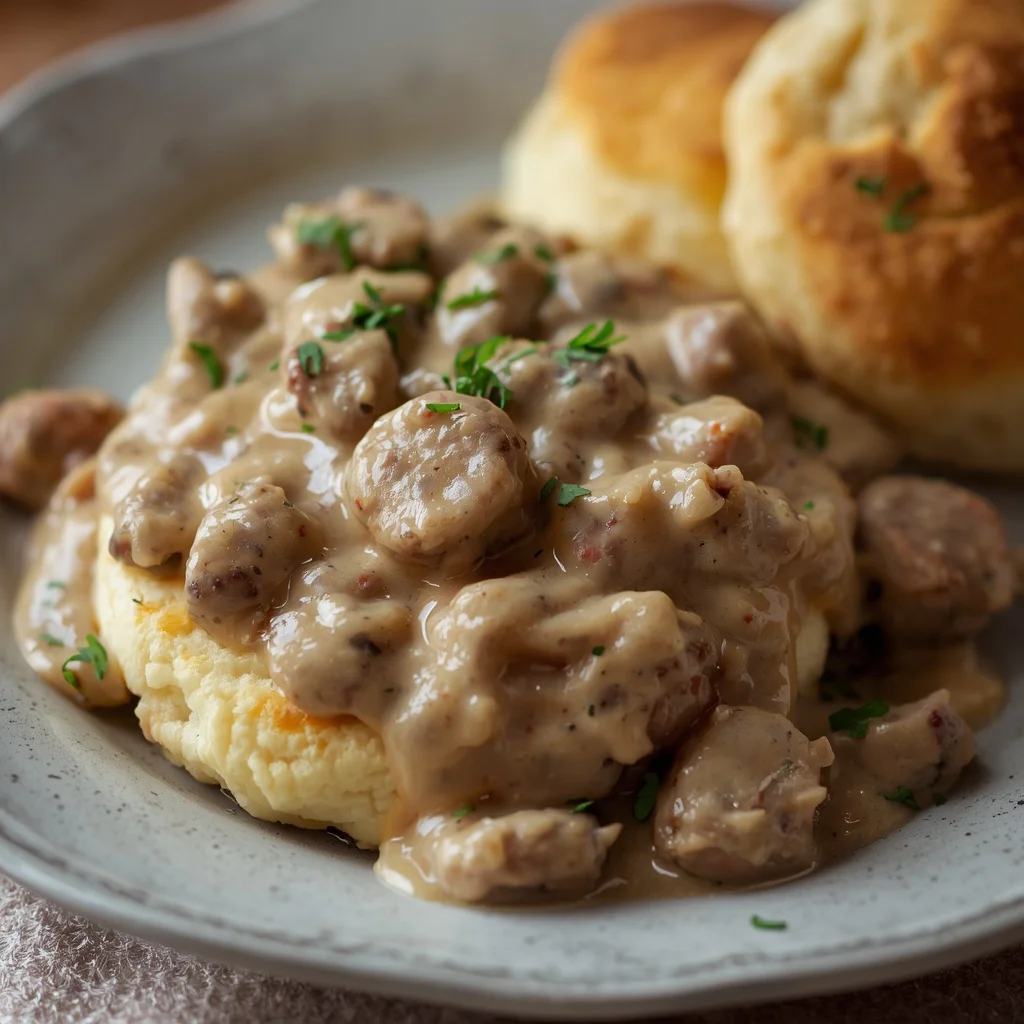
When it comes to pure, comforting, and soul-satisfying food, nothing quite captures Southern cooking like a warm plate of biscuits and sausage gravy. This iconic breakfast dish brings together tall, flaky buttermilk pastry and a rich, peppery pork sauce. Every single bite warms you up from the inside out. Whether you host a lively family brunch, cook a weekend breakfast, or simply crave comfort food in your kitchen, learning this meal from scratch is a fantastic culinary skill. In this guide, you will discover history, preparation steps, variation ideas, and essential tips. Every home cook can create restaurant-quality biscuits and sausage gravy with ease.
What Is Biscuits and Sausage Gravy?
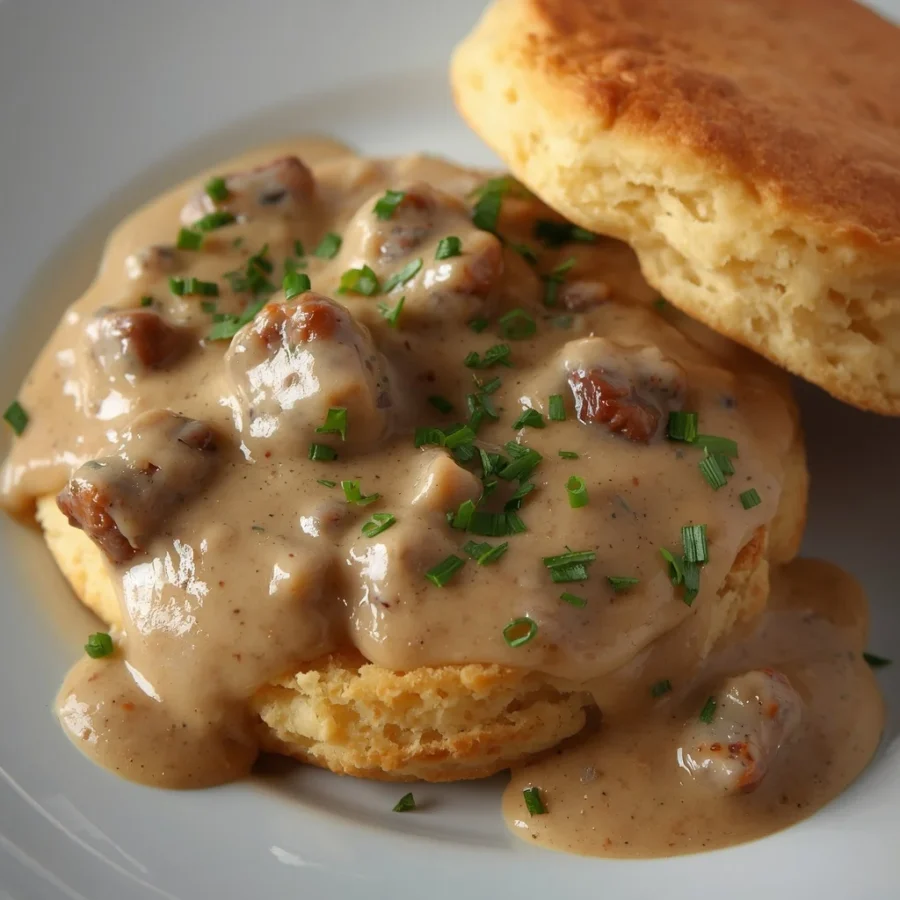
At its core, biscuits and sausage gravy is a traditional American breakfast staple. The dish relies on two primary elements: fresh-baked buttermilk biscuits and a creamy pan sauce packed with seasoned pork sausage. Humble kitchen ingredients come together here to create extraordinary texture and rich flavor.
The biscuits serve as the structural foundation of the plate. A proper Southern biscuit must be golden brown on the outside. The exterior keeps a slight crispness, while the inside remains light, fluffy, and tender. Meanwhile, the sauce is often called country gravy or sawmill gravy. Home cooks create it by browning flavorful pork sausage inside a heavy skillet. The remaining pan fat mixes with flour to build a quick roux base. Next, you whisk whole milk into the pan until a lush, velvety sauce forms. Heavy black pepper gives the meal its signature kick. Pouring hot gravy over split biscuits lets the flaky pastry layers absorb every drop of savory flavor.
The Origin of Biscuits and Sausage Gravy
The story of biscuits and sausage gravy belongs to the American South. Laborers created this breakfast to survive long, demanding days of physical work. People needed high-calorie fuel while working in lumber yards, farms, and factories.
During the late eighteenth century, financial resources were quite scarce across rural communities. Settlers required meals that stayed inexpensive, easy to cook, and deeply filling. Soft wheat grew exceptionally well in Southern soil, which made white flour cheap and accessible. Combined with butter, lard, or cultured milk, home cooks could produce massive batches of fresh biscuits effortlessly.
Simultaneously, pork served as the main livestock meat in the region. After butchering, cooks gathered leftover pork scraps. They ground the meat, heavily seasoned it with garden herbs, and cooked it in cast-iron skillets. Resourceful workers realized that sprinkling flour into the hot pork fat created a thick base. Whisking milk into that pan produced a creamy sauce that stretched a small portion of meat into a massive feast. Over many decades, this simple subsistence food transformed into a beloved culinary tradition across North America.
Ingredients You Will Need
Quality ingredients matter when crafting the best biscuits and sausage gravy. Because this recipe uses simple household items, choosing fresh flour, cold dairy, and high-grade meat will elevate your final results.
For the Homemade Fluffy Biscuits
-
All-Purpose Flour: Two cups (or two hundred fifty grams). Standard flour provides structure without making dough tough.
-
Baking Powder: One tablespoon. This element acts as the main leavener to lift the dough high.
-
Baking Soda: One-half teaspoon. It reacts with acidic buttermilk to create extra airiness.
-
Salt: One teaspoon. Essential for unlocking rich butter and wheat flavors.
-
Unsalted Butter: Six tablespoons (or eighty-five grams). Keep it thoroughly chilled and cubed to build flaky layers.
-
Buttermilk: Three-quarters of a cup (or one hundred eighty milliliters). Cold buttermilk adds tang and tenderizes gluten.
For the Rich Sausage Gravy
-
Breakfast Sausage: Four hundred fifty grams (or one pound). Fresh pork seasoned with sage, thyme, and pepper yields classic flavor.
-
All-Purpose Flour: One-quarter cup (or thirty grams). This thickens meat fat into a smooth cooked roux base.
-
Whole Milk: Two and one-half to three cups (or six hundred to seven hundred twenty milliliters). Rich milk forms the creamy body.
-
Freshly Ground Black Pepper: One-half teaspoon, plus extra to taste. Coarse pepper defines traditional sawmill gravy.
-
Salt: One-quarter teaspoon, adjusted to your preference.
-
Cayenne Pepper: A tiny pinch (optional). Adds subtle background heat without overpowering the dish.
Step-by-Step Directions and Preparation Method
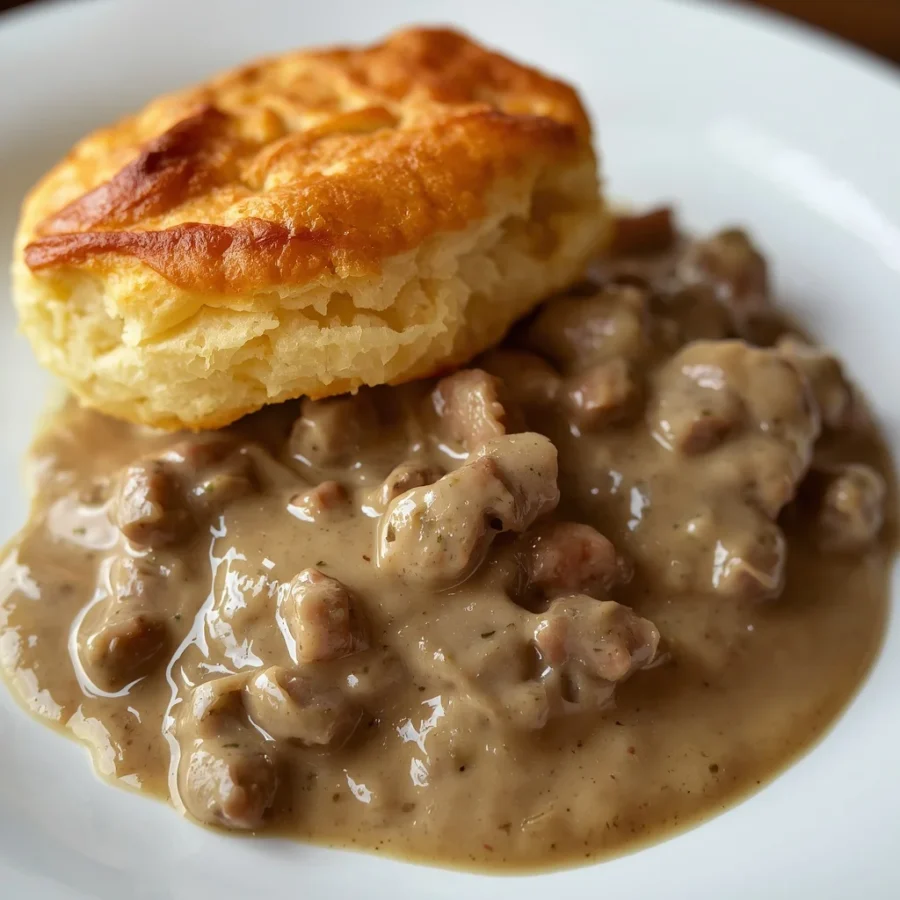
Preparing this feast requires little active labor time. However, watching temperatures and handling techniques guarantees success. Follow these clear directions to assemble your biscuits and sausage gravy without stress.
+---------------------------------------------------------------------------------+
|                              TIMELINE & WORKFLOW                                |
+---------------------------------------------------------------------------------+
|  [ PREP DOUGH ]  ->  [ CUT & BAKE BISCUITS ]  ->  [ BROWN SAUSAGE & MAKE GRAVY ]  |
|   (10 mins)             (12 to 15 mins)                 (10 to 12 mins)         |
+---------------------------------------------------------------------------------+
Baking the Fluffy Buttermilk Biscuits
-
Prepare Your Oven: Start by preheating your oven to four hundred twenty-five degrees Fahrenheit (or two hundred twenty degrees Celsius). Line a baking sheet with parchment paper or grease it lightly.
-
Mix the Dry Ingredients: Grab a large bowl. Whisk together the all-purpose flour, baking powder, baking soda, and salt until uniform.
-
Cut in the Butter: Drop cold butter cubes directly into your flour mixture. Work the fats into dry flour using a pastry cutter, fork, or fingertips until coarse crumbs form. Small butter bits must remain visible, as they melt in the oven to create steam pockets.
-
Combine with Buttermilk: Pour cold buttermilk straight into your bowl. Stir gently using a wooden spoon until a soft, slightly sticky dough forms. Avoid overmixing, since extra stirring causes heavy, dense biscuits.
-
Shape the Biscuit Dough: Transfer the dough onto a clean, lightly floured counter. Gently press the mass down until it reaches three-quarters of an inch (or two centimeters) in thickness. Skip rolling pins here, because hand-patting preserves internal air bubbles.
-
Cut the Biscuits: Press a sharp round biscuit cutter straight down into the dough without twisting. Twisting seals dough edges and prevents proper rising. Arrange cut pieces onto your baking sheet so their sides touch slightly, which forces them to rise upward during baking.
-
Bake to Perfection: Slide the pan into your oven. Bake for twelve to fifteen minutes until tops turn golden brown and sides puff up high. Remove the pan and keep your biscuits warm.
Preparing the Savory Sausage Gravy
-
Brown the Pork Sausage: Set a large, heavy skillet over medium heat. Add your pork sausage, breaking larger clumps apart with a wooden spoon. Cook thoroughly until the meat browns completely with zero pink remaining.
-
Build the Flour Base: Dust the flour evenly over the hot cooked sausage and rendered fats. Stir the pan continuously for one to two minutes. This brief cooking step eliminates raw flour taste while coating the meat evenly.
-
Whisk in the Milk: Stream whole milk slowly into your skillet while whisking rapidly. Keep scraping the pan bottom to dissolve brown bits and smooth out lumps.
-
Simmer and Thicken: Bring your sauce mixture to a light simmer. Lower the flame and cook for five to eight minutes, stirring occasionally, until gravy turns thick and velvety. Pour in extra milk if the sauce looks too thick.
-
Season Heavily: Sprinkle freshly cracked black pepper, salt, and cayenne pepper into the skillet. Taste your creation and fine-tune seasonings as desired.
Plating and Serving
To serve, pull a warm buttermilk biscuit apart into two halves. Place them open-faced inside a wide bowl or plate. Ladle generous amounts of hot sausage gravy over top, ensuring plenty of meat lands on each biscuit. Eat immediately while piping hot.
Flavorful Variations on Biscuits and Sausage Gravy
Classic pork biscuits and sausage gravy remains unbeatable, yet customizing the recipe to match diet needs or personal taste is easy:
| Variation Type | Primary Ingredients | Flavor Profile |
| Spicy Southern Style | Hot Italian sausage, red pepper flakes, extra cayenne | Fiery, bold, and zesty with a kick |
| Herb & Garlic Infused | Sage sausage, fresh thyme, minced garlic, cracked pepper | Savory, earthy, and aromatic |
| Lighter Poultry Option | Seasoned turkey or chicken sausage, butter emulsion | Leaner, lighter, yet thoroughly savory |
| Vegetarian Delight | Plant-based sausage, vegetable oil, whole milk | Earthy, satisfying, and meat-free |
-
Spicy Southern Gravy: Swap mild pork for hot Italian or spicy country sausage. Tossing crushed red pepper flakes into the skillet adds a fiery kick.
-
Herbed Country Gravy: Mix chopped sage, thyme, or rosemary directly into browning meat. Fresh garden herbs enhance the overall savory aroma.
-
Poultry Sausage Gravy: Substitute turkey or chicken sausage for traditional pork. Since poultry contains less fat, melt one tablespoon of butter in the skillet before adding flour.
-
Cheddar and Chive Biscuits: Fold sharp cheddar cheese and fresh chives into dry flour before adding liquid. Cheesy biscuits pair wonderfully with peppery pork sauce.
-
Vegetarian Sausage Gravy: Use your favorite plant-based sausage cooked in butter or oil. Follow standard flour and milk steps to craft a delicious meatless alternative.
Frequently Asked Questions
Can I make the biscuit dough in advance?
Yes, preparing dough ahead of time works well. Cut the biscuits out and line them on a baking sheet. Cover the tray tightly and refrigerate for up to twenty-four hours before baking. Alternatively, freeze raw dough shapes on a plate, move them into a bag, and bake straight from frozen by adding three minutes to your total timer.
Why did my biscuits turn out flat or dense?
Biscuits turn out heavy for three main reasons: expired baking powder, overworking dough, or twisting cutter tools. Overworking develops tough gluten strands inside wheat flour. Meanwhile, twisting cutter edges pinches dough layers shut, blocking steam from pushing pastry upward. Always punch cutters straight down and pull straight up.
How do I store and reheat leftover sausage gravy?
Store leftover gravy inside an airtight glass container within your refrigerator. The sauce keeps fresh for three to four days. Reheat gravy in a small saucepan over medium-low heat, stirring in fresh milk to restore a silky texture as starch thickens upon cooling.
Can I use skim milk or non-dairy milk for the gravy?
Whole milk produces the richest consistency, but low-fat options can work. Skim milk feels too thin and often makes watery gravy. For dairy-free cooking, unsweetened oat milk or almond milk works best, though alternative liquids slightly adjust final flavor profiles.
How do I keep my butter cold enough when making biscuits?
If your kitchen feels warm, chop butter into cubes and place them in your freezer for fifteen minutes. Chilled butter remains solid until reaching the hot oven, which produces distinct steam pockets and flaky pastry layers.
Conclusion
Cooking a scratch-made batch of biscuits and sausage gravy is a deeply rewarding kitchen project. Combining humble pantry staples with proper technique—like using ice-cold butter and browning flour roux—lets you produce breakfast options superior to local diner offerings. Warm flavors, hearty textures, and classic comfort define this meal. Simple ingredients cooked with care will always deliver culinary excellence.
Print
The Ultimate Guide to Homemade Biscuits and Sausage Gravy
- Total Time: 35 minutes
- Yield: 8 servings 1x
Description
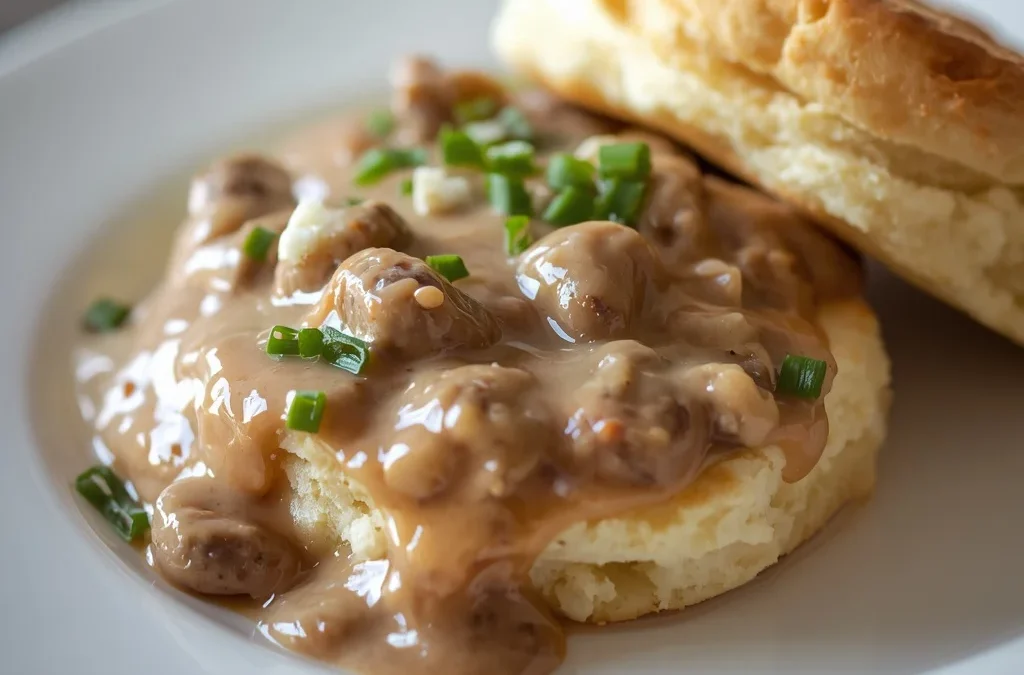
At its core, biscuits and sausage gravy is a traditional American breakfast staple. The dish relies on two primary elements: fresh-baked buttermilk biscuits and a creamy pan sauce packed with seasoned pork sausage. Humble kitchen ingredients come together here to create extraordinary texture and rich flavor.
Ingredients
Scale
For the biscuits
- 2 cups (250 g) all-purpose flour
- 1 tbsp baking powder
- ½ tsp baking soda
- 1 tsp salt
- 6 tbsp (85 g) cold unsalted butter, cubed
- ¾ cup (180 ml) cold buttermilk
For the sausage gravy
- 450 g (1 lb) breakfast sausage, preferably pork
- ¼ cup (30 g) all-purpose flour
- 2½–3 cups (600–720 ml) whole milk
- ½ tsp freshly ground black pepper, or more to taste
- ¼ tsp salt, or to taste
- Pinch of cayenne pepper, optional
Instructions
1. Make the biscuits
- Preheat the oven to 220°C (425°F).
- Whisk together the flour, baking powder, baking soda, and salt.
- Cut the cold butter into the flour mixture until it resembles coarse crumbs.
- Pour in the cold buttermilk and gently mix just until a soft dough forms. Don’t overmix.
- Turn the dough onto a lightly floured surface and gently pat it to about 2 cm (¾ inch) thick.
- Cut out biscuits using a round cutter. Place them close together on a baking sheet.
- Bake for 12–15 minutes, until puffed and golden.
2. Make the sausage gravy
- Heat a large skillet over medium heat. Add the sausage and cook, breaking it into small pieces, until browned and fully cooked.
- Sprinkle the flour over the sausage. Stir continuously for about 1–2 minutes to cook the flour.
- Gradually pour in the milk while stirring to prevent lumps.
- Simmer for 5–8 minutes, stirring occasionally, until the gravy thickens.
- Season generously with black pepper and add salt and cayenne if desired.
- If the gravy becomes too thick, stir in a little more milk.
3. Serve
Split the warm biscuits in half and spoon plenty of sausage gravy over the top.
Notes
For especially fluffy biscuits, keep the butter and buttermilk very cold and handle the dough as little as possible.
- Prep Time: 15 minutes
- Cook Time: 20 minutes
- Category: Breakfast
- Method: Baking & Stovetop
- Cuisine: American
Nutrition
- Serving Size: 1 biscuit with gravy
- Calories: ~430 kcal
Keywords: buttermilk biscuits with sausage gravy, southern sausage gravy and biscuits, classic biscuits and gravy
