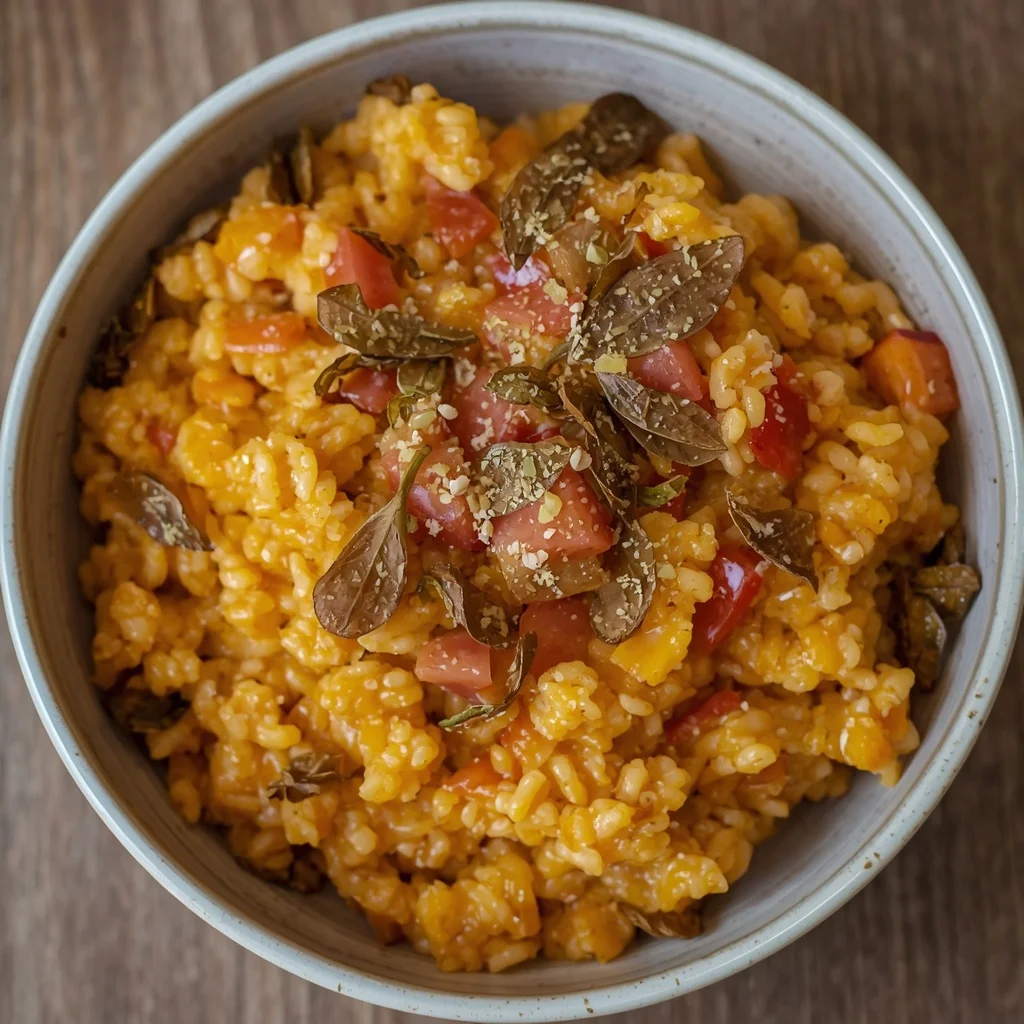
There is something undeniably magical about standing over a steaming pan on a chilly evening, slowly stirring a pot of rice as it transforms into a velvety masterpiece. If you are looking for the ultimate comfort food that feels like a warm hug, look no further than this luxurious butternut squash risotto with crispy sage. This dish strikes the perfect balance between the natural sweetness of roasted autumn vegetables, the savory depth of aged cheese, and the earthy crunch of flash-fried herbs. It is sophisticated enough to impress guests at a formal dinner party, yet deeply comforting enough to enjoy in your favorite loungewear on a quiet Sunday night.
Creating a restaurant-quality meal at home does not require professional culinary training. It simply requires a little patience, a deep appreciation for fresh ingredients, and a few classic techniques. In this comprehensive guide, we will explore the roots of this classic Italian preparation, break down every single ingredient you need, and walk through the step-by-step process to ensure your rice achieves that flawless, flowing texture every single time.
What is Butternut Squash Risotto with Crispy Sage?
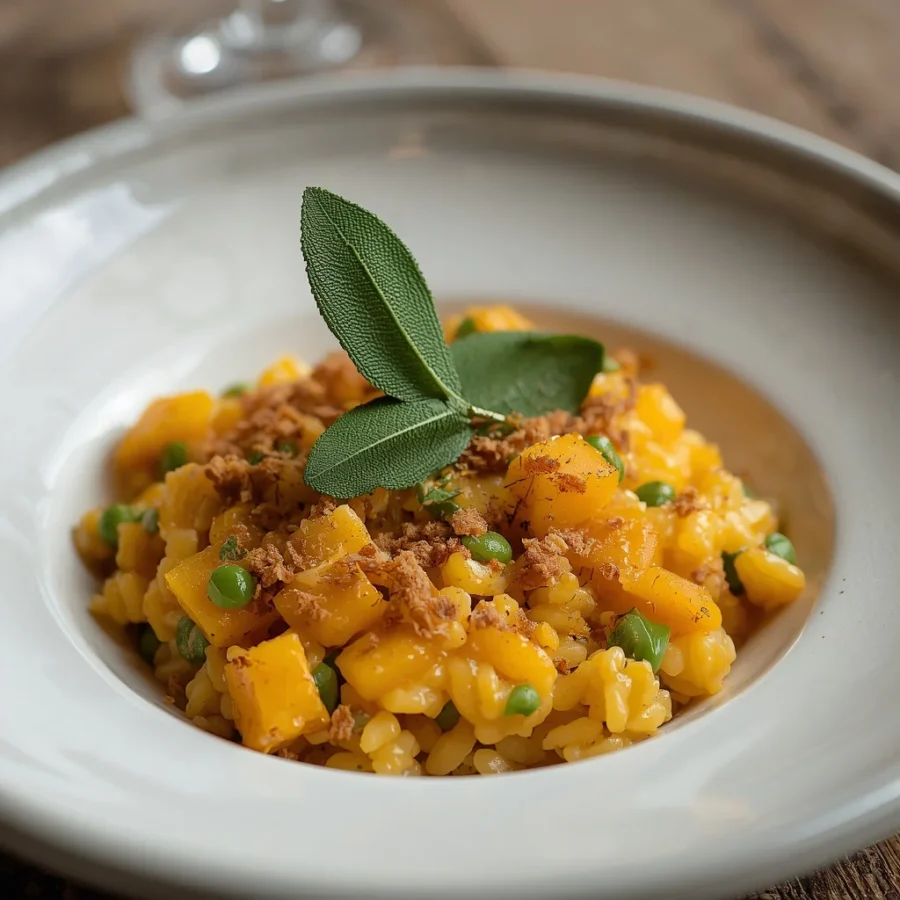
At its core, butternut squash risotto with crispy sage is a traditional Italian rice dish that celebrates seasonal produce and culinary patience. Unlike standard rice preparations that involve boiling grains in a set amount of water until fluffiness is achieved, this method relies on the gradual addition of warm liquid to a specific variety of high-starch rice. As the rice cooks and is stirred, it releases its natural starches, creating a rich, self-thickening sauce without the need for heavy creams or artificial thickeners.
The addition of winter squash introduces a beautiful, vibrant orange hue and a subtle sweetness that pairs brilliantly with the savory elements of the dish. By mashing half of the roasted vegetable directly into the rice and leaving the remaining half intact as tender cubes, you get the best of both worlds: a deeply flavored, colorful base and delightful bursts of texture throughout. The entire experience is elevated by a final crowning glory of delicate herb leaves that have been fried until they shatter pleasantly with every bite.
Origin of Butternut Squash Risotto with Crispy Sage
To truly appreciate this butternut squash risotto with crispy sage, we must travel back in time to the northern regions of Italy. Rice was first introduced to the Italian peninsula by the Moors during the Middle Ages, finding an ideal home in the damp, marshy plains of the Po River Valley in Lombardy and Piedmont. Over the centuries, local farmers cultivated unique short-grain and medium-grain rice varieties specifically suited to absorbing large quantities of liquid while retaining their structural integrity.
The technique of slowly adding broth to toasted rice emerged as a brilliant way to create a filling, hearty meal from simple ingredients. While the most famous variation is arguably the golden, saffron-infused version from Milan, regional cooks quickly realized that the creamy rice canvas was the perfect vehicle for showcase seasonal agriculture. Combining the sweet, long-keeping winter squashes of the countryside with the abundant sage growing in kitchen gardens became a natural, time-honored tradition during the cooler months of the year.
Ingredients with Quantity: Butternut Squash Risotto with Crispy Sage
Before you turn on your stove, it is essential to gather your ingredients and measure them out. Having everything prepped and ready to go will make the cooking process smooth and stress-free.
For the Squash
-
Four cups of butternut squash, peeled and cut into one-half-inch cubes (this equals about six hundred grams)
-
Two tablespoons of high-quality olive oil
-
One-half teaspoon of fine sea salt
-
One-quarter teaspoon of freshly ground black pepper
Risotto Base
-
Six cups of hot vegetable stock or chicken stock
-
Two tablespoons of unsalted butter
-
One tablespoon of high-quality olive oil
-
One small yellow or white onion, finely diced
-
Two cloves of fresh garlic, minced
-
One and one-half cups of uncooked Arborio rice
-
One-half cup of dry white wine, such as Pinot Grigio or Sauvignon Blanc (this is optional but highly recommended for depth of flavor)
-
Three-quarters cup of freshly grated Parmesan cheese
-
Two tablespoons of unsalted butter, reserved strictly for finishing the dish
-
Additional salt and black pepper, adjusted to your personal taste
For the Crispy Sage Garnish
-
Twelve to sixteen fresh, whole sage leaves
-
One tablespoon of unsalted butter or olive oil for frying
Step by Step Direction and Preparation Method: Butternut Squash Risotto with Crispy Sage
Roasting the Sweet Squash
Begin by preheating your kitchen oven to four hundred and twenty-five degrees Fahrenheit. While the appliance heats up, take your half-inch cubes of winter squash and place them onto a large, rimmed baking sheet. Drizzle the vegetable pieces evenly with two tablespoons of olive oil, and sprinkle the one-half teaspoon of salt and one-quarter teaspoon of black pepper over the top. Use your hands or a large spatula to toss the cubes until every single piece is lightly coated in oil and seasoning.
Spread the seasoned pieces out into a single, even layer so they roast rather than steam. Slide the baking sheet into the hot oven and bake for twenty-five to thirty minutes. Around the halfway mark, use a spatula to stir the pieces once, ensuring even browning on all sides. You will know it is ready when the edges are lightly caramelized and a fork easily slides into the center of the cubes. Remove the pan from the oven. Take roughly half of the roasted pieces and use a fork to mash them into a smooth paste, leaving the remaining half as whole cubes. Set both portions aside for later.
Preparing the Crunchy Herb Garnish
Place a small skillet or frying pan over medium heat on your stovetop. Add one tablespoon of butter or olive oil and let it melt until it begins to shimmer. Carefully drop the fresh, whole herb leaves into the hot fat in a single layer. Let them fry undisturbed for just twenty to thirty seconds. They will quickly change color slightly and become brittle.
Use a pair of tongs or a slotted spoon to carefully lift the delicate leaves out of the hot fat. Immediately transfer them to a plate lined with a clean paper towel to drain off any excess oil. While they are still warm, sprinkle them very lightly with a tiny pinch of fine salt. As they cool, they will become wonderfully crisp and will deliver an incredible texture to the finished plate.
Building the Rice Base
Pour your six cups of vegetable or chicken stock into a medium saucepan and place it over low heat. It is absolutely crucial that this liquid remains consistently warm throughout the entire cooking process, as cold liquid will shock the rice grains and halt the cooking process. In a separate, large, heavy-bottomed pan or Dutch oven, melt two tablespoons of butter alongside one tablespoon of olive oil over medium heat.
Add the finely diced small onion to the pan. Cook the onion for approximately five minutes, stirring frequently, until the pieces become completely soft, translucent, and sweet, ensuring they do not brown or burn. Next, stir in the two cloves of minced garlic and let it cook for a brief thirty seconds until its aroma fills your kitchen.
Now, dump the one and one-half cups of Arborio rice directly into the pan. Stir the grains continuously for one to two minutes so that every single grain is thoroughly coated in the warm fat. Look closely; you want the edges of the rice grains to become slightly translucent while the very center remains stark white. This toasting step seals the exterior of the grain and ensures a perfect texture.
The Slow Simmer Process
If you are choosing to use the optional dry white wine, pour the one-half cup into the toasted rice now. It will hiss and bubble vigorously. Use a wooden spoon to scrape up any flavorful bits stuck to the bottom of the pan, stirring constantly until the liquid has been almost entirely absorbed by the grains.
Now, begin the rhythmic process of adding the warm stock. Ladle roughly one cup of the simmering broth into the rice pan. Stir the mixture frequently, but not constantly. Allow the rice to gently simmer over medium-low heat until the liquid is nearly gone. Once you can draw your wooden spoon across the bottom of the pan and leave a clear trail behind it, it is time to add another ladle of warm stock.
Repeat this exact cycle, adding a ladle of broth, stirring regularly, and waiting for absorption before adding more. This entire process will take anywhere from eighteen to twenty-two minutes. Keep testing the rice along the way; you are looking for an al dente texture, meaning the grains should be incredibly creamy on the outside but still retain a tiny, pleasant bite right at the center.
The Final Flourish
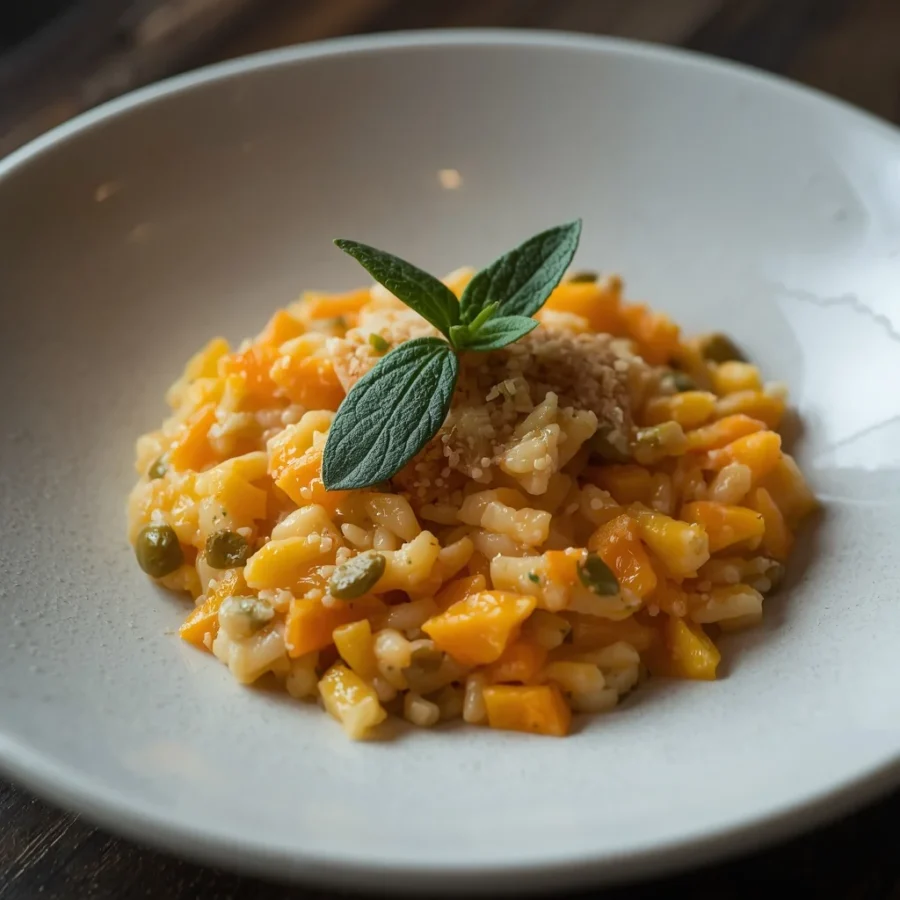
Once the rice reaches that perfect stage of doneness, reduce the heat to the absolute lowest setting or turn it off completely. Gently stir in the smooth mashed squash, which will immediately paint the rice a gorgeous golden color. Next, fold in the remaining roasted cubes, the three-quarters cup of freshly grated Parmesan cheese, and the final two tablespoons of cold butter reserved for finishing.
Stir the mixture vigorously for a few moments. This final energetic stir incorporates air and emulsifies the melting cheese and butter with the residual starchy cooking liquid, creating an unbelievably luxurious sauce. Taste the mixture carefully and adjust the seasonings with an extra pinch of salt and freshly cracked black pepper if desired. If the mixture seems a bit too thick or sticky, simply splash in a few extra tablespoons of the remaining warm stock. The consistency should be loose and flowing, gently spreading out when spooned onto a flat plate rather than molding into a stiff mound.
Variations to Try: Butternut Squash Risotto with Crispy Sage
While this traditional version is spectacular on its own, the creamy rice base acts as an incredible canvas for culinary creativity. Here are a few delightful ways you can customize this recipe to suit different tastes or occasions:
-
The Carnivore’s Delight: If you want to add a savory, salty contrast to the sweet vegetable, consider frying up some diced pancetta or smoky bacon in your pan before cooking the onions. Remove the crispy meat pieces, leave the rendered fat in the pan to cook the onions and toast the rice, and stir the crispy bits back into the finished dish right before serving.
-
The Nutty Crunch: For an extra layer of texture that beautifully complements the earthy notes of the dish, toss a handful of chopped walnuts or pecans into a dry skillet. Toast them over medium heat until they are fragrant, and scatter them over the top of the bowls along with the fried herb leaves.
-
The Extra Creamy Indulgence: If you want an even richer texture for a special occasion, replace the final two tablespoons of butter with two tablespoons of creamy mascarpone cheese or a splash of heavy cream at the very end of the cooking process.
-
The Plant-Based Makeover: To make this recipe completely vegan, use a rich vegetable broth, swap out the butter for a high-quality plant-based butter alternative or extra virgin olive oil, and use a dairy-free Parmesan alternative or a tablespoon of nutritional yeast for that signature savory kick.
FAQs: Butternut Squash Risotto with Crispy Sage
What type of rice is best for Butternut Squash Risotto with Crispy Sage?
For the absolute best results, you should always use Arborio rice or another high-starch Italian variety like Carnaroli or Vialone Nano. These specific grains are short, plump, and capable of absorbing large amounts of liquid while releasing the surface starches necessary to create a naturally creamy sauce without falling apart or becoming mushy. Regular long-grain white rice or jasmine rice will not work for this preparation method, as they lack the necessary starch content.
Can I make this dish ahead of time?
This meal is truly at its peak of perfection the absolute moment it is finished cooking, as the starch continues to set and absorb liquid as it sits. However, if you are hosting a dinner party and want to save time, you can easily roast the squash and fry the herb leaves several hours in advance. Keep the roasted vegetable stored in the refrigerator and keep the fried leaves at room temperature on a paper towel until you are ready to begin the stovetop cooking process.
How do I store and reheat leftovers?
If you happen to have any leftovers, allow them to cool completely before transferring them into an airtight container. Store the container in your refrigerator for up to three to four days. When you are ready to enjoy it again, place the portion into a saucepan, add a splash of water or broth to loosen the tightened starches, and heat gently over low heat while stirring constantly until it is warmed through and creamy once again.
What can I do with leftover risotto?
If you do not want to eat the leftovers plain, you can transform them into a spectacular Italian street food appetizer known as arancini. Simply roll the cold, firm leftover rice mixture into small balls, stuff a tiny cube of mozzarella cheese into the center of each ball, coat them in flour, dip them in beaten egg, roll them in breadcrumbs, and deep-fry them until they are golden brown and melted on the inside.
Conclusion: Butternut Squash Risotto with Crispy Sage
Mastering a classic butternut squash risotto with crispy sage is a rewarding culinary journey that proves how a few humble ingredients can be transformed into an extraordinary meal through simple, mindful cooking techniques. By taking the time to roast the vegetable to caramelized perfection, toast the rice grains properly, and patiently incorporate the warm broth ladle by ladle, you create a dish that is far greater than the sum of its parts. It is a celebration of texture, warmth, and balance that will undoubtedly become a favorite centerpiece for your autumn and winter dining table. Gather your ingredients, take your time at the stove, and enjoy every single bite of this velvety, comforting masterpiece.
Print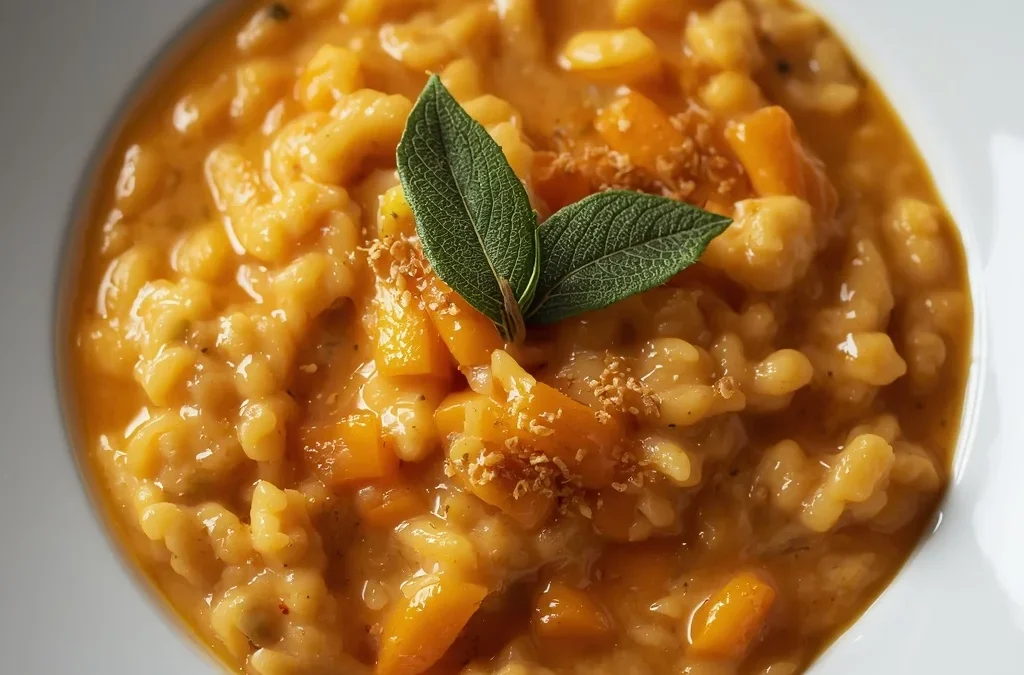
Comfort in a Bowl: The Ultimate Butternut Squash Risotto with Crispy Sage
- Total Time: 1 hour
- Yield: 4 servings 1x
- Diet: Vegetarian
Description
At its core, butternut squash risotto with crispy sage is a traditional Italian rice dish that celebrates seasonal produce and culinary patience. Unlike standard rice preparations that involve boiling grains in a set amount of water until fluffiness is achieved, this method relies on the gradual addition of warm liquid to a specific variety of high-starch rice. As the rice cooks and is stirred, it releases its natural starches, creating a rich, self-thickening sauce without the need for heavy creams or artificial thickeners.
Ingredients
For the squash
- 4 cups (about 600 g) butternut squash, peeled and cut into ½-inch cubes
- 2 tbsp olive oil
- ½ tsp salt
- ¼ tsp black pepper
For the risotto
- 6 cups hot vegetable or chicken stock
- 2 tbsp butter
- 1 tbsp olive oil
- 1 small onion, finely diced
- 2 cloves garlic, minced
- 1½ cups Arborio rice
- ½ cup dry white wine (optional)
- ¾ cup grated Parmesan cheese
- 2 tbsp butter (for finishing)
- Salt and black pepper, to taste
Crispy sage
- 12–16 fresh sage leaves
- 1 tbsp butter or olive oil
Instructions
1. Roast the squash
- Preheat the oven to 425°F (220°C).
- Toss the squash with olive oil, salt, and pepper.
- Roast for 25–30 minutes, stirring once, until tender and lightly caramelized.
- Mash about half the squash and leave the rest in cubes.
2. Make the crispy sage
- Heat the butter or oil in a small skillet over medium heat.
- Fry the sage leaves for 20–30 seconds until crisp.
- Transfer to a paper towel and lightly sprinkle with salt.
3. Cook the risotto
- Keep the stock warm in a saucepan.
- Heat butter and olive oil in a large pan over medium heat.
- Cook the onion for about 5 minutes until soft.
- Add garlic and cook for 30 seconds.
- Stir in the Arborio rice for 1–2 minutes until lightly toasted.
- Add the wine (if using) and cook until mostly absorbed.
- Add the warm stock one ladle at a time, stirring frequently. Wait until each addition is nearly absorbed before adding more.
- Continue for 18–22 minutes, until the rice is creamy and al dente.
4. Finish
- Stir in the mashed squash, roasted squash cubes, Parmesan, and the remaining butter.
- Season with salt and pepper.
- If needed, add a splash of stock to loosen the risotto—it should flow gently when spooned.
Notes
- Prep Time: 15 minutes
- Cook Time: 45 minutes
- Category: Main
- Method: Stovetop
- Cuisine: Italian
Nutrition
- Serving Size: 1 bowl
- Calories: 485 kcal
Keywords: creamy winter squash risotto, roasted butternut squash rice, Italian squash risotto with herbs
