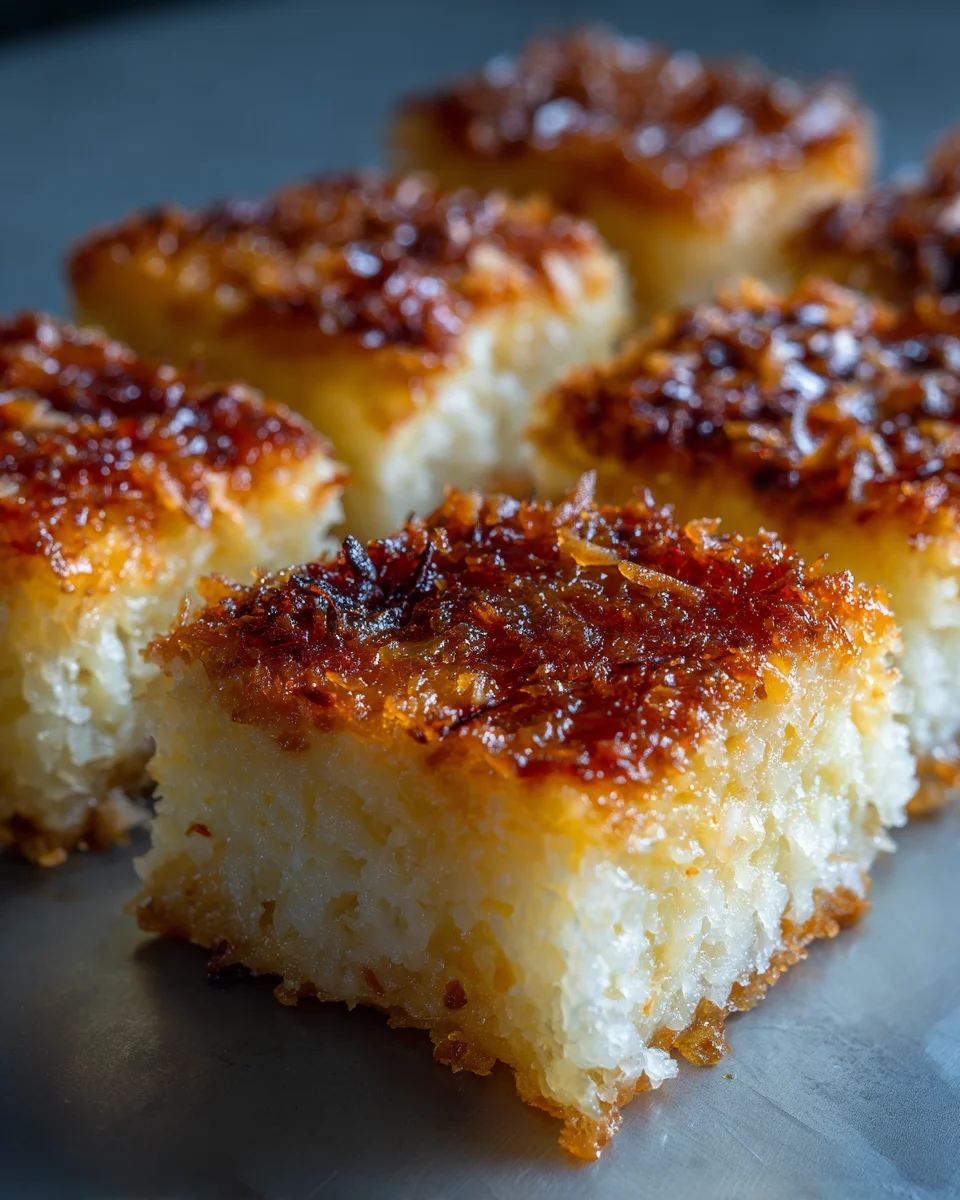
Stepping into the kitchen to bake something truly unique often means looking beyond traditional sponge cakes and standard chocolate chip brownies. When you want a dessert that transports your senses straight to a sun-drenched beach while delivering an addictive, chewy texture, it is time to experiment with something spectacular. Traditional baked goods absolutely have their place, but nothing matches the incredibly satisfying texture of a sweet treat made with sweet rice flour. If you are ready to shake up your dessert routine with something vibrant, tropical, and wonderfully distinct, these irresistible coconut mango mochi cake bars are the ultimate treat to bake next.
This specific style of baking offers a delightful departure from the crumbly texture of standard cakes, replacing it with a dense, bouncy, and soft interior that keeps people coming back for just one more slice. By pairing this satisfying structure with the creamy depth of tropical fruit, you create a treat that is both comforting and deeply refreshing. If you want a foolproof dessert that will effortlessly stand out at your next gathering, crafting a batch of coconut mango mochi cake bars will instantly elevate you to legendary status among your family and friends.
What Is This Tropical Baked Dessert?
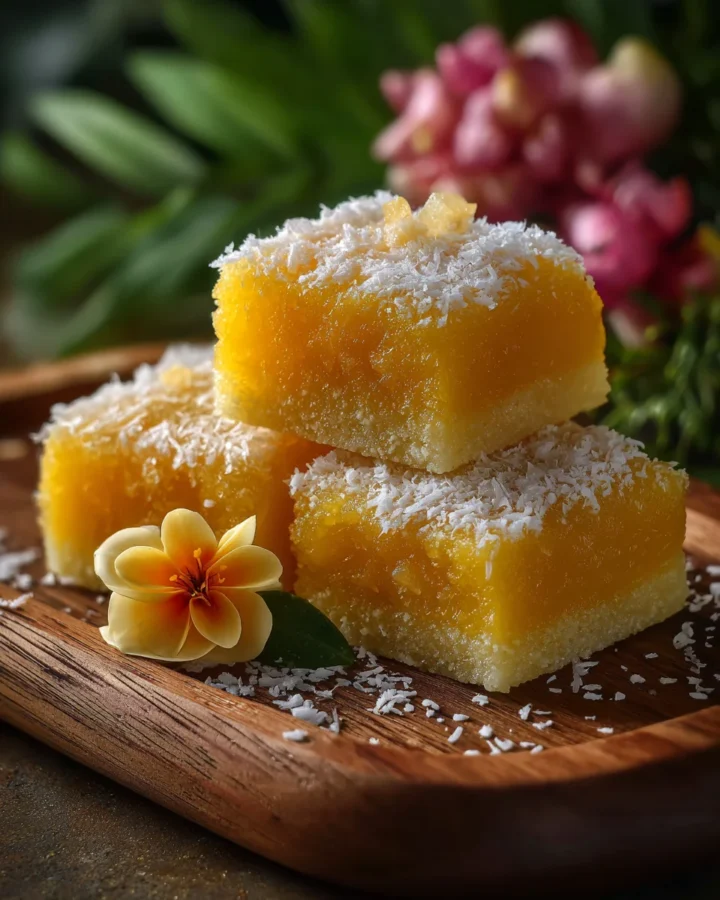
To understand this delightful creation, one must first look at its incredible textural profile, which differs entirely from Western-style confections. Unlike cakes made with wheat flour that rely on a light, airy crumb network, this dessert utilizes glutinous rice flour to achieve a heavy, elastic, and pillowy bounce. It is essentially a brilliant cross between a traditional East Asian pounded rice sweet and a classic American sheet cake bar.
The interior remains wonderfully soft, sticky, and custard-like, while the exterior edges develop a delicate, golden-brown crust during its time in the oven. The cake itself is infused thoroughly with rich coconut fats and studded generously with pockets of juicy fruit, ensuring that every single mouthful delivers an explosion of contrasting sensations. It is naturally gluten-free due to the inherent properties of the specialized rice grain, making it an incredibly versatile option for serving crowds with diverse dietary needs without ever compromising on pure indulgence.
The Fascinating Heritage Of Mochi Baking
The roots of this recipe represent a beautiful, modern intersection of diverse global culinary traditions. The concept of using glutinous rice flour to create sweet treats belongs fundamentally to the ancient culinary histories of Japan, China, and Korea. In Japan, traditional pounded rice cakes have been treated as sacred symbols of good fortune and health for centuries, typically enjoyed during major cultural celebrations like the new year.
However, the specific technique of taking these traditional ingredients, mixing them into a liquid batter with dairy, eggs, and sugar, and baking them in an oven is a modern innovation that traces back to the vibrant food culture of Hawaii. Known locally across the islands as butter mochi, this brilliant style of fusion baking emerged as home cooks combined Portuguese, Filipino, Japanese, and Western influences into single-pan desserts. This current adaptation honors that innovative spirit by weaving in classic Southeast Asian flavor components like fresh mango and thick coconut cream, resulting in a contemporary dessert that feels simultaneously nostalgic and entirely fresh.
Essential Ingredients Gathered For coconut mango mochi cake bars
Achieving the perfect balance of bounce and tropical brightness requires a few specific components. Ensuring you have the correct type of flour is the absolute key to success before you even begin mixing.
The Complete Shopping List
-
Two cups of premium glutinous rice flour, which is absolutely vital and cannot be substituted with regular rice flour
-
One teaspoon of baking powder to provide just enough lift to keep the dense bars beautifully tender
-
One-half of a cup of granulated white sugar to complement the natural sweetness of the fresh fruit
-
One cup of premium unsweetened coconut milk, preferably the full-fat variety from a can for maximum richness
-
One-half of a cup of fresh whole milk to round out the liquid base with traditional dairy creaminess
-
Two large eggs at room temperature to provide essential structure, stability, and a rich flavor profile
-
One-quarter of a cup of melted unsalted butter or pure virgin coconut oil, depending on your personal flavor preference
-
One teaspoon of pure vanilla extract to supply a warm, aromatic baseline that ties the flavors together
-
One cup of perfectly ripe fresh mango, peeled carefully and cut into neat, small dice
-
One-half of a cup of fine shredded coconut, which adds an incredible texture throughout the interior and over the top
Step-By-Step Direction And Preparation Method: coconut mango mochi cake bars
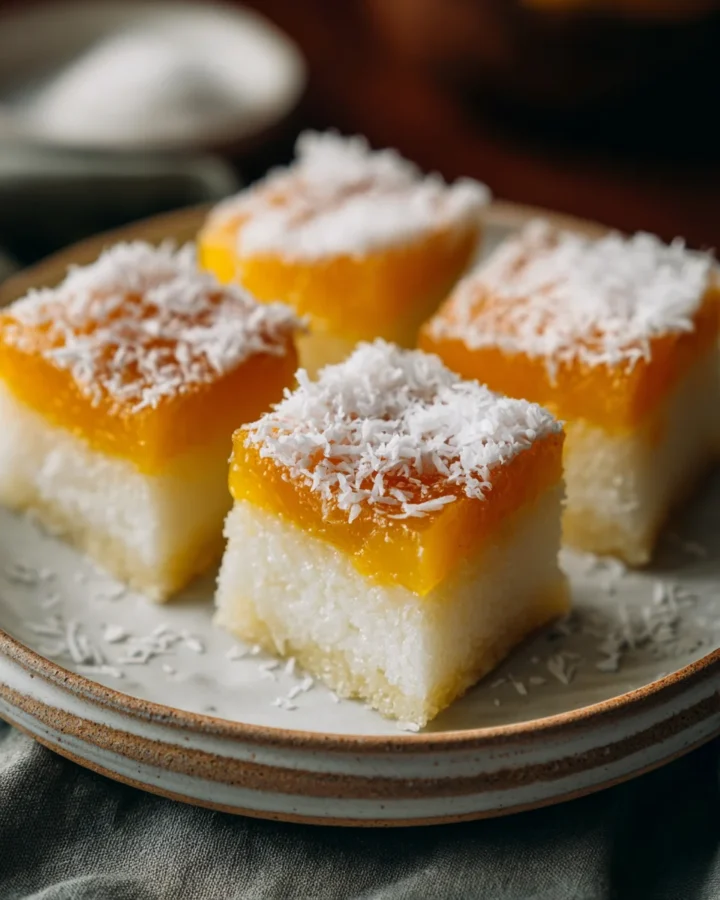
Baking this tropical dessert is a wonderfully forgiving and simple process that requires no complicated kitchen machinery or advanced pastry techniques. By following these clear, methodical steps, you will achieve the ultimate chewy texture every single time.
Organizing Your Workspace
Before you begin assembling your ingredients, it is vital to prepare your baking environment correctly. Start by turning on your oven and setting the temperature to three hundred and fifty degrees Fahrenheit, allowing it to preheat thoroughly so the heat distributes evenly.
Next, take a standard eight-by-eight-inch square baking pan and grease the interior lightly. Cut a sheet of non-stick parchment paper so that it fits perfectly across the bottom of the pan, leaving a bit of excess paper hanging over two opposite sides. These extended edges will serve as convenient handles later on, allowing you to lift the delicate, sticky slab out of the pan effortlessly once it finishes baking.
Whisking The Smooth Foundation
Grab a large, clean mixing bowl and pour in your glutinous rice flour, baking powder, and granulated white sugar. Use a dry wire whisk to stir these dry elements together for roughly thirty seconds, ensuring that the baking powder distributes evenly through the dense rice flour to prevent any pockets of uneven rising.
In a separate medium bowl or a large glass measuring cup, combine your full-fat coconut milk, whole milk, cracked eggs, melted butter or coconut oil, and your pure vanilla extract. Use a fork or a small whisk to beat the liquids together until the eggs break down completely and integrate into a uniform, creamy golden fluid.
Slowly pour the combined wet ingredients directly into the bowl containing your dry flour mixture. Using a sturdy silicone spatula or a heavy wooden spoon, begin stirring from the center outward. Mix the combination steadily until the dry flour absorbs the liquids completely, resulting in a smooth, glossy, and relatively thin batter. Take a moment to scrape down the sides and the very bottom of the bowl to ensure no hidden pockets of dry flour remain trapped.
Folding In The Tropical Elements
Once your base batter is completely smooth and free of stubborn lumps, it is time to introduce the stars of the show. Gently tip your small cubes of ripe mango and your shredded coconut directly into the mixing bowl.
Using a gentle folding motion with your silicone spatula, slowly cut through the center of the batter, sweep across the bottom of the bowl, and bring the mixture up over the top. Repeat this gentle motion a few times just until the pieces of fruit and the shreds of coconut distribute evenly throughout the liquid.
Avoid aggressive stirring or beating at this stage, as you want the fruit pieces to remain completely intact so they create beautiful, distinct pockets of moisture within the finished bars.
The Golden Bake Routine
Carefully pour the finished mango batter directly into your prepared square baking pan, using your spatula to guide every last drop out of the bowl. Give the pan a gentle shake on your countertop to help the thick liquid settle into an even, level layer, and tap the bottom of the pan flat against the counter once or twice to release any trapped air bubbles.
Slide the pan carefully onto the center rack of your preheated oven. Let the dessert bake undisturbed for forty-five to fifty minutes. As the minutes tick by, your kitchen will fill with an absolutely incredible aroma of sweet fruit and toasted coconut.
You will know the process is complete when the top surface shifts to a beautiful, light metallic-gold color and the very center feels springy and set when pressed gently with a clean fingertip. Remove the pan from the oven and set it onto a wire cooling rack.
The Critical Cooling Process
While it is incredibly tempting to slice into this fragrant creation immediately, exercising patience during this final stage is absolutely paramount. When hot out of the oven, the gelatinized starches within the sweet rice flour are incredibly sticky and fragile.
Allow the pan to sit completely undisturbed at room temperature until it cools down entirely. As it cools, the internal structure firms up, locking in that signature chewy, elastic texture that makes this style of baking so famous.
Once fully cooled, grab the parchment paper handles and lift the entire square slab onto a clean cutting board. Use a large, sharp chef’s knife to slice the slab into neat, uniform squares or rectangular bars, wiping the blade clean with a damp paper towel between each cut to ensure pristine, professional edges.
Creative Variations To Try At Home: coconut mango mochi cake bars
The beautiful blueprint of this recipe serves as a fantastic canvas for your own culinary imagination. You can easily modify the ingredients to suit different seasonal fruits or to match whatever elements you currently have available in your pantry.
Alternative Fruit Additions
If fresh mangoes are out of season, you can easily substitute them with an equal amount of canned sweet mango puree mixed directly into the batter, or swap the fruit entirely for sweet chunks of fresh pineapple. For a dramatic color contrast and a tart flavor explosion, adding fresh raspberries or wild blueberries into the batter alongside the coconut cream works beautifully, cutting through the natural sweetness with a delightful pop of acidity.
Enhancing The Top Layer
To inject an extra layer of texture into your dessert, consider upgrading the surface coating before the pan ever enters the oven. You can scatter a generous layer of sliced almonds or crushed macadamia nuts over the wet batter to create a dramatic, crunchy topping that contrasts spectacularly with the chewy interior. Alternatively, dusting the top with a thin layer of brown sugar right before baking creates a gorgeous, caramelized brûlée crust that shatters delightfully with every bite.
Adjusting The Dairy Profile
For those looking to create a completely dairy-free version of this tropical delight, the whole milk and traditional butter can be swapped out effortlessly. Simply replace the half-cup of whole milk with an equal measurement of light oat milk or additional almond milk, and use melted virgin coconut oil exclusively instead of dairy butter. These simple adjustments preserve the luxurious mouthfeel completely while keeping the entire recipe entirely plant-based.
Frequently Asked Questions: coconut mango mochi cake bars
Why is it absolutely mandatory to use glutinous rice flour coconut mango mochi cake bars?
This is the single most important rule of mochi-style baking. Glutinous rice flour, which is often sold in specialized markets as sweet rice flour, is milled from a specific variety of sticky rice that contains a exceptionally high amount of amylopectin starch. This specific starch molecule is what creates the incredibly stretchy, bouncy, and distinctively chewy texture when cooked. Regular white or brown rice flour lacks this specific starch profile entirely; if you attempt to use standard rice flour, your dessert will turn out gritty, dry, and crumbly rather than soft and beautifully elastic.
How should I store the leftover bars to keep them fresh?
Because of the unique properties of sweet rice starch, these bars keep best when stored at room temperature in an airtight container for up to three days. Make sure to place a small sheet of parchment paper between any stacked layers to prevent the squares from sticking together. Avoid storing them in the refrigerator if possible, as the cold temperature causes the starches to recrystallize rapidly, turning the delightfully chewy bars hard and firm. If they do happen to stiffen up over time, simply pop a square into the microwave for ten seconds to restore its original soft, pillowy texture instantly.
Can I use frozen mango instead of fresh fruit?
Yes, frozen mango works beautifully as a convenient alternative when fresh fruit is unavailable. To ensure your batter does not become overly watered down, allow the frozen fruit pieces to thaw completely in a colander on your counter beforehand. Once thawed, pat the fruit cubes thoroughly with a dry paper towel to remove any excess external moisture before dicing them into smaller pieces and folding them into your mixing bowl.
Why did my bars turn out too wet and gooey in the center?
If the center of your dessert feels overly soggy rather than pleasantly chewy, it usually comes down to two common factors: excess fruit moisture or underbaking. If your mangoes were exceptionally juicy and large, they can release too much liquid into the surrounding batter during the baking process. To fix this, ensure your fruit is diced small and padded dry. Additionally, because oven calibrations can vary quite a bit, you may simply need to extend the baking time by an extra five minutes to ensure the center sets perfectly.
Conclusion: coconut mango mochi cake bars
Creating a memorable homemade dessert does not require hours of complicated labor or delicate pastry skills. These incredible coconut mango mochi cake bars offer a sensational escape from ordinary baking routines, delivering a magnificent combination of rich coconut depth, vibrant fruit flavor, and an unparalleled chewiness that is impossible to resist. By prioritizing the correct sweet rice flour and allowing the finished slab to cool completely before slicing, you guarantee a perfect texture that stays soft and satisfying for days. Introduce this delightful fusion treat to your kitchen line-up today, and enjoy a perfectly balanced, tropical indulgence that will easily capture the hearts of everyone who takes a bite.
Print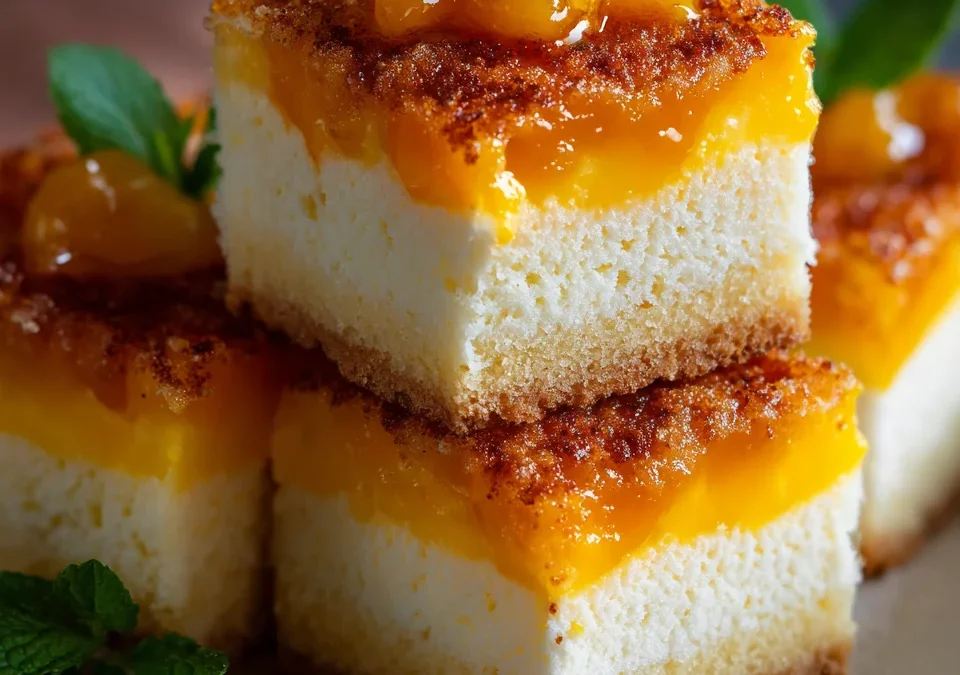
Coconut Mango Mochi Cake Bars
- Total Time: 1 hour 5 minutes
- Yield: 12 bars 1x
- Diet: Vegetarian
Description
To understand this delightful creation, one must first look at its incredible textural profile, which differs entirely from Western-style confections. Unlike cakes made with wheat flour that rely on a light, airy crumb network, this dessert utilizes glutinous rice flour to achieve a heavy, elastic, and pillowy bounce. It is essentially a brilliant cross between a traditional East Asian pounded rice sweet and a classic American sheet cake bar.
Ingredients
- 2 cups glutinous rice flour
- 1 tsp baking powder
- 1/2 cup sugar
- 1 cup coconut milk
- 1/2 cup whole milk
- 2 eggs
- 1/4 cup melted butter or coconut oil
- 1 tsp vanilla extract
- 1 cup diced ripe mango
- 1/2 cup shredded coconut
Instructions
1. Prep
- Preheat oven to 175°C (350°F).
- Line an 8×8-inch baking pan with parchment paper.
2. Make the Batter
- In a large bowl, whisk together glutinous rice flour, baking powder, and sugar.
- Add coconut milk, whole milk, eggs, melted butter, and vanilla extract.
- Mix until smooth and lump-free.
3. Add Mango & Coconut
- Fold in diced mango and shredded coconut evenly throughout the batter.
4. Bake
- Pour batter into the prepared pan.
- Bake for 45–50 minutes until golden on top and set in the center.
5. Cool & Slice
- Let cool completely before slicing into bars for the best chewy texture.
Notes
- Prep Time: 15 minutes
- Cook Time: 50 minutes
- Category: Dessert
- Method: Baking
- Cuisine: Asian-Inspired
Nutrition
- Serving Size: 1 bar
- Calories: 210 kcal
