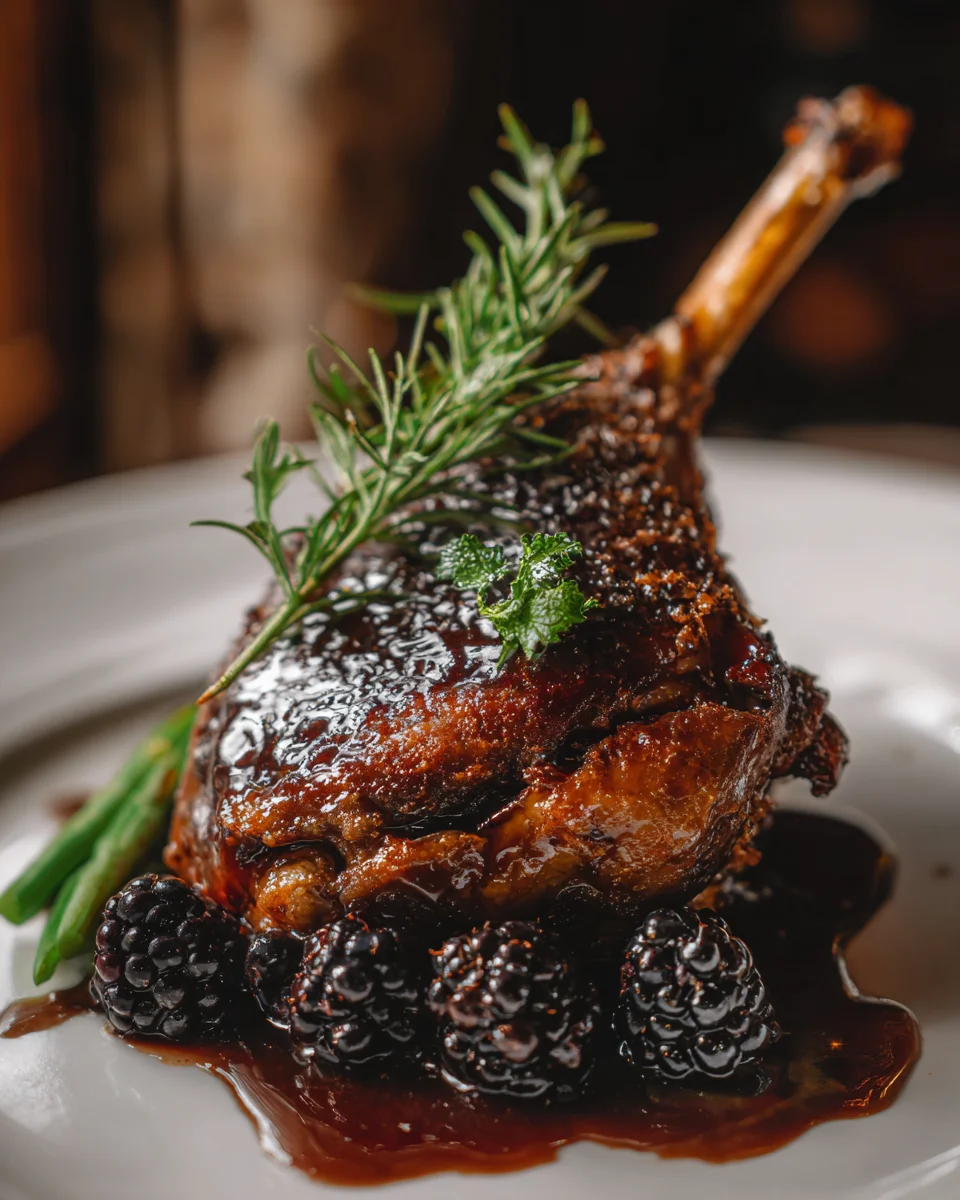
There is a specific kind of culinary magic that happens when you take a humble piece of poultry and subject it to the ancient French art of slow cooking in fat. If you have ever sat in a high-end bistro and wondered how they managed to achieve meat so tender it falls off the bone while keeping the skin as thin and crackling as a sheet of glass, you have encountered the wonder of confit. Today, we are going to master that technique at home with a sophisticated twist: Crispy Duck Leg Confit with Blackberry Glaze.
This dish is the ultimate “slow food” experience. It is not about rushing to the finish line; it is about respecting the process and allowing the ingredients to transform over time. The result is a flavor profile that is deeply savory, incredibly rich, and perfectly balanced by a tart, vibrant fruit reduction. Whether you are planning a romantic anniversary dinner or simply want to prove to yourself that you can cook at a Michelin-star level, this guide will walk you through every nuance of the process.
What is This Recipe and Why is it Special?
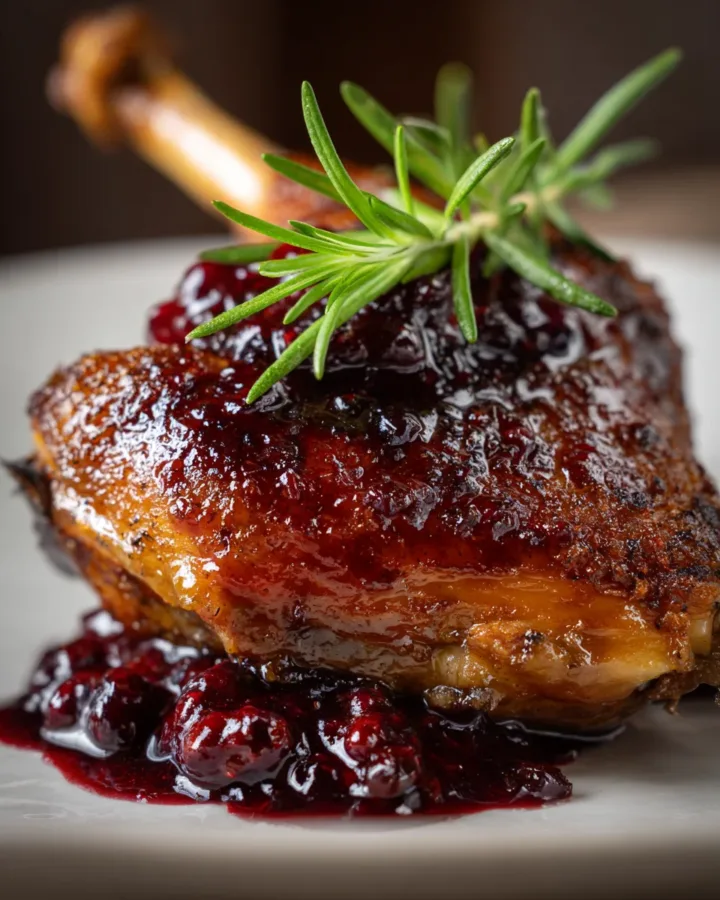
When we talk about this specific Crispy Duck Leg Confit with Blackberry Glaze, we are discussing a dish that hits every sensory note. The term “confit” comes from the French word confire, which means to preserve. Originally, this was a way to keep meat edible through the winter by cooking it in its own fat and storing it in a cool cellar. Today, we use the method because it produces a texture that is impossible to replicate with roasting or frying alone.
What makes our version unique is the addition of the blackberry glaze. Duck is a naturally fatty meat, and while that fat carries immense flavor, it needs an acidic and sweet counterpoint to prevent the dish from feeling too heavy on the palate. The blackberries provide a deep purple hue and a sharp, tannic sweetness that cuts right through the richness of the duck, creating a balanced and elegant plate that looks as good as it tastes.
The Historic Origin of the Confit Method
The roots of duck confit are firmly planted in the Gascony region of Southwest France. For centuries, the people of this region relied on the preservation qualities of salt and fat. After the autumn harvest, ducks and geese were prepared and submerged in massive stoneware jars filled with rendered fat. This allowed the meat to stay preserved for months without refrigeration.
Over time, what began as a necessity for survival evolved into a culinary delicacy. Chefs realized that the slow-cooking process broke down the tough connective tissues in the duck legs, turning them into something buttery and succulent. The Crispy Duck Leg Confit with Blackberry Glaze is a modern evolution of this tradition, taking the rustic soul of French country cooking and refining it with a fruit-forward sauce that reflects modern gastronomic trends.
Ingredients with Specific Quantities: Crispy Duck Leg Confit
To ensure your Crispy Duck Leg Confit with Blackberry Glaze turns out perfectly, you must use high-quality fats and fresh produce. Do not be intimidated by the amount of fat required; the meat does not “soak it up” in a greasy way, but rather bathes in it to remain moist.
For the Duck Confit
-
Two duck legs: Look for meaty legs with plenty of skin.
-
Two cups of duck fat: You need enough to fully submerge the legs. If you cannot find duck fat, a high-quality lard can work, but duck fat is vastly superior for flavor.
-
Four cloves of garlic: These should be crushed but left whole to infuse the fat gently.
-
Two to three sprigs of fresh thyme: This adds a woody, herbal backbone to the meat.
-
One teaspoon of salt: Essential for the initial curing process.
-
One-half teaspoon of black pepper: Freshly cracked is always best for a sharp bite.
For the Blackberry Glaze
-
One cup of fresh or frozen blackberries: These provide the base of the sauce.
-
Two tablespoons of honey: To balance the acidity of the vinegar and the tartness of the berries.
-
One tablespoon of balsamic vinegar: This provides the necessary acid to cut through the duck fat.
-
One-fourth cup of water: To help the berries break down into a sauce.
-
One pinch of salt: To enhance the sweetness of the fruit.
Step by Step Direction and Preparation Method: Crispy Duck Leg Confit
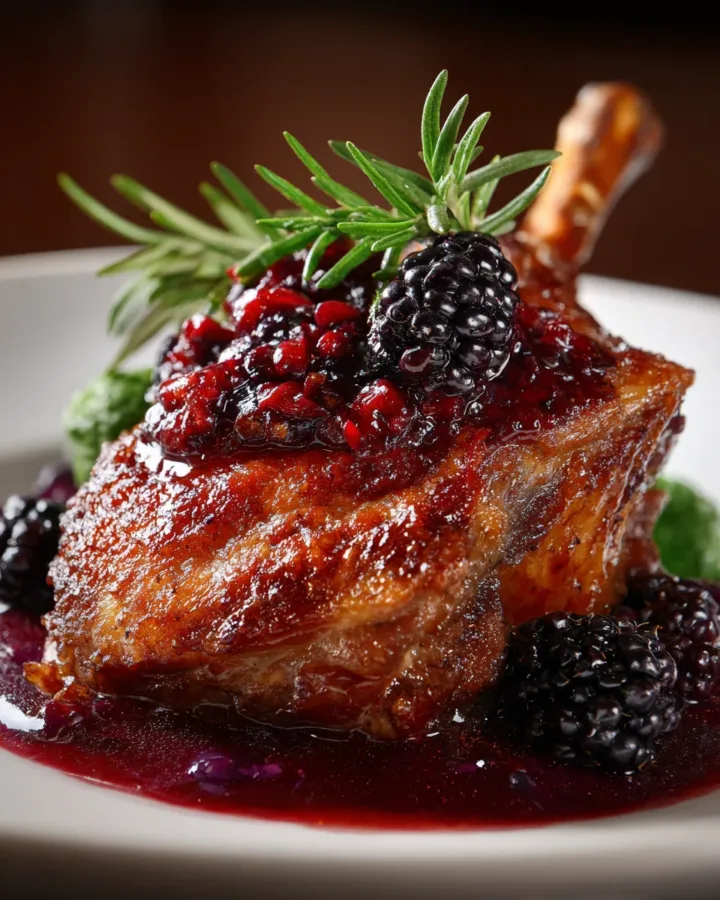
Patience is your greatest tool when making Crispy Duck Leg Confit with Blackberry Glaze. Follow these steps precisely to achieve that world-class texture.
The Essential Cure
The first step is to cure the meat. Rub the duck legs thoroughly with the salt and pepper. Place them in a dish with the crushed garlic and thyme sprigs. Cover the dish and let it sit in the refrigerator for at least eight to twelve hours. Overnight is even better. This salt-curing step is vital because it draws out excess moisture from the meat and seasons it all the way to the bone.
Preparation and Slow Cooking
After the curing time is up, remove the legs from the fridge. Lightly rinse off the excess salt under cold water and pat them completely dry with paper towels. Any moisture left on the skin will interfere with the cooking process.
Place the duck legs in a small baking dish or a heavy-bottomed pot. Melt your duck fat and pour it over the legs until they are completely submerged. Place them in a low oven set to one hundred twenty degrees Celsius. You want to cook them for two and a half to three hours. You will know they are done when the meat is tender and starting to pull away from the bone, but hasn’t completely fallen apart yet.
Creating the Blackberry Glaze
While the duck is slow-cooking, you can prepare the glaze. In a small saucepan, combine the blackberries, honey, balsamic vinegar, water, and a pinch of salt. Bring the mixture to a gentle simmer over medium-low heat. Let it cook for about eight to ten minutes. Use a spoon to crush the berries against the side of the pan to release all their juices. Once the liquid has thickened into a syrupy consistency, you can strain it through a fine-mesh sieve for a smooth, professional-looking sauce, or leave the fruit whole for a more rustic feel.
The Final Crisp
Once the duck legs are tender, carefully lift them out of the fat. At this stage, they are delicious but the skin will be soft. To fix this, heat a dry skillet over medium-high heat. Place the duck legs skin-side down in the pan. You do not need to add oil, as the skin is already saturated with fat. Cook for several minutes until the skin becomes golden-brown and very crispy.
Variations: Crispy Duck Leg Confit
If you find yourself making this Crispy Duck Leg Confit with Blackberry Glaze often, you might want to try a few variations to keep things interesting. The core technique remains the same, but the flavor profile can be shifted easily.
The Citrus Variation
Instead of a blackberry glaze, try a classic orange and ginger reduction. Duck and orange is a famous pairing because the citric acid works similarly to the vinegar in our original recipe. Add a bit of star anise to the duck fat during the cooking process to give it a subtle licorice note that pairs beautifully with citrus.
The Spiced Confit
For a deeper, warmer flavor, you can add cinnamon sticks and cloves to the duck fat while it is in the oven. This creates a spiced version of the Crispy Duck Leg Confit with Blackberry Glaze that feels particularly appropriate for the autumn and winter months. The warmth of the spices complements the dark fruit of the glaze perfectly.
The Herb-Intense Version
If you prefer a more savory, garden-fresh profile, increase the amount of herbs in the cure. Use rosemary and bay leaves in addition to the thyme. When it comes time to crisp the skin in the pan, throw in a few more fresh herbs to infuse the fat as it renders out, creating an aromatic crust on the duck.
Frequently Asked Questions: Crispy Duck Leg Confit
Can I reuse the duck fat after cooking?
Absolutely. In fact, many chefs consider the leftover fat to be a “kitchen treasure.” After you have finished the Crispy Duck Leg Confit with Blackberry Glaze, strain the fat through a coffee filter or fine cloth to remove any bits of meat or herbs. Store it in a jar in the fridge. It is incredible for roasting potatoes, sautéing vegetables, or even making the next batch of confit. It actually gets more flavorful the more times it is used.
Do I have to use a low temperature for the oven?
Yes, the temperature is non-negotiable. If the fat gets too hot, you are essentially deep-frying the duck, which will make the meat tough and stringy. The goal of a confit is to gently poach the meat in the fat at a temperature of one hundred twenty degrees Celsius. This low heat allows the collagen to melt into gelatin, which is what gives the duck that “melt-in-your-mouth” quality.
How do I know if the skin is crispy enough?
When you are searing the legs in the pan, look for a deep mahogany color. You can gently tap the skin with your tongs; it should sound hard and hollow. Avoid moving the duck too much while it is searing; let it stay in contact with the pan to build that crust.
Is it possible to make this dish ahead of time?
One of the best things about this recipe is that it is perfect for make-ahead meals. You can cook the duck in the fat, let it cool, and store the legs completely submerged in the fat in the refrigerator for up to a week. When you are ready to serve, just take them out of the fat, wipe them off, and proceed to the final crisping step in the skillet.
Pro Tips for Crispy Duck Leg Confit
To truly surpass other versions of this dish, remember that the “rest” is just as important as the cook. Once the duck comes out of the pan, let it sit for about five minutes before drizzling with the blackberry glaze. This allows the juices to redistribute so the meat remains moist when you cut into it.
Another secret is to use the blackberry glaze sparingly at first. It is quite potent, and you want to enhance the flavor of the duck, not drown it out. Serve extra sauce on the side so guests can add more as they like. Finally, always serve this on warm plates. Because duck fat has a high melting point, it can start to feel “waxy” if it hits a cold plate and cools down too quickly.
Conclusion: Crispy Duck Leg Confit
Mastering the Crispy Duck Leg Confit with Blackberry Glaze is a rite of passage for any home cook who loves the art of French cuisine. It is a dish that requires you to slow down and pay attention to the details—the salt of the cure, the steady heat of the oven, and the sharp sizzle of the pan. By taking the time to follow these traditional methods, you are rewarded with a meal that is truly extraordinary.
The combination of the rich, tender meat and the tart, sweet glaze creates a symphony of flavors that is hard to forget. It is a testament to how simple ingredients, when treated with respect and time, can become something magnificent. Whether you are serving this for a special occasion or just a quiet evening of culinary exploration, the memories of that perfectly crispy skin and the deep purple glaze will linger long after the last bite is gone. Enjoy the process, and even more importantly, enjoy the incredible feast you have created.
Print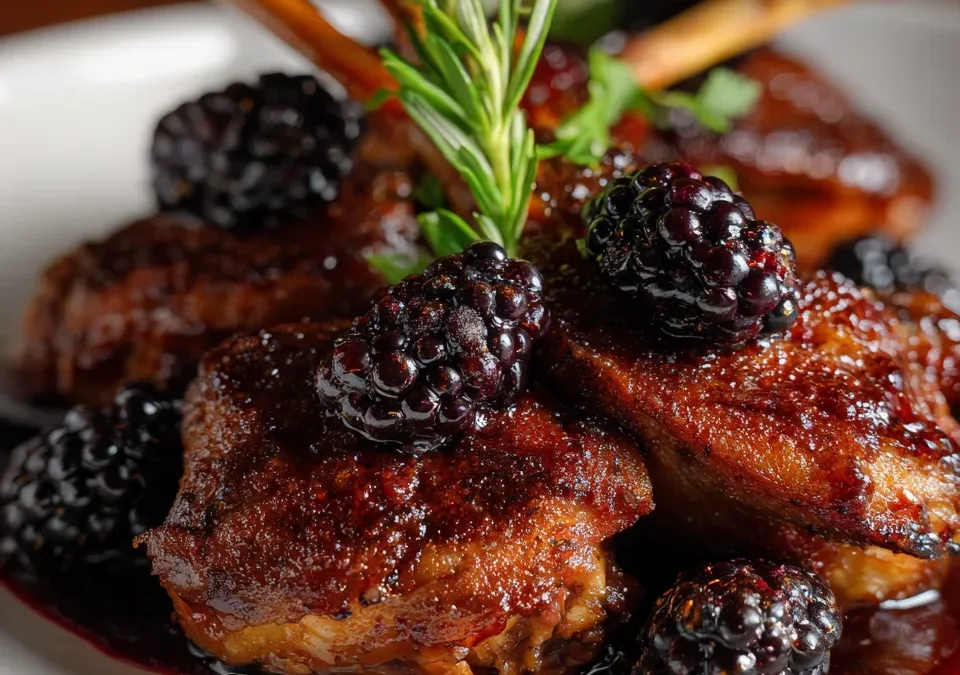
The Master Guide to Crispy Duck Leg Confit with Blackberry Glaze
- Total Time: ~3 hours 15 minutes (excluding curing time)
- Yield: 2 servings 1x
Description
When we talk about this specific Crispy Duck Leg Confit with Blackberry Glaze, we are discussing a dish that hits every sensory note. The term “confit” comes from the French word confire, which means to preserve. Originally, this was a way to keep meat edible through the winter by cooking it in its own fat and storing it in a cool cellar. Today, we use the method because it produces a texture that is impossible to replicate with roasting or frying alone.
Ingredients
For the Duck Confit:
- 2 duck legs
- 2 cups duck fat (or enough to fully submerge)
- 4 cloves garlic (crushed)
- 2–3 sprigs fresh thyme
- 1 tsp salt
- ½ tsp black pepper
For the Blackberry Glaze:
- 1 cup fresh or frozen blackberries
- 2 tbsp honey
- 1 tbsp balsamic vinegar
- ¼ cup water
- Pinch of salt
Instructions
1. Cure the duck
Rub duck legs with salt and pepper. Place with garlic and thyme, cover, and refrigerate for at least 8–12 hours (or overnight).
2. Rinse & dry
Lightly rinse off excess salt and pat the duck legs completely dry.
3. Slow cook (confit)
Place duck legs in a baking dish or pot and cover fully with duck fat.
Cook in a low oven at 120°C (250°F) for 2.5–3 hours until tender.
4. Make the blackberry glaze
In a saucepan, combine blackberries, honey, balsamic vinegar, water, and salt.
Simmer for 8–10 minutes until thickened. Strain for a smooth sauce (optional).
5. Crisp the duck
Remove duck legs from fat and place skin-side down in a hot pan.
Cook until the skin becomes golden and crispy.
6. Serve
Plate the duck and drizzle generously with blackberry glaze.
Notes
- Prep Time: 15 minutes (plus overnight curing)
- Cook Time: 3 hours
- Category: Main Course
- Method: Confit
- Cuisine: French
Nutrition
- Serving Size: 1 duck leg with glaze
- Calories: ~650 kcal
