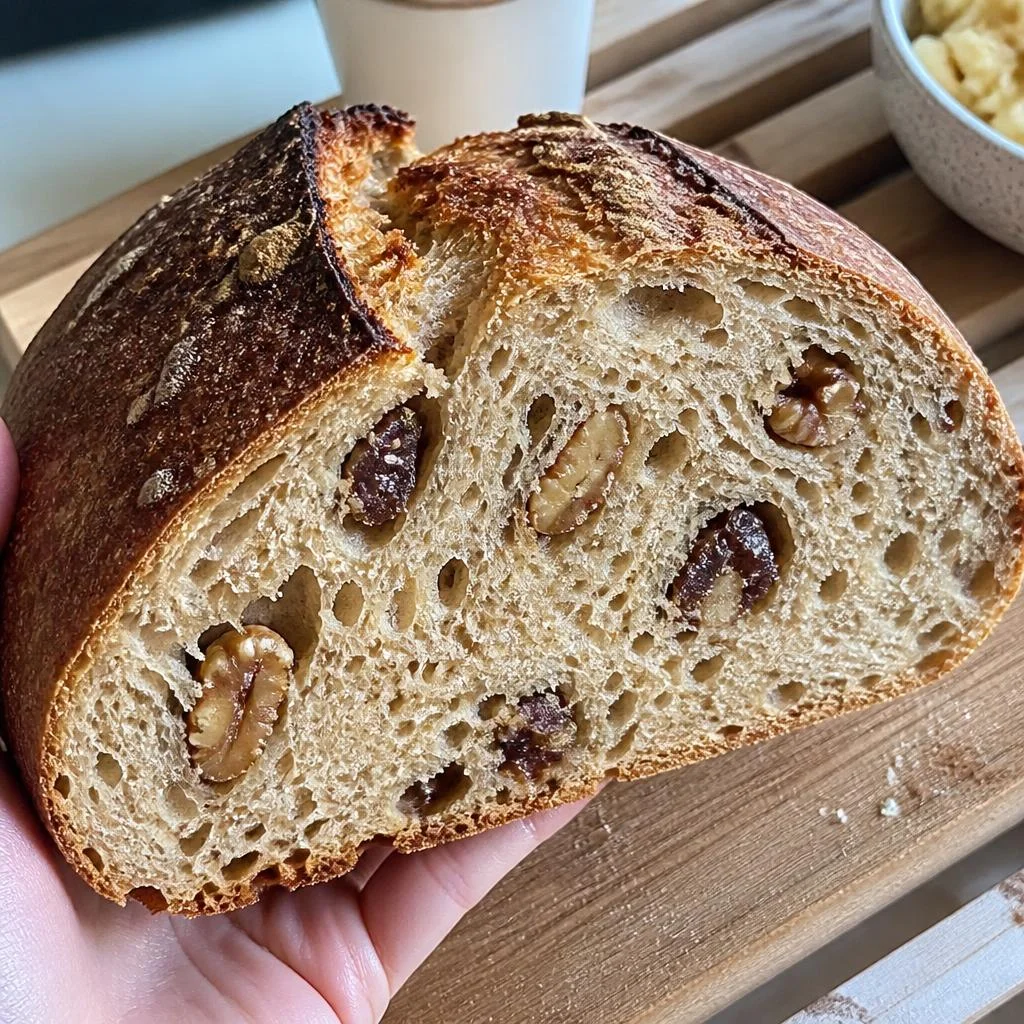
Baking your own bread at home is a deeply satisfying experience, and mastering a rustic date & roasted pecan spelt sourdough loaf will completely transform your weekend baking routine. There is something truly magical about combining the natural tang of wild yeast fermentation with the earthy, nutty undertones of ancient whole spelt grain. When you fold in soft, naturally sweet dates alongside crunchy, freshly toasted pecans, you create a complex balance of textures and flavors that far surpasses any basic artisan bread. Whether you slice it fresh, slather it with cold salted butter, or pair it with a sharp farmhouse cheese, this loaf stands out as a delicious showstopper for any table.
What is the Date & Roasted Pecan Spelt Sourdough Loaf Recipe?
At its essence, the date & roasted pecan spelt sourdough loaf is an artisan bread recipe that relies entirely on wild yeast fermentation rather than commercial dry yeast. It brings together high-protein unbleached bread flour and whole grain spelt flour to build a flexible dough structure that holds air bubbles beautifully while contributing a deeply satisfying, toasted grain aroma.
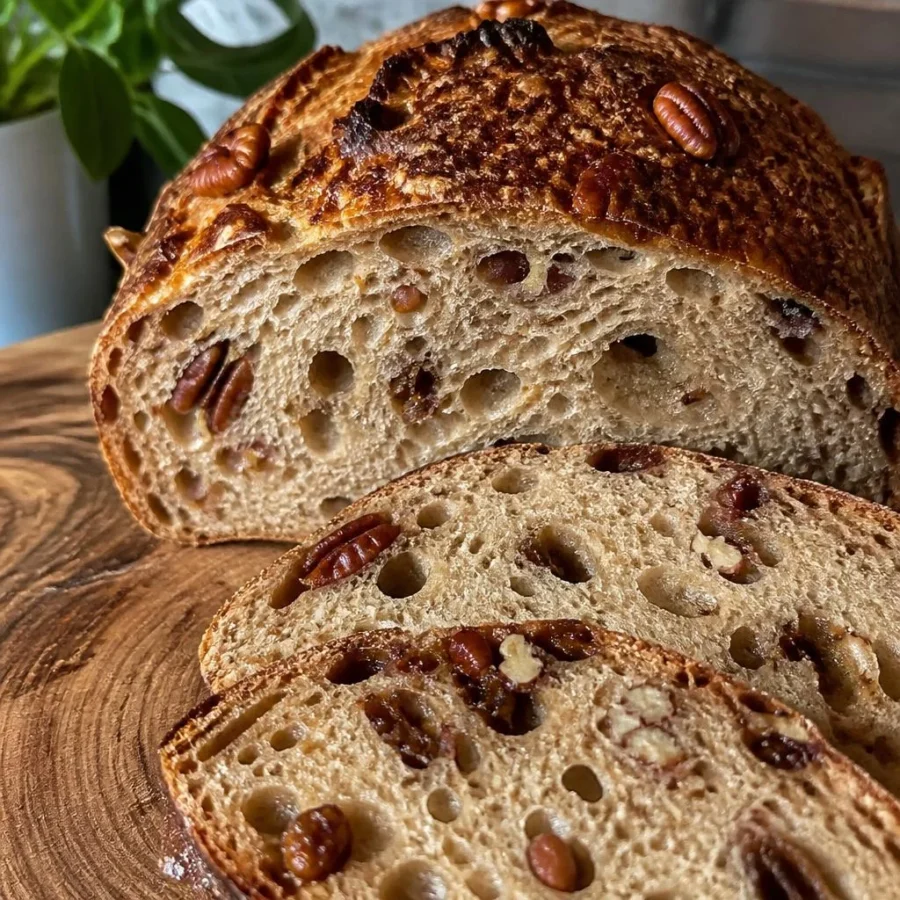
Unlike plain sourdough loaves, this recipe incorporates sweet chopped dates and oven-roasted pecans directly into the crumb during the folding phase. As the loaf ferments slowly over many hours, the natural sugars from the dates subtly meld with the acidic notes of the sourdough culture. Meanwhile, the oils inside the pecans keep the crumb moist and tender. The result is a gorgeous golden loaf boasting a blistered, crackling crust, an open and airy interior, and a delicious contrast of chewy sweet fruits and nutty crunch in every single bite.
Origin of Spelt Sourdough and Inclusion Breads
To truly appreciate the artistry behind the date & roasted pecan spelt sourdough loaf, it helps to explore the ancient origins of its core ingredients. Spelt is one of the oldest cultivated grains in human history, originating in the Middle East and Central Europe thousands of years ago. Ancient bakers valued spelt for its robust flavor and high mineral content. Unlike modern hybridized wheat, ancient spelt retains a lighter, delicate gluten structure that gives artisan breads a lighter texture and an unmistakable nuttiness.
The practice of wild yeast fermentation dates back to ancient Egypt, where bakers discovered that allowing flour and water to sit naturally attracted wild yeasts and beneficial bacteria from the environment. Over centuries, European baking traditions—particularly across France and Germany—perfected the craft of slow bulk fermentation to make dough easier to digest and far more flavorful.
Adding dried fruits and roasted tree nuts to sourdough loaves grew out of traditional European harvest celebrations. Mountain communities across the Alps would routinely bake hearty inclusion breads during the autumn months, combining stored nuts and dried fruit with long-fermented grains to build calorie-dense, nutritious loaves designed to last through cold winters. Today, modern bakers continue this rich heritage by pairing ancient grains like spelt with sweet dates and roasted pecans for a contemporary, gourmet twist on a classic technique.
Ingredients with Quantity for the Date & Roasted Pecan Spelt Sourdough Loaf
To craft a loaf with the perfect balance of hydration, structural strength, and flavor distribution, collect the following high-quality ingredients before starting your dough:
Base Dough Components
-
Three hundred fifty grams high-protein bread flour
-
One hundred fifty grams whole grain spelt flour
-
Three hundred seventy-five grams room temperature water
-
One hundred grams active, bubbly sourdough starter (refreshed and at peak height)
-
Ten grams fine sea salt
Sweet and Nutty Inclusions
-
One hundred grams pitted dried dates, roughly chopped into small pieces
-
One hundred grams fresh raw pecan halves, roughly chopped and roasted
Step by Step Direction and Preparation Method
Baking a magnificent date & roasted pecan spelt sourdough loaf requires patience and steady attention during key stages. Follow these detailed steps to ensure your dough ferments properly and achieves a magnificent rise in the oven.
Step One: Roast and Cool the Pecans
Begin by preparing your inclusions so they are cool and ready when needed. Preheat your oven to three hundred fifty degrees Fahrenheit. Spread your roughly chopped pecan halves across a rimmed baking sheet in a single, even layer. Place them in the warm oven to roast for seven to ten minutes until they release a rich, fragrant aroma and turn a deep golden shade. Remove the baking sheet from the oven immediately and allow the pecans to cool completely at room temperature. Adding warm nuts to your dough will overheat the wild yeast and ruin the fermentation timing.
Step Two: Autolyse the Flours and Water
In a large ceramic or glass mixing bowl, combine the three hundred fifty grams of bread flour with the one hundred fifty grams of whole spelt flour. Pour in the three hundred seventy-five grams of room temperature water. Stir the mixture together thoroughly using your hands or a wooden spoon until no dry pockets of flour remain. Cover the bowl with a damp cloth and let it rest undisturbed for thirty to forty-five minutes. This autolyse phase allows the flours to hydrate completely, unlocking natural enzymes and relaxing the gluten before you introduce the starter and salt.
Step Three: Incorporate the Starter and Salt
Once your autolyse is complete, add one hundred grams of active sourdough starter along with ten grams of fine sea salt directly over the top of the wet dough. Work the starter and salt into the dough by gently pinching and folding the mixture over itself for two to three minutes. The dough will feel sticky initially, but it will quickly become cohesive, smooth, and supple as you continue light mixing. Cover the bowl again and let it rest for thirty minutes.
Step Four: Begin Bulk Fermentation with Stretch and Folds
Allow the dough to undergo bulk fermentation at room temperature for roughly four to six hours, depending on the ambient warmth of your kitchen and the strength of your starter culture. During the first two hours of this phase, perform four full sets of stretch-and-folds spaced thirty minutes apart. To perform a stretch-and-fold, wet your hands with cold water, reach under one side of the dough, pull it upward gently without tearing it, and fold it back over its center. Rotate the bowl one-quarter turn and repeat this motion until you have stretched all four sides of the dough.
Step Five: Fold in the Dates and Roasted Pecans
During your second or third set of stretch-and-folds, distribute half of your chopped dates and cooled roasted pecans across the surface of the dough before stretching and folding. Repeat the folding motion to trap the sweet fruits and nuts inside the core of the dough matrix. Add the remaining portion of inclusions during the subsequent fold set. Distributing the dates and pecans gradually prevents the heavy pieces from tearing the delicate gluten strands or clustering in one corner of the loaf.
Step Six: Shape the Artisan Loaf
After bulk fermentation, when your dough has expanded noticeably in volume, shows visible air bubbles on its surface, and feels light and dome-shaped, gently turn it out onto a lightly floured work surface. Using floured hands and a bench scraper, shape the dough into a taut round ball or an oval shape. Work the dough gently against the counter to create outer surface tension without crushing the interior pockets of air.
Step Seven: Cold Fermentation in the Refrigerator
Dust a wooden banneton basket or a bowl lined with a clean kitchen towel generously with rice flour or spelt flour. Using a bench scraper, lift your shaped loaf and place it seam-side up into the prepared banneton. Cover the basket loosely with a damp cloth or place it inside a large plastic bag. Transfer the dough into your refrigerator for a cold proof lasting eight to fourteen hours. This cold overnight rest slows down yeast activity while allowing lactic acid bacteria to develop a deeper, more nuanced sourdough flavor.
Step Eight: Preheat Your Baking Vessel
The next morning, place a heavy cast-iron Dutch oven, complete with its lid, onto the middle rack of your oven. Preheat the oven to four hundred seventy-five degrees Fahrenheit for at least thirty to forty-five minutes so the heavy iron absorbs maximum heat.
Step Nine: Score and Bake with Steam
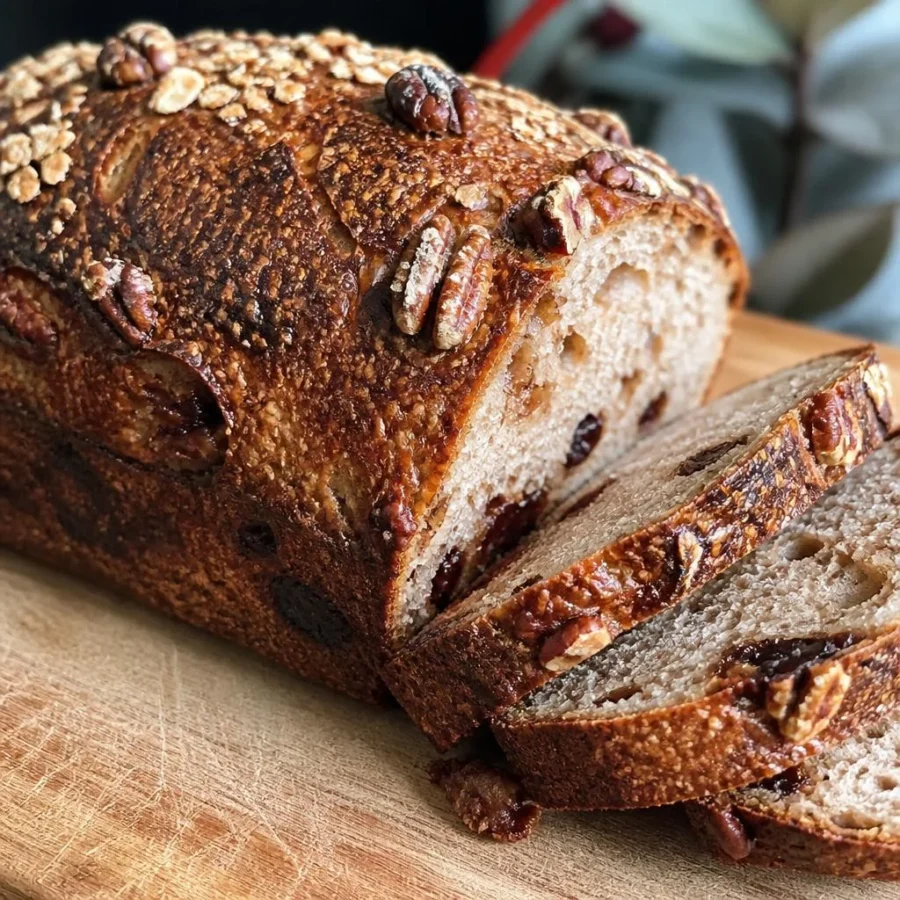
Carefully invert your chilled dough out of the banneton onto a sheet of parchment paper so it sits seam-side down. Dust the top lightly with additional flour if desired. Using a razor-sharp baker’s lame or a fresh razor blade, make a swift, decisive slash across the top of the loaf at a slight angle. This cut controls where steam escapes, allowing the bread to expand fully without cracking randomly. Carefully remove the piping hot Dutch oven from your main oven, lower the parchment paper holding the scored dough into the pot, cover it tightly with the lid, and place it back into the oven to bake for twenty minutes.
Step Ten: Uncover to Crisp the Crust
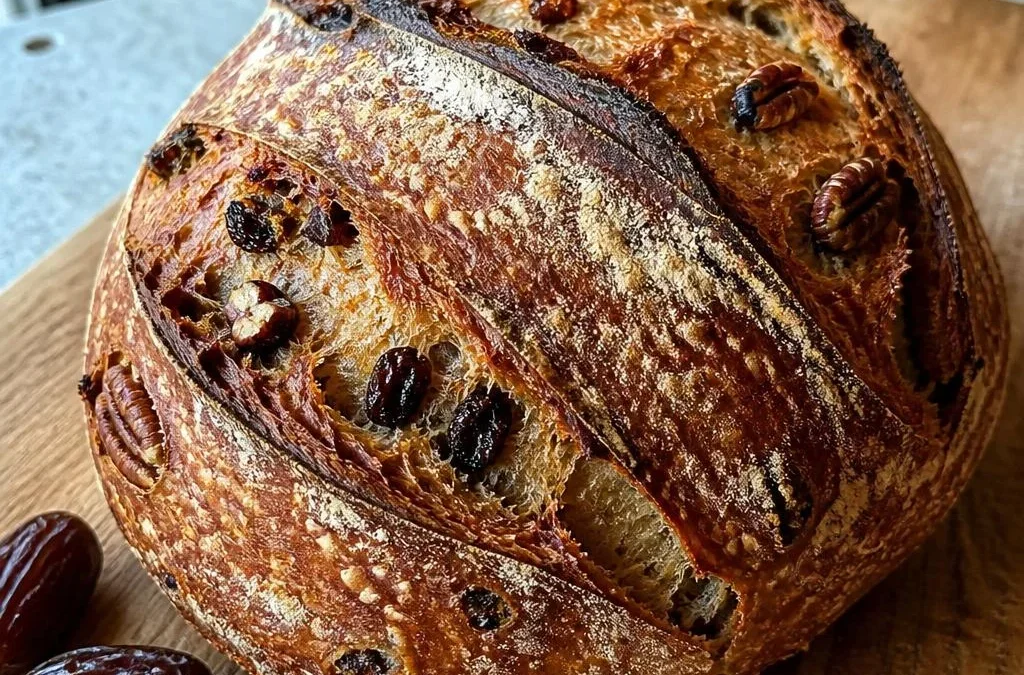
After twenty minutes, remove the Dutch oven lid to release the trapped steam. Reduce your oven temperature to four hundred fifty degrees Fahrenheit. Continue baking uncovered for another twenty to twenty-five minutes until the crust turns a rich mahogany brown color and the internal temperature of the loaf reads around two hundred eight degrees Fahrenheit.
Step Eleven: Cool Before Slicing
Carefully lift the baked loaf out of the Dutch oven using the parchment paper edges and place it onto a wire cooling rack. Allow the bread to cool completely for at least one to two hours before slicing into it with a sharp serrated knife. Cutting into a hot loaf prematurely traps residual steam, turning the interior crumb gummy and wet.
Exciting Recipe Variations to Try: date & roasted pecan spelt sourdough loaf
Once you master the standard technique for a date & roasted pecan spelt sourdough loaf, you can experiment with creative tweaks to match different seasons or personal flavor preferences:
-
Maple Walnut Twist: Substitute the pecans with equal amounts of roasted walnuts and replace twenty grams of the water with pure maple syrup for an earthy, autumnal sweetness.
-
Spicy Cinnamon Raisin Fusion: Add one teaspoon of ground Ceylon cinnamon during the salt stage and swap half of the dates for dark organic raisins or sweet dried figs.
-
Savory Rosemary Date Balance: Fold in one tablespoon of fresh, finely minced rosemary leaves alongside the dates and pecans to contrast the rich fruit sweetness with a woody, herbal note.
-
Orange Zest Citrus Infusion: Grate the fresh zest of one large organic orange directly into the dough during the autolyse phase to elevate the berry and caramel notes of the spelt flour.
Frequently Asked Questions: date & roasted pecan spelt sourdough loaf
Why do my dates smear into the dough during folding?
If your dates are extremely soft or fresh, excessive handling can cause them to mash directly into the flour matrix, turning the dough sticky and discolored. To prevent this, chop soft dates into slightly larger chunks and fold them into the dough very gently during the final stretch-and-fold set, or chill the chopped dates in the refrigerator beforehand so they hold their clean shape.
Can I make date & roasted pecan spelt sourdough loaf using only whole spelt flour?
While you can bake a loaf using one hundred percent whole spelt flour, spelt gluten is naturally more fragile and less elastic than standard hard wheat bread flour. A total spelt loaf will yield a denser crumb and smaller rise. Combining thirty percent whole spelt flour with seventy percent high-protein bread flour gives you the best of both worlds: robust spelt flavor paired with a tall, airy crumb structure.
How should I store my leftover date and pecan sourdough bread?
Store your unsliced or sliced sourdough loaf wrapped in a clean linen cloth or inside a paper bag at room temperature for up to three days. Avoid storing fresh artisan bread in plastic bags or inside the refrigerator, as cold air accelerates starchy crystallization and ruins the crispness of the crust. For long-term storage, slice the cooled loaf completely, seal the slices inside a freezer-safe bag, and freeze for up to three months, pulling out individual slices to toast whenever you like.
What should I serve with date & roasted pecan spelt sourdough loaf?
This versatile loaf pairs wonderfully with both sweet and savory toppings. Try serving thick, toasted slices topped with salted cultured butter, whipped ricotta, or soft goat cheese. It also makes an exceptional companion to artisan charcuterie boards featuring aged cheddar, prosciutto, and raw clover honey.
Conclusion: date & roasted pecan spelt sourdough loaf
Baking your own date & roasted pecan spelt sourdough loaf at home is a deeply satisfying culinary journey that brings together ancient grains, natural fermentation, and a delightful blend of sweet and nutty flavors. By combining high-protein bread flour with aromatic spelt, you create a sturdy yet tender foundation that cradles every piece of sweet date and crunchy pecan. The long overnight fermentation yields a golden, blistered crust paired with an easily digestible crumb that tastes far superior to anything found on supermarket shelves. Whether you are an experienced sourdough enthusiast looking for a unique inclusion recipe or an ambitious home baker taking your first steps with ancient grains, this recipe delivers an unforgettable artisan loaf every single time. Heat up your oven, refresh your sourdough starter, and enjoy the comforting aroma of fresh baking today.
Print
Date & Roasted Pecan Spelt Sourdough Loaf
- Total Time: 15 hours 15 minutes
- Yield: 1 loaf 1x
Description
At its essence, the date & roasted pecan spelt sourdough loaf is an artisan bread recipe that relies entirely on wild yeast fermentation rather than commercial dry yeast. It brings together high-protein unbleached bread flour and whole grain spelt flour to build a flexible dough structure that holds air bubbles beautifully while contributing a deeply satisfying, toasted grain aroma.
Ingredients
Scale
For the Sourdough
- 350 g bread flour
- 150 g whole spelt flour
- 375 g water, room temperature
- 100 g active sourdough starter
- 10 g salt
- 100 g pitted dates, chopped
- 100 g pecans, roughly chopped and roasted
Instructions
- Roast the pecans:
Preheat the oven to 350°F (175°C). Spread the pecans on a baking tray and roast for 7–10 minutes, until fragrant. Allow them to cool completely. - Mix the dough:
Combine the bread flour, spelt flour, and water in a large bowl. Mix until no dry flour remains. Cover and let rest for 30–45 minutes. - Add the starter and salt:
Add the active sourdough starter and salt. Mix and knead gently until incorporated and the dough becomes cohesive. - Bulk fermentation:
Cover and let the dough ferment at room temperature for approximately 4–6 hours, depending on the temperature and strength of your starter. During the first 2 hours, perform a set of stretch-and-folds every 30 minutes. - Add dates and pecans:
During the second or third stretch-and-fold, gently incorporate the chopped dates and roasted pecans. Avoid overworking the dough. - Shape:
Once the dough has increased noticeably in volume and feels airy, transfer it to a lightly floured surface. Shape it into a round or oval loaf. - Cold proof:
Place the shaped dough seam-side up in a floured banneton or bowl lined with a clean kitchen towel. Cover and refrigerate for 8–14 hours. - Preheat the oven:
Place a Dutch oven inside and preheat the oven to 475°F (245°C) for at least 30–45 minutes. - Score and bake:
Carefully transfer the chilled dough onto parchment paper. Score the top with a sharp blade and place it into the hot Dutch oven. Cover and bake for 20 minutes. - Finish baking:
Remove the lid, reduce the temperature to 450°F (230°C), and bake for another 20–25 minutes, until deeply golden brown. - Cool:
Transfer the loaf to a wire rack and allow it to cool for at least 1–2 hours before slicing. This allows the crumb to finish setting.
Notes
- Prep Time: 30 minutes
- Cook Time: 45 minutes
- Category: Bread
- Method: Baking
- Cuisine: European
Nutrition
- Serving Size: 1 slice
- Calories: ~220 kcal
Keywords: date and pecan spelt sourdough, pecan date sourdough bread, spelt sourdough with dates and pecans
