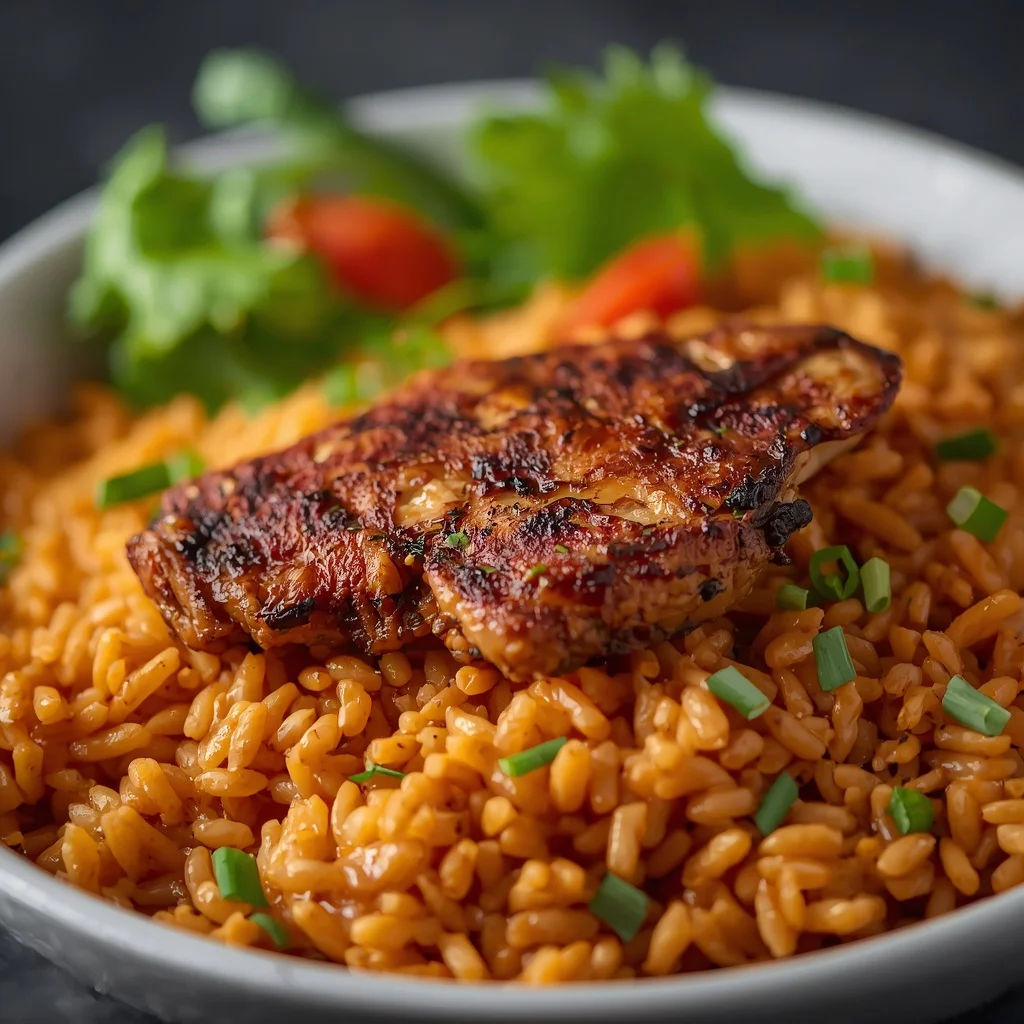
If there is one dish that captures the vibrant heart, rich hospitality, and fiery culinary spirit of West Africa, it is without a doubt a steaming plate of Jollof Rice with Grilled Chicken. This iconic red-orange rice dish, simmered in a reduced blend of pureed tomatoes, sweet red bell peppers, aromatic onions, and fierce Scotch bonnet peppers, stands as a crowning achievement of West African cooking. Paired alongside juicy, charred chicken marinated in warm garlic, thyme, and paprika, this meal transforms simple kitchen staples into an unforgettable feast.
Whether you are hosting a festive weekend party, cooking a memorable family dinner, or simply looking to expand your international cooking repertoire, learning how to master authentic Jollof Rice with Grilled Chicken will instantly elevate your culinary skill set. In this detailed, step-by-step guide, we will dive deep into the cultural origins of this famous dish, break down every single ingredient required, explore the secrets behind achieving the coveted smoky flavor, provide clear step-by-step cooking directions, and answer common questions about getting the texture perfectly right every single time.
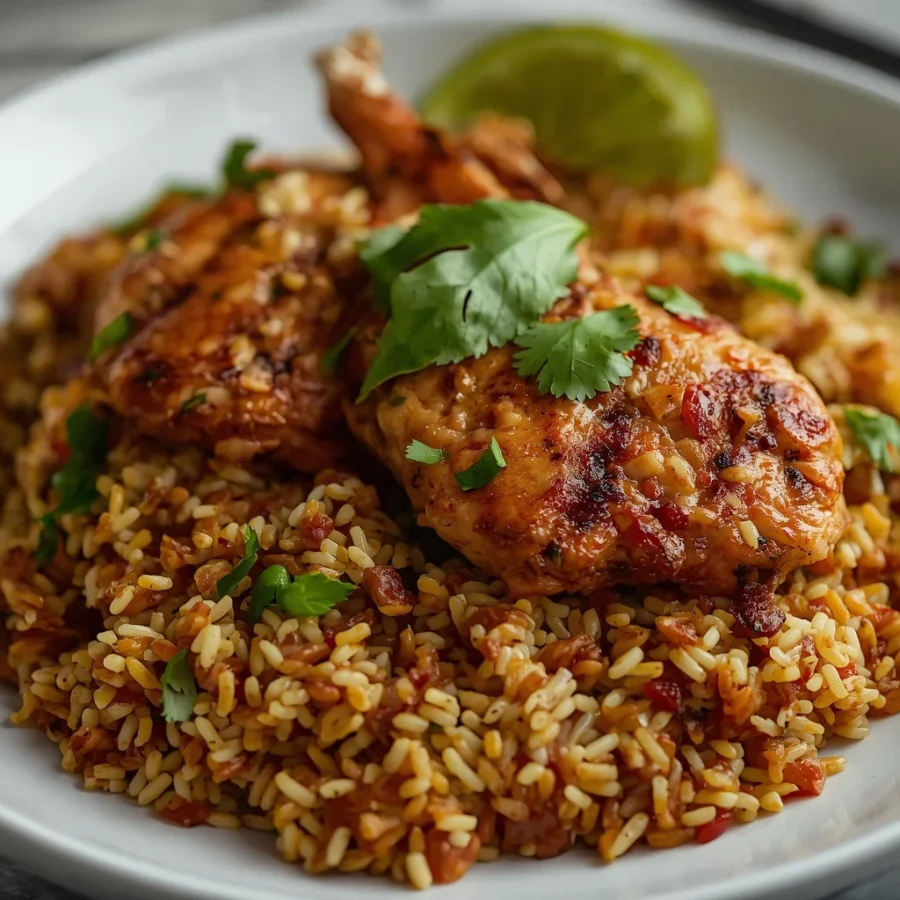
What Is Jollof Rice with Grilled Chicken?
At its core, Jollof Rice with Grilled Chicken is a unified one-pot rice meal served alongside spiced, flame-kissed poultry. The hallmark of exceptional Jollof rice is its deep, rich reddish-orange color and complex, savory depth of flavor. Rather than cooking rice in plain water or simple broth, Jollof rice absorbs a concentrated, reduced stew base made from fresh blended tomatoes, roasted red bell peppers, raw onions, and fiery chili peppers.
As the long-grain parboiled rice simmers slowly inside this aromatic tomato reduction, it absorbs every drop of savory chicken stock, sweet tomato paste, earthy thyme, smoky paprika, and fragrant curry powder. The result is fluffy, individual grains of rice infused with layer upon layer of spice, heat, and Umami. When served next to tender grilled chicken quarters that feature crisp, charred edges and a warm spice rub, the dish strikes a brilliant harmony between hearty grain and smoky protein.
The Secrets of Texture and the Famous Party Rice Smoke
Understanding what makes a plate of Jollof Rice with Grilled Chicken truly exceptional comes down to two major technical factors:
-
Separated, Fluffy Grains: Unlike risottos or creamy rice puddings, proper Jollof rice should never turn mushy, sticky, or clumped together. Using long-grain parboiled rice and steaming it under tight foil allows the grain to expand slowly while keeping each kernel separate and firm.
-
The Bottom Pot Crisp: Known across various regions as bottom pot, party rice finish, or intentional scorching, allowing the bottom layer of rice to brown slightly against the pot creates a fragrant, smoky aroma that permeates the entire batch. This subtle smokiness elevates homemade stove-top rice to restaurant-level perfection.
The Origin and History of Jollof Rice
To truly appreciate the cultural weight of Jollof Rice with Grilled Chicken, one must trace its journey across West African history. The roots of this dish lead back to the historic Senegambia region—encompassing modern-day Senegal and The Gambia—during the reign of the Wolof Empire between the fourteenth and sixteenth centuries.
In the Wolof language, the original version of this meal was called Thiéboudienne or Ceebu Jën, which translates literally to rice and fish. Wolof cooks utilized their abundant access to coastal seafood, locally cultivated rice, fresh tomatoes, and indigenous vegetables to create a rich, one-pot savory stew. As trade routes expanded across West Africa, the base technique of cooking rice directly inside a rich tomato broth traveled along with merchants, soldiers, and migrant families.
+-----------------------------------------------------------------------+
|                    HISTORICAL EVOLUTION OF JOLLOF RICE                |
+-----------------------------------------------------------------------+
|  14th - 16th Century: The Wolof Empire (Senegambia Region)            |
|  • Creation of Ceebu Jën (Rice and fish cooked in rich vegetable broth)|
|  • Native red rice and local vegetables formed the foundation          |
+-----------------------------------------------------------------------+
                                   │
                                   ▼
+-----------------------------------------------------------------------+
|  19th - 20th Century: Regional Spread Across West Africa              |
|  • Adapted across Nigeria, Ghana, Sierra Leone, and Liberia           |
|  • Fish expanded to include beef, goat meat, and grilled chicken      |
+-----------------------------------------------------------------------+
                                   │
                                   ▼
+-----------------------------------------------------------------------+
|  Modern Era: The Global Culinary Icon                                 |
|  • Friendly regional rivalries (Nigerian vs. Ghanaian Jollof)         |
|  • Celebrated globally alongside spicy grilled or roasted chicken     |
+-----------------------------------------------------------------------+
As the recipe spread throughout West Africa, different nations adapted it using local ingredients and cooking styles. In Nigeria, long-grain parboiled rice became the standard, paired with a heavy emphasis on a smoky tomato reduction. In Ghana, fragrant jasmine rice is often preferred, yielding a lighter, aromatic finish. Today, Jollof rice is a unifying symbol of West African pride, celebrated at weddings, birthdays, holidays, and street food stalls worldwide. Pairing this iconic grain with smoky grilled chicken represents one of the most popular, crowd-pleasing ways to serve it.
Ingredients You Will Need
Creating an authentic, deeply flavorful Jollof Rice with Grilled Chicken requires building layers of taste using simple, fresh whole ingredients combined with fragrant pantry spices.
For the Grilled Chicken and Marinade
-
Four pieces chicken thighs or drumsticks: Bone-in, skin-on or skinless chicken cuts retain moisture best over hot grill heat.
-
One tablespoon vegetable oil: Helps the marinade spices coat the meat smoothly.
-
One teaspoon paprika: Adds rich red color and mild pepper warmth.
-
One teaspoon garlic powder: Delivers savory, pungent aroma throughout the meat.
-
One-half teaspoon onion powder: Enhances the natural sweet savory profile.
-
One-half teaspoon dried thyme: Brings an earthy, herbal note traditional to West African chicken preparations.
-
One-half teaspoon ground ginger: Adds a warm, zesty zing.
-
One-half teaspoon salt: Essential for highlighting the natural chicken flavor.
-
One-quarter teaspoon black pepper: Provides gentle background heat.
-
One tablespoon lemon juice: Fresh acid that tenderizes the chicken fibers and brightens the spices.
Aromatic Tomato-Pepper Sauce Base
-
Four large ripe tomatoes: Chopped roughly to provide the juicy, sweet base of the sauce.
-
One large red bell pepper: Chopped roughly; adds deep red color and natural vegetable sweetness.
-
One to two Scotch bonnet peppers: Stemmed and seeded; delivers the signature fruitiness and fiery heat of authentic West African cuisine.
-
One medium onion: Half blended into the sauce and half finely chopped for sautéing.
-
Three tablespoons vegetable oil: Used to fry the aromatics and build richness.
-
Two tablespoons tomato paste: Concentrated tomato paste adds deep color, body, and Umami richness.
For the Jollof Rice
-
Two cups long-grain parboiled rice: Thoroughly rinsed in cold water to remove excess surface starch.
-
Two cups chicken stock: Rich broth that hydrates the rice grains with savory flavor.
-
One teaspoon curry powder: Mild Madras-style curry powder adds warmth and yellow-gold undertones.
-
One teaspoon dried thyme: Key traditional herb that defines West African rice dishes.
-
One teaspoon smoked paprika: Imparts a delicate woody smoke flavor to the rice.
-
One bay leaf: Releases a subtle tea-like botanical aroma during slow simmering.
-
One-half teaspoon garlic powder: Adds extra savory depth to the grain.
-
One-half teaspoon ground ginger: Complements the garlic and herbs.
-
One teaspoon salt: Adjust to match the saltiness of your chicken stock.
-
One-half teaspoon black pepper: Adds mild pepper notes throughout the rice.
-
One teaspoon granulated sugar: Optional; balances the strong acidity of fresh tomatoes and paste.
Optional Garnishes and Side Dishes
-
Fresh parsley or cilantro: Chopped finely for bright visual contrast.
-
Sliced red onion and fresh cucumbers: Adds cold, crisp contrast against warm rice.
-
Fried sweet plantains: Sliced ripe plantains fried until golden brown serve as the ultimate traditional side dish.
Complete Ingredient Summary and Quantities
To assist with your grocery prep and kitchen organization, refer to this detailed component breakdown:
| Meal Component | Ingredient Name | Exact Quantity (Four Servings) | Purpose in Recipe |
| Chicken Marinade | Chicken Thighs or Drumsticks | Four pieces | Juicy protein base |
| Spice Blend & Lemon | Paprika, garlic, thyme, ginger, salt, pepper, lemon | Deep savory spice coating | |
| Pepper Base | Tomatoes & Red Bell Pepper | Four large tomatoes, one bell pepper | Sweet red sauce foundation |
| Scotch Bonnet & Onion | One to two peppers, one medium onion | Fiery heat and aromatic base | |
| Rice Base | Parboiled Long-Grain Rice | Two cups | Main grain structure |
| Tomato Paste & Oil | Two tablespoons paste, three tablespoons oil | Rich color and frying base | |
| Chicken Stock | Two cups | Savory simmering liquid | |
| Seasoning Spices | Curry, thyme, smoked paprika, bay leaf, ginger, garlic | Signature Jollof aroma profile | |
| Garnish Sides | Plantains & Fresh Herbs | Fresh herbs, sliced cucumber, ripe plantains | Traditional visual and sweet sides |
Step-by-Step Preparation Method: Jollof Rice with Grilled Chicken
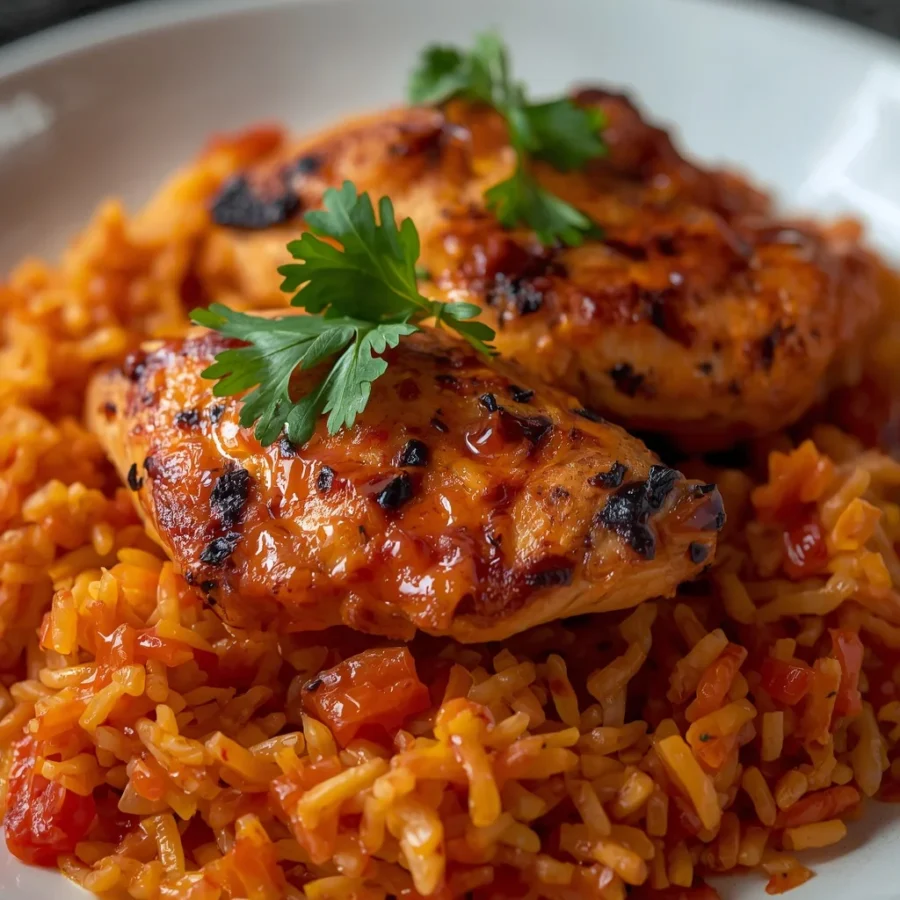
Executing a perfect batch of Jollof Rice with Grilled Chicken requires building flavors in sequential stages. Follow these detailed directions carefully to achieve optimal flavor extraction and rice texture.
Step One: Marinate the Chicken
Place your four chicken thighs or drumsticks into a large mixing bowl or sealable bag. Add one tablespoon of vegetable oil, one teaspoon of paprika, one teaspoon of garlic powder, one-half teaspoon of onion powder, one-half teaspoon of dried thyme, one-half teaspoon of ground ginger, one-half teaspoon of salt, one-quarter teaspoon of black pepper, and one tablespoon of fresh lemon juice.
Toss and massage the chicken thoroughly to ensure every piece is evenly coated in the spiced oil marinade. Cover the bowl and let it marinate in the refrigerator for at least thirty minutes, or overnight for maximum flavor penetration.
Step Two: Blend the Tomato-Pepper Base
In a high-speed blender, combine your four chopped ripe tomatoes, one chopped red bell pepper, one to two stemmed Scotch bonnet peppers, and half of your chopped onion. Blend on high speed for sixty to ninety seconds until the mixture transforms into a vibrant red, completely smooth liquid. Set this blended mixture aside.
Step Three: Sauté the Aromatics and Tomato Paste
Heat three tablespoons of vegetable oil in a large, heavy-bottomed Dutch oven or deep pot over medium heat. Add the remaining half of your finely chopped onion and sauté for two to three minutes until soft, clear, and fragrant. Add two tablespoons of tomato paste directly into the oil and onions. Fry the paste continuously for two minutes, stirring constantly. Frying the tomato paste removes its harsh raw acidity and darkens its color into a deep rust red.
Step Four: Reduce the Tomato Sauce
Carefully pour the blended tomato-pepper mixture into the pot with the fried tomato paste and onions. Stir well to combine. Bring the sauce to a gentle simmer, then cover the pot loosely with a lid. Allow the sauce to cook over medium-low heat for fifteen to twenty minutes, stirring occasionally. You want the excess water content from the tomatoes to evaporate so the sauce thickens significantly and darkens into a rich, concentrated stew base.
Step Five: Season the Base and Wash the Rice
Once the tomato sauce has reduced and oil begins to float lightly on top, add one teaspoon of curry powder, one teaspoon of dried thyme, one teaspoon of smoked paprika, one bay leaf, one-half teaspoon of garlic powder, one-half teaspoon of ground ginger, one teaspoon of salt, one-half teaspoon of black pepper, and one teaspoon of sugar if using. Stir thoroughly to activate the spices.
While the sauce bubbles gently, place your two cups of long-grain parboiled rice into a fine mesh colander and rinse thoroughly under cool running water until the water runs completely clear. Rinsing removes loose surface starches that could otherwise cause your Jollof rice to become gummy.
Step Six: Combine and Simmer the Rice
Add the rinsed, drained rice directly into the pot with the reduced tomato sauce. Stir continuously for two minutes to ensure every single grain of rice is coated in the warm spiced oil and tomato reduction. Pour in two cups of chicken stock and stir gently to combine. Taste the broth at this point; it should taste bold, savory, and well-seasoned.
Reduce the stove heat to low. Cover the top of the pot tightly with a layer of aluminum foil, then press the pot lid firmly down over the foil. Trapping the steam inside is the ultimate secret to cooking fluffy Jollof rice evenly without adding excessive liquid. Allow the rice to cook undisturbed over low heat for twenty-five to thirty minutes.
Step Seven: Grill the Marinated Chicken
While the rice is steaming slowly, heat an outdoor grill or an indoor cast-iron grill pan over medium-high heat. Lightly oil the grates. Place the marinated chicken pieces onto the hot grill. Grill for twenty to twenty-five minutes, turning the pieces every five to six minutes, until the skin is beautifully browned, slightly charred at the edges, and cooked through to a safe internal temperature. Remove the chicken from the heat and let it rest on a clean plate for five minutes.
Step Eight: Fluff, Rest, and Serve
Once the rice timer finishes, turn off the heat. Remove the lid and aluminum foil carefully, keeping your face clear of hot escaping steam. Discard the bay leaf. Use a fork to gently fluff the rice grains from the bottom up. If you prefer a subtle smoky taste, allow the rice to sit covered for five additional minutes off the heat so the heat from the bottom of the pot infuses through the grains.
Spoon generous portions of vibrant Jollof rice onto serving plates. Place a piece of smoky grilled chicken beside the rice. Garnish with chopped fresh parsley, crisp cucumber slices, and golden fried sweet plantains. Serve hot and enjoy.
Important Secrets for Perfect Jollof Rice
Achieving perfect Jollof rice can sometimes feel intimidating for beginners, but mastering a few core cooking principles ensures success every single time.
                              JOLLOF COOKING PRINCIPLES
                                          │
       ┌──────────────────────────────────┼──────────────────────────────────┐
       ▼                                  ▼                                  ▼
Steam Over Liquid                  Rinse Starches Completely          Tight Seal Technique
• Excess liquid creates mushy       • Rinsing under cold water          • Foil traps steam inside pot.
  rice. Stick to equal ratios.        removes gummy surface starches.  • Cooks grains evenly on low heat.
Liquid Control and Steam Power
The single most common mistake cooks make when preparing Jollof rice is adding too much chicken stock or water out of fear that the rice will burn. Rice cooked in tomato sauce cooks primarily through trapped steam, not boiling liquid. If you flood the pot with stock, the rice grains will absorb too much water and break down into porridge. Maintain a near one-to-one ratio between rice and liquid, relying entirely on a tight foil seal to gently steam the grains through.
Flame Control for the Smoky Finish
The legendary smokiness of traditional African party rice comes from cooking the dish over an open wood fire or allowing the bottom layer to toast against the metal pot. If cooking on a domestic stove, keep the heat on low during the final ten minutes of cooking. You want to hear a gentle, rhythmic crackling sound coming from the bottom of the pot. That slight brown crust at the bottom infuses the entire batch with an authentic party flavor without burning the entire dish.
Delicious Variations and Substitutions: Jollof Rice with Grilled Chicken
This classic recipe can easily be adapted to suit different dietary preferences or protein availability without losing its distinct West African soul.
Alternative Protein Pairings
-
Suya Spiced Beef Skewers: Replace the grilled chicken with thinly sliced beef steak coated in traditional Suya spice (ground roasted peanuts, ginger, garlic, and cayenne pepper) grilled on wooden skewers.
-
Baked or Fried Fish: In keeping with older traditional roots, serve the spicy tomato rice alongside crispy fried red snapper, sea bass, or tilapia fillets.
-
Smoky Grilled Turkey Wings: Turkey wings marinated in the same thyme, garlic, and paprika rub offer a heartier meat alternative that holds up wonderfully to hot grill flames.
Plant-Based and Vegan Adapations
-
Vegetable Stock Base: Swap the chicken stock for a rich, roasted vegetable broth or mushroom stock to build natural savory depth.
-
Grilled Tofu or Tempeh: Marinate extra-firm tofu slabs or tempeh in the garlic, lemon, ginger, and paprika marinade, then grill until crisp edges form.
-
Addition of Sweet Peas and Carrots: Fold diced cooked carrots and sweet green peas into the fluffed rice right at the end for added fiber and color contrast.
Frequently Asked Questions: Jollof Rice with Grilled Chicken
What type of rice is best for Jollof rice?
Long-grain parboiled rice is widely considered the ultimate choice for West African Jollof rice. Parboiled rice undergoes a steam-pressure process before hulling, which fortifies the starch structure within each grain. This allows the rice to absorb massive amounts of rich tomato broth without softening into a mushy texture. Long-grain jasmine or basmati rice can also be used, but require slightly less liquid and careful watching to prevent overcooking.
How do I handle the heat level of Scotch bonnet peppers?
Scotch bonnet peppers are notoriously spicy, but they also bring a essential sweet, fruity aroma to Jollof rice. If you prefer mild heat, use only half of a pepper and remove all interior seeds and white membranes before blending. Alternatively, replace the Scotch bonnet pepper with a milder habanero or a pinch of red cayenne pepper powder to control the spice level easily.
Can I prepare Jollof rice ahead of time for meal prep?
Yes, Jollof rice is one of the absolute best dishes for meal prepping because its flavor deepens and improves after sitting overnight in the refrigerator. Store cooked Jollof rice and grilled chicken in airtight glass containers in the fridge for up to four days. Reheat gently in the microwave with a small splash of water or broth to restore steam moisture to the grains.
Why is my Jollof rice still hard after thirty minutes?
If your rice grains feel hard or crunchy after thirty minutes, your pot lid likely allowed steam to escape, or your heat was set too low to create adequate steam. Rather than adding more liquid—which can make the rice soggy—sprinkle two tablespoons of warm water over the top, reseal the pot tightly with new aluminum foil, and let it steam over low heat for an additional eight to ten minutes.
Conclusion: Jollof Rice with Grilled Chicken
Platter after platter, Jollof Rice with Grilled Chicken continues to captivate food lovers across the world for good reason. By combining fluffy long-grain rice with a rich, reduced tomato-pepper sauce, warm aromatic spices, and flame-grilled chicken, this traditional West African meal offers a sensory feast of color, aroma, heat, and smoke. It is a celebratory dish that brings people together around the dinner table, proving that simple, wholesome ingredients cooked with patience and care can yield restaurant-worthy results. Fire up your stove, blend your pepper base, marinate your chicken, and enjoy bringing the authentic taste of West African hospitality straight into your home kitchen.
Print
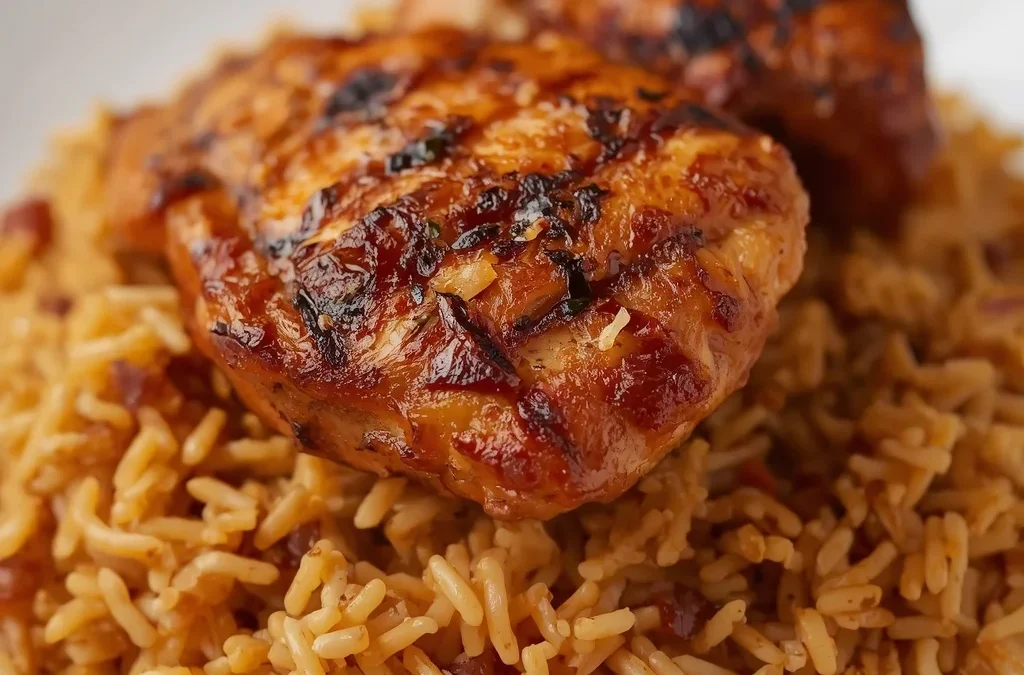
Jollof Rice with Grilled Chicken: The Ultimate West African Feast
- Total Time: 1 hour 20 minutes
- Yield: 4 servings 1x
Description
At its core, Jollof Rice with Grilled Chicken is a unified one-pot rice meal served alongside spiced, flame-kissed poultry. The hallmark of exceptional Jollof rice is its deep, rich reddish-orange color and complex, savory depth of flavor. Rather than cooking rice in plain water or simple broth, Jollof rice absorbs a concentrated, reduced stew base made from fresh blended tomatoes, roasted red bell peppers, raw onions, and fiery chili peppers.
Ingredients
Scale
- 2 cups long-grain parboiled rice, rinsed
- 4 large tomatoes, chopped
- 1 red bell pepper, chopped
- 1–2 Scotch bonnet peppers, seeded for less heat
- 1 medium onion, chopped
- 3 tbsp vegetable oil
- 2 tbsp tomato paste
- 2 cups chicken stock
- 1 tsp curry powder
- 1 tsp dried thyme
- 1 tsp smoked paprika
- 1 bay leaf
- ½ tsp garlic powder
- ½ tsp ground ginger
- 1 tsp salt, or to taste
- ½ tsp black pepper
- 1 tsp sugar, optional
For the Grilled Chicken
- 4 chicken thighs or drumsticks
- 1 tbsp vegetable oil
- 1 tsp paprika
- 1 tsp garlic powder
- ½ tsp onion powder
- ½ tsp dried thyme
- ½ tsp ground ginger
- ½ tsp salt
- ¼ tsp black pepper
- 1 tbsp lemon juice
Optional Garnish
- Fresh parsley or cilantro
- Sliced red onion
- Fried or grilled plantains
- Fresh cucumber or tomato
Instructions
- Marinate the chicken: Combine the chicken with oil, paprika, garlic powder, onion powder, thyme, ginger, salt, pepper, and lemon juice. Let it marinate for at least 30 minutes.
- Make the pepper mixture: Blend the tomatoes, red bell pepper, Scotch bonnet peppers, and half of the onion until smooth.
- Cook the sauce: Heat the oil in a large heavy-bottomed pot over medium heat. Add the remaining onion and sauté for 2–3 minutes. Stir in the tomato paste and cook for another 2 minutes.
- Add the blended mixture: Carefully pour in the blended tomato mixture. Cook uncovered for about 15–20 minutes, stirring occasionally, until it thickens and the excess liquid reduces.
- Season: Add curry powder, thyme, smoked paprika, bay leaf, garlic powder, ginger, salt, black pepper, and sugar if using. Stir well.
- Add the rice: Stir the rinsed rice into the tomato sauce until evenly coated. Add the chicken stock and bring to a gentle simmer.
- Cook the rice: Cover tightly with foil or a lid and reduce the heat to low. Cook for 25–30 minutes, or until the rice is tender. Avoid stirring frequently to prevent mushy rice.
- Grill the chicken: While the rice cooks, preheat a grill or grill pan. Grill the marinated chicken until browned, cooked through, and the internal temperature reaches 165°F (74°C), turning as needed.
- Finish the Jollof rice: Once the rice is tender, remove the bay leaf and gently fluff the rice with a fork. If desired, let it sit covered for 5 minutes before serving.
- Serve: Spoon the Jollof rice onto plates and serve with the grilled chicken. Garnish with fresh herbs and sliced vegetables, and add fried plantains if desired
Notes
For a deeper, smoky Jollof flavor, allow the rice to cook undisturbed near the end so that a light layer forms at the bottom of the pot. This toasted layer, often called socarrat or party rice in some preparations, adds extra flavor and texture.
- Prep Time: 30 minutes
- Cook Time: 50 minutes
- Category: Main Course
- Method: Stovetop & Grilling
- Cuisine: West African
Nutrition
- Serving Size: 1 plate
- Calories: 680 kcal
