
If you are looking for a dessert that defines effortless elegance, look no further than the Lemon Posset served in Lemon Rinds. There is something truly magical about a dish that requires only three primary ingredients yet manages to deliver a flavor profile so sophisticated that it would not be out of place at a Michelin-starred restaurant. This dessert is the personification of brightness, offering a velvety, creamy texture paired with the sharp, refreshing punch of citrus. By serving this custard-like treat inside the hollowed-out skins of the lemons themselves, you transform a simple sweet into a stunning visual centerpiece that will have every guest at your table reaching for their camera.
In this comprehensive guide, we are going to explore everything there is to know about this timeless British classic. We will look at its fascinating history, the science behind how it sets without eggs or gelatin, and provide a detailed, conversational walkthrough to ensure your version is perfectly smooth and tart every single time. Whether you are a seasoned pastry chef or a beginner in the kitchen, this Lemon Posset served in Lemon Rinds recipe is designed to be a foolproof addition to your culinary repertoire.
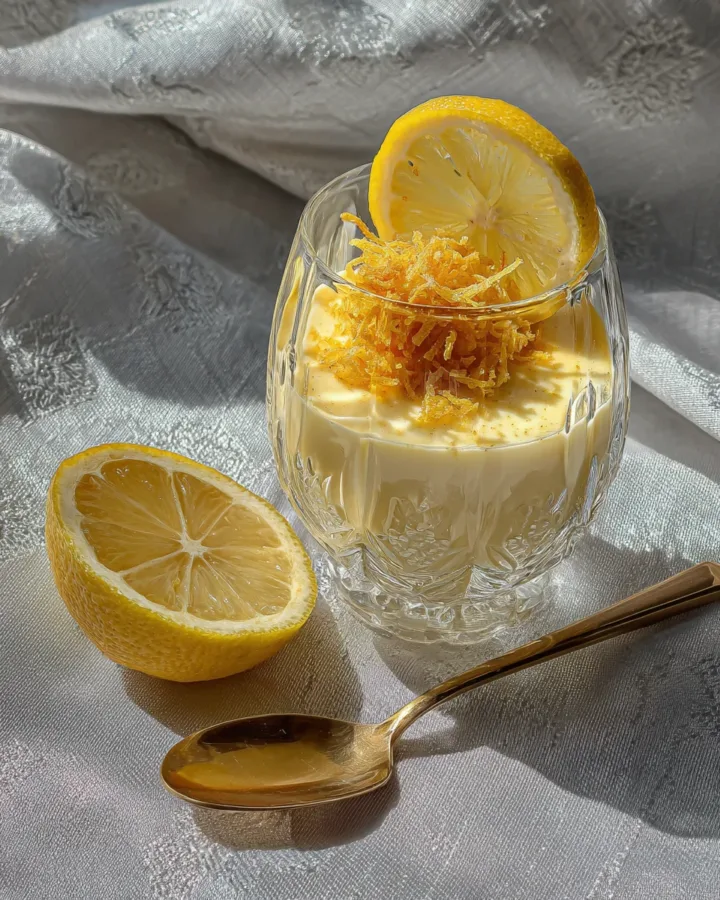
What is the Lemon Posset Served in Lemon Rinds?
To understand this dish, you first have to understand the unique texture of a posset. It is often compared to a panna cotta or a mousse, but it occupies a category all its own. Unlike many other set desserts, it does not rely on thickening agents like cornstarch, eggs, or gelatin. Instead, it relies on a beautiful chemical reaction between the acid in the lemon juice and the proteins in the heavy cream. When these two meet after the cream has been boiled with sugar, the mixture thickens into a dense, luxurious cream that is incredibly stable.
The addition of serving the mixture in lemon rinds is a modern, stylish twist on the traditional presentation. By using the fruit itself as a natural, biodegradable bowl, you emphasize the “fresh-from-the-grove” appeal of the dish. It feels organic, rustic, and incredibly high-end all at once. The Lemon Posset served in Lemon Rinds is the perfect conclusion to a heavy meal because the acidity cleanses the palate, while the creaminess provides that necessary hit of indulgence.
The Fascinating Origin of the Lemon Posset Recipe
The word posset has a long and storied history in British culture, dating back as far as the Middle Ages. However, the original version looked very different from the smooth dessert we enjoy today. In the fifteenth and sixteenth centuries, a posset was actually a hot, spiced drink made of curdled milk mixed with ale or wine. It was often used as a medicinal remedy for colds or as a luxury nightcap for the wealthy. Even William Shakespeare mentioned the drink in his plays, cementing its status as a staple of the era.
As culinary techniques evolved during the eighteenth and nineteenth centuries, the drink transformed into a solidified cream dessert. The ale and wine were replaced by citrus juices, and the focus shifted from medicinal properties to pure gastronomic pleasure. The modern version we recognize today became a beloved part of the British “pudding” tradition. Today, the Lemon Posset served in Lemon Rinds represents the pinnacle of that evolution, taking a centuries-old concept and refining it into a clean, bright, and modern masterpiece.
Essential Ingredients with Full Quantities
One of the best things about this recipe is that you likely already have the ingredients in your kitchen. Because there are so few components, it is absolutely vital that you use the highest quality items you can find. Here is exactly what you will need:
-
Two cups of heavy cream: This must be full-fat heavy whipping cream. Low-fat versions or half-and-half will not have enough protein or fat to react with the lemon juice properly, and your dessert will not set.
-
Three quarters of a cup of granulated sugar: This provides the sweetness necessary to balance the intense acidity of the citrus.
-
Five tablespoons of fresh lemon juice: This usually requires about two to three medium-sized lemons. It is imperative to use fresh juice rather than bottled, as the bottled version lacks the bright aromatic oils and the correct acidity level.
-
One tablespoon of lemon zest: This adds a deep, floral citrus aroma that juice alone cannot provide.
-
Three to four large lemons for serving shells: Look for lemons with thick, bright skins that are free of blemishes, as these will serve as your bowls.
Step by Step Direction and Preparation Method: Lemon Posset served in Lemon Rinds
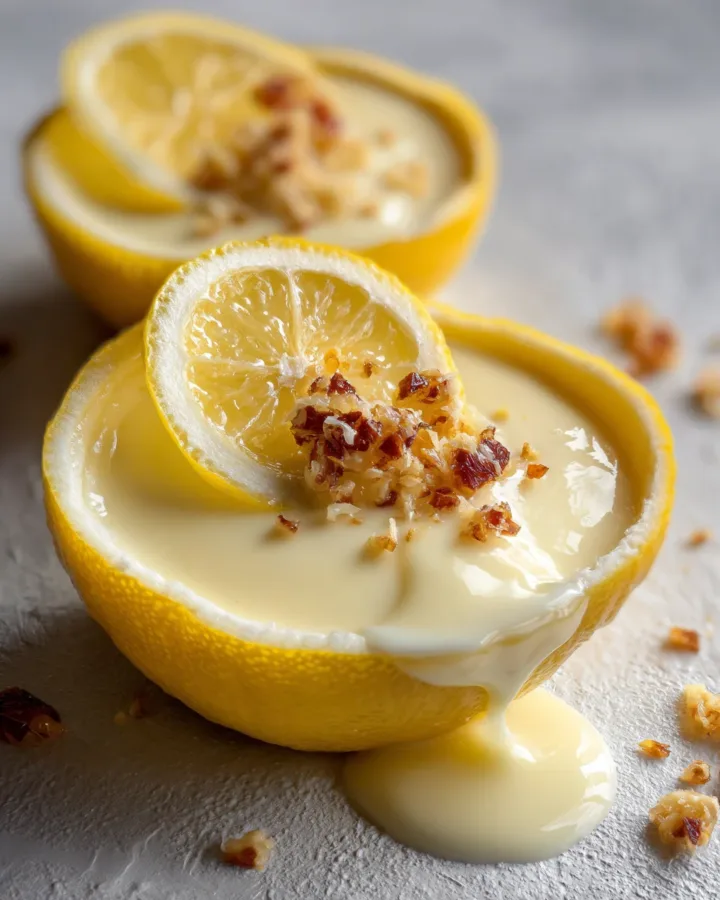
Creating a Lemon Posset served in Lemon Rinds is a process that rewards patience and attention to detail. Follow these steps carefully to achieve that perfect, silk-like consistency.
Preparing the Natural Lemon Cups
The first step is to create your serving vessels. Take your large lemons and cut them in half lengthwise. Using a small paring knife or a sturdy spoon, carefully scoop out the pulp and the inner membranes. You want to be gentle so that you do not puncture the yellow skin. Once the rinds are empty, squeeze the pulp through a sieve to collect the fresh juice you need for the recipe. Place the empty shells on a tray or in a muffin tin to keep them upright and set them aside.
Heating the Cream and Sugar Base
In a medium-sized, heavy-bottomed saucepan, combine the two cups of heavy cream and the three quarters of a cup of granulated sugar. Place the pan over medium heat. You want to stir this occasionally to ensure the sugar dissolves completely. Bring the mixture to a gentle, rolling boil.
The Simmering Stage
Once the cream reaches a boil, turn the heat down slightly but keep it at a steady simmer. Let the mixture cook for about five to seven minutes. During this time, the water content in the cream evaporates slightly, concentrating the fats and proteins. You will notice the mixture starts to look a bit thicker and turns a very pale ivory color. Be careful not to let it boil over, as cream can rise very quickly in the pan.
Incorporating the Citrus
Remove the saucepan from the heat immediately. Stir in the five tablespoons of fresh lemon juice and the tablespoon of lemon zest. You will notice an almost instant change in the texture. The cream will begin to thicken as the acid does its work. Let the mixture sit in the pan for about five minutes to cool down slightly before pouring.
Achieving a Smooth Texture
If you want a truly professional finish, this is the time to strain the mixture. Pour the liquid through a fine-mesh sieve into a jug. This removes the zest and any small bits of curd or cream skin that might have formed, leaving you with a perfectly smooth liquid.
Filling the Prepared Rinds
Carefully pour the warm mixture into your hollowed-out lemon shells. Fill them right up to the brim. If you have any leftover mixture, you can pour it into small glass ramekins. The muffin tin trick mentioned earlier is perfect here to ensure the lemons do not tip over while they are liquid.
The Chilling and Setting Process
Place the tray in the refrigerator. The Lemon Posset served in Lemon Rinds needs at least two to three hours to set completely, though leaving them overnight is often even better. The cold temperature helps the fats solidify, resulting in a texture that is firm enough to hold its shape but soft enough to melt on the tongue.
Serving and Garnishing
Just before serving, you can add a final touch of elegance. A tiny sprig of fresh mint, a single raspberry, or a very light dusting of powdered sugar adds a beautiful contrast to the bright yellow of the lemon. Serve them straight from the fridge for the most refreshing experience.
Creative Variations to the Lemon Posset Recipe
While the classic lemon version is hard to beat, the science of the posset allows for a lot of creative experimentation. As long as you maintain the ratio of fat to acid, you can play with various flavors.
The Lime and Ginger Twist
Swap the lemon juice and zest for fresh lime. Add a teaspoon of finely grated ginger to the cream while it simmers. This creates a zingy, slightly spicy dessert that is reminiscent of a tropical cocktail. It is particularly good when served in lime rinds for a vibrant green presentation.
The Orange and Vanilla Fusion
Using orange juice will result in a much sweeter and milder posset. Because oranges are less acidic than lemons, you may need to add a teaspoon of lemon juice to ensure it sets firmly. Scraping the seeds of a fresh vanilla bean into the cream while it boils adds a luxurious, creamy depth that tastes like an upscale orange creamsicle.
The Lavender Infusion
For a floral, sophisticated flavor, add a teaspoon of dried culinary lavender to the cream and sugar. Let it steep as the cream simmers, and then be sure to strain the mixture well before adding the lemon juice. The combination of lavender and lemon is incredibly relaxing and elegant.
The Berry Topped Delight
If you prefer a bit more texture, you can place a few macerated blueberries or blackberries at the bottom of the lemon rind before pouring in the liquid. As the posset sets, the berries will be trapped at the bottom, providing a sweet surprise when you reach the end of the treat.
Frequently Asked Questions (FAQs): Lemon Posset served in Lemon Rinds
Why did my Lemon Posset served in Lemon Rinds not set?
The most common reason for a posset failing to set is using cream with too low a fat content. You must use heavy cream. Another reason could be not boiling the cream and sugar for long enough. That five to seven minute simmer is crucial for concentrating the proteins. Finally, ensure your lemon juice is fresh; bottled juice sometimes lacks the necessary acidity to trigger the thickening reaction.
How long does it stay fresh in the refrigerator?
The Lemon Posset served in Lemon Rinds is actually a great make-ahead dessert. It will stay perfectly fresh and delicious for up to three days in the fridge. In fact, many people find the flavor actually improves after twenty-four hours as the lemon zest has more time to infuse into the cream.
Can I freeze lemon posset?
It is not recommended to freeze this dessert. Because it is a dairy-based emulsion, the freezing and thawing process can cause the fat to separate from the liquid, leading to a grainy or watery texture. It is best enjoyed chilled but never frozen.
Is this recipe gluten-free and egg-free?
Yes! One of the biggest advantages of the posset is that it is naturally gluten-free and egg-free. This makes it a fantastic option for guests with specific dietary restrictions or allergies, provided they can consume dairy.
Can I use a sugar substitute?
While you can use some sugar substitutes, you must be careful. Sugar plays a role in the structure and the way the cream boils. If you use a liquid sweetener like honey or maple syrup, it may alter the setting process. Granulated erythritol often works best if you are looking for a lower-sugar option, but the classic granulated sugar provides the most reliable results.
Why this Lemon Posset served in Lemon Rinds Surpasses Other Dessert Options
In the world of modern cooking, we often feel pressured to use complicated techniques or exotic ingredients to impress our peers. The Lemon Posset served in Lemon Rinds proves that simplicity is often the highest form of sophistication. Unlike a souffle, which can collapse, or a cheesecake, which can crack, the posset is remarkably stable once you understand the basic science of the boil.
Furthermore, the presentation is naturally eco-friendly and stunning. There is no need for plastic wrap or expensive crystal bowls when the fruit provides everything you need. It is a zero-waste serving suggestion that looks like a million dollars. When you compare the labor-to-reward ratio of this dish to almost any other dessert, the posset wins every time. It offers a punch of flavor that is far more vibrant than a standard custard and a texture that is more luxurious than a sorbet.
Conclusion: Lemon Posset served in Lemon Rinds
The Lemon Posset served in Lemon Rinds is a masterclass in balance. It balances the richness of dairy with the sharpness of fruit, and it balances historical tradition with modern aesthetic appeal. By following this guide, you are not just making a snack; you are creating a sensory experience. The bright scent of the zest, the cold touch of the rind, and the velvety melt of the cream all work together to create a truly memorable moment. Whether you are serving this at a summer garden party or as a bright end to a winter celebration, it is a recipe that promises success. Once you see how easy it is to achieve such a high level of luxury at home, this citrus delight will undoubtedly become a recurring favorite in your kitchen.
Print
The Ultimate Guide to the Classic Lemon Posset Served in Lemon Rinds
- Total Time: 20 minutes (+ chilling time 2–3 hours)
- Yield: 4 servings 1x
- Diet: Vegetarian
Description
To understand this dish, you first have to understand the unique texture of a posset. It is often compared to a panna cotta or a mousse, but it occupies a category all its own. Unlike many other set desserts, it does not rely on thickening agents like cornstarch, eggs, or gelatin. Instead, it relies on a beautiful chemical reaction between the acid in the lemon juice and the proteins in the heavy cream. When these two meet after the cream has been boiled with sugar, the mixture thickens into a dense, luxurious cream that is incredibly stable.
Ingredients
- 1½ cups fresh strawberries (chopped)
- 1 cup milk or dark chocolate (melted)
- ½ cup heavy cream (or whipping cream)
- 2 tbsp sweetened condensed milk
- ½ tsp vanilla extract
- 2–3 tbsp crushed biscuits (like digestive biscuits)
- 2 tbsp chopped nuts (pistachios or almonds)
- Optional: caramel sauce or chocolate syrup for layering
Instructions
- Prepare strawberries
Wash, hull, and chop the strawberries into small pieces. - Make the cream layer
In a bowl, whip the cream until soft peaks form. Gently mix in condensed milk and vanilla extract. - Prepare chocolate
Melt the chocolate until smooth (microwave or double boiler). - Layer the cups
In small serving cups:- Add a layer of crushed biscuits
- Add strawberries
- Spoon a layer of cream
- Drizzle melted chocolate
- Repeat layers
Repeat the layers once more for a rich, dessert-style cup. - Top & garnish
Finish with chocolate drizzle, chopped nuts, and a few strawberry pieces. - Chill & serve
Refrigerate for 20–30 minutes before serving for best texture.
Notes
A beautifully simple dessert with a silky texture and bright citrus flavor—perfect for impressing guests with minimal effort.
- Prep Time: 10 minutes
- Cook Time: 10 minutes
- Category: Dessert
- Method: Chilled
- Cuisine: British
Nutrition
- Serving Size: 1 lemon half
- Calories: 320 kcal
Keywords: Classic British lemon cream, citrus posset in fruit shells, three-ingredient lemon dessert, creamy lemon custard pots, chilled lemon rind treats.
