
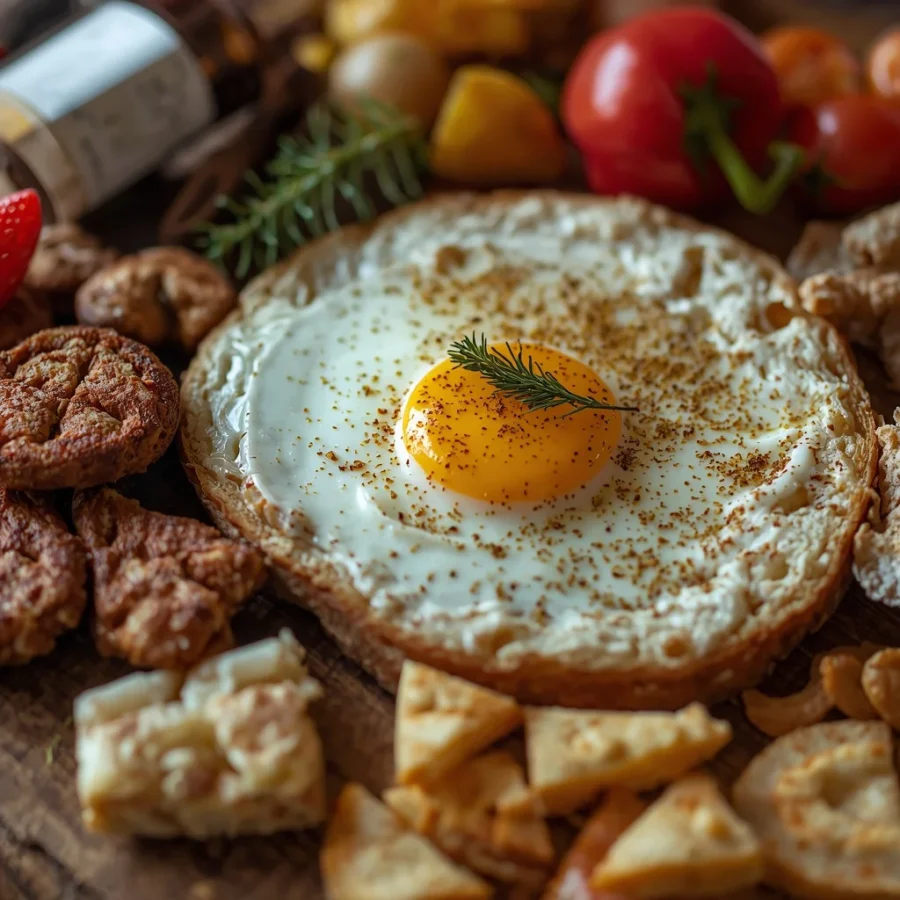
What is a Middle Eastern Breakfast Board?
A Middle Eastern Breakfast Board is a festive communal serving platter. It features a traditional morning arrangement known as a mezze spread. The concept relies on fresh whole foods served at room temperature. You pair these fresh ingredients with warm flatbreads. It is a wonderful break from sugary syrups or heavy pancakes.
At its core, this platter relies on complete balance. You serve protein-packed dips with crisp raw vegetables. English cucumbers and ripe tomatoes add great hydration. Salty feta cheese balances earthy herbal blends like za’atar and sumac. Hard-boiled eggs provide sustained morning energy. Bright pickles and briny olives add a pleasant punchy tang. The main beauty lies in total meal customization. Guests scoop and layer ingredients on pita according to their preferences.
The Rich History and Origin of Middle Eastern Breakfast Board
You should explore the ancient culinary traditions behind this feast. Across Lebanon, Syria, Jordan, Palestine, Turkey, and Egypt, breakfast is a major social ritual. Agricultural workers needed a wholesome morning meal long ago. They required sustained energy before heading into farm fields. The food needed to be simple yet incredibly filling.
This morning spread was traditionally called futoor. It relied heavily on preserved family staples. Cultured yogurt was strained overnight into thick labneh. Wild thyme and sesame seeds were dried into za’atar. Olive oil was cold-pressed from local groves. Families laid out small bowls containing various pantry items. Over centuries, this practical habit evolved into an art form. Hospitality became the primary focus of the meal. Food lovers worldwide now modernize this ancient tradition. You can easily honor its authentic Mediterranean roots at home.
Essential Ingredients and Quantities: Middle Eastern Breakfast Board
Building an unforgettable Middle Eastern Breakfast Board requires high-quality ingredients. This recipe easily serves six to eight hungry people. Gather these primary components and optional extras for your shopping list.
For the Core Platter:
-
Two cups of smooth homemade or store-bought hummus
-
One and a half cups of thick labneh strained yogurt cheese
-
Six large hard-boiled eggs peeled and cut in half
-
Two hundred grams of creamy feta cheese cut into small cubes
-
One hundred and fifty grams of mixed green and black olives
-
Two large vine-ripened tomatoes thinly sliced
-
One large English cucumber sliced into rounds or sticks
-
One small red onion thinly sliced into delicate rings
-
One cup of mixed fresh flat-leaf parsley and mint leaves
-
Half a cup of magenta pickled turnips or mixed Middle Eastern pickles
-
Half a cup of roasted nuts like pistachios, walnuts, or pine nuts
-
Six to eight pieces of fresh pita bread or flatbread
-
Two tablespoons of high-quality extra-virgin olive oil
-
One teaspoon of wild za’atar spice mix
-
Half a teaspoon of ground tangy sumac
Optional Hearty Additions:
-
One cup of smoky baba ganoush eggplant dip
-
Eight pieces of warm crispy falafel
-
One bowl of warm ful medames fava bean stew
-
Four small fresh radishes sliced thinly
-
Half a cup of sweet dried dates or dried figs
-
Six stuffed grape leaves known as dolmas
-
A small pan of hot shakshuka poached eggs
Step-by-Step Directions and Preparation Method: Middle Eastern Breakfast Board

Assembling a gorgeous Middle Eastern Breakfast Board is relaxing and fun. Following a strategic sequence ensures everything stays fresh and warm. Your visual presentation will look completely balanced and deeply inviting.
Prepare and Style the Dips
-
Take a large wooden board or wide serving tray. Clean its surface thoroughly before placing any food items.
-
Spoon two cups of smooth hummus into a shallow ceramic bowl. Use the back of a spoon to create a deep swirl pattern on top. Drizzle a tablespoon of extra-virgin olive oil into the groove. Sprinkle the top with a pinch of tangy sumac.
-
Spoon one and a half cups of thick labneh into a second shallow bowl. Create a similar decorative swirl on the surface. Drizzle with the remaining extra-virgin olive oil. Dust the top generously with wild za’atar spice mix.
-
Place these two bowls on opposite sides of your board. They anchor the entire arrangement visually.
Prepare the Fresh Produce and Eggs
-
Wash the tomatoes, cucumber, red onion, radishes, and fresh herbs thoroughly. Use cold water and pat them dry with a clean towel.
-
Slice the tomatoes into uniform round pieces. Cut the cucumber into thick rounds or long spears for easy dipping. Slice the red onion into paper-thin rings.
-
Hard-boil six large eggs in boiling water for roughly nine minutes. This timing creates a firm yet soft yellow center. Cool them immediately in an ice bath. Peel off the shells carefully. Slice each egg in half lengthwise. Lightly dust the open egg halves with sumac for color.
Arrange the Board Architecture
-
Place the halved hard-boiled eggs in a neat fan pattern. Position them right next to one of the dip bowls.
-
Group the cubed feta cheese, green olives, and black olives in separate clusters. Use small ramekins for the olives. This prevents brine from seeping into your fresh bread.
-
Tuck sliced tomatoes, cucumber rounds, and onion rings into open gaps. Alternate bright red and green colors across the board.
-
Fill smaller empty gaps with pink pickled turnips and toasted nuts. Add sweet dried dates and fresh sprigs of mint and parsley. This creates a dense appearance without visible empty wood space.
Warm the Bread and Serve Immediately
-
Warm your pita bread pieces just before calling everyone to eat. Use a dry skillet, open flame, or warm oven for two minutes. The bread becomes pliable and very fragrant.
-
Cut the warmed pita into neat triangular wedges. Nestle them around the outer edges of your board. You can also serve them in a clean cloth-lined basket.
-
Give the entire board a final light garnish of herbs. Serve immediately alongside warm mint tea or dark Arabic coffee.
Creative Variations for Your Breakfast Board
Hosting with a Middle Eastern Breakfast Board offers incredible versatility. You can adapt the spread for different seasons or dietary needs. It is easy to modify flavor profiles for your guests.
The Plant-Based Vegan Spread
Make this platter entirely plant-based with simple swaps. Replace dairy labneh with a thick garlic-tahini dip or vegan yogurt. Omit the hard-boiled eggs and feta cheese completely. Fill those open spaces with crispy homemade falafel balls. Add warm ful medames and stuffed grape leaves for rich protein.
The Warm and Hearty Winter Board
Turn this light breakfast into a warm comfort feast during cold months. Anchor the center of your platter with a small cast-iron skillet. Fill it with bubbling shakshuka beside warm bowls of spiced fava beans. Pair these hot elements with warm halloumi cheese grilled until golden. Serve everything with toasted sesame flatbreads.
The Sweet and Savory Fusion Board
Incorporate sweet Mediterranean flavors alongside your savory dips. Add natural honeycomb and thick clot-cream known as kaymak. Include fresh fig halves, pomegranate seeds, and sour cherry preserves. The contrast between salty feta, rich labneh, and sweet honey is incredible. Spread them together on warm bread for an amazing taste experience.
Frequently Asked Questions: Middle Eastern Breakfast Board
Can I assemble parts of this breakfast board the night before?
Yes, you can easily handle prep work the evening prior. Slice your raw vegetables and hard-boil the eggs. Prepare your dips and store everything in separate airtight containers in the refrigerator. On the morning of your event, arrange the ingredients on your board. Warm the pita and serve immediately.
Where can I find za’atar and sumac spices?
Both spices are widely available in major supermarkets today. Check the international spice aisle or visit a local Middle Eastern grocery store. Za’atar is a blend of dried thyme, sesame seeds, and sumac. Sumac is a deep red ground berry known for its tart lemony taste.
What is labneh and can I make it at home?
Labneh is an ultra-thick cheese made by straining whey from yogurt. If you cannot purchase pre-made labneh, make it at home easily. Stir a pinch of salt into plain whole-milk Greek yogurt. Transfer it to a cheesecloth-lined strainer over a bowl. Let it drain in your refrigerator for twelve to twenty-four hours.
How do I prevent the bread from going soggy on the board?
Keep moist items like olives, pickles, and tomatoes contained properly. Place them in small dishes or separate them with cucumber slices. Positioning warm bread around the board edges keeps it dry. You can also serve bread in a separate basket nearby.
Conclusion: Middle Eastern Breakfast Board
Creating a Middle Eastern Breakfast Board is a truly rewarding experience. It brings people together over wholesome, nourishing food. The combination of colorful vegetables, creamy dips, and warm pita is unbeatable. Every bite delivers a wonderful balance of savory Mediterranean flavors. You can easily adapt the board to suit any dietary preference. Preparing this spread turns an ordinary morning into a special occasion. Gather your favorite ingredients and build your own platter today.
Print

Middle Eastern Breakfast Board
- Total Time: 35 minutes
- Yield: 6–8 servings 1x
- Diet: Vegetarian
Description
A Middle Eastern Breakfast Board is a festive communal serving platter. It features a traditional morning arrangement known as a mezze spread. The concept relies on fresh whole foods served at room temperature. You pair these fresh ingredients with warm flatbreads. It is a wonderful break from sugary syrups or heavy pancakes.
Ingredients
Scale
For the Chicken Satay
- 1½ lb (700 g) halal boneless, skinless chicken thighs, cut into strips
- 2 tbsp vegetable oil
- 2 tbsp soy sauce or halal-certified soy sauce
- 1 tbsp honey
- 1 tbsp lime juice
- 3 cloves garlic, minced
- 1 tsp ground turmeric
- 1 tsp ground coriander
- ½ tsp ground cumin
- ½ tsp paprika
- ½ tsp salt
- ¼ tsp black pepper
For the Peanut Sauce
- ½ cup creamy peanut butter
- ½ cup coconut milk
- 1 tbsp soy sauce
- 1 tbsp lime juice
- 1 tbsp honey or brown sugar
- 1 tsp chili sauce or sambal, optional
- 1 small garlic clove, minced
- 2–3 tbsp warm water, as needed
For Serving
- Lime wedges
- Fresh cilantro
- Sliced cucumber
- Crushed roasted peanuts
- Extra chili sauce, optional
Instructions
- Marinate the chicken: In a large bowl, combine oil, soy sauce, honey, lime juice, garlic, turmeric, coriander, cumin, paprika, salt, and pepper. Add the chicken strips and mix well. Cover and refrigerate for at least 1 hour, preferably 4 hours.
- Prepare the skewers: If using wooden skewers, soak them in water for about 30 minutes. Thread the marinated chicken onto the skewers.
- Make the peanut sauce: Combine peanut butter, coconut milk, soy sauce, lime juice, honey, chili sauce, and garlic in a small saucepan. Warm over low heat, stirring until smooth. Add warm water a little at a time until you reach your preferred consistency.
- Cook the chicken: Heat a grill, grill pan, or skillet over medium-high heat. Cook the skewers for about 3–4 minutes per side, turning occasionally, until nicely charred and the chicken reaches 165°F/74°C internally.
- Serve: Arrange the chicken satay on a platter. Garnish with cilantro and crushed peanuts and serve warm with the peanut sauce, lime wedges, and cucumber slices.
Notes
- Prep Time: 25 minutes
- Cook Time: 10 minutes
- Category: Breakfast
- Method: Assembly
- Cuisine: Middle Eastern
Nutrition
- Serving Size: 1 portion
- Calories: ~520 kcal
Keywords: Middle Eastern breakfast platter, Levant breakfast spread, Mediterranean breakfast board, futoor breakfast spread
