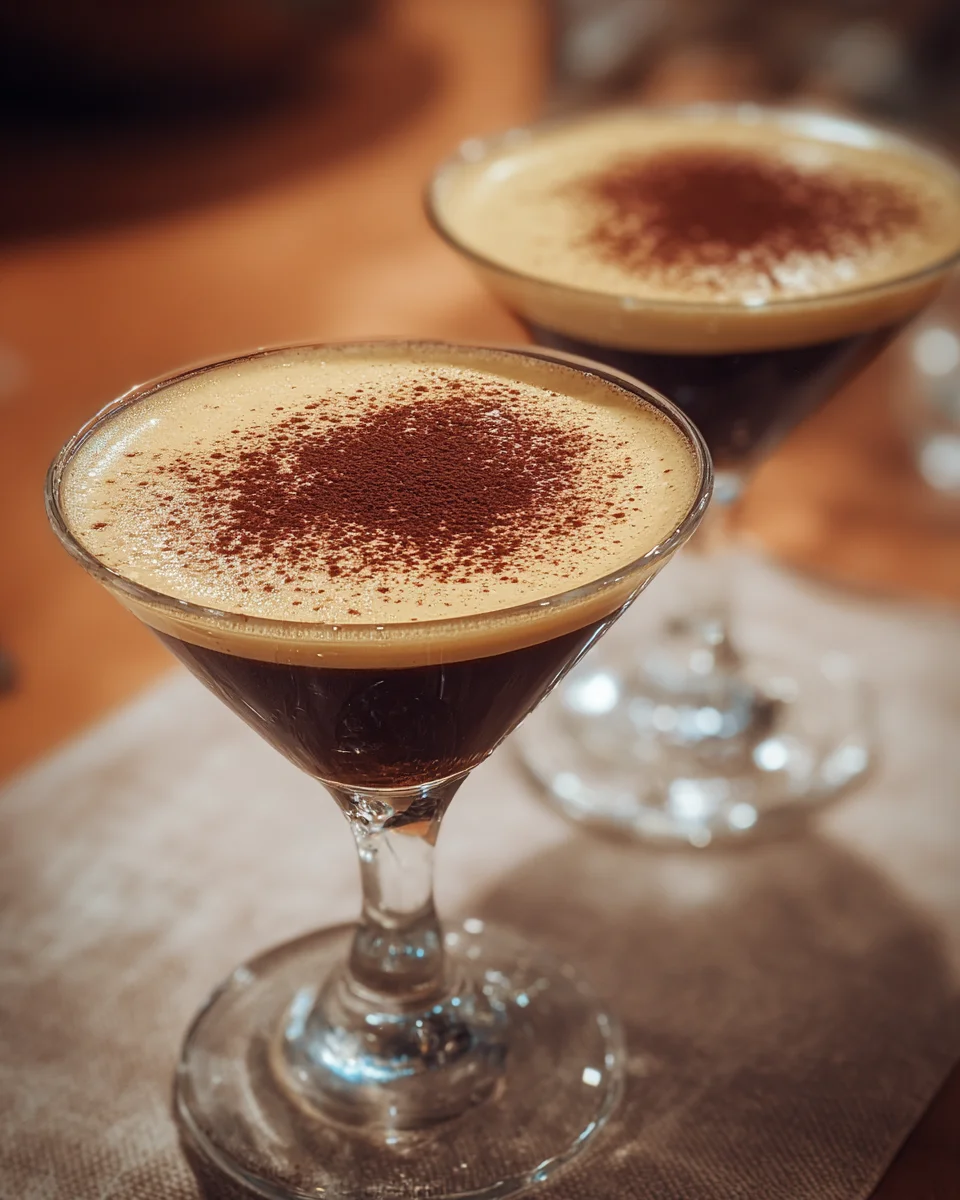
If you love the sophisticated, bold flavors of a classic cocktail but also harbor a massive sweet tooth, you are in for an absolute treat. Imagine taking the velvety, deep richness of a traditional French chocolate custard and infusing it with the sharp, invigorating kick of a late-night cocktail. That is exactly what you get with mini espresso martini pots de crème. This decadent, make-ahead dessert tastes like a tiny espresso martini in custard form, bringing together the best of both worlds in a single, elegant spoonful. Whether you are hosting an intimate dinner party, celebrating a special milestone, or simply looking to elevate your weekend dessert game, this recipe delivers a luxurious experience that will leave your guests talking for weeks.
Creating a dessert that balances the intensity of dark chocolate with the distinct punch of coffee and spirits requires a thoughtful approach. It is not just about throwing ingredients together; it is about crafting a texture so smooth and a flavor profile so complex that it rivals anything you would order at a high-end bistro. In this comprehensive guide, we will dive deep into everything you need to know about making these elegant little pots of joy, exploring their culinary roots, breaking down the ingredients, and walking through the process step by step to ensure your dessert turns out flawless every single time.
What is a Pot de Crème?
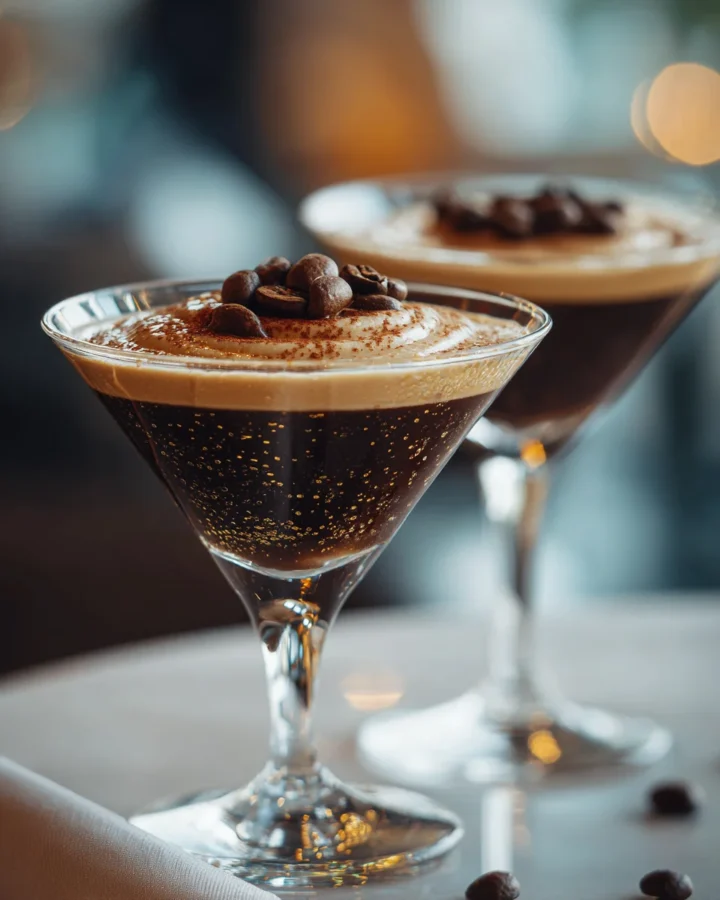
To truly appreciate this dessert, it helps to understand what a pot de crème actually is. Translating literally from French as “pot of cream” or “pots of cream,” this classic dessert dates back centuries. It is a loose, French baking custard that is traditionally thinner and much more delicate than a standard pudding, pot de crème, or crème brûlée. While a crème brûlée relies on a hard, caramelized sugar crust for contrast, and a pudding often uses cornstarch as a thickening agent, a traditional pot de crème relies entirely on egg yolks and gentle heat to achieve its signature texture.
The result is an incredibly dense, silky, and rich custard that coats the spoon and melts effortlessly on your tongue. Because it is so decadent, it is traditionally served in very small vessels, such as tiny porcelain cups, espresso mugs, or miniature ramekins. This makes it the perfect canvas for bold, intense flavors. When you introduce the elements of a modern cocktail into this historic French framework, you get a beautiful marriage of old-world culinary technique and contemporary mixology.
Origin of the Espresso Martini and Custard Fusion
The inspiration behind mini espresso martini pots de crème comes from two distinct culinary lineages that collided in the best way possible. On one side, you have the classic French custard technique developed by royal pastry chefs in France during the seventeenth and eighteenth centuries. On the other side, you have the espresso martini, a legendary cocktail born in London during the late nineteen-eighties. Rumor has it that a famous supermodel walked into a bar and asked bartender Dick Bradsell for a drink that would wake her up and then wake her up a bit more, using a slightly more colorful choice of words. Bradsell combined fresh espresso, vodka, and coffee liqueur, creating an instant global phenomenon.
In recent years, modern pastry chefs and adventurous home bakers began to notice a striking similarity between the flavor notes in premium dark chocolate and the rich, roasted undertones of a perfectly pulled shot of espresso. It did not take long for someone to realize that the components of the world’s favorite coffee cocktail could be beautifully folded into a luxurious chocolate custard base. By infusing traditional French cream with high-quality espresso powder, deep dark chocolate, a splash of vodka, and a generous pour of coffee liqueur, this fusion dessert was born. It honors the meticulous nature of French baking while embracing the playful, energetic spirit of modern cocktail culture.
Ingredients and Exact Quantities: mini espresso martini pots de crème
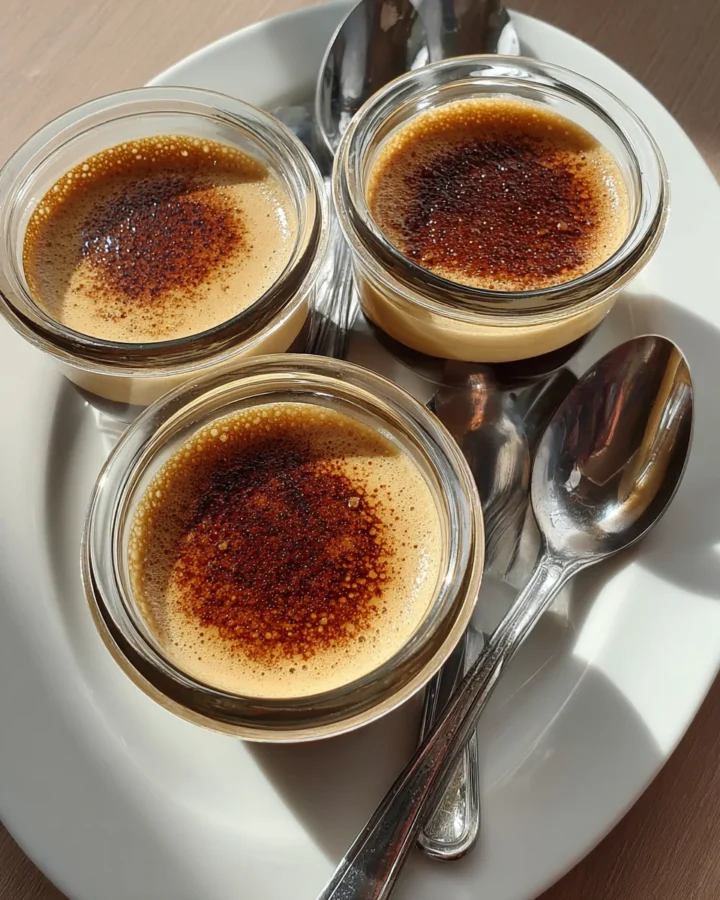
To create the perfect batch of mini espresso martini pots de crème, you will need a balance of dairy, structure-building proteins, high-quality chocolate, and the distinct spirits that give the dessert its signature martini flair. This recipe is designed to yield six to eight mini pots, depending on the size of your serving dishes.
Here is exactly what you will need to gather before you begin cooking:
The Custard Base
-
Two cups of heavy cream
-
One cup of whole milk
-
One hundred and twenty grams of high-quality dark chocolate, sixty to seventy percent cacao, finely chopped
-
Five large egg yolks
-
One-third cup of granulated white sugar
-
Two tablespoons of instant espresso powder, or very strong brewed espresso
-
Two tablespoons of premium coffee liqueur, such as Kahlúa
-
One tablespoon of vodka
-
One teaspoon of pure vanilla extract
-
A small pinch of fine salt
Elegant Topping Options
-
Lightly whipped heavy cream, un-sweetened or very lightly sweetened
-
Delicate dark chocolate shavings or curls
-
Whole roasted espresso beans for decoration
-
A dusting of unsweetened cocoa powder
Step-by-Step Direction and Preparation Method: mini espresso martini pots de crème
Achieving the ultimate silky texture requires patience and care. Follow these detailed steps closely to avoid curdling the eggs and to ensure a flawless presentation.
Step One: Heating the Cream and Coffee Mixture
Begin by placing a heavy-bottomed saucepan over medium-low heat. Combine your two cups of heavy cream, one cup of whole milk, two tablespoons of instant espresso powder, and a small pinch of salt in the pan. Whisk these components together gently to ensure the espresso powder completely dissolves into the dairy.
Keep a close eye on the saucepan. You want to heat the mixture gently until it is steaming and tiny bubbles begin to form around the edges of the pan, but do not let it reach a rolling boil. Heating the dairy slowly allows the coffee flavors to fully bloom and prevents the milk proteins from scorching on the bottom of your pan.
Step Two: Melting the Dark Chocolate
Once the cream mixture is thoroughly heated and steaming, remove the saucepan from the heat source temporarily. Add your one hundred and twenty grams of finely chopped dark chocolate directly into the warm liquid. Let it sit undisturbed for about one minute to allow the residual heat of the cream to soften the cocoa solids.
After a minute has passed, take a balloon whisk and gently stir the mixture starting from the center and working your way outward. Continue whisking until the chocolate is completely melted, smooth, and fully integrated into the coffee-cream base. The color should be a rich, uniform, deep chocolate brown.
Step Three: Whisking the Yolks and Sugar
While your chocolate and cream mixture cools slightly on the counter, take a separate, medium-sized heatproof mixing bowl. Separate your five large egg yolks into this bowl, discarding the whites or saving them for a different recipe later. Add the one-third cup of granulated white sugar directly to the yolks.
Immediately begin whisking the yolks and sugar together vigorously. Do not let the sugar sit on top of the egg yolks without mixing, as the sugar can actually draw moisture out of the yolks and create tiny, hard yellow lumps. Whisk constantly for about two minutes until the mixture becomes slightly pale in color, thickens up, and falls from the whisk in a ribbon-like consistency.
Step Four: Tempering the Egg Yolks
This is the most critical step of the entire process. If you pour hot liquid directly into raw eggs, you will end up with sweet, chocolate-flavored scrambled eggs. To prevent this, you must temper the yolks.
While whisking the egg and sugar mixture constantly with one hand, use your other hand to slowly pour a very thin, steady stream of the warm chocolate-cream mixture into the bowl. Start with just a few tablespoons at first, then gradually increase to a ladleful. This slowly raises the temperature of the egg yolks without shocking them. Once about half of the warm cream has been successfully whisked into the eggs, you can safely pour the entire egg mixture back into the main saucepan with the remaining chocolate cream, whisking continuously as you do so.
Step Five: Gentle Cooking for a Silky Finish
Place the saucepan back onto the stove over very low heat. Use a heatproof silicone spatula or a wooden spoon to stir the mixture constantly. Be sure to scrape the bottom and the corners of the pan frequently to prevent any sticking or burning.
Cook the custard gently for a few minutes until it thickens slightly and achieves a gorgeous, silky sheen. It should lightly coat the back of your spoon, meaning if you draw a line through the custard on the back of the spoon with your finger, the line holds its shape perfectly. Do not let the mixture boil under any circumstances, as excessive heat will ruin the smooth texture.
Step Six: Infusing the Martini Elements
Remove the saucepan completely from the heat. Now it is time to turn this chocolate custard into true mini espresso martini pots de crème. Pour in the two tablespoons of coffee liqueur, the one tablespoon of vodka, and the one teaspoon of pure vanilla extract.
Stir the liquids in gently until they are fully incorporated. Adding the alcohol at the very end, off the heat, ensures that the volatile flavor compounds and the distinct kick of the spirits do not evaporate into the air, preserving that authentic cocktail experience in every bite.
Step Three: Straining and Pouring
To guarantee an absolutely flawless, restaurant-quality presentation, pour the custard through a fine-mesh sieve or strainer into a large liquid measuring cup with a pour spout. This step catches any tiny bits of egg that might have cooked too quickly, leaving you with an incredibly smooth liquid.
Carefully pour the strained custard into your chosen serving vessels. You can use classic ceramic ramekins, glass espresso cups, or even elegant shot glasses for a party format. Fill them evenly, leaving a little bit of headspace at the top for your toppings.
Step Eight: Choosing Your Finishing Method (Bake versus Chill)
You have two fabulous options for finishing this dessert, depending on your schedule and texture preference.
-
The Classic Baked Method: For a traditional, ultra-dense, and velvety texture, preheat your oven. Place your filled ramekins into a large, deep baking pan. Pour hot water into the baking pan around the ramekins until the water level reaches halfway up the sides of your serving dishes, creating a gentle water bath. Bake for twenty-five to thirty minutes until the edges of the custards are set but the centers still jiggle slightly when gently shaken. Remove them from the water bath, let them cool to room temperature, and then refrigerate for at least four hours.
-
The No-Bake Method: If you want a quicker, easier process that still tastes magnificent, you can skip the oven entirely. Simply cover the warm serving dishes loosely with plastic wrap and place them directly into the refrigerator. Let them chill undisturbed for at least four hours, or ideally overnight, until the custard sets up firm and chilled.
Step Nine: Decorating and Serving
Just before you are ready to serve your masterpieces, remove them from the refrigerator. Top each little pot with a generous dollop of lightly whipped cream. Decorate the cream with a scattering of delicate dark chocolate shavings, a light dusting of cocoa powder, and exactly three whole espresso beans placed gently in the center, mimicking the traditional garnish of a classic espresso martini cocktail.
Creative Variations: mini espresso martini pots de crème
Once you master the basic technique for these mini espresso martini pots de crème, you can experiment with a variety of flavor twists to suit different occasions or dietary needs.
The Non-Alcoholic Coffee Custard
If you love the flavor profile of an espresso martini but want to keep the dessert entirely family-friendly or alcohol-free, you can easily adapt the recipe. Simply omit the vodka and the coffee liqueur entirely. To compensate for the lost liquid and flavor, add one extra teaspoon of instant espresso powder to the cream mixture, and add an extra splash of vanilla extract along with a tablespoon of heavy cream at the very end of cooking.
The White Chocolate Mocha Twist
For a sweeter, creamier variation, swap out the one hundred and twenty grams of dark chocolate for an equal amount of high-quality white chocolate. Because white chocolate is naturally much sweeter and contains more fat, reduce the granulated sugar in the egg yolk mixture to just two tablespoons. The combination of sweet white chocolate and bitter espresso creates a stunning mocha-latte flavor profile.
Spiced Mexican Coffee Pots
Give your dessert a warm, cozy kick by adding a half-teaspoon of ground cinnamon and a tiny, subtle pinch of cayenne pepper to the cream mixture while it heats. The cinnamon complements the coffee liqueur beautifully, while the whisper of cayenne pepper enhances the richness of the dark chocolate and leaves a delightful, warming sensation on the palate.
Perfect Pairings for mini espresso martini pots de crème
While these little pots of cream are absolutely spectacular on their own, serving them alongside complementary treats can turn dessert time into an unforgettable experience.
Crispy Italian Biscotti
The ultra-creamy, velvety texture of a pot de crème cries out for a crunchy textural contrast. Serving long, crisp Italian biscotti on the side is an excellent choice. Almond, hazelnut, or anise-flavored biscotti pair beautifully with the deep coffee and chocolate notes, allowing guests to dip the crunchy biscuit directly into the smooth custard.
Fresh Berries and Orange Peel
If you want to cut through the intense richness of the dark chocolate and heavy cream, look to bright, acidic fruits. A small handful of fresh raspberries or blackberries served on top adds a vibrant tartness that cleanses the palate. Alternatively, a strip of candied orange peel makes a gorgeous, sophisticated garnish, as orange and coffee are a classic flavor match.
Frequently Asked Questions: mini espresso martini pots de crème
Can I make mini espresso martini pots de crème in advance?
Absolutely. In fact, this dessert is highly recommended for make-ahead preparation because the flavors actually deepen and improve as it sits in the refrigerator. You can prepare and chill these pots up to two days before you plan to serve them. Just be sure to wrap them tightly with plastic wrap so they do not absorb any stray odors from your fridge, and wait to add the whipped cream and garnishes until right before serving.
Why did my custard turn out grainy?
A grainy texture usually means that the egg yolks were cooked too quickly or the heat was too high during the cooking or baking process. To avoid this, make sure to temper your eggs very slowly, keep your stove heat on low, and always use a fine sieve to strain the liquid before pouring it into your serving dishes. If you are baking them, never skip the water bath, as it protects the delicate eggs from the direct, harsh heat of the oven.
What can I use if I do not have espresso powder?
If you do not have instant espresso powder on hand, you can substitute it with two tablespoons of regular instant coffee granules, though the flavor may be slightly less intense. Alternatively, you can use two tablespoons of very strong, concentrated brewed espresso liquid, but reduce the whole milk by one tablespoon to keep the liquid ratios balanced.
What type of chocolate works best for this recipe?
For the most sophisticated flavor, use a premium baking bar of dark chocolate with a cacao percentage between sixty and seventy percent. Avoid using standard chocolate chips if possible, as they often contain stabilizers and less cocoa butter, which can prevent them from melting into a perfectly smooth consistency.
Conclusion: mini espresso martini pots de crème
Creating a memorable dessert does not require hours of complicated assembly or hard-to-find ingredients. These mini espresso martini pots de crème offer a brilliant solution for anyone looking to impress with minimal effort on the night of an event. By taking the time-honored traditions of classic French pastry and infusing them with the bold, playful energy of a contemporary espresso martini, you create an indulgent treat that satisfies both coffee lovers and chocolate enthusiasts alike. The rich, velvety texture combined with the sophisticated kick of coffee liqueur and vodka ensures that each tiny pot feels like an absolute luxury. Prepare a batch for your next gathering, set them to chill in the refrigerator, and enjoy the peace of mind that comes with having a spectacular, restaurant-quality dessert ready to serve at a moment’s notice.
Print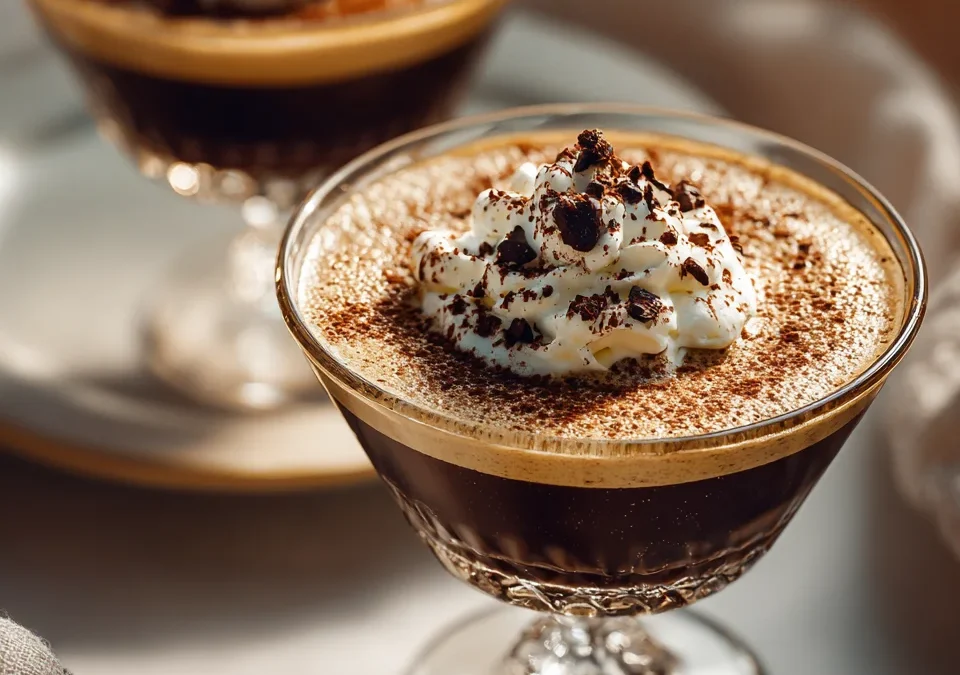
The Ultimate Guide to Mini Espresso Martini Pots de Crème
- Total Time: 50 minutes
- Yield: 6–8 mini pots 1x
- Diet: Vegetarian
Description
To truly appreciate this dessert, it helps to understand what a pot de crème actually is. Translating literally from French as “pot of cream” or “pots of cream,” this classic dessert dates back centuries. It is a loose, French baking custard that is traditionally thinner and much more delicate than a standard pudding, pot de crème, or crème brûlée. While a crème brûlée relies on a hard, caramelized sugar crust for contrast, and a pudding often uses cornstarch as a thickening agent, a traditional pot de crème relies entirely on egg yolks and gentle heat to achieve its signature texture.
Ingredients
- 2 cups heavy cream
- 1 cup whole milk
- 120 g dark chocolate (60–70%), chopped
- 5 egg yolks
- 1/3 cup sugar
- 2 tbsp instant espresso powder or very strong espresso
- 2 tbsp coffee liqueur (like Kahlúa)
- 1 tbsp vodka
- 1 tsp vanilla extract
- Pinch of salt
Optional toppings
- Lightly whipped cream
- Chocolate shavings
- Espresso beans
- Cocoa powder
Instructions
- Heat the cream mixture
In a saucepan, combine cream, milk, espresso powder, and salt. Heat gently until steaming but not boiling. - Melt the chocolate
Add chopped chocolate and whisk until smooth. - Whisk yolks and sugar
In a separate bowl, whisk egg yolks with sugar until slightly pale. - Temper the eggs
Slowly pour a little warm cream mixture into the yolks while whisking constantly. Then whisk the egg mixture back into the saucepan. - Cook gently
Stir over low heat until slightly thickened and silky. Do not boil. - Add the “martini” flavors
Remove from heat and stir in coffee liqueur, vodka, and vanilla. - Strain and pour
Strain through a fine sieve into small ramekins, espresso cups, or shot glasses. - Bake or chill
- For classic texture: place ramekins in a water bath and bake at 150°C (300°F) for about 25–30 minutes until just set.
- For an easier no-bake style: chill until firm, about 4 hours.
- Serve
Top with whipped cream, chocolate shavings, and a few espresso beans.
Notes
These mini pots de crème are the perfect make-ahead treat for coffee lovers and chocolate fans alike.
- Prep Time: 20 minutes
- Cook Time: 30 minutes
- Category: Dessert
- Method: Baking
- Cuisine: French-Inspired
Nutrition
- Serving Size: 1 mini pot
- Calories: 320 kcal
Keywords: espresso martini chocolate custard, no bake coffee pots de creme, individual espresso martini desserts
