
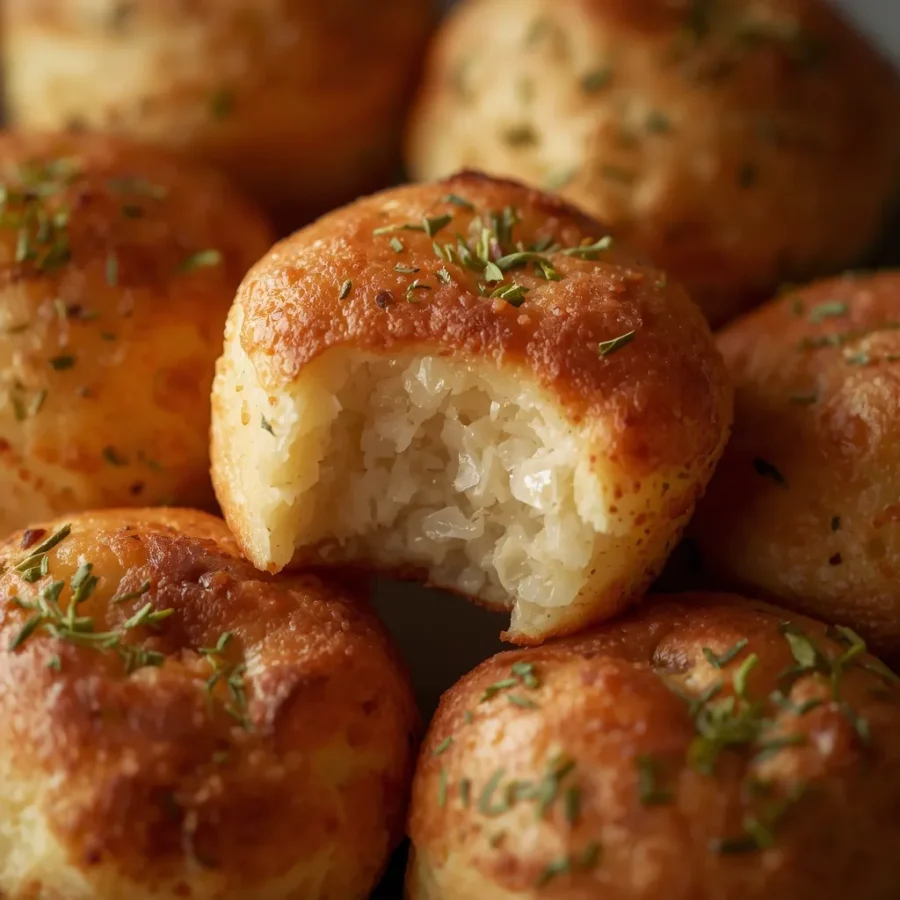
The Ultimate Guide to Parmesan Herb Yorkshire Puddings

If you are looking to elevate your traditional Sunday roast or festive feast, mastering the art of Parmesan herb Yorkshire puddings is the absolute best place to start. A traditional British classic gets a spectacular makeover in this recipe, blending rich savory notes with the iconic dramatic rise and crispy edges everyone loves. While a classic pudding is always a crowd-pleaser, infusing the batter with finely grated Parmesan cheese, fresh rosemary, thyme, and a hint of garlic transforms a simple side dish into the star of your dinner table. The secret behind achieving that soaring, golden structure with a pillowy center lies in balanced ratios, proper batter resting, and sizzled hot fat. In this comprehensive guide, you will learn everything required to make these savory delights completely from scratch with absolute success every single time.
Parmesan Herb Yorkshire Puddings

What Is a Parmesan Herb Yorkshire Pudding?

A Parmesan herb Yorkshire pudding is an upgraded, deeply flavorful variation of the iconic British baked batter side dish. Traditionally made from a straightforward combination of flour, eggs, milk, and salt, these savory quick breads rely on steam rather than chemical leaveners to achieve their dramatic, hollow rise.
In this elevated version, the foundational batter is infused with finely aged Parmesan cheese alongside fragrant herbs such as chopped rosemary, thyme, and garlic powder. As the batter hits the smoking-hot fat in a scorching oven, the steam causes the sides to puff upward rapidly, trapping melted cheese and aromatic herbs into a crisp, golden-brown crown. The result is a savory side dish featuring a crunchy, outer shell, a light and tender center, and an irresistible nutty, herbal depth that pairs beautifully with gravies and roasts.

The Origin and Evolution of Yorkshire Pudding

To truly appreciate this recipe, it helps to look back at where the original Yorkshire pudding began. The dish dates back to early eighteenth-century England, where cooks initially named it dripping pudding. In traditional British kitchens, meat was suspended on a spit above a roasting fire. Bakers placed a large pan underneath the meat to catch the falling fat and juices, pouring a simple batter into the drippings so nothing went to waste.
The term Yorkshire pudding first appeared in print around the middle of the eighteenth century in a popular cookbook by Hannah Glasse. Over generations, the dish evolved from a large flat sheet served as a filling first course into individual, highly risen puddings baked in tin cups.
Today, cooks around the globe enjoy experimenting with traditional batter by incorporating custom savory ingredients. Combining aged Italian Parmesan cheese with classic Mediterranean herbs represents a modern culinary evolution, blending rustic English comfort food with rich European flavor profiles.

Ingredients and Exact Quantities: Parmesan herb Yorkshire puddings

Creating flawless Parmesan herb Yorkshire puddings requires precise measuring and high-quality ingredients. To ensure your batter rises properly while retaining great structural integrity, gather the following components before beginning:
  • Plain flour: One hundred grams of standard plain all-purpose flour. Avoid using self-raising flour, as chemical leaveners ruin the classic shape and texture.
  • Large eggs: Two large eggs at room temperature to help build a strong structure that traps steam efficiently.
  • Whole milk: One hundred and fifty milliliters of full-fat whole milk for a rich taste and soft interior texture.
  • Parmesan cheese: Forty grams of finely grated Parmesan cheese. Freshly grated cheese works best because pre-shredded varieties often contain anti-caking agents that can weigh down the batter.
  • Fresh rosemary: One tablespoon of finely chopped fresh rosemary leaves.
  • Fresh thyme: One tablespoon of finely chopped fresh thyme leaves.
  • Garlic powder: One half of a teaspoon of garlic powder to add a subtle savory undertone.
  • Salt: One quarter of a teaspoon of fine sea salt.
  • Black pepper: One quarter of a teaspoon of freshly ground black pepper.
  • Cooking fat: Two to three tablespoons of high-smoke-point oil, such as vegetable oil, or melted beef dripping for authentic flavor.

Step-by-Step Directions and Preparation Method

Parmesan Herb Yorkshire Puddings

Follow these systematic steps to bake perfectly risen, crisp puddings every single time.

Step One: Prepare the Base Batter

Begin by sifting one hundred grams of plain flour into a medium-sized glass or stainless steel mixing bowl. Sifting removes lumps and aerates the dry ingredients. Add one quarter of a teaspoon of salt and one quarter of a teaspoon of freshly ground black pepper to the flour, whisking lightly to distribute the seasoning.
Make a small well in the center of the dry mixture. Crack two large room-temperature eggs directly into the well. Using a wire whisk, begin stirring the eggs into the surrounding flour. Gradually pour in one hundred and fifty milliliters of whole milk in a slow, steady stream while whisking continuously. Continue beating vigorously until you achieve a smooth, lump-free batter with the consistency of single cream.

Step Two: Incorporate the Savory Aromatics

Once your batter base is fully smooth, gently fold in forty grams of finely grated Parmesan cheese, one tablespoon of chopped fresh rosemary, one tablespoon of chopped fresh thyme, and one half of a teaspoon of garlic powder. Stir gently with a spoon or spatula until all ingredients are evenly distributed throughout the mixture. Avoid overmixing at this stage to keep the batter light.

Step Three: Rest the Batter

Cover the mixing bowl with a clean kitchen towel or plastic wrap and allow the batter to rest at room temperature for at least thirty minutes. Resting allows the flour starches to swell and absorb the liquids while relaxing the gluten proteins. This critical step guarantees a tender, light texture inside and a remarkably tall rise.

Step Four: Preheat the Oven and Prepare the Tin

Preheat your oven thoroughly to two hundred and twenty degrees Celsius in a conventional oven, or two hundred degrees Celsius in a fan-assisted oven. Gas Mark seven works perfectly if you are using a gas stove.
Take a standard six-cup or eight-cup muffin tin. Evenly divide two to three tablespoons of vegetable oil or beef dripping among the muffin cups, ensuring each cup has a generous puddle of fat sitting at the bottom.

Step Five: Heat the Fat Until Scorching

Place the prepared tin with oil into the preheated oven for eight to ten minutes. The fat must become piping hot before the batter touches it. You want the fat to shimmer without burning or smoking excessively. Extremely hot fat is required to cook the outer wall of batter instantly upon contact, trapping steam so the center inflates dramatically.

Step Six: Fill the Tin Quickly

Carefully pull the hot muffin tin out of the oven using heat-resistant oven mitts, setting it safely on your cooktop or heat-safe surface. Immediately pour the rested batter into the hot oil, filling each muffin cup approximately halfway full. You should hear a distinct sizzle as the batter hits the fat. Work as swiftly and safely as possible to keep the tin from losing heat.

Step Seven: Bake Without Opening the Oven Door

Promptly return the filled tin to the hot oven and bake for twenty to twenty-five minutes. Do not open the oven door during the first twenty minutes of baking under any circumstances. Introducing cool air prematurely will cause the trapped steam inside the rising walls to condense, making your puddings collapse into flat cakes. Bake until they are tall, crisp, and deep golden-brown.

Step Eight: Serve Immediately

Remove the finished puddings from the oven. Transfer them immediately to a warm serving platter using tongs or a fork. Garnish with an extra sprinkle of grated Parmesan cheese and fresh thyme leaves if desired. Serve hot right away alongside your main meal.

Creative Recipe Variations: Parmesan herb Yorkshire puddings

While this classic cheese and herb combination is exceptional, you can easily tweak the ingredients to match your personal taste or specific meal pairing.
+------------------------+---------------------------------------+--------------------------------------+
| Variation Name         | Key Ingredient Substitutions           | Best Meal Pairing                    |
+------------------------+---------------------------------------+--------------------------------------+
| Mature Cheddar & Chive | Swap Parmesan for aged Cheddar and    | Roast pork loin, sausages, or beef   |
|                        | use fresh chopped chives              | stew                                 |
| Sage & Brown Butter    | Use melted brown butter in fat cups   | Roasted turkey, chicken, or festive  |
|                        | and minced sage in batter             | holiday roasts                       |
| Spicy Chili & Herb     | Add red pepper flakes and crushed     | Roasted rib eye, brisket, or chili   |
|                        | garlic to batter                      | braised meats                        |
| Smoked Gouda & Parsley | Use grated smoked Gouda and chopped   | Roasted lamb, venison, or root       |
|                        | flat-leaf parsley                     | vegetable bakes                      |
+------------------------+---------------------------------------+--------------------------------------+

1. Cheddar and Chive Twist

Replace forty grams of Parmesan cheese with finely grated mature sharp Cheddar cheese, and swap the rosemary and thyme for two tablespoons of finely chopped fresh chives. This variation offers a sharper, tangy flavor profile that pairs wonderfully with roasted pork or hearty beef stew.

2. Festive Sage and Brown Butter Variation

Substitute fresh sage leaves for the rosemary, and use brown butter inside the muffin cups instead of vegetable oil. The nutty aroma of browned butter accentuates the earthiness of winter sage, making this option an extraordinary match for turkey dinners and holiday feasts.

3. Spicy Herb and Garlic Batter

Add one half of a teaspoon of crushed red pepper flakes along with two crushed fresh garlic cloves into the batter alongside the herbs. This adds a gentle heat that cuts through rich gravies and fatty cuts of roast beef.

Pro Tips for Culinary Success: Parmesan herb Yorkshire puddings

Achieving perfect results with Yorkshire batter requires attention to basic physical details during preparation. Keep these foundational practices in mind:
  • Ensure Extreme Heat: The single biggest reason batter fails to rise is warm fat. The oil must be piping hot when the batter enters the tin.
  • Use Room-Temperature Ingredients: Cold milk and cold eggs straight from the refrigerator cool down the hot fat in the tin instantly, severely reducing the initial steam expansion.
  • Keep the Oven Door Closed: Resist the temptation to check on your baking batter. Opening the door lets out heat, causing steam pressure inside the dough walls to drop and flatten your rise.
  • Control Cheese Moisture: Always use finely grated hard cheeses. Soft cheeses or large shreds release too much oil and moisture during cooking, which weakens the batter structure.

Essential Frequently Asked Questions: Parmesan herb Yorkshire puddings

Can I make the batter ahead of time?

Yes, you can prepare the batter up to twenty-four hours in advance. Keep it tightly covered in the refrigerator. Before baking, remove the batter from the fridge and allow it to sit at room temperature for at least thirty minutes. Give it a gentle whisk before pouring into the hot fat.

Why did my puddings deflate after rising?

Deflation usually occurs for two reasons: opening the oven door too early in the baking process, or removing the puddings from the heat before the internal structure sets completely. Ensure they bake for a full twenty to twenty-five minutes until golden and solid.

What is the best fat to use for baking?

Beef dripping yields the most authentic flavor and crisp exterior. However, high-smoke-point vegetable oils like sunflower oil or canola oil work exceptionally well too. Avoid butter or extra virgin olive oil, as they burn quickly at high baking temperatures.

Can I freeze leftover Parmesan herb Yorkshire puddings?

Absolute success is easy to achieve when freezing cooked puddings. Let them cool completely on a wire rack, then store them in an airtight container or freezer bag for up to one month. Reheat directly from frozen in a hot oven at two hundred degrees Celsius for five to six minutes until crisp again.

Conclusion: Parmesan herb Yorkshire puddings

Mastering Parmesan herb Yorkshire puddings brings a delicious level of sophistication to any meal. By combining simple, wholesome ingredients like flour, eggs, and whole milk with sharp Parmesan cheese and aromatic herbs, you can create an impressive side dish that rivals any restaurant presentation. The secret always rests in using room-temperature liquid ingredients, resting your batter properly, maintaining sizzling hot cooking fat, and keeping the oven door tightly closed while baking. Whether you serve them alongside a classic Sunday roast beef, juicy roasted chicken, or a winter vegetable feast with rich onion gravy, these savory delights are guaranteed to satisfy every guest at your dinner table. Gather your ingredients, heat up your oven, and enjoy making these crispy, savory savory puddings today!
Print
clock clock iconcutlery cutlery iconflag flag iconfolder folder iconinstagram instagram iconpinterest pinterest iconfacebook facebook iconprint print iconsquares squares iconheart heart iconheart solid heart solid icon

The Ultimate Guide to Parmesan Herb Yorkshire Puddings


  • Author: David Andersson
  • Total Time: 1 hour 5 minutes (including 30 minutes resting time)
  • Yield: 8 puddings 1x
  • Diet: Vegetarian

Description

A Parmesan herb Yorkshire pudding is an upgraded, deeply flavorful variation of the iconic British baked batter side dish. Traditionally made from a straightforward combination of flour, eggs, milk, and salt, these savory quick breads rely on steam rather than chemical leaveners to achieve their dramatic, hollow rise.


Ingredients

Scale
  • 100 g plain flour

  • 2 large eggs

  • 150 ml whole milk

  • 40 g finely grated Parmesan cheese

  • 1 tbsp chopped fresh rosemary

  • 1 tbsp chopped fresh thyme

  • ½ tsp garlic powder (optional)

  • ¼ tsp salt

  • ¼ tsp freshly ground black pepper

  • 2–3 tbsp vegetable oil or beef dripping


Instructions

1. Prepare the batter. Add the flour, salt, and black pepper to a mixing bowl. Whisk in the eggs gradually, then slowly add the milk until you have a smooth, lump-free batter.

2. Add the flavourings. Stir in the grated Parmesan, chopped rosemary, thyme, and garlic powder, if using.

3. Rest the batter. Leave the batter to rest at room temperature for 30 minutes. This helps create a lighter texture.

4. Heat the oven. Preheat the oven to 220°C (200°C fan) / 425°F / Gas Mark 7. Divide the oil or beef dripping between 6–8 holes of a muffin tin.

5. Heat the oil. Place the tin in the oven for 8–10 minutes, until the fat is very hot. It should shimmer but must not smoke excessively.

6. Fill the tin. Carefully remove the hot tin. Quickly pour the batter into the prepared holes, filling each approximately halfway. Work quickly to keep the fat hot.

7. Bake until risen. Return the tin to the oven and bake for 20–25 minutes, until the puddings are tall, golden brown, and crisp. Avoid opening the oven door during baking.

8. Serve immediately. Remove the puddings from the tin and serve while hot, with a little extra Parmesan and fresh thyme if desired.

Notes

Serve with roast beef, rich onion gravy, roasted vegetables, or creamy mushroom sauce for a delicious savoury side dish.

  • Prep Time: 10 minutes
  • Cook Time: 25 minutes
  • Category: Side Dish
  • Method: Baking
  • Cuisine: British

Nutrition

  • Serving Size: 1 pudding
  • Calories: 115 kcal

Keywords: savory herb Yorkshire puddings, savory cheesy Yorkshire puddings, cheesy herb popovers

Author

Leave a Comment

Recipe rating ★☆ ★☆ ★☆ ★☆ ★☆