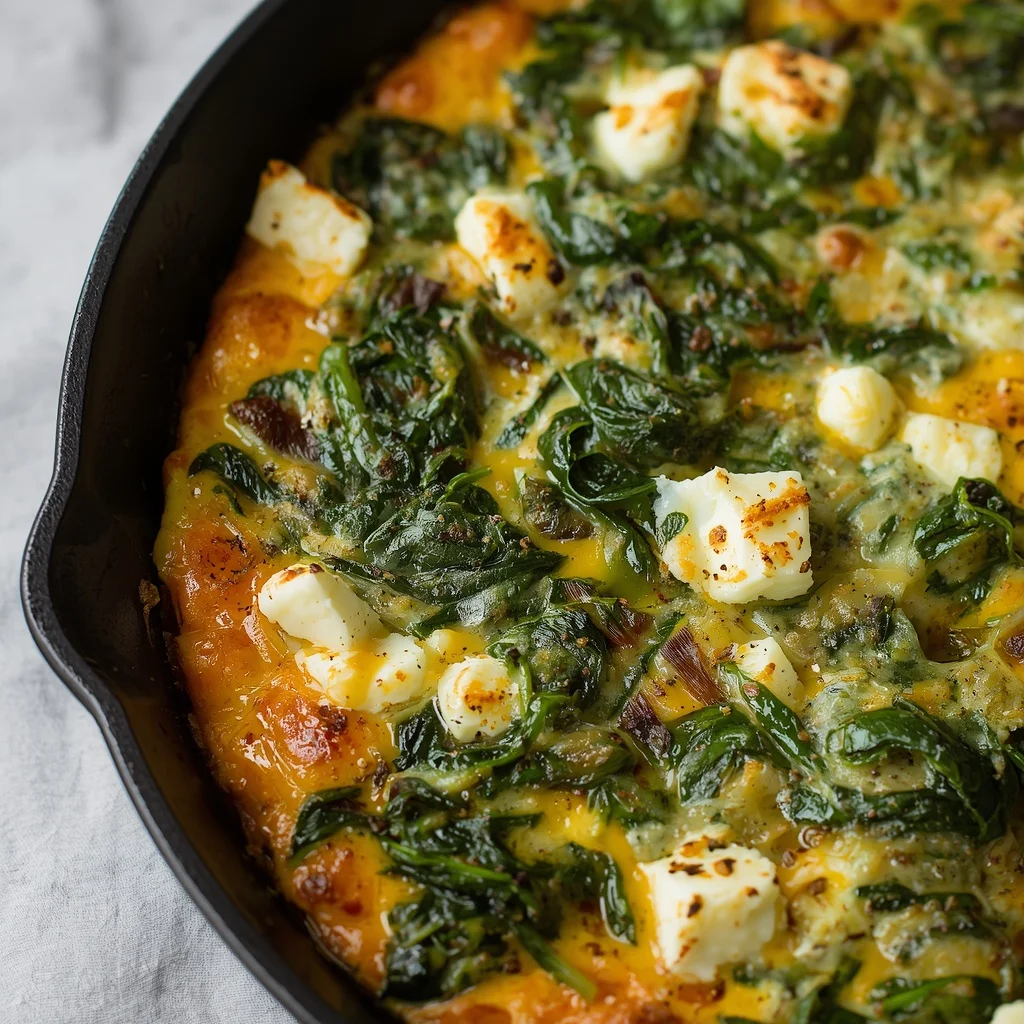
Culinary elegance meets everyday simplicity in this iconic dish. Few options match the brilliance of a classic spinach and feta frittata recipe. Are you planning a relaxed Sunday morning brunch? Perhaps you need a quick weeknight dinner after work. Maybe you want nutritious meal prep options for the week ahead. This single skillet masterpiece fits every single occasion. It bridges the gap between gourmet quality and accessible home cooking.
The secret behind a successful spinach and feta frittata recipe lies in balance. Simple components come together in perfect harmony. Soft eggs are whipped into a fluffy, golden custard. Vibrant ribbons of tender spinach fold smoothly into the egg base. Aromatic garlic and sweet onions bring deep flavor. Pockets of warm feta cheese burst with rich taste in every single bite. No flour or pastry dough is required here. Therefore, this dish naturally suits gluten free and low carbohydrate diets. Comforting richness remains fully intact throughout every slice.
What Is the Ultimate Spinach and Feta Frittata Recipe?
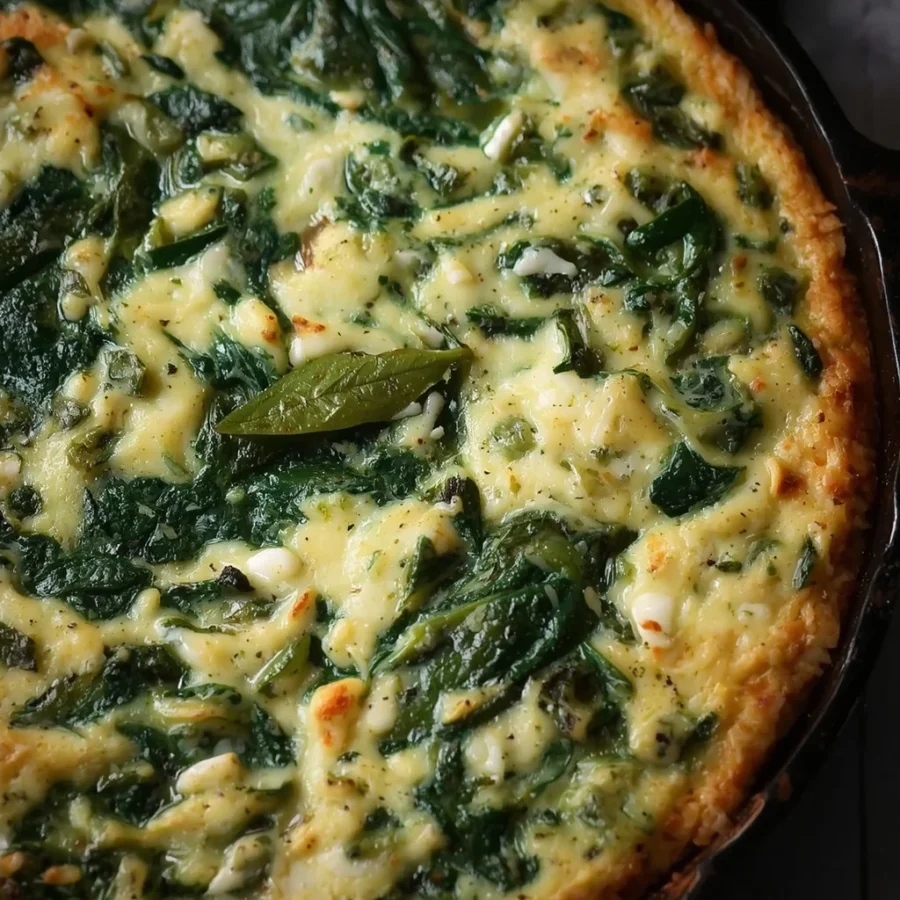
An authentic spinach and feta frittata recipe creates an open faced Italian egg dish. Cooking begins slowly in a skillet right on your stovetop. Afterward, the pan moves into the oven to finish setting into a delicate slice. French omelets demand rapid heat and precise folding skills. Conversely, a frittata offers a far more forgiving process. Fillings layer directly into the egg mixture. Every ingredient cooks evenly throughout the entire skillet.
Classic quiches rely heavily on buttery pastry shells and heavy cream mixtures. Instead, a frittata keeps the main spotlight firmly on fresh produce and eggs. An airy structure develops quickly without requiring hours of work. Pairing nutrient dense spinach with sharp sheep milk feta creates an incredible flavor profile. Traditional Eastern Mediterranean cooking inspires this harmonious balance.
Understanding the Custard Structure
Science plays a vital role in egg coagulation. Gentle heat uncoils protein chains slowly. Moisture stays trapped inside a delicate structural network. Adding a splash of milk or heavy cream helps tremendously. Dairy lowers the temperature at which egg proteins firm up. A soft curd forms rather than a rubbery texture.
Baking this delicate custard surrounded by greens creates fantastic contrast. Natural oils from the cheese melt gently into the eggs. Rich savory pockets enhance the grassy notes of cooked spinach. Texture and taste stay balanced across every single bite.
The Rich Historical Origin of the Frittata
Appreciating this dish fully requires looking back at history. The word frittata traces its origin to the Italian verb friggere. This word translates directly to fry. Historically, Italian cooks used the term broadly for any pan fried egg meal. Descriptions ranged from plain fried eggs to complex layered egg cakes filled with leftovers.
Resourcefulness defined daily life across rural Italian households. Waste was strictly avoided in traditional kitchens. Leftover vegetables, boiled potatoes, cured meats, and cheese rinds were carefully gathered. Cooks sautéed these items briefly in olive oil before binding them with fresh farm eggs. This practical mindset created an affordable meal that fueled working families for generations.
The Mediterranean Fusion of Spinach and Feta
Italian cooks perfected the skillet technique over time. Meanwhile, blending spinach with feta traces back to the sunny coasts of Greece. Aegean cooks have celebrated leafy greens paired with barrel aged cheese for centuries. Classic savory pastries like spanakopita showcase this exact combination best.
Cross pollination of Mediterranean traditions expanded during the nineteenth and twentieth centuries. Home cooks realized that applying vibrant Greek ingredients to Italian stovetop baking created extraordinary results. Today, the spinach and feta frittata recipe stands as a global favorite. Breakfast cafés, local bistros, and home kitchens celebrate its magnificent taste daily.
Essential Ingredients and Quantities
Crafting the absolute best spinach and feta frittata recipe starts with quality ingredients. Minimal components mean every single item impacts flavor significantly.
+-----------------------------------------------------------------------+
|                    INGREDIENT & FUNCTION BREAKDOWN                    |
|                                                                       |
|   Large Eggs ......... Provides structure, protein, and rich flavor   |
|   Whole Milk/Cream ... Tenderizes proteins for a soft custard texture |
|   Fresh Spinach ...... Adds earthy sweetness, color, and key vitamins |
|   Feta Cheese ........ Delivers sharp, salty, creamy pockets of flavor|
|   Onion & Garlic ..... Establishes an aromatic savory base note       |
|   Olive Oil .......... Sautéing medium that enhances Mediterranean notes|
+-----------------------------------------------------------------------+
Ingredients for the Egg Custard Base
-
Large eggs: Eight large room temperature eggs. Room temperature eggs ensure uniform baking without dropping pan temperature suddenly.
-
Whole milk or heavy cream: Two tablespoons. Dairy provides essential fat, keeping proteins soft and tender.
-
Fine sea salt: One quarter teaspoon. Salt enhances natural egg and vegetable flavors.
-
Freshly cracked black pepper: One quarter teaspoon. Black pepper adds subtle warmth.
-
Dried oregano: One quarter teaspoon. Herbal notes tie spinach and cheese together.
Ingredients for the Vegetable and Cheese Filling
-
Fresh spinach: Two cups, roughly chopped and packed tightly. Fresh baby spinach offers sweet flavor, though mature spinach works fine.
-
Crumbled feta cheese: One half cup. Block feta preserved in brine yields better melting than pre-crumbled varieties.
-
Yellow or white onion: One quarter cup, finely chopped. Yellow onion delivers delicate background sweetness.
-
Garlic: One clove, finely minced. Fresh garlic brings rich savory aroma.
-
Extra virgin olive oil: One tablespoon. Cold pressed oil adds fruity notes to sautéed vegetables.
-
Grated Parmesan cheese: Two tablespoons, optional. Parmesan creates a savory, golden top crust.
Detailed Step by Step Direction and Preparation Method: spinach and feta frittata
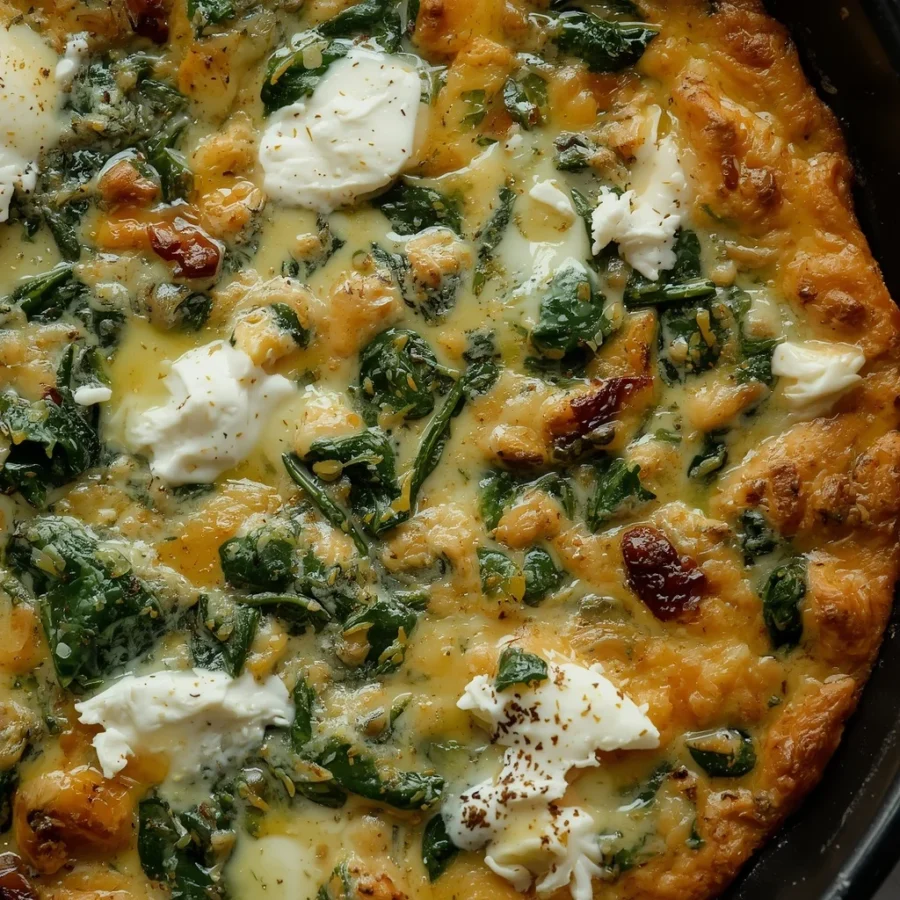
Flawless results require attention to heat management, vegetable preparation, and baking time. Follow these steps carefully for success.
Step 1: Preheating the Oven and Equipment Selection
Position your oven rack directly in the center position. Preheat the oven to three hundred seventy five degrees Fahrenheit. Choosing the correct pan matters greatly here. Select a ten inch heavy duty, oven safe skillet. Well seasoned cast iron or heavy stainless steel distributes heat evenly across bottom and sides.
Step 2: Preparing and Whisking the Egg Mixture
Crack eight room temperature eggs into a clean glass bowl. Add two tablespoons of milk, one quarter teaspoon of salt, one quarter teaspoon of black pepper, and one quarter teaspoon of dried oregano.
Whisk vigorously for one full minute. Thoroughly blend whites and yolks until liquid becomes smooth and frothy. Introducing air bubbles helps create a lighter, fluffier texture later.
Step 3: Sautéing the Aromatics and Greens
Set your skillet over medium burner heat. Warm one tablespoon of extra virgin olive oil. Toss in one quarter cup of finely chopped onion once oil shimmers. Cook for two to three minutes until translucent and soft.
Add minced garlic and two cups of chopped fresh spinach. Tossing constantly for one to two minutes wilts greens rapidly. Ensure released vegetable moisture evaporates completely before proceeding.
Step 4: Setting the Base on the Stovetop
Turn heat down to medium low. Pour the egg mixture directly over cooked onions, garlic, and spinach. Distribute greens evenly using a heat resistant spatula.
Leave the pan undisturbed for two to three minutes. Watch the perimeter carefully during this time. The bottom and outer edges should firm up while center remains liquid.
Step 5: Layering the Cheese
Scatter one half cup of crumbled feta cheese across the setting egg mixture once edges firm up. Sprinkle optional Parmesan over the top surface now as well.
Avoid stirring cheese into the egg liquid directly. Cheese sinks naturally while forming a bubbly, golden upper crust in the oven.
Step 6: Baking and Oven Finishing
Transfer the heavy skillet carefully onto the middle rack of your preheated oven using oven mitts. Bake at three hundred seventy five degrees Fahrenheit for ten to fifteen minutes.
Monitor progress closely during final baking minutes. The frittata is done when the center feels springy and no longer jiggles. Edges should appear golden brown and pull slightly away from pan sides.
Step 7: Resting, Slicing, and Serving
Remove hot skillet safely using heavy mitts. Place it on a trivet or heatproof surface. Allow your frittata to rest undisturbed for five full minutes.
Resting lets internal steam redistribute while egg structures firm up nicely. Clean, sharp wedges slice effortlessly without crumbling apart. Serve warm, at room temperature, or chilled.
Inspiring Recipe Variations and Customizations: spinach and feta frittata
Adaptability makes this basic recipe truly fantastic. Adjust ingredients easily based on dietary goals, seasonal produce, or kitchen supplies.
Mediterranean Sun Dried Tomato and Olive Version
Intensity increases when adding sun dried tomatoes to the mix. Toss one quarter cup of drained, chopped sun dried tomatoes in with spinach during sautéing. Add two tablespoons of pitted, sliced Kalamata olives just before pouring eggs. Concentrated tomato sweetness pairs wonderfully with salty olives and rich feta.
Protein Packed Meat Lover’s Frittata
Adding cooked meats satisfies those wanting extra protein. Crisp diced bacon, crumbled turkey sausage, or prosciutto work brilliantly. Cook meat in the skillet first. Drain excess fat before sautéing onions and greens right in that flavorful pan base.
Dairy Free and Vegan Adaptations
Plant based alternatives allow everyone to enjoy this classic dish. Swap whole milk for unsweetened almond or oat milk easily. Choose high quality dairy free feta alternatives instead of milk cheese. For complete egg replacement, blend sixteen ounces of silken tofu with nutritional yeast, turmeric, and cornstarch. Follow standard skillet baking instructions from there.
The Sheet Pan Crowd Pleaser
Baking in a skillet may not produce enough portions for large crowds. Doubling ingredient quantities solves this issue easily. Pour the mixture into a greased nine by thirteen inch glass baking dish. Bake at three hundred seventy five degrees Fahrenheit for twenty to twenty five minutes. Slice into neat rectangular squares once fully set.
Frequently Asked Questions (FAQs): spinach and feta frittata
How can I prevent my spinach and feta frittata from becoming watery?
Improperly prepared spinach causes most watery frittatas. Raw greens release tremendous moisture when exposed to heat. Always cook fresh spinach until liquid evaporates completely before pouring eggs into your pan.
Thaw frozen spinach completely if using it as a substitute. Wrap cooked greens tightly inside a clean kitchen towel. Squeeze out every drop of excess water before mixing ingredients.
Can I make spinach and feta frittata in advance for weekly meal prep?
Meal planning becomes simple with this durable egg dish. Cool the baked frittata completely at room temperature first. Cut into individual serving wedges. Store slices in airtight glass containers inside your refrigerator for up to four days.
Reheating requires minimal effort later. Warm single slices in a microwave on medium power for forty five seconds. Alternatively, heat wedges in a three hundred fifty degree oven for five to seven minutes.
What is the best type of skillet to use for a frittata?
Every frittata skillet must be completely oven safe. Well seasoned ten inch cast iron pans represent the gold standard. Cast iron retains heat exceptionally well while forming golden outer crusts.
Heavy stainless steel pans or oven proof nonstick cookware perform wonderfully too. Avoid handles made of plastic. Ensure materials tolerate heat reaching at least four hundred degrees Fahrenheit.
Why did my frittata turn out dry or rubbery?
Overbaking causes tough, rubbery textures in egg dishes. Coagulation happens rapidly under direct heat. Excessive cooking squeezes moisture out from egg protein strands violently.
Protect delicate textures by removing the pan as soon as the center sets. Residual heat in heavy cookware continues gentle cooking during the mandatory resting window on your counter.
Conclusion: spinach and feta frittata
Every home cook benefits from mastering a classic spinach and feta frittata recipe. Simple staples transform into an elegant, nutritious meal suitable for any time of day. Careful vegetable preparation ensures proper moisture control throughout baking. Gentle cooking temperatures preserve soft egg textures seamlessly. Allowing proper resting time guarantees clean, beautiful slices on every plate. Prepare this skillet meal today and experience effortless Mediterranean style cooking right at home.
Print
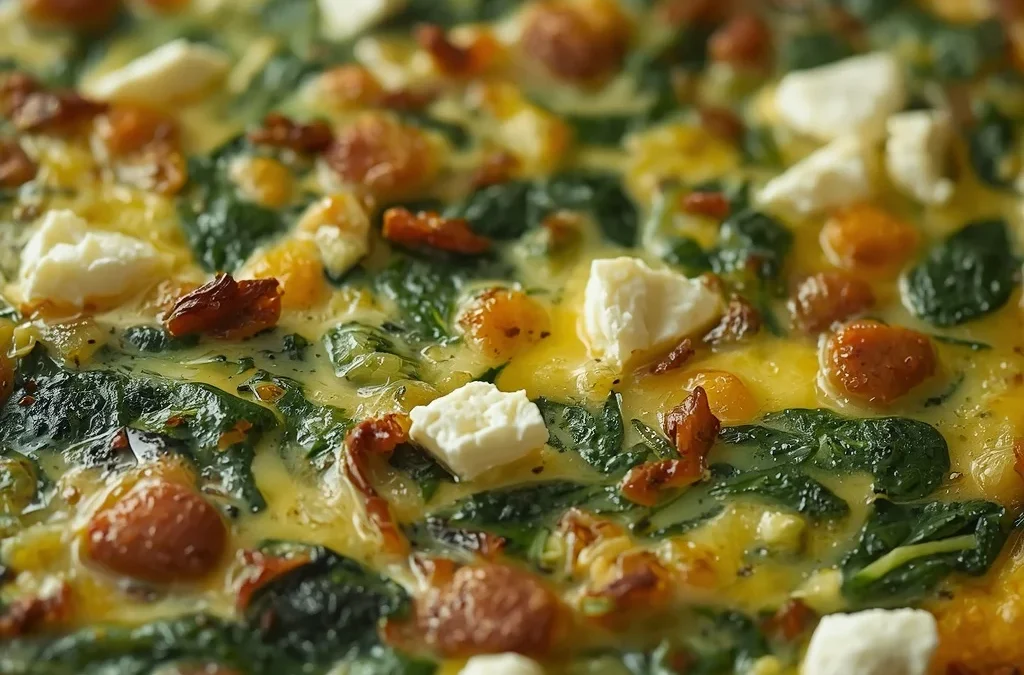
The Ultimate Guide to the Masterful Spinach and Feta Frittata Recipe
- Total Time: 25 minutes
- Yield: 4 servings 1x
- Diet: Vegetarian
Description
An authentic spinach and feta frittata recipe creates an open faced Italian egg dish. Cooking begins slowly in a skillet right on your stovetop. Afterward, the pan moves into the oven to finish setting into a delicate slice. French omelets demand rapid heat and precise folding skills. Conversely, a frittata offers a far more forgiving process. Fillings layer directly into the egg mixture. Every ingredient cooks evenly throughout the entire skillet.
Ingredients
Scale
- 8 large eggs
- 2 tbsp milk or heavy cream
- 2 cups fresh spinach, roughly chopped
- ½ cup crumbled feta cheese
- ¼ cup finely chopped onion
- 1 clove garlic, minced
- 1 tbsp olive oil
- ¼ tsp salt
- ¼ tsp black pepper
- ¼ tsp dried oregano
- 2 tbsp grated Parmesan cheese, optional
Instructions
- Preheat: Heat the oven to 190°C (375°F).
- Prepare eggs: Whisk eggs, milk, salt, pepper, and oregano in a bowl.
- Sauté vegetables: Heat olive oil in an oven-safe skillet over medium heat. Cook onion for 2–3 minutes, then add garlic and spinach. Cook until the spinach wilts, about 1–2 minutes.
- Add eggs: Pour the egg mixture over the vegetables. Cook without stirring for 2–3 minutes, until the edges begin to set.
- Add cheese: Sprinkle feta and Parmesan over the top.
- Bake: Transfer the skillet to the oven and bake for 10–15 minutes, until the center is set and lightly golden.
- Serve: Rest for 5 minutes, slice, and serve warm.
Notes
For extra flavor, add cherry tomatoes, bell peppers, mushrooms, or fresh herbs such as parsley or dill. Serve warm with a fresh salad or toasted bread for a delicious and satisfying meal.
- Prep Time: 10 minutes
- Cook Time: 15 minutes
- Category: Breakfast
- Method: Baking
- Cuisine: Italian
Nutrition
- Serving Size: 1 slice
- Calories: 220 kcal
Keywords: spinach feta frittata, baked egg frittata with spinach and feta, easy spinach and feta egg bake
