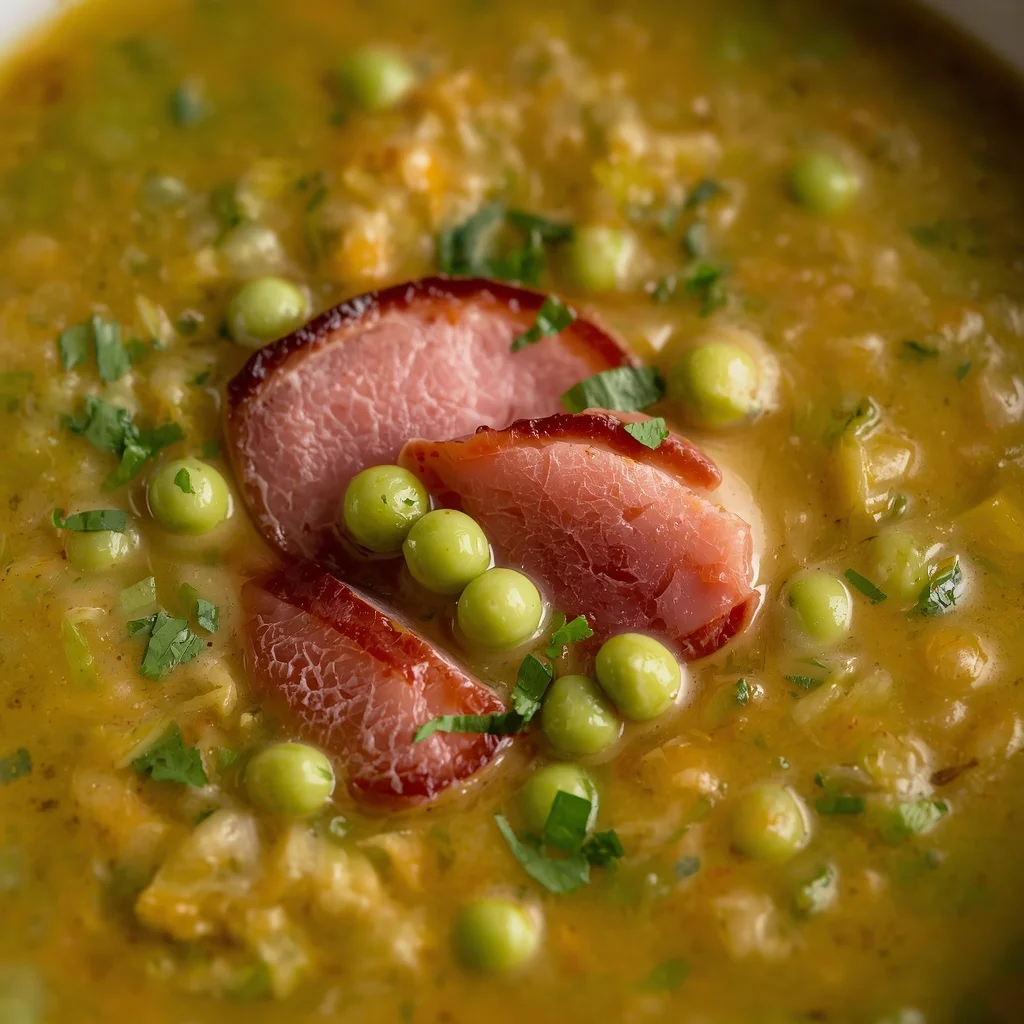
Nothing quite compares to a steaming, fragrant bowl of homemade split pea soup with ham on a cold, brisk day. This timeless dish is the ultimate definition of rustic comfort food. It brings together earthly dried legumes, sweet garden vegetables, aromatic herbs, and savory, smoky pork into a rich, velvety brew that naturally warms you from the inside out. When you cook this hearty meal at home, the delightful aroma slowly fills your entire kitchen, creating an irresistible sense of nostalgia and warmth. Whether you are seeking a budget-friendly family dinner, a satisfying meal prep option for a busy work week, or simply a delicious way to make good use of leftover holiday pork bones, learning how to master this traditional split pea soup with ham will elevate your home cooking to new heights.
In this comprehensive culinary guide, we will break down every single detail you need to know about preparing this iconic dish. We will explore what makes this classic soup so special, delve into its fascinating history, cover exact ingredient measurements written in plain language, walk through detailed step-by-step cooking directions, discuss creative dietary variations, and answer the most frequently asked questions. By the time you finish reading, you will possess all the knowledge required to create a perfect, restaurant-quality batch right in your own kitchen.
What Is Split Pea Soup with Ham?
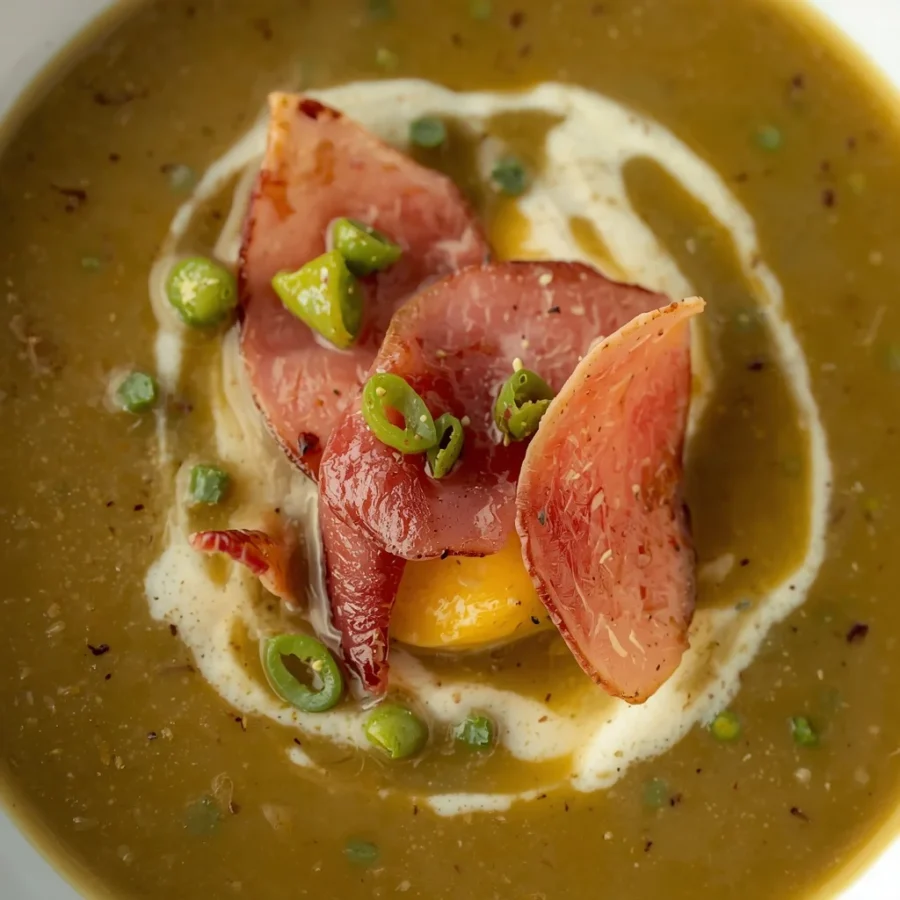
At its most fundamental level, split pea soup with ham is a thick, slow-simmered, leguminous soup crafted from dried green split peas, a mirepoix of aromatic vegetables, savory liquid broth, and rich pork meat. Unlike fresh garden peas, which are sweet, tender, and eaten as a light side vegetable, split peas are field peas grown specifically for drying. Once harvested, the outer skin is removed, and the seed naturally splits in half along its seam. This splitting process allows the dried pulse to break down rapidly during the simmering process, completely dissolving into a thick, luxurious, and smooth texture without requiring any flour, cornstarch, or artificial cream thickeners.
The addition of cured pork meat provides a essential taste profile that elevates the natural earthiness of the dried legumes. As the bone and attached tender meat simmer gently alongside the herbs and stock, the rendered fat and deep smoked flavor infuse every single spoonful. The result is a wonderfully balanced dish that is high in dietary fiber, packed with plant and animal protein, remarkably low in unnecessary sugars, and extraordinarily satisfying to eat as a complete, standalone meal.
Origin of That Recipe and the Tradition of Legume Cooking
The historical roots of simmering dried legumes into rich potages extend back thousands of years to ancient human civilizations. Long before modern refrigeration existed, early agrarian societies across the Mediterranean, the Near East, and Europe relied heavily on dried field peas and lentils as essential survival foods during long winter months. Historical records show that street vendors in ancient Athens and Rome routinely sold hot pea broth from large copper kettles to working-class citizens seeking affordable nourishment.
As culinary practices evolved across Northern and Western Europe throughout the Middle Ages, home cooks began pairing these long-lasting dried legumes with preserved, salt-cured, or smoked pork. In regions like Germany, the Netherlands, England, and Scandinavia, thick pea soup became a celebrated staple of everyday peasant life. European settlers later carried these cherished recipes across the Atlantic Ocean to North America. Over time, the traditional combination transformed into a legendary American comfort dish, particularly in cold northeastern climates where utilizing a leftover holiday ham bone or a humble pork shank became a cherished post-holiday ritual.
Ingredients and Exact Quantities: split pea soup with ham
Creating an exceptional pot of soup requires high-quality, whole food elements combined in precise proportions. Below is the complete list of everything you will need to gather before beginning your preparation:
- Dried Green Split Peas: One full pound, which equals approximately four hundred and fifty grams. Ensure you pick through them carefully to discard any tiny pebbles or debris, then rinse them thoroughly under cold running water.
- Cured Pork Meat: One whole ham hock weighing approximately one pound to one and a half pounds, which equals four hundred and fifty to six hundred and eighty grams. Alternatively, if you do not have a full hock available, you may use two full cups of cooked ham cut into uniform cubes.
- Yellow Onion: One medium-sized yellow onion, neatly peeled and finely diced.
- Fresh Carrots: Two medium fresh garden carrots, thoroughly washed, peeled, and cut into small pieces.
- Celery Stalks: Two crisp stalks of fresh celery, thoroughly washed and finely chopped.
- Garlic: Two fresh cloves of garlic, peeled and finely minced.
- Liquid Broth Base: Eight full cups of liquid, using either reduced-sodium chicken stock or flavorful vegetable broth.
- Aromatic Bay Leaf: One whole dried bay leaf.
- Dried Thyme: One half teaspoon of aromatic dried thyme leaves.
- Black Pepper: One half teaspoon of freshly ground black pepper.
- Table Salt: One half teaspoon of fine salt, or adjusted to your personal taste preferences depending on how salty your pork is.
- Cooking Oil: One full tablespoon of extra virgin olive oil.
- Fresh Parsley: Two full tablespoons of fresh curly or flat-leaf parsley, finely chopped for a vibrant final garnish.
Step-by-Step Direction and Preparation Method: split pea soup with ham
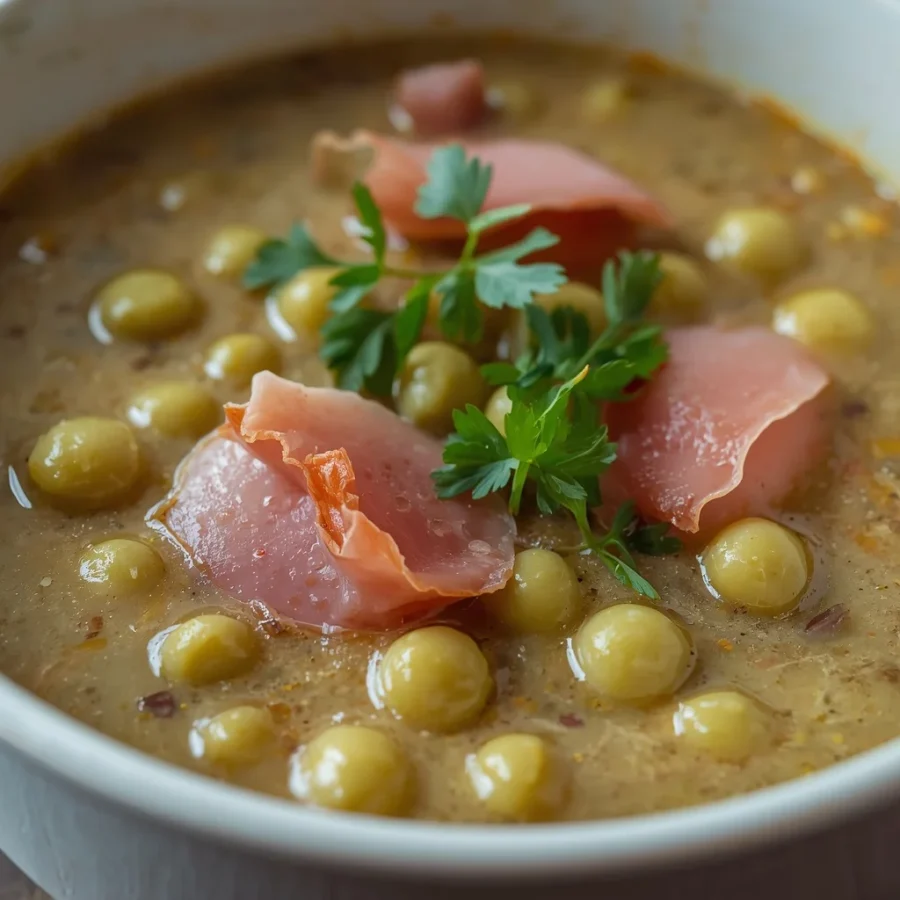
Cooking a memorable batch of split pea soup with ham does not require complex culinary techniques, but it does demand patience and careful attention to detail. Follow these straightforward steps to achieve a perfectly balanced, velvety outcome.
Step One: Building the Aromatic Vegetable Base
Place a heavy, thick-bottomed soup pot or large Dutch oven on your stove burner set to medium heat. Pour in one full tablespoon of extra virgin olive oil and allow it to warm for a moment. Add your finely diced yellow onion, chopped carrots, and sliced celery stalks directly into the warm oil. Cook these aromatic vegetables together, stirring frequently with a wooden spoon, for approximately five to seven minutes. You want the vegetables to soften and become translucent without turning dark brown.
Step Two: Infusing the Aromatic Garlic
Once your vegetable base has softened, add the two cloves of minced garlic directly to the pot. Stir the mixture continuously for about thirty seconds until the rich garlic scent fills the air. Be careful not to let the garlic scorch or burn, as burnt garlic will introduce an unwanted bitter flavor to your finished broth.
Step Three: Assembling the Pot Ingredients
Immediately pour your rinsed green split peas into the pot along with the softened vegetables and garlic. Carefully submerge the whole ham hock right into the center of the pot. Next, pour in eight full cups of your chosen liquid broth base. Add the single dried bay leaf, one half teaspoon of dried thyme, and one half teaspoon of ground black pepper. Give all the ingredients a gentle, thorough stir to combine them evenly.
Step Four: Bringing to a Boil and Gentle Simmering
Increase your stove heat setting to high and bring the entire liquid pot to a rolling boil. As soon as bubbles begin breaking vigorously across the surface, immediately reduce your stove burner heat down to low. Place the heavy lid on your pot, leaving it slightly ajar so a small amount of steam can escape continuous pressure build-up. Allow the soup to simmer gently for a total duration of sixty to ninety minutes. Be sure to return to the stove every fifteen to twenty minutes to stir the bottom of the pot, preventing the settling legumes from sticking to the hot surface.
Step Five: Processing the Meat and Adjusting Texture
After sixty to ninety minutes of slow simmering, check the split peas. They should be completely dissolved, creating a thick and velvety green broth. Carefully remove the whole ham hock using heavy tongs and set it aside on a clean cutting board for five minutes to cool down slightly. Once cool enough to handle safely, shred the tender pork meat away from the center bone and discard any tough skin, fat, or cartilage. Shred or chop the warm meat into small, bite-sized pieces and return it back into the simmering pot. If you are using pre-diced cooked ham instead of a whole hock, simply stir the two cups of diced meat into the pot during the final fifteen minutes of cooking.
Step Six: Final Seasoning and Presentation
Carefully extract and discard the dried bay leaf from the pot. Taste a spoon of the hot liquid and evaluate the salt level. Depending on the inherent saltiness of your pork meat and broth base, add up to one half teaspoon of additional salt if needed. Ladle the hot, rich liquid into deep soup bowls, sprinkle chopped fresh parsley across the top for a bright color contrast, and serve immediately alongside warm crusty bread.
Flavorful Variations and Dietary Adaptations: split pea soup with ham
While the traditional classic split pea soup with ham recipe remains a timeless favorite, you can easily adapt the basic foundation to match your specific dietary preferences or pantry ingredients.
Vegetarian and Vegan Smoky Adaptation
If you prefer a completely plant-based diet, you can easily transform this recipe into a vegetarian masterpiece. Simply eliminate the pork meat entirely and use an all-vegetable liquid stock base. To recreate the deep, smoky flavor profile that the cured meat typically provides, add one full teaspoon of smoked paprika, a few drops of liquid hickory smoke, or a small splash of soy sauce during the vegetable sauté stage.
Yellow Split Pea and Root Vegetable Variation
You can substitute traditional green split peas with yellow split peas for a slightly milder, nuttier flavor profile and an elegant golden color. Additionally, you can add extra hearty root vegetables into the pot during the initial cooking phase. Adding small cubes of peeled golden potatoes, parsnips, or rutabagas creates an even thicker, chunkier texture that feels delightfully rustic and filling.
Creamy Slow Cooker Method
For those who prefer a completely hands-off preparation method, this recipe translates exceptionally well into a slow cooker appliance. Simply sauté your diced onions, carrots, celery, and garlic in a pan first to unlock their deep flavors, then transfer them into your slow cooker vessel along with the rinsed peas, hock, seasonings, and broth. Cover the appliance with its lid and cook on the low setting for seven to eight full hours until the peas break down into a smooth, creamy texture.
Frequently Asked Questions: split pea soup with ham
Why do my split peas remain hard even after long cooking?
If your dried split peas fail to soften after more than ninety minutes of continuous simmering, the issue is usually tied to the age of the legumes or hard water. Old legumes lose their internal moisture over time and take significantly longer to break down. To ensure success, always buy fresh bags of dried split peas from busy grocery stores with high product turnover. Additionally, avoid adding high-acid ingredients like tomatoes or lemon juice until after the legumes have completely softened, as acid hardens the outer cell walls of pulses.
Do I need to soak dried split peas overnight before cooking?
Unlike large dried whole beans such as kidney beans, black beans, or chickpeas, dried split peas do not require any overnight soaking prior to cooking. Because the outer skin has been removed and the seed split in half, they absorb hot liquid rapidly and soften naturally within sixty to ninety minutes of boiling. A thorough rinse under cold running water to clear away dust is all the advance prep required.
How should I store and reheat leftover portions safely?
Allow leftover portions to cool down to room temperature before transferring them into airtight glass containers. Store the containers in your refrigerator for up to four or five days. As the soup cools down, it will naturally thicken into a firm, almost gel-like consistency due to the rich natural starches. When you are ready to reheat a portion, simply place it into a small saucepan over medium heat and stir in a small splash of extra water or broth to restore its smooth, velvety consistency. You can also freeze portions in freezer-safe containers for up to three months.
Conclusion: split pea soup with ham
In summary, learning to make an authentic, comforting split pea soup with ham is a gratifying culinary journey that yields remarkable flavor from simple, wholesome ingredients. By combining earthy dried legumes, sweet garden vegetables, and savory smoked pork, you create a wholesome, highly nourishing meal that satisfies the appetite while bringing warmth to any table. Whether you follow the traditional stovetop preparation method, adapt it for a slow cooker, or customize the ingredients to suit your unique tastes, this timeless recipe is bound to become a permanent family favorite in your weekly home meal rotation.
Split Pea Soup with Ham
- Total Time: 1 hour 45 minutes
- Yield: 6 servings 1x
Description
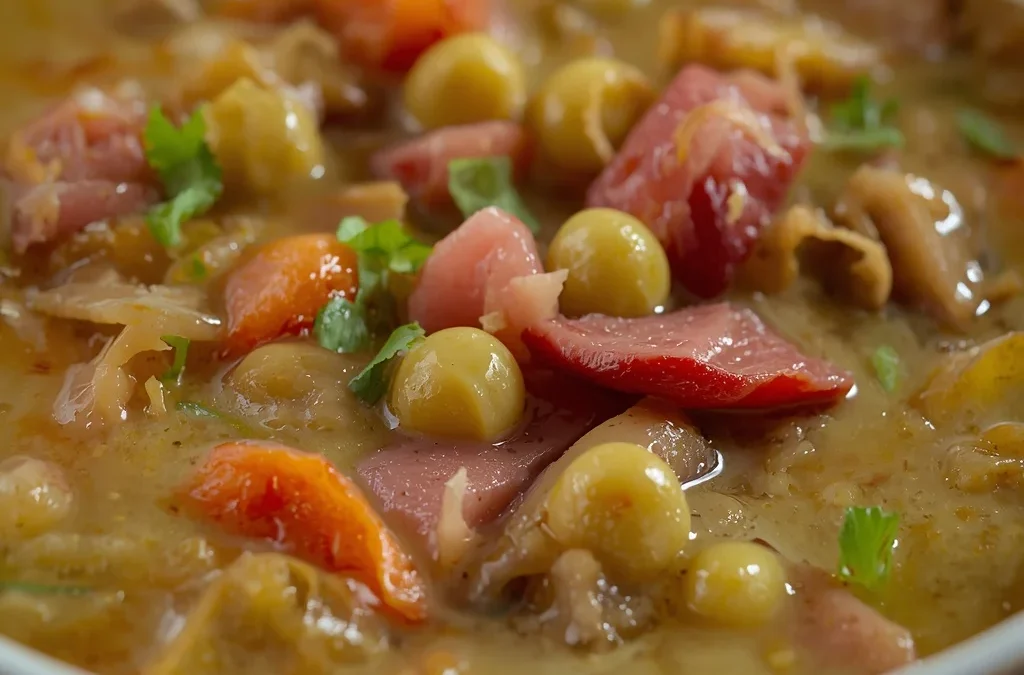
At its most fundamental level, split pea soup with ham is a thick, slow-simmered, leguminous soup crafted from dried green split peas, a mirepoix of aromatic vegetables, savory liquid broth, and rich pork meat. Unlike fresh garden peas, which are sweet, tender, and eaten as a light side vegetable, split peas are field peas grown specifically for drying. Once harvested, the outer skin is removed, and the seed naturally splits in half along its seam. This splitting process allows the dried pulse to break down rapidly during the simmering process, completely dissolving into a thick, luxurious, and smooth texture without requiring any flour, cornstarch, or artificial cream thickeners.
Ingredients
- 1 lb (450 g) dried green split peas, rinsed
- 1 ham hock (about 1–1½ lb / 450–680 g) or 2 cups diced cooked ham
- 1 medium onion, diced
- 2 carrots, diced
- 2 celery stalks, diced
- 2 cloves garlic, minced
- 8 cups chicken or vegetable broth
- 1 bay leaf
- ½ tsp dried thyme
- ½ tsp black pepper
- ½ tsp salt, or to taste
- 1 tbsp olive oil
- 2 tbsp chopped fresh parsley, for garnish
Instructions
- Heat the olive oil in a large pot over medium heat. Add the onion, carrots, and celery and cook for 5–7 minutes until softened.
- Add the garlic and cook for another 30 seconds.
- Add the split peas, ham hock, broth, bay leaf, thyme, and black pepper.
- Bring to a boil, then reduce the heat and cover partially.
- Simmer for 60–90 minutes, stirring occasionally, until the peas are soft and the soup is thick.
- Remove the ham hock. Shred the meat, discard the skin and bone, and return the meat to the soup. If using diced cooked ham, stir it in during the last 15 minutes.
- Season with salt to taste and remove the bay leaf.
- Garnish with parsley and serve hot.
Notes
For extra flavor, add a splash of lemon juice or a little smoked paprika just before serving. The soup also thickens as it cools, so add a little broth when reheating if needed.
- Prep Time: 15 minutes
- Cook Time: 1 hour 30 minutes
- Category: Soup
- Method: Simmer
- Cuisine: American
Nutrition
- Serving Size: 1 bowl
- Calories: ~390 kcal
Keywords: green split pea soup with ham, crockpot split pea soup with ham hock, homemade ham and split pea soup
