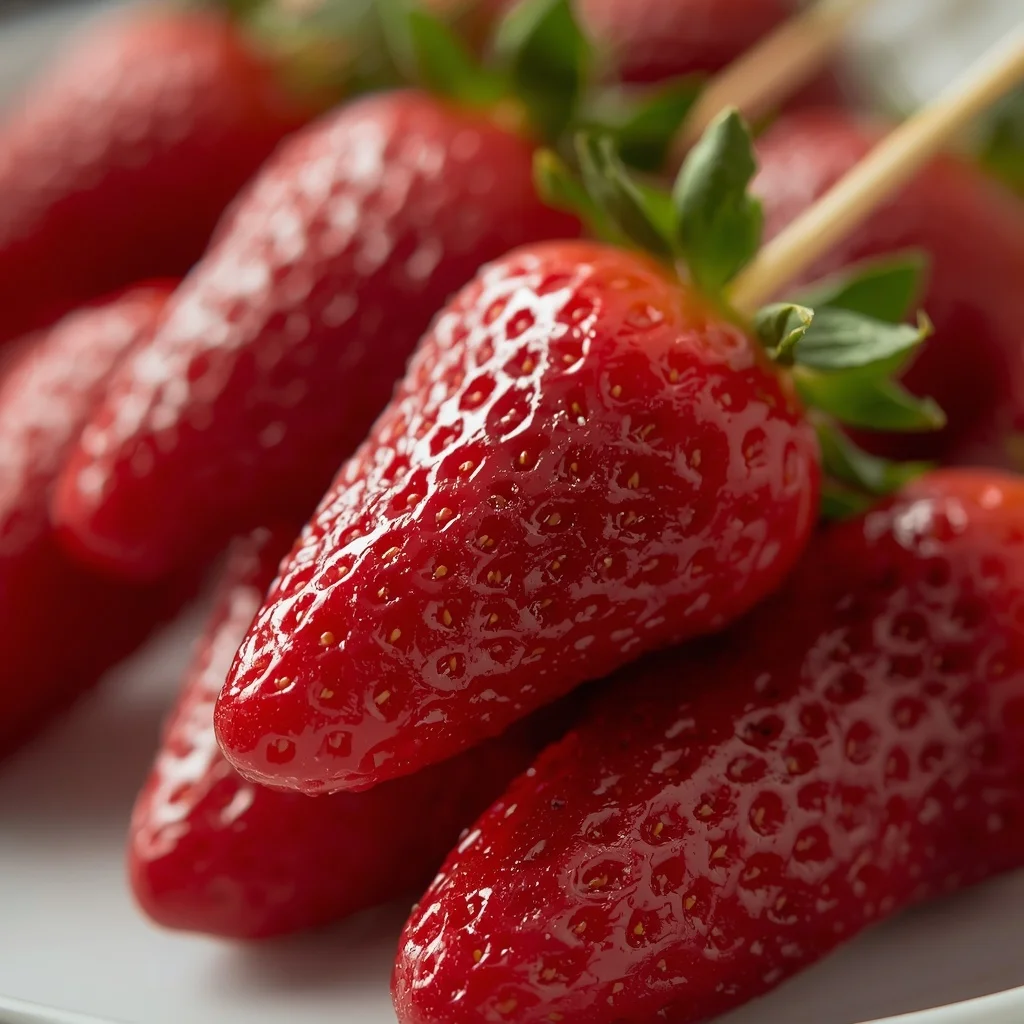
If you have ever scrolled through social media and found yourself completely mesmerized by the deep, resonant crunch of someone biting into a glossy piece of fruit, you have already met the internet sensation that is taking the culinary world by storm. That beautiful, glass-like treat is none other than Tanghulu Candied Strawberry Skewers, a magnificent sweet snack that perfectly balances the tart juiciness of fresh fruit with a shatteringly crisp, sweet shell. Making this classic treat at home is an absolute joy, blending a bit of kitchen science with pure culinary artistry.
When you create Tanghulu Candied Strawberry Skewers, you are not just making a quick dessert; you are mastering a traditional technique that turns humble kitchen staples into a shimmering masterpiece. The contrast between the rigid, hard sugar exterior and the sudden burst of warm, soft fruit inside creates a sensory experience that is entirely unmatched by standard confections. While it might look like something purchased from a high-end confectionery shop or a bustling night market, achieving that flawless, crystal-clear glaze is completely doable in your own kitchen when you follow the right steps.
What is That Recipe?
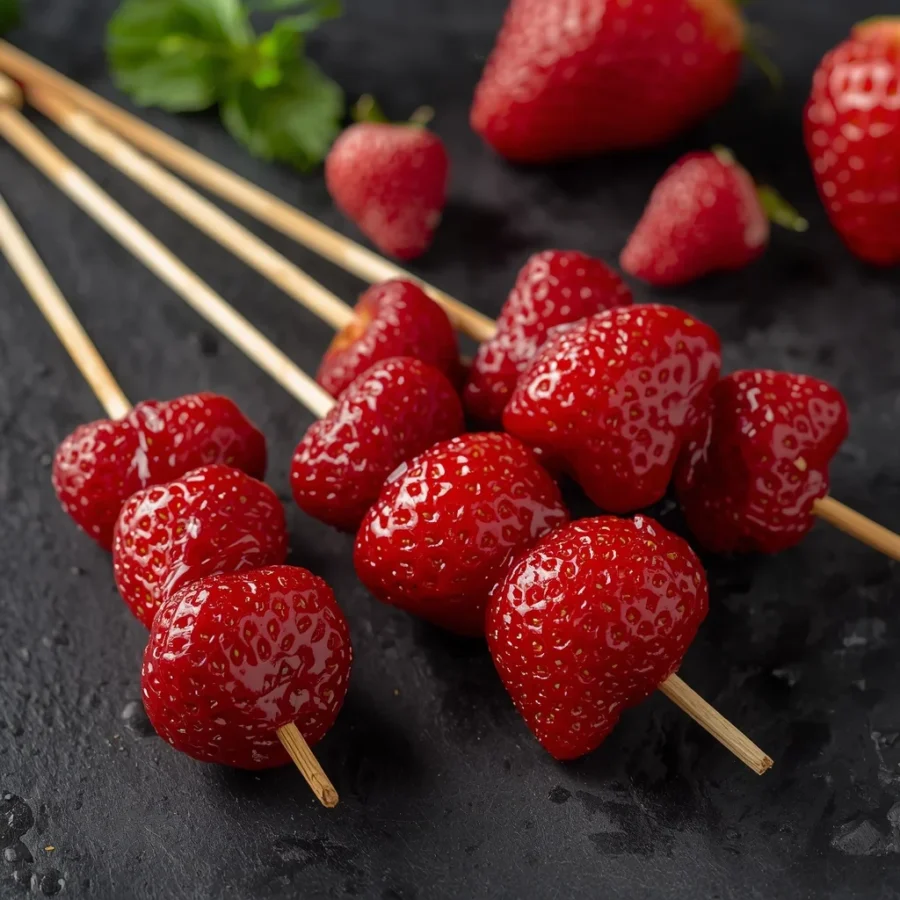
To truly appreciate this sweet treat, we must first look at what makes it so incredibly special. At its absolute core, this dish consists of fresh pieces of fruit that are threaded onto wooden sticks and dipped into a highly concentrated, intensely heated sugar syrup. As the syrup cools, it instantly solidifies into a transparent, rock-hard glaze. The magic relies entirely on reaching the precise physical state of the sugar mixture, ensuring that when you take a bite, the shell cracks like delicate glass rather than chewing like soft taffy or sticking to your teeth.
While strawberries have become the modern superstar of this dish, the technique can be applied to an incredibly wide variety of fruits. The brilliant red hue of the berries glowing through the glossy, reflective coating makes Tanghulu Candied Strawberry Skewers a visual triumph as much as a culinary one. It is a brilliant example of how simple ingredients can undergo a complete structural transformation with the application of controlled heat, resulting in a texturally exciting snack that satisfies both sweet cravings and the desire for a satisfying crunch.
Origin of That Recipe
A Royal Northern Chinese Tradition
Long before this crunchy snack became a viral sensation across global video platforms, it held a deeply rooted place in traditional Chinese culinary history. The roots of this dish stretch back hundreds of years to Northern China, specifically during the Song Dynasty. According to ancient lore, one of the imperial emperors sought a cure for his beloved empress, who had fallen ill with a mysterious ailment that affected her appetite. The court physician prescribed a simple yet ingenious remedy: eating fresh mountain hawthorn berries coated in melted sugar before every meal.
The treatment worked wonders, the empress fully recovered, and the brilliant preparation quickly spread from the elite imperial palace walls directly to the lively streets. Street vendors recognized the brilliance of the combination and began skewering the bright red fruits on long bamboo sticks, selling them to eager crowds during the cold winter months. The freezing northern winds acted as a natural refrigerator, instantly setting the hot syrup into a permanent, icy glaze as vendors carried them through the city.
The Evolution of the Name
The traditional name itself carries a beautiful, symbolic meaning. The word translates roughly to sugar calabash, which refers to a specific type of bottle gourd. The traditional vendors would thread the smaller hawthorn berries near the top of the stick and larger ones toward the bottom, mimicking the classic double-bulbed shape of the calabash gourd.
In Chinese culture, the calabash is a powerful symbol of good fortune, abounding health, and family unity. Over the centuries, as the dish transitioned from a medicinal palace remedy to a beloved winter festival staple, the choice of fruit expanded. While traditionalists still revere the sharp, sour bite of the original mountain hawthorn, the modern world has fell completely in love with the naturally sweet, aromatic profile of fresh strawberries.
Why Candy Coating Requires Specific Kitchen Science
To consistently create the best high-quality content in your kitchen, it helps to understand why the sugar behaves the way it does. When you dissolve granulated white sugar into water and apply heat, you are initiating a process of thermal evaporation. As the water boils away, the concentration of sugar in the pan steadily increases, causing the boiling temperature of the liquid to rise far past the standard boiling point of pure water.
As the temperature climbs, the syrup moves through very distinct culinary phases. Early on, it hits the soft ball stage, which yields chewy caramels. If you keep heating, it progresses to the hard ball and soft crack stages, which are perfect for toffee or taffy. However, for the ultimate Tanghulu Candied Strawberry Skewers, the syrup must absolutely reach the legendary hard-crack stage. At this exact point, almost all residual moisture has vanished from the pan. When the syrup is cooled rapidly in an ice bath, the sugar molecules are locked into an amorphous, non-crystalline solid state. This scientific transformation is what guarantees that unforgettable, musical snap when you bite down.
Ingredients With Quantity: Tanghulu Candied Strawberry Skewers
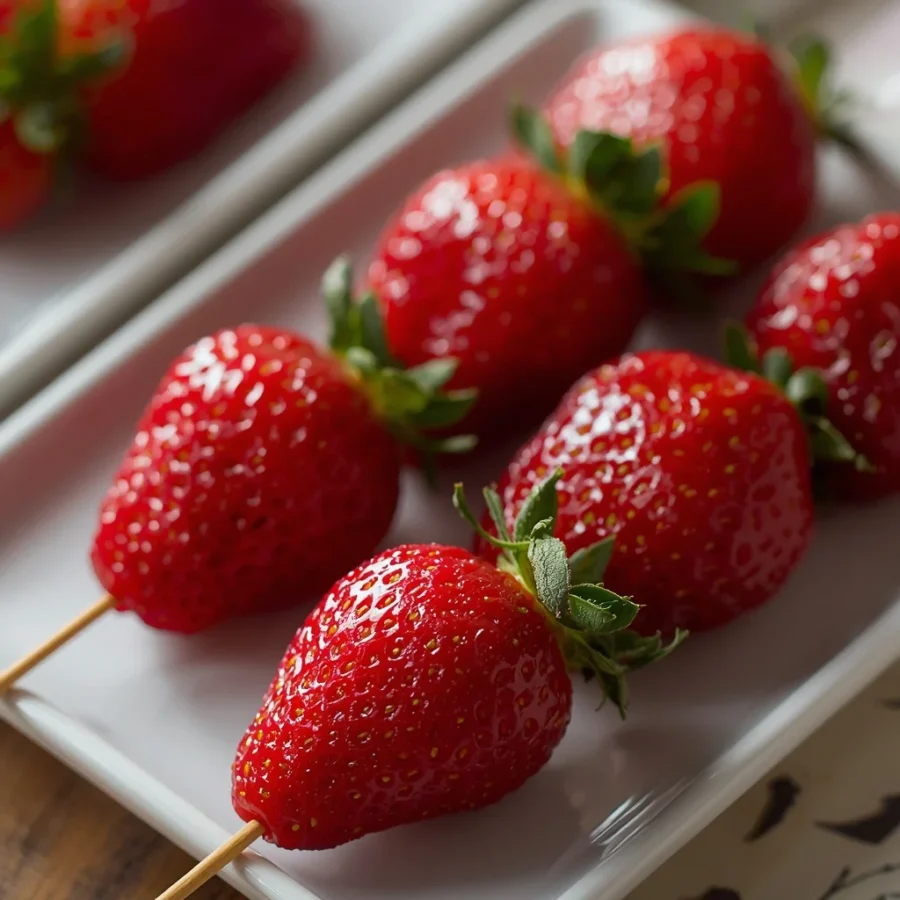
Achieving perfection requires starting with the exact proportions of simple, high-quality components. Because this process moves exceptionally fast once the ideal temperature is reached, you must have all of your items measured out and arranged beautifully on your counter before you ever turn on the stove.
Here is exactly what you will need to gather for your kitchen workspace:
-
Sixteen to twenty fresh strawberries: Choose berries that are firm, uniformly sized, completely ripe, and entirely free of bruises or soft spots.
-
Two full cups of granulated white sugar: Standard white cane sugar is absolutely required here, as alternative sugars contain different moisture levels that will ruin the crystallization process.
-
One full cup of clean water: This provides the initial medium to evenly dissolve the sugar crystals before the boiling process begins.
-
Six to eight sturdy bamboo skewers: These will serve as the structural backbone for your beautiful fruit presentation.
-
A large bowl filled with ice water: This is an essential diagnostic tool used to test the physical readiness of your boiling syrup.
Step by Step Direction and Preparation Method: Tanghulu Candied Strawberry Skewers
Phase One: Fruit Preparation and Essential Moisture Control
The absolute gold standard rule of this entire process is that moisture is the ultimate enemy of hot sugar. If even a single drop of water remains on the surface of your fruit, it will create a barrier of steam when dipped into the boiling syrup. This prevents the sugar from adhering, leaving you with a weeping, sticky mess instead of a beautiful glass shell.
Phase Two: The Delicate Boiling Process
Now that your fruit is completely secure and dry, it is time to turn your attention to the stove. This phase requires patience, focused attention, and a absolute ban on stirring the pan.
Phase Three: The Coating and Setting Ritual
This final active stage requires swift, confident movements. The syrup will continue to cook and darken if left on the hot burner, so you must work efficiently to coat your fruit before the sugar burns.
Pro Tips for Culinary Success: Tanghulu Candied Strawberry Skewers
Creating flawless Tanghulu Candied Strawberry Skewers on your very first try can be simple if you keep a few critical principles in mind.
-
First, always prioritize the dryness of your fruit; even a small trace of humidity or condensation from a cold refrigerator can cause the hot sugar to slide right off the berry surface.
-
Second, resist every single urge to stir the boiling mixture; let the heat do the work naturally as the water evaporates away.
-
Third, work with absolute speed once the syrup hits that perfect hard-crack stage, as the window of time between ideal syrup and burnt, bitter caramel is incredibly narrow.
-
Finally, if you notice the syrup in your pan is beginning to thicken up too much before you have finished dipping all of your fruit skewers, simply return the saucepan to your stove over a very low heat setting for a minute to gently loosen the mixture back up.
Creative Flavor and Fruit Variations
While the classic crimson strawberry will always hold a special place in our hearts, the ingenious technique behind Tanghulu Candied Strawberry Skewers opens the door to an absolute wonderland of creative variations. You can easily elevate the visual and flavor profile of your traditional skewers by introducing delightful texturing elements or exploring different selections from the produce aisle.
Enhancing the Outer Shell
If you want to add an extra layer of complexity to your sweet snacks, try introducing aromatic additions to the process:
-
The Savory Crunch: Immediately after rolling your fruit skewer through the hot syrup, lightly sprinkle the glossy shell with freshly toasted sesame seeds. The nutty, savory notes of the seeds cut through the intense sweetness of the candy shell perfectly.
-
The Fragrant Infusion: Once you remove your perfect syrup from the direct stove heat, stir in a few drops of pure vanilla extract or a splash of rosewater. This infuses the clear shell with a beautiful aroma that complements the natural fruit sugars.
Exploring the Produce Aisle
Do not feel limited to just one type of fruit when building your platters. A spectacular presentation involves mixing and matching different shapes, colors, and acid profiles to create a vibrant rainbow of candied goodness.
| Fruit Choice | Preparation Nuance | Flavor Profile Experience |
| Green or Red Grapes | Keep the skin completely intact; ensure the tiny stem attachment point is entirely dry. | An explosive burst of liquid juice that contrasts intensely with the crunchy exterior. |
| Mandarin Segments | Meticulously peel away all bitter white pith without puncturing the delicate juice membranes. | A bright, citrusy acidity that cuts through the rich sugar coating beautifully. |
| Fresh Blueberries | Skewer several plump berries tightly together to minimize exposed wooden stick areas. | A wonderful bite-sized option that offers a perfect balance of deep sweetness and tartness. |
| Kiwi Chunks | Cut into thick rounds and blot the exposed wet flesh repeatedly with paper towels before dipping. | A striking emerald-green visual presentation with an exotic, tropical tang. |
Frequently Asked Questions: Tanghulu Candied Strawberry Skewers
Why did my sugar coating turn out sticky and soft instead of hard?
This common issue happens when the sugar and water mixture does not spend enough time on the stove. If the syrup does not fully reach the hard-crack stage, there is still too much residual water trapped within the mixture. Without evaporating that excess water, the sugar can only cool into a soft, chewy, or sticky state that clings uncomfortably to your teeth rather than snapping cleanly.
Can I save my leftovers by storing them in the refrigerator?
It is highly recommended that you enjoy these treats immediately, ideally within one to two hours of making them. Refrigerators are naturally high-humidity environments. When you place the hardened sugar shells into a cold fridge, the ambient moisture in the air will cause the sugar to slowly liquefy and weep, turning your beautiful hard candy into a syrupy mess.
How do I clean the stubborn hardened sugar out of my saucepan?
Cleaning up after making candy can look intimidating, but it is actually incredibly simple. Do not waste your energy scrubbing the rock-hard residue. Instead, fill the dirty saucepan to the brim with plain water and place it back on the stove. Bring the water to a rolling boil for several minutes. The high heat will rapidly dissolve the hardened sugar right back into the water, allowing you to pour it down the sink and wipe the pan completely clean with zero effort.
Is it safe to use frozen fruit for Tanghulu Candied Strawberry Skewers?
It is best to avoid frozen options entirely. As frozen berries begin to thaw, even slightly, they continuously release internal moisture and ice crystals onto the surface. This moisture will melt the hot syrup instantly upon contact, preventing that beautiful glass shell from ever forming correctly. Stick to fresh, firm room-temperature produce for the absolute best results.
Conclusion: Tanghulu Candied Strawberry Skewers
Mastering the art of Tanghulu Candied Strawberry Skewers is a deeply rewarding culinary journey that proves you do not need a long list of complex ingredients to create something truly spectacular. By combining fresh, vibrant fruit with the simple physics of boiled sugar, you can transform your kitchen into a traditional night market, yielding a dessert that is as beautiful to look at as it is thrilling to eat. As long as you respect the core rules of moisture control, avoid the urge to stir the boiling pan, and move with confident speed during the dipping process, you will consistently produce a shimmering, glass-like coating that delivers that definitive, triumphant crunch with every single bite. Gather your fresh ingredients, set your workspace up for success, and enjoy the wonderful process of crafting this timeless street food tradition right at home.
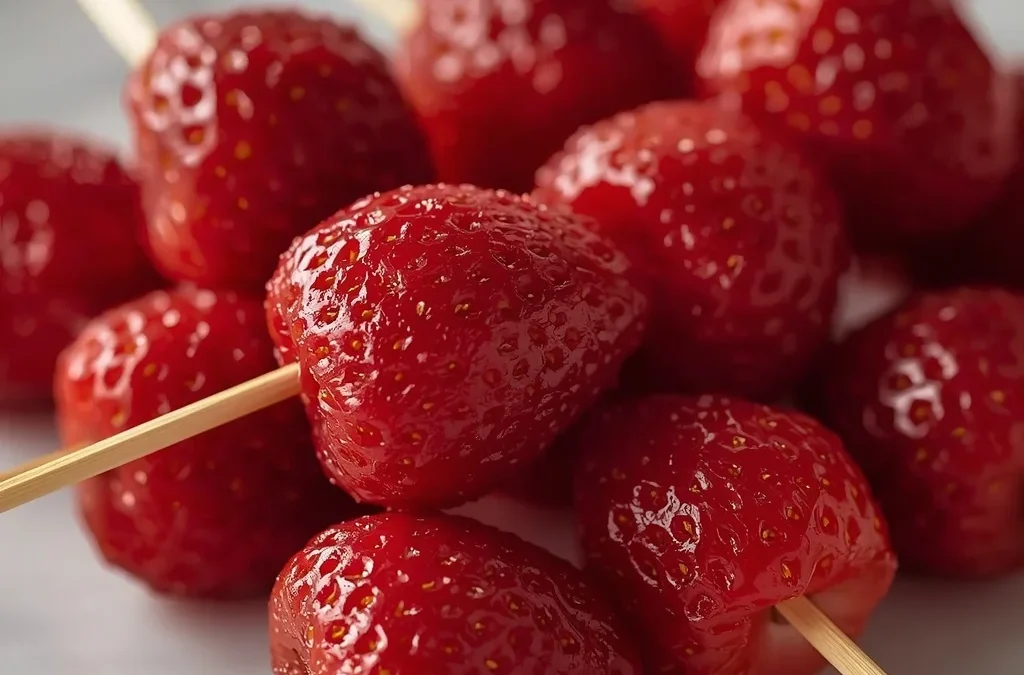
The Ultimate Guide to Perfect Tanghulu Candied Strawberry Skewers
- Total Time: 30 minutes
- Yield: 8 skewers 1x
- Diet: Vegetarian
Description
To truly appreciate this sweet treat, we must first look at what makes it so incredibly special. At its absolute core, this dish consists of fresh pieces of fruit that are threaded onto wooden sticks and dipped into a highly concentrated, intensely heated sugar syrup. As the syrup cools, it instantly solidifies into a transparent, rock-hard glaze. The magic relies entirely on reaching the precise physical state of the sugar mixture, ensuring that when you take a bite, the shell cracks like delicate glass rather than chewing like soft taffy or sticking to your teeth.
Ingredients
- 16–20 fresh strawberries, washed and completely dry
- 6–8 bamboo skewers
- 2 cups (400 g) granulated sugar
- 1 cup (240 ml) water
- Ice water (for testing the syrup)
Instructions
- Prepare the strawberries
- Wash the strawberries.
- Dry them thoroughly with paper towels. Any moisture can prevent the sugar from sticking.
- Thread 2–3 strawberries onto each skewer.
- Make the sugar syrup
- Add the sugar and water to a saucepan.
- Heat over medium heat without stirring. Swirl the pan gently if needed.
- Cook until the syrup reaches 300°F (150°C) (hard-crack stage), or test by dropping a little syrup into ice water—it should harden immediately and snap cleanly.
- Coat the strawberries
- Tilt the pan and quickly roll each skewer in the syrup until evenly coated.
- Let excess syrup drip off.
- Set the candy
- Place the coated skewers on a parchment-lined tray or lightly oiled surface.
- The coating should harden within 1–2 minutes.
Notes
Tanghulu is best enjoyed immediately, ideally within 1–2 hours. Refrigeration can make the sugar coating sticky due to moisture.
- Prep Time: 15 minutes
- Cook Time: 15 minutes
- Category: Dessert
- Method: Candying
- Cuisine: Chinese
Nutrition
- Serving Size: 1 skewer
- Calories: 130 kcal
Keywords: Chinese candied strawberries, rock candy fruit skewers, glassy sugar coated strawberries, crunchy strawberry tanghulu candy.
