Texas-Style Smoked Beef Ribs: The Ultimate Low-and-Slow Pitmaster Recipe

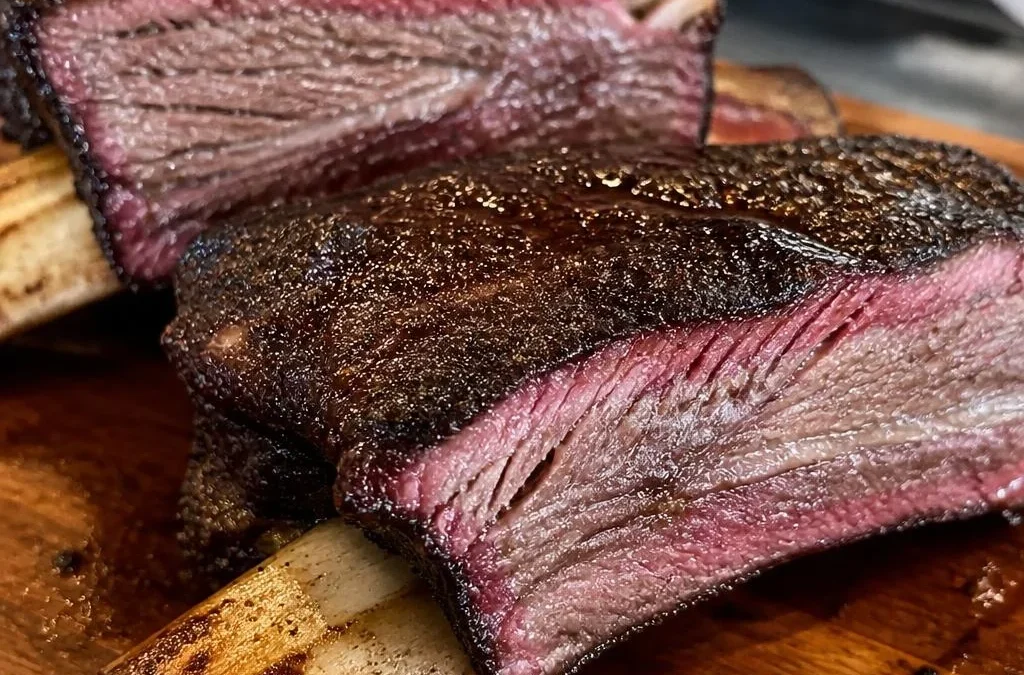
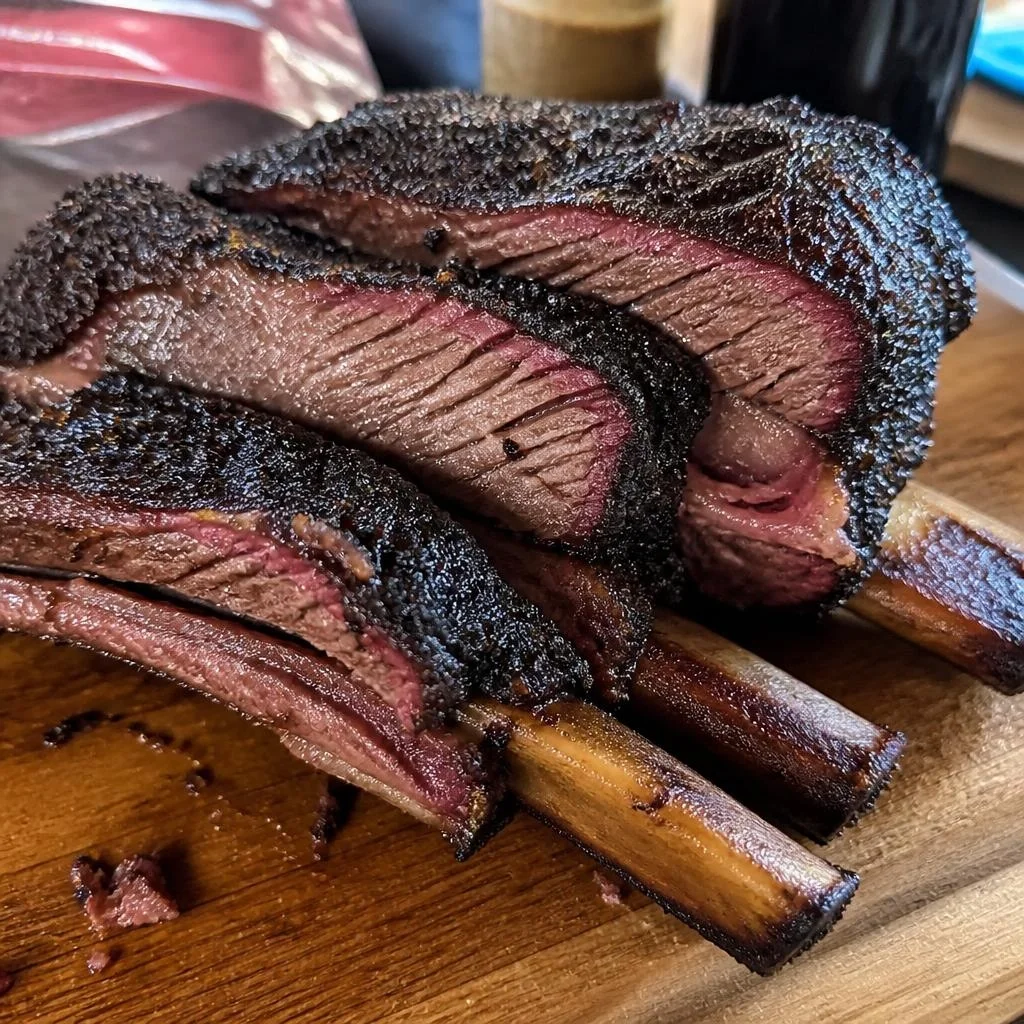
When it comes to legendary backyard barbecue, nothing commands attention at the cutting board quite like Texas-Style Smoked Beef Ribs. Often referred to by pitmasters as dinosaur ribs because of their massive, meaty bones, these showstopping ribs deliver a deep, mahogany-black bark on the outside and rich, melt-in-your-mouth tenderness on the inside. Seasoned with a bold, uncomplicated rub of coarse kosher salt and cracked black pepper, then kissed for hours by fragrant post oak smoke, Texas-Style Smoked Beef Ribs celebrate pure, unadulterated beef flavor without hiding behind sugary sauces or complicated marinades.
If you have ever stood in line at a famous Central Texas smokehouse just to taste a single, glistening beef rib sliced straight off the bone, you already know why enthusiasts call this cut brisket on a stick. The best part is that you do not need a commercial offset smoker or decades of competition experience to recreate that exact magic in your own backyard. With patience, steady heat, and a few time-tested pitmaster techniques, you can serve unforgettable Texas-Style Smoked Beef Ribs right off your home smoker.

What Are Texas-Style Smoked Beef Ribs?
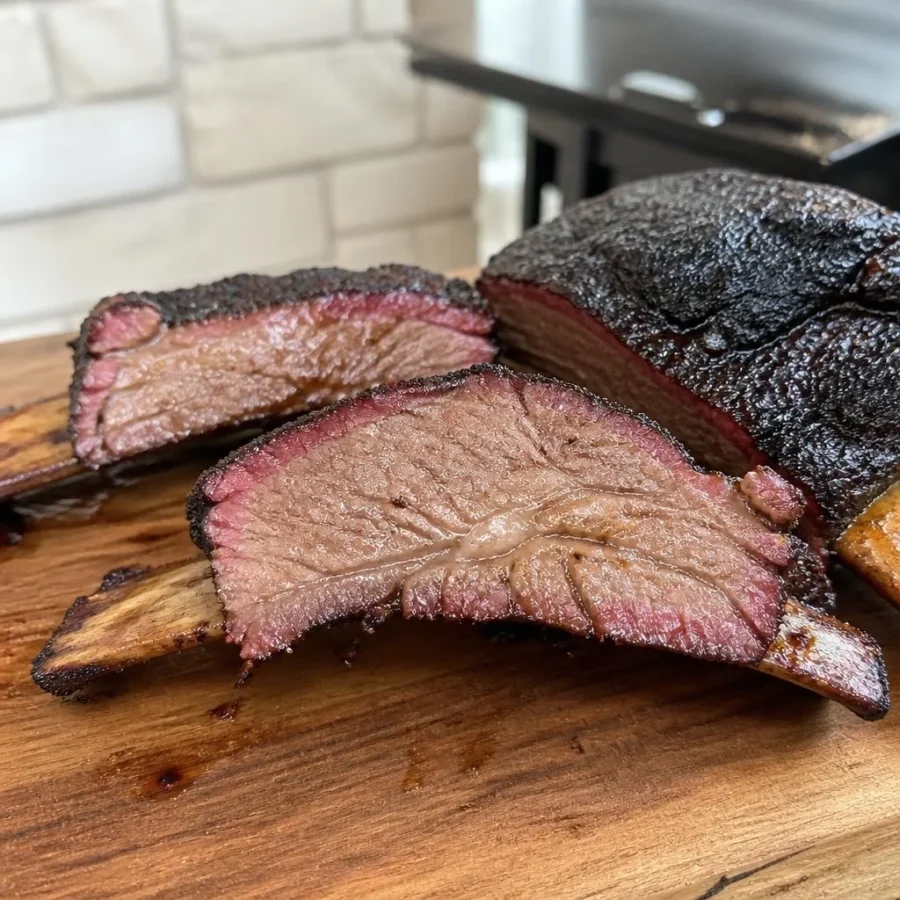
At their core, Texas-Style Smoked Beef Ribs are large, heavily marbled beef plate short ribs cooked low and slow over hardwood smoke until tough connective tissue melts into silky, rich gelatin. Unlike pork baby back or spare ribs, which are much smaller and often glazed with sweet tomato-based sauces, beef plate ribs pack thick layers of flavorful beef above sturdy, wide bones.
The defining hallmark of authentic Texas barbecue is restraint. Rather than layering on dozens of sweet spices, pitmasters rely on a Dalmatian-style rub—equal parts coarse salt and coarse black pepper—alongside subtle savory notes of garlic and onion. Over seven to ten hours in the smoker, the coarse pepper and natural beef juices fuse together to form a crisp, deeply flavorful crust known as bark. Inside, the abundant intramuscular marbling renders slowly, basting the meat from within until every bite feels almost like prime rib infused with clean wood smoke.
Texas Style Smoked Beef Ribs

The Authentic Central Texas Origin of Smoked Beef Ribs

To understand why Texas-Style Smoked Beef Ribs taste so distinctive, you have to look back to the meat markets of Central Texas in the late nineteenth century. German and Czech immigrants settling in towns like Lockhart, Taylor, and Luling opened butcher shops where unsold cuts of beef were smoked over local post oak logs to preserve them and serve hungry travelers.
Because those early butcher-shop pitmasters wanted the natural flavor of Texas beef to take center stage, they skipped heavy sauces altogether, seasoning their meats simply with salt and black pepper. While brisket eventually became the everyday staple of Central Texas barbecue joints, giant three-bone beef plate ribs emerged as the prized weekend specialty—cooked in limited batches and coveted by barbecue purists across the Lone Star State. Today, Texas-Style Smoked Beef Ribs stand as the crown jewel of traditional smokehouse craft.

Ingredients Needed for Texas-Style Smoked Beef Ribs

Selecting the right cut of beef and using coarse-grained seasonings make all the difference when building a true smokehouse crust. This recipe yields four to six hearty servings.

For the Beef Ribs and Binder

  • Beef Plate Ribs: One whole rack weighing approximately five to six pounds, ideally a three-bone plate rib rack from the sixth through eighth ribs for maximum meat thickness.

  • Yellow Mustard or Worcestershire Sauce: Two tablespoons, used optionally as a thin surface binder to help the dry rub cling evenly to the meat without leaving any mustard taste behind.

Texas-Style Dry Rub

  • Coarse Kosher Salt: One quarter cup, providing essential savory seasoning and helping draw surface moisture to start building the bark.

  • Coarsely Ground Black Pepper: One quarter cup, preferably sixteen-mesh restaurant-style pepper, which creates the signature dark, textured crust.

  • Garlic Powder: One tablespoon, adding deep, savory aroma that complements rich beef.

  • Onion Powder: One teaspoon, lending gentle background sweetness without burning over a long smoke.

  • Smoked Paprika: One teaspoon, included optionally to deepen the reddish-mahogany color of the finished bark.

  • Cayenne Pepper: One half teaspoon, added optionally for a subtle, lingering warmth on the finish.

For the Flavorful Spritz

  • Beef Broth: One half cup, keeping the exterior moist while reinforcing savory beef richness.

  • Apple Cider Vinegar: One half cup, providing gentle acidity that balances rich beef fat and helps smoke adhere.

  • Worcestershire Sauce: Two tablespoons, adding fermented umami depth to every spritz.

For Wrapping and Resting

  • Unwaxed Pink Butcher Paper: Enough heavy-duty paper to wrap the entire rack snugly once the bark sets.

  • Rendered Beef Tallow: Two tablespoons, brushed optionally onto the paper before wrapping to lock in extraordinary juiciness.

Step-by-Step Instructions for Making Texas-Style Smoked Beef Ribs
Texas Style Smoked Beef Ribs

Follow these sequential pitmaster steps carefully, focusing on steady temperatures and visual cues rather than watching the clock alone.

Step One: Trim and Prep the Beef Ribs

Remove your rack of beef plate ribs from its packaging and pat every surface completely dry with paper towels. Inspect the meaty top side and trim away any thick, hard chunks of external fat—known as deckle fat—as well as any tough, silvery membrane on the meat side so your seasoning can penetrate directly into the muscle. Leave a thin, even quarter-inch layer of fat across the top to protect the meat and baste it during the long cook. On the underside, you can leave the thick bone membrane intact; it helps hold the heavy bones together as the meat becomes ultra-tender.

Step Two: Coat Lightly with a Binder

Pour two tablespoons of plain yellow mustard or Worcestershire sauce over the top and sides of the rack, rubbing it into a thin, barely visible sheen. Do not worry about the final ribs tasting like mustard—the vinegar and moisture evaporate early in the smoke, leaving behind only a tacky surface for the spices to grip.

Step Three: Apply the Texas Dry Rub Generously

In a small mixing bowl, stir together the coarse kosher salt, coarsely ground black pepper, garlic powder, onion powder, smoked paprika, and cayenne pepper until evenly distributed. Hold your shaker or hand ten to twelve inches above the ribs and sprinkle the seasoning generously over the meat side, edges, and bone side. Gently press the rub into the meat with the flat of your palm rather than rubbing it around, which keeps the spice layer uniform. Let the seasoned rack rest at room temperature for thirty to forty-five minutes while you fire up your smoker so the salt begins drawing out moisture and setting the crust.

Step Four: Preheat Your Smoker with Post Oak

Prepare your offset smoker, pellet grill, or charcoal smoker to maintain a steady temperature of two hundred fifty degrees Fahrenheit, which equals one hundred twenty-one degrees Celsius. For genuine Texas-Style Smoked Beef Ribs, burn seasoned post oak wood chunks or splits. If post oak is hard to find in your area, pecan or hickory wood offers a closely related, robust hardwood smoke profile. Wait until the smoke turns thin, clean, and pale blue before placing meat inside.

Step Five: Smoke Low and Slow Unwrapped

Set the seasoned beef ribs directly onto the middle smoker grate with the bone side facing down. Close the lid and allow the ribs to smoke undisturbed for approximately five to seven hours at a consistent two hundred fifty degrees Fahrenheit. Resist the urge to peek during the first three hours so the heat stays steady and the dry rub sets firmly onto the beef. After the three-hour mark, combine the beef broth, apple cider vinegar, and Worcestershire sauce in a clean spray bottle, and lightly mist any dry-looking spots on the bark every forty-five to sixty minutes.

Step Six: Wrap in Butcher Paper Once the Bark Sets

Keep smoking unwrapped until the exterior develops a dark, rugged, mahogany-black bark that feels firm to the touch and does not rub off on your finger—typically when the internal temperature reaches between one hundred sixty-five and one hundred seventy-five degrees Fahrenheit, or seventy-four to seventy-nine degrees Celsius. Lay out two overlapping sheets of unwaxed butcher paper on a clean counter, drizzle two tablespoons of warm beef tallow down the center if using, and place the ribs meat-side down onto the paper. Fold the paper tightly around the rack to eliminate air pockets, then return the wrapped package to the smoker seam-side down.

Step Seven: Finish Cooking Until Probe-Tender

Continue smoking the wrapped ribs for another two to three hours until the meat reaches complete tenderness. While the internal temperature usually lands between two hundred and two hundred five degrees Fahrenheit, which equals ninety-three to ninety-six degrees Celsius, treat temperature strictly as a starting guide. Unfold a corner of the paper and slide an instant-read thermometer probe into the thick meat between the bones: when the ribs are truly done, the probe will glide in with virtually zero resistance, feeling like soft room-temperature butter.

Step Eight: Rest Patiently Before Slicing

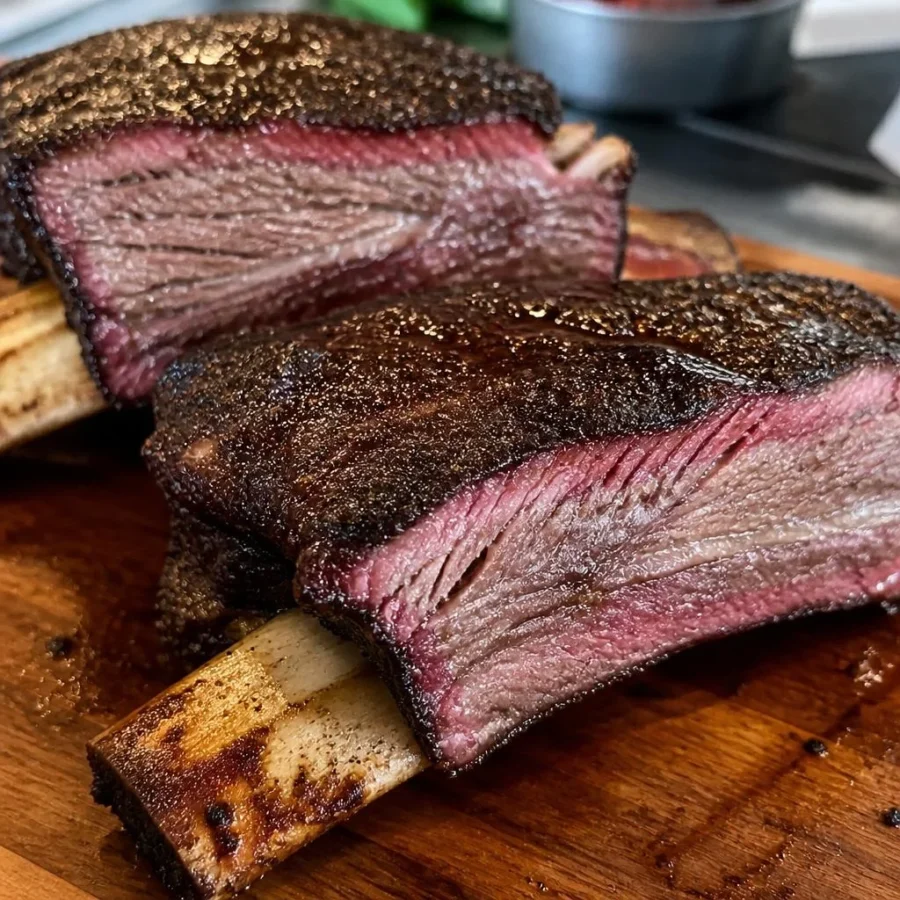
Transfer the wrapped rack from the smoker directly onto a rimmed baking sheet or into an insulated cooler lined with clean towels. Let the Texas-Style Smoked Beef Ribs rest undisturbed for at least forty-five to sixty minutes—and up to two hours if held safely warm. Resting allows the superheated juices and melted collagen to settle back into the muscle fibers instead of spilling out onto your cutting board.

Step Nine: Slice Between the Bones and Serve

Carefully peel back the butcher paper, saving any rich pan juices to spoon over the meat. Place the rack upright on a sturdy wooden cutting board and use a long, sharp slicing knife to cut cleanly between the thick bones into monumental single-rib portions. Serve immediately while piping hot.

Essential Pitmaster Secrets for Perfect Texas Beef Ribs

Mastering Texas-Style Smoked Beef Ribs comes down to respecting a few fundamental rules of traditional barbecue craft.
  • Buy Plate Ribs, Not Back Ribs: Grocery stores often sell beef back ribs cut from the ribeye loin, which have most of the meat carved off the top. Ask your butcher specifically for three-bone beef plate short ribs—sometimes labeled NAMP one-twenty-three-A—for thick, steak-like meatiness.

  • Never Wrap by the Clock: Wrapping in butcher paper before the bark has darkened and set will steam the exterior and make your pepper crust mushy. Always wait until the bark looks rich, dark, and firmly attached.

  • Choose Butcher Paper Over Foil: Unwaxed pink butcher paper lets excess steam escape while trapping heat and rendered fat, protecting your crisp bark far better than aluminum foil.

  • Trust Feel Over Numbers: Every rack of beef has slightly different marbling and connective tissue. One rack might turn probe-tender at one hundred ninety-eight degrees Fahrenheit, while another needs two hundred six degrees Fahrenheit. Always trust how effortlessly the probe slides in.

Classic Texas Barbecue Serving Suggestions

Because Texas-Style Smoked Beef Ribs are deeply rich and savory, pairing them with crisp, tangy, and comforting sides balances the meal effortlessly.
  • Cool and Creamy Contrast: Serve alongside tangy homemade coleslaw or mustard-forward Texas-style potato salad to cut through the rich beef marbling.

  • Classic Smokehouse Staples: Pair with smoky Southern baked beans, warm honey-buttered cornbread, or thick slices of soft white sandwich bread to mop up savory juices.

  • Bright Pickled Accompaniments: Set out bowls of crisp dill pickle chips, pickled jalapeños, and tangy pickled red onions to refresh the palate between rich bites.

  • Sauce on the Side: True Texas beef ribs need zero sauce, though offering a warm, peppery Central Texas-style barbecue sauce on the side lets guests customize their plate.

Creative Variations on Texas-Style Smoked Beef Ribs

Once you nail the classic salt-and-pepper method for Texas-Style Smoked Beef Ribs, you can experiment with subtle regional twists.

Coffee-Crusted Texas Beef Ribs

Replace one tablespoon of the black pepper with finely ground dark roast espresso beans. Roasted coffee deepens the dark color of the bark and adds an earthy, bittersweet richness that pairs naturally with oak-smoked beef.

Jalapeño and Garlic Herb Rub

Add one teaspoon of dried jalapeño powder and one teaspoon of crushed dried rosemary to the basic salt-and-pepper mixture for a lively Tex-Mex kick with aromatic herbal notes.

Oven-Finished Indoor Method

If bad weather interrupts your backyard smoke, smoke the ribs outdoors for the first three to four hours to lock in authentic post oak flavor, then wrap tightly in butcher paper and finish in an oven preheated to two hundred fifty degrees Fahrenheit until probe-tender.

Storage and Reheating Guidelines

Leftover Texas-Style Smoked Beef Ribs are a true luxury and reheat beautifully when handled gently. Store cooled ribs wrapped tightly or sealed in an airtight container in the refrigerator for up to three to four days. For longer storage, wrap individual ribs snugly in plastic wrap and heavy-duty foil, then freeze for up to two to three months.
To reheat without drying out the tender beef, place the ribs in a covered baking dish with two tablespoons of beef broth or melted tallow, and warm in an oven set to two hundred seventy-five degrees Fahrenheit, or one hundred thirty-five degrees Celsius, for twenty to twenty-five minutes until heated through.

Frequently Asked Questions About Texas-Style Smoked Beef Ribs

How many pounds of beef ribs should I buy per person?

Because beef plate ribs have thick, heavy bones and shrink significantly as fat and moisture render during a long smoke, plan on roughly one to one and a half pounds of raw bone-in ribs per adult guest—usually one giant bone per person alongside hearty sides.

Should I remove the membrane on the back of beef plate ribs?

Unlike pork ribs, where removing the thin back membrane is standard practice, most Texas pitmasters leave the thick membrane intact on the bone side of beef plate ribs. Removing it can cause the heavy bones to fall completely away from the meat while handling or slicing.

Why are my smoked beef ribs tough even though they reached two hundred degrees?

Toughness at high internal temperatures almost always means the ribs simply needed more time for tough collagen to finish breaking down into gelatin. Return the wrapped ribs to the smoker and check them every twenty to thirty minutes until a probe slides in effortlessly.

Can I smoke beef ribs without wrapping them at all?

Yes, you can run a completely unwrapped smoke from start to finish. Leaving the ribs unwrapped produces an even crunchier, thicker pepper bark, though it may add one to two hours to the total cook time and requires occasional spritzing so the edges do not dry out.

What is the difference between beef plate ribs and beef chuck short ribs?

Beef plate ribs come from the lower belly section and feature three massive, long bones topped with thick, richly marbled meat. Beef chuck short ribs come from the shoulder area, usually have four shorter bones, and are slightly leaner, though they can be smoked using the exact same method.

Conclusion

Mastering Texas-Style Smoked Beef Ribs is one of the most rewarding milestones any backyard cook can achieve. With nothing more than quality beef plate ribs, coarse salt and black pepper, steady post oak smoke, and patience at the pit, you can create a deeply savory, crusty, fork-tender centerpiece that rivals the finest smokehouses in Central Texas. Slice them thick right off the bone, gather your favorite classic sides, and enjoy every smoky, melt-in-your-mouth bite of homemade Texas-Style Smoked Beef Ribs.
Print
clock clock iconcutlery cutlery iconflag flag iconfolder folder iconinstagram instagram iconpinterest pinterest iconfacebook facebook iconprint print iconsquares squares iconheart heart iconheart solid heart solid icon
Texas Style Smoked Beef Ribs

Texas-Style Smoked Beef Ribs: The Ultimate Low-and-Slow Pitmaster Recipe


  • Author: David Andersson
  • Total Time: 9–11 hours (including resting time)
  • Yield: 4–6 servings 1x
  • Diet: Gluten Free

Description

At their core, Texas-Style Smoked Beef Ribs are large, heavily marbled beef plate short ribs cooked low and slow over hardwood smoke until tough connective tissue melts into silky, rich gelatin. Unlike pork baby back or spare ribs, which are much smaller and often glazed with sweet tomato-based sauces, beef plate ribs pack thick layers of flavorful beef above sturdy, wide bones.


Ingredients

Scale

For the beef ribs

  • 1 rack beef plate ribs (approximately 5–6 pounds), preferably 3-bone plate ribs

  • 2 tablespoons yellow mustard or Worcestershire sauce (as a binder, optional)

For the Texas-style dry rub

  • ¼ cup coarse kosher salt

  • ¼ cup coarsely ground black pepper

  • 1 tablespoon garlic powder

  • 1 teaspoon onion powder

  • 1 teaspoon smoked paprika (optional)

  • ½ teaspoon cayenne pepper (optional)

For the spritz

  • ½ cup beef broth

  • ½ cup apple cider vinegar

  • 2 tablespoons Worcestershire sauce

For wrapping (optional)

  • Unwaxed butcher paper

  • 2 tablespoons beef tallow (optional)


Instructions

1. Prepare the beef ribs

Remove the beef ribs from their packaging and pat them dry with paper towels. Trim away loose pieces of fat and any silver skin from the meat side. Leave a thin layer of fat to help keep the meat moist during smoking.

2. Apply the binder

Lightly coat the ribs with yellow mustard or Worcestershire sauce. This helps the seasoning adhere to the meat and does not overpower the final flavor.

3. Season the ribs

In a small bowl, combine kosher salt, black pepper, garlic powder, onion powder, smoked paprika, and cayenne pepper.

Generously coat all sides of the beef ribs with the seasoning mixture. Gently press the rub into the meat.

Let the ribs rest at room temperature for about 30–45 minutes while preparing the smoker.

4. Preheat the smoker

Preheat your smoker to 250°F (121°C).

Use oak wood for authentic Texas barbecue flavor. Post oak is especially traditional, but other hardwoods such as pecan or hickory also work well.

5. Smoke the beef ribs

Place the ribs bone-side down directly on the smoker grates.

Close the lid and smoke for approximately 5–7 hours, maintaining a steady temperature of 250°F (121°C).

Avoid opening the smoker too frequently. After the first 3 hours, lightly spritz the ribs with the beef broth, apple cider vinegar, and Worcestershire mixture every 45–60 minutes if the surface looks dry.

6. Wrap the ribs (optional)

When the bark is dark, firm, and well developed, and the internal temperature is approximately 165–175°F (74–79°C), remove the ribs from the smoker.

Place them on unwaxed butcher paper. Add a little beef tallow if desired, then wrap tightly.

Return the wrapped ribs to the smoker.

7. Continue cooking

Continue smoking for approximately 2–3 more hours, or until the meat becomes extremely tender.

The internal temperature will often reach 200–205°F (93–96°C), but tenderness is more important than a specific temperature. A thermometer probe should slide into the meat with very little resistance.

8. Rest the ribs

Remove the ribs from the smoker and keep them wrapped.

Rest for at least 45–60 minutes before slicing. For longer holding, keep them safely hot in a controlled warming environment.

9. Slice and serve

Unwrap the ribs and place them on a cutting board. Slice between the bones into individual portions.

Serve warm with your favorite Texas barbecue sides.

Notes

Enjoy authentic Texas-style barbecue beef ribs—smoky, tender, juicy, and packed with bold beef flavor!

  • Prep Time: 30 minutes
  • Cook Time: 8–10 hours
  • Category: Main Course
  • Method: Smoking
  • Cuisine: American (Texas BBQ)

Nutrition

  • Serving Size: 1 beef rib (approximately 8 oz cooked meat)
  • Calories: 650 kcal

Keywords: authentic Texas smoked beef ribs, smoked beef plate ribs, Central Texas beef ribs recipe, low and slow smoked beef ribs, Texas BBQ dinosaur ribs

Author

Leave a Comment

Recipe rating ★☆ ★☆ ★☆ ★☆ ★☆