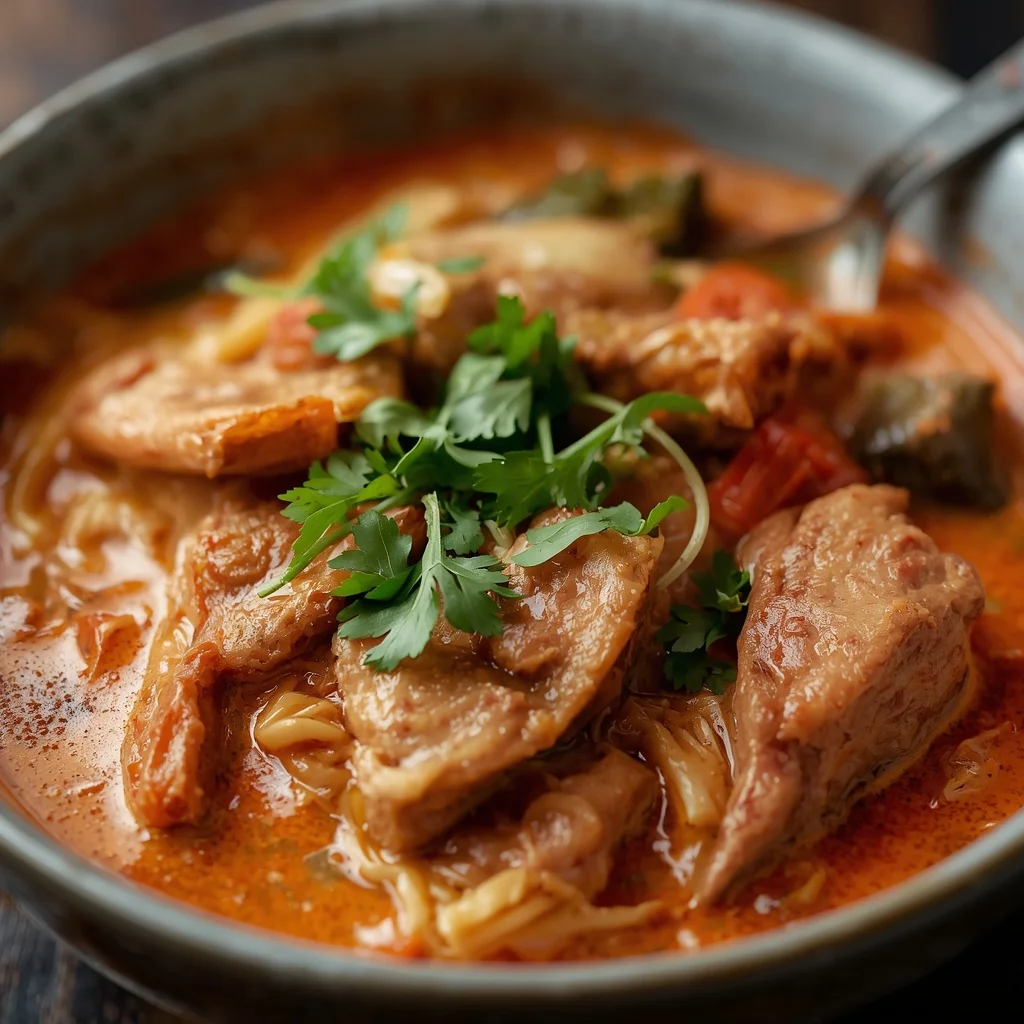
Few dishes in world cuisine capture the imagination quite like authentic Thai Massaman curry. You will adore every single bite of this amazing meal. It hits all your favorite taste notes at once. It is sweet, savory, tangy, and subtly spicy. This iconic dish stands in a class of its own. Tender pieces of slow-simmered beef or lamb unite with creamy coconut milk. Golden potatoes, crunchy roasted peanuts, and fragrant warm spices create a rich meal. Eating this curry feels both luxurious and deeply comforting. You can easily impress dinner guests with this feast. Mastering a traditional Thai Massaman curry will elevate your home cooking repertoire to extraordinary new heights.
What is Thai Massaman Curry?
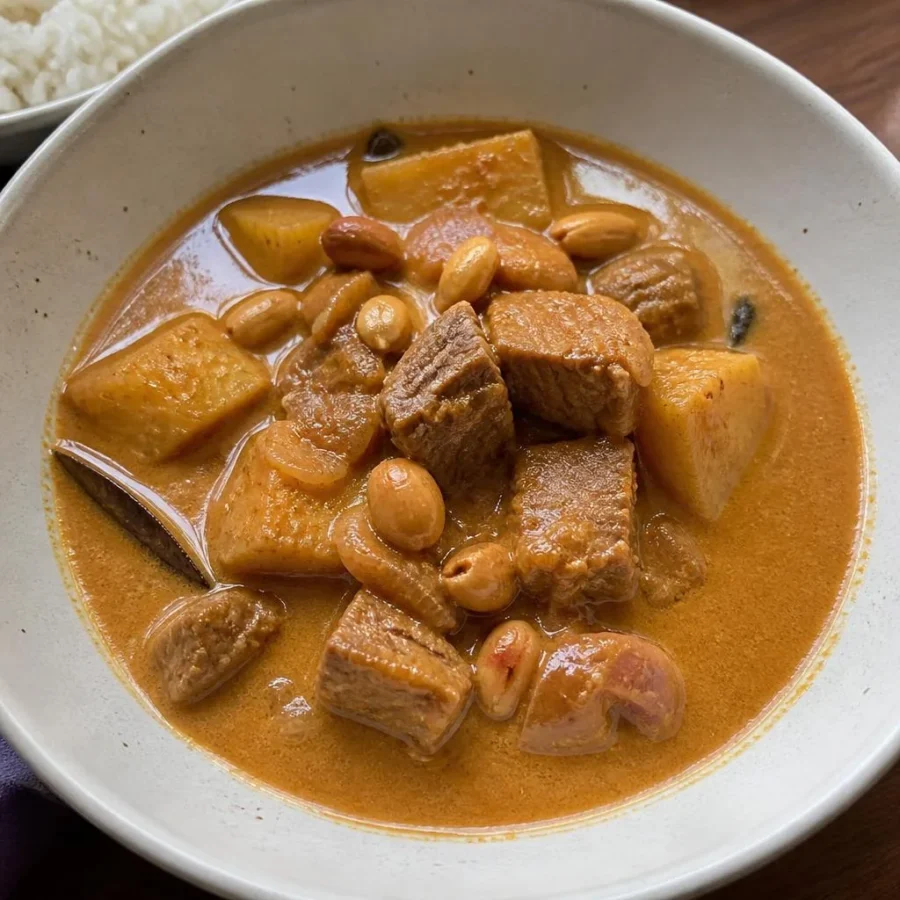
At its core, Thai Massaman curry is a mild-to-medium spiced curry with a rich history. The dish bridges two vibrant culinary traditions seamlessly. It combines the dry-spice heritage of Indian traders with fresh Thai herbal paste techniques. Fiery green curries rely heavily on fresh chilies and lemongrass. In contrast, this smooth version is characterized by its velvety texture and soothing warmth.
The standout identity of this meal comes from a harmonious blend of simple ingredients. Whole spices are toasted and ground into a fragrant paste. Cooks fry this mixture in thick coconut cream until the natural oils separate cleanly. Hearty proteins, root vegetables, and toasted peanuts simmer slowly in the pan. The finished gravy offers a deep flavor profile. It is neither overly hot nor overwhelmingly heavy. A perfectly balanced sauce coats your spoon and turns simple steamed rice into a majestic feast.
The Fascinating Origin of Massaman Curry
The history of Thai Massaman curry is as rich as its flavor profile. Food historians believe the main title relates to ancient trade routes. The term derives from an archaic word used for Muslim merchants. These travelers journeyed into Southeast Asia during the seventeenth century.
Foreign ships arrived at royal courts carrying prized dry spices. These ingredients were completely foreign to local cooks. Merchants brought cinnamon sticks, cloves, cardamom pods, and cumin seeds. Royal Thai chefs combined these imported dry spices with regional staples. They added galangal, lemongrass, fermented fish sauce, tamarind paste, and fresh coconut milk. This clever blend produced a majestic hybrid creation. King Rama the Second of Siam loved the dish. He wrote a famous nineteenth-century poem dedicated to its irresistible scent and taste. That royal delicacy evolved into a beloved national standard enjoyed across the globe today.
Ingredients You Will Need for Authentic Massaman Curry
Quality ingredients are essential for cooking a world-class Thai Massaman curry at home. Proper proportions ensure your gravy turns out balanced and smooth. Gather the following items to yield four to six hearty servings:
-
Beef chuck or lamb: One and one half pounds, trimmed of excess fat and cut into uniform bite-sized cubes.
-
Vegetable oil: Two tablespoons of neutral cooking oil with a high smoke point.
-
Massaman curry paste: Three tablespoons of store-bought or homemade authentic paste.
-
Coconut milk: One can containing four hundred milliliters of full-fat coconut milk.
-
Stock: One cup, equivalent to two hundred forty milliliters of quality beef stock or chicken stock.
-
Potatoes: Two medium potatoes, peeled and cut into generous medium-sized cubes.
-
Yellow onion: One medium onion, cut into rustic wedges.
-
Roasted peanuts: One half cup of unsalted, roasted whole or halved peanuts.
-
Fish sauce: Two tablespoons of quality fermented fish sauce for essential savory depth.
-
Brown sugar: One and one half tablespoons of packed brown sugar or palm sugar.
-
Tamarind paste: One tablespoon of concentrated tamarind paste for signature tanginess.
-
Cinnamon stick: One whole cinnamon stick.
-
Cardamom pods: Three green cardamom pods, lightly crushed to release their essential oils.
-
Bay leaves: Two dried bay leaves.
-
Ground cumin: One half teaspoon of ground cumin seed powder.
-
Ground coriander: One half teaspoon of ground coriander seed powder.
-
Salt: Fine sea salt, added to personal taste preference.
-
Fresh cilantro: Freshly chopped cilantro leaves, reserved strictly for final garnish.
Step by Step Direction and Preparation Method: Thai Massaman curry
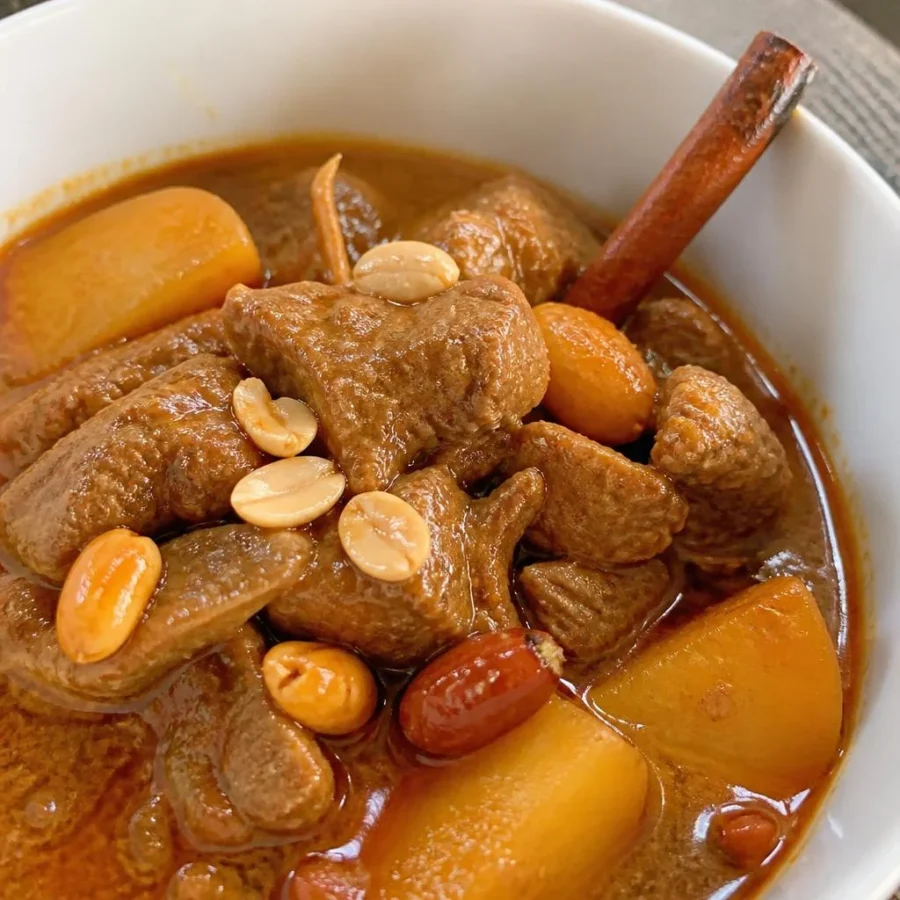
Preparing an authentic Thai Massaman curry does not demand fancy kitchen equipment. Success depends on heat control and proper sequencing. Follow these detailed steps to achieve perfect results every time.
Searing and Browning the Protein
Set a large, heavy-bottomed pot over medium-high heat on your stove. Pour in two tablespoons of vegetable oil. Allow the liquid to shimmer. Dry your cubed beef chuck or lamb thoroughly using clean paper towels. Removing surface moisture is crucial for achieving a deep brown crust. Work in small batches to avoid crowding the pan. Place the meat carefully into the hot oil. Cook each side for roughly three to four minutes until a rich golden brown color forms. Remove the seared protein with a slotted spoon. Set the pieces aside on a plate.
Frying the Curry Paste and Cracking the Coconut Milk
Lower your stove burner heat to medium. Drop three tablespoons of Massaman curry paste straight into the residual oil. Stir constantly for one to two minutes. The paste will darken slightly and release an intense aroma. Open your can of full-fat coconut milk. Pour approximately half of the liquid into the pot. Stir vigorously to combine the thick paste with the white cream. Simmer this base for three to four minutes. Small droplets of oil will soon separate and float to the surface. Chefs call this cracking the coconut milk. This essential technique unlocks maximum flavor extraction from the spices.
Building the Aromatic Simmering Base
Transfer the browned beef or lamb back into the deep pot. Remember to include any meat juices resting on the plate. Pour in the remainder of your coconut milk. Add one cup of beef or chicken stock. Drop in one whole cinnamon stick and three lightly crushed cardamom pods. Throw in two dried bay leaves, one half teaspoon of ground cumin, and one half teaspoon of ground coriander. Stir all ingredients together until well mixed. Bring the entire pot to a gentle boil over medium heat.
Slow Cooking for Tender Meat
Reduce your stove heat to low as soon as large bubbles appear. Cover the pot tightly with a heavy lid. Allow the dish to simmer gently for forty-five to sixty minutes. Check the progress occasionally to maintain a soft bubbling motion. Avoid a harsh rolling boil. This slow cooking phase breaks down tough connective tissues in the protein. The meat becomes meltingly tender. Meanwhile, every strand of meat absorbs the fragrant spice mixture.
Incorporating Vegetables and Nuts
Remove the pot lid carefully after forty-five to sixty minutes of slow cooking. Slide the cubed potatoes and onion wedges into the bubbling gravy. Make sure the vegetables are submerged under the liquid. Place the lid back on the pot. Continue cooking on low heat for another twenty to twenty-five minutes. Test the potatoes with a paring knife to verify they are soft. The onion wedges should turn sweet and translucent.
Perfecting the Flavor Balance and Garnishing
Uncover the pot to add the final liquid seasonings. Stir in two tablespoons of fish sauce and one and one half tablespoons of brown sugar. Add one tablespoon of tamarind paste and one half cup of roasted peanuts. Simmer uncovered for five extra minutes. The rich sauce will thicken slightly and gain a glossy sheen. Taste the broth carefully. Add a pinch of salt or an extra splash of fish sauce if needed. Turn off the burner heat. Discard the cinnamon stick and bay leaves. Sprinkle fresh cilantro over top. Serve steaming hot in wide bowls with fresh jasmine rice.
Versatile Variations of Massaman Curry
The traditional beef or lamb preparation remains a classic favorite. However, Thai Massaman curry adapts easily to different diets and ingredients.
-
Chicken Massaman Curry: Swap the beef or lamb for bone-in chicken thighs or cut breast meat. Chicken cooks much faster than red meat. Reduce the initial simmering time to roughly twenty to twenty-five minutes before adding your potatoes and onions.
-
Vegetarian and Vegan Massaman Curry: Create a completely plant-based version by using extra-firm pressed tofu or tempeh. Heavy vegetables like cauliflower, sweet potatoes, and butternut squash work wonderfully. Use vegetable stock instead of meat broth. Replace the fish sauce with light soy sauce or tamari.
-
Nut Variations: Swapping the roasted peanuts is easy if you have allergies. Try toasted cashews or raw macadamia nuts instead. Both alternatives provide a buttery crunch that pairs naturally with the coconut sauce.
Frequently Asked Questions: Thai Massaman curry
Why is my Massaman curry sauce separating or looking oily?
Seeing a light layer of oil on top of a traditional Thai curry is expected. Local cooks fry the spice paste in rich coconut cream until the fat separates naturally. This step ensures the raw spices cook thoroughly. Stir two tablespoons of warm water into the pot if the sauce looks too split.
Can I make Massaman curry ahead of time?
Yes, this dish tastes even better the next day. Spices, tamarind, and coconut milk penetrate deeper into the ingredients overnight. The overall flavor profile becomes much richer in your refrigerator. Reheat gently on the stovetop over low heat. Add a splash of stock if the sauce thickens too much.
What is the best rice to serve with Massaman curry?
Fragrant Thai jasmine rice is the absolute best companion for this meal. Its floral aroma and fluffy texture absorb the rich coconut gravy cleanly. Warm, buttery roti bread or naan also works great for dipping into the sauce.
Conclusion: Thai Massaman curry
Cooking a classic Thai Massaman curry brings a restaurant-quality experience straight into your home kitchen. Searing your protein properly sets a fantastic foundation. Blooming warm spices in creamy coconut milk yields incredible depth. Balancing sweet, savory, tangy, and mild heat notes completes the dish. Gather your ingredients, enjoy the slow simmering process, and savor every bite of this timeless classic.
Print
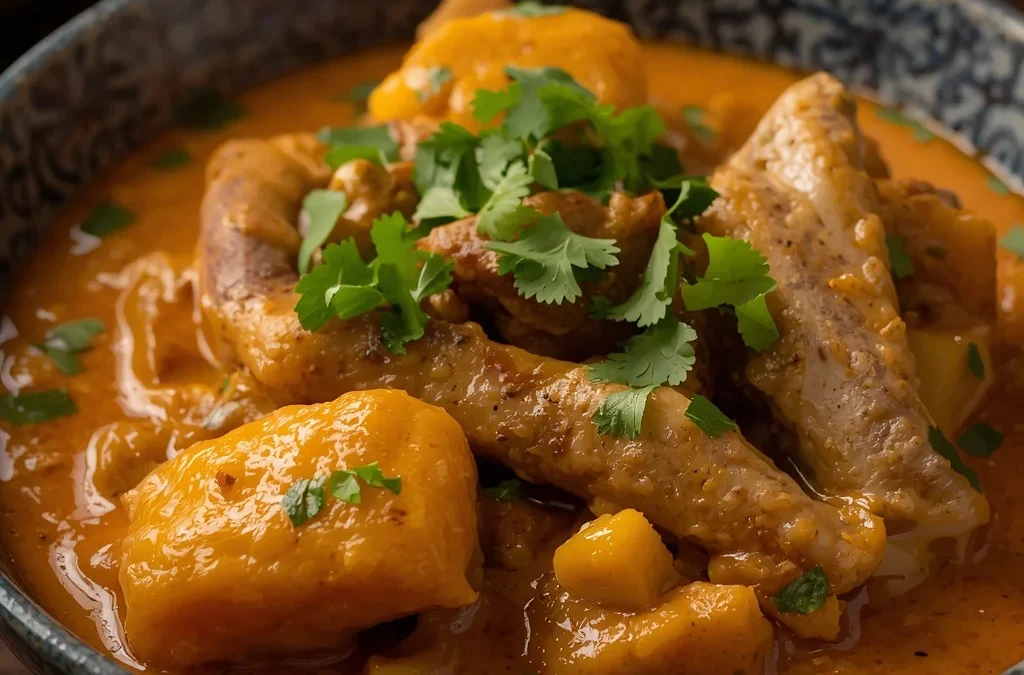
The Ultimate Thai Massaman Curry Recipe: A Rich and Fragrant Culinary Masterpiece
- Total Time: 1 hour 40 minutes
- Yield: 5–6 servings 1x
Description
At its core, Thai Massaman curry is a mild-to-medium spiced curry with a rich history. The dish bridges two vibrant culinary traditions seamlessly. It combines the dry-spice heritage of Indian traders with fresh Thai herbal paste techniques. Fiery green curries rely heavily on fresh chilies and lemongrass. In contrast, this smooth version is characterized by its velvety texture and soothing warmth.
Ingredients
Scale
- 1½ lb (700 g) beef chuck or lamb, cut into bite-sized pieces
- 2 tbsp vegetable oil
- 3 tbsp Massaman curry paste
- 1 can (400 ml) coconut milk
- 1 cup (240 ml) beef or chicken stock
- 2 medium potatoes, peeled and cubed
- 1 medium onion, cut into wedges
- ½ cup roasted peanuts
- 2 tbsp fish sauce
- 1½ tbsp brown sugar
- 1 tbsp tamarind paste
- 1 cinnamon stick
- 3 cardamom pods, lightly crushed
- 2 bay leaves
- ½ tsp ground cumin
- ½ tsp ground coriander
- Salt, to taste
- Fresh cilantro, for garnish
Instructions
- Brown the meat: Heat the oil in a large pot over medium-high heat. Add the beef or lamb and cook until lightly browned on all sides. Remove and set aside.
- Cook the curry paste: Reduce the heat to medium. Add the Massaman curry paste and cook for 1–2 minutes until fragrant.
- Add coconut milk: Pour in about half of the coconut milk and stir well. Simmer for 3–4 minutes until slightly thickened.
- Simmer the meat: Return the meat to the pot. Add the remaining coconut milk, stock, cinnamon, cardamom, bay leaves, cumin, and coriander. Bring to a gentle simmer.
- Cook slowly: Cover and simmer for 45–60 minutes, or until the meat is tender.
- Add vegetables: Add the potatoes and onion. Continue cooking for 20–25 minutes, until the potatoes are tender.
- Season: Stir in the fish sauce, brown sugar, tamarind paste, and peanuts. Simmer for another 5 minutes. Taste and adjust the seasoning as needed.
- Serve: Remove the cinnamon stick and bay leaves. Garnish with fresh cilantro and extra peanuts. Serve hot with steamed jasmine rice.
Notes
- Prep Time: 15 minutes
- Cook Time: 1 hour 25 minutes
- Category: Main Course
- Method: Stovetop
- Cuisine: Thai
Nutrition
- Serving Size: 1½ cups
- Calories: 520 kcal
Keywords: authentic Massaman curry, beef Massaman curry, easy Thai curry, homemade Massaman curry
