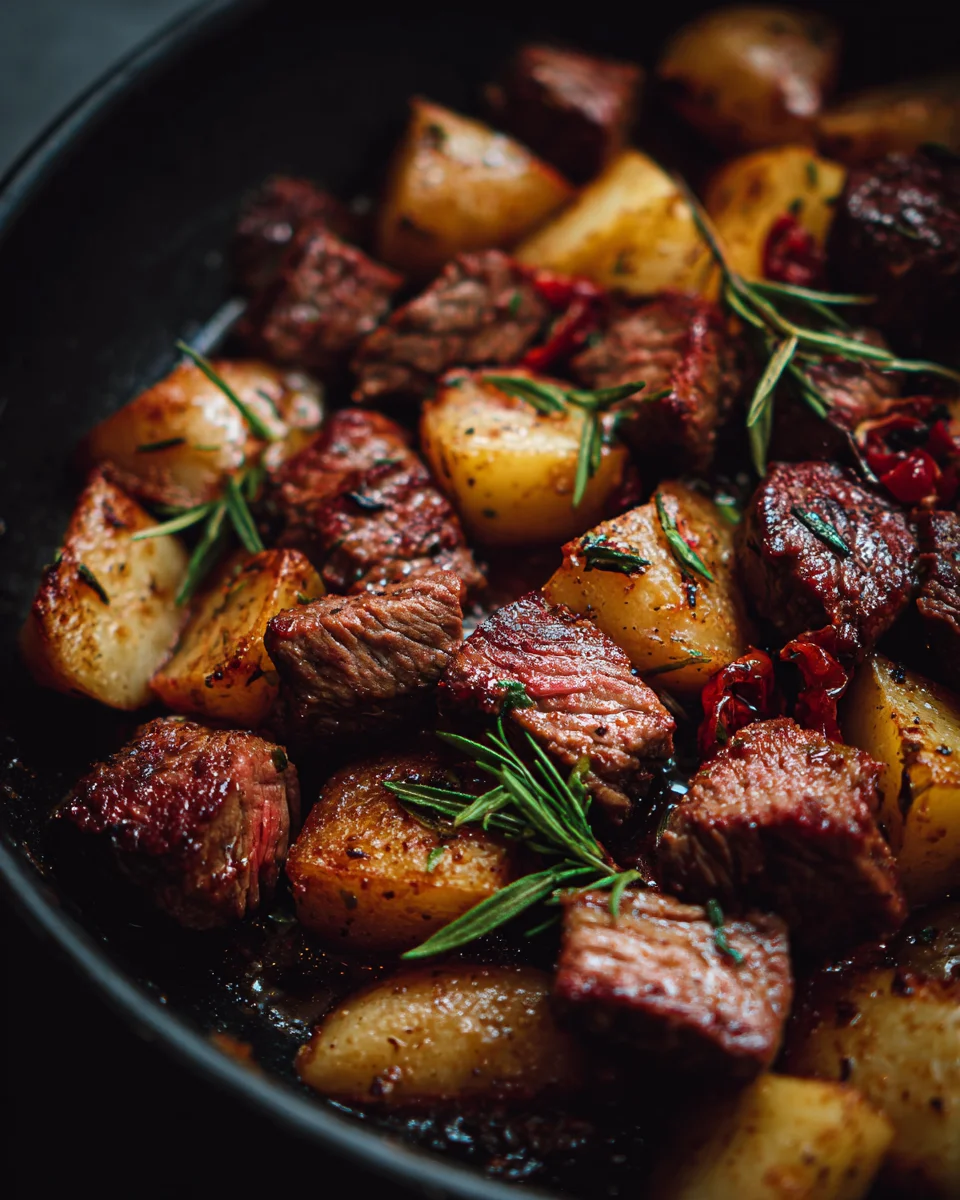
Finding a dinner solution that feels thoroughly indulgent yet comes together in a single pan under forty minutes is the ultimate goal for busy home cooks and seasoned food lovers alike. When you want a hearty, protein-packed dinner that satisfies deep comfort food cravings, a quick-seared beef dish is always a dependable option. This exceptionally savory and perfectly seasoned steak bites and potatoes skillet recipe is specifically designed to maximize rich flavors while minimizing cleanup time.
It pairs beautifully tender, garlic-infused cubes of sirloin beef with naturally sweet baby spuds that are cooked until they possess a spectacularly crispy, golden outer crust. The entire meal is brought together using a rich glaze of melted butter, fresh minced garlic, and earthy herbs that coat every single piece with an addictive savory gloss. This comprehensive guide will walk you through the essential culinary techniques required to prevent your beef from becoming tough, ensuring you achieve a restaurant-quality sear right in your own home kitchen.
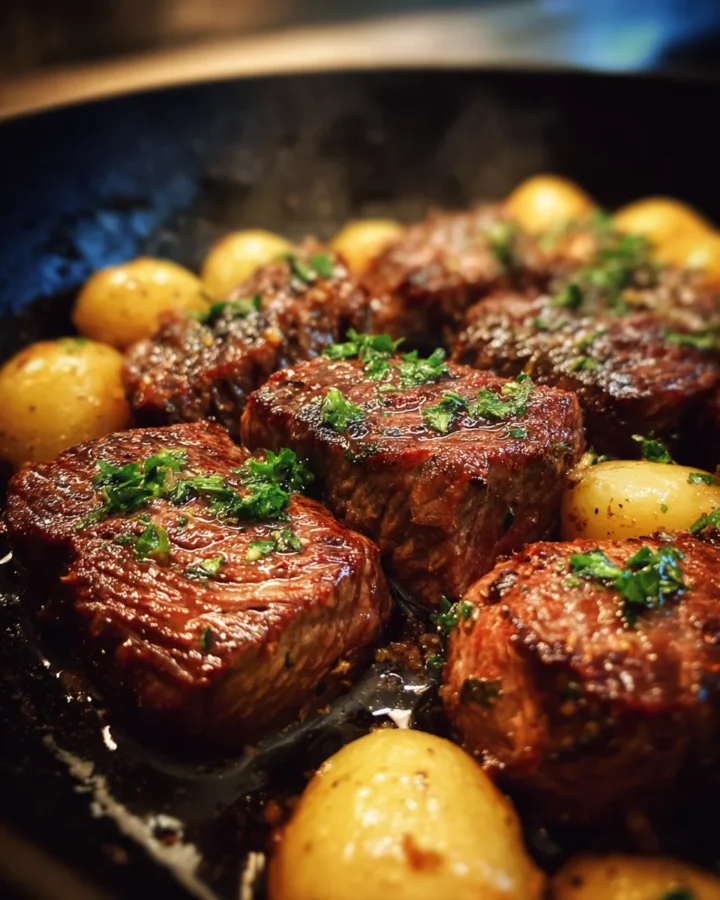
What is a Steak Bites and Potatoes Skillet?
To understand why this specific preparation has taken modern kitchens by storm, it helps to analyze the structural advantages of cutting beef into compact pieces. Traditional pan-searing methods involve cooking a massive, whole piece of meat, which can occasionally result in an uneven temperature gradient between the exterior crust and the cold interior center.
By slicing your sirloin into uniform, bite-sized cubes before it ever touches a hot pan, you dramatically increase the total surface area of the meat. This increased surface exposure allows for an expansive distribution of the Maillard reaction, which is the scientific chemical process where amino acids and reducing sugars react under intense heat to create that beautifully browned, deeply flavorful exterior crust. When these intensely savory morsels are combined with pre-boiled, pan-fried baby root vegetables, the two components create a complete, self-contained main course that delivers a perfect balance of rich protein and comforting carbohydrates in every single spoonful.
The Rich History of Cast Iron Skillet Cooking
The practice of combining meat and root vegetables in a heavy, seasoned metal pan has a deep and storied history that stretches across centuries of global culinary traditions. Long before the invention of modern nonstick coatings or high-tech digital ovens, home cooks relied almost exclusively on heavy cast iron vessels suspended over open hearth fires or placed directly atop wood-burning stoves.
In the United States, this specific style of cooking became deeply woven into the fabric of Western frontier history, where cowboys and pioneers traveling across the plains required durable, indestructible cookware that could easily withstand the harsh conditions of a campfire. They frequently combined whatever fresh meat was available with hearty, long-lasting root vegetables to create filling, energy-dense meals that could sustain them through long days of intense physical labor. This contemporary pan recipe honors those rugged, old-world cooking foundations while refining the seasoning profiles and cooking times to suit modern palates that appreciate a swift, clean, and highly sophisticated approach to home-cooked comfort food.
Essential Ingredients with Exact Volume and Weight Quantities
Creating a truly flawless skillet meal requires selecting high-quality fresh ingredients and measuring them with careful intention. Because this dish relies on rapid, high-heat cooking, choosing the right cuts of meat and the correct variety of vegetables is paramount to achieving a spectacular final texture.
Ingredients Required for the Savory Steak Bites
-
Sirloin steak: One full pound, which should be cut into uniform, bite-sized cubes measuring roughly one inch square. Sirloin is the ideal choice for this application because it is lean enough to cook quickly while remaining incredibly tender and juicy when seared over high heat.
-
Olive oil: One and one half tablespoons, split carefully across the different cooking stages to lubricate the pan and prevent the meat from sticking.
-
Unsalted butter: Two tablespoons of high-quality dairy butter to create a rich, luxurious finishing glaze that carries the aromatics throughout the dish.
-
Fresh garlic cloves: Three large cloves, thoroughly minced. Fresh garlic provides a sharp, pungent punch that pairs naturally with rich red meat.
-
Ground paprika: One teaspoon of sweet or smoked paprika to introduce a subtle warmth and impart a beautiful, rich reddish-brown color to the beef.
-
Black pepper: One half teaspoon of freshly cracked black pepper to provide a clean, biting hint of spice that cuts through the buttery glaze.
-
Fine salt: One half teaspoon of table salt, or more to taste, to elevate the natural umami flavors of the beef.
-
Soy sauce: One teaspoon of traditional soy sauce. While this ingredient is entirely optional, it acts as a secret flavor enhancer that adds incredible depth and a rich savory finish to the pan juices without making the dish taste explicitly Asian.
-
Fresh parsley: One tablespoon of finely chopped flat-leaf parsley to use as a bright, herbaceous visual garnish just before serving.
Ingredients Required for the Crispy Potatoes
-
Baby potatoes: One full pound, thoroughly washed and sliced cleanly in half. Small varieties are preferred because their delicate skins crisp up beautifully without becoming tough or leathery.
-
Olive oil: Two tablespoons to coat the vegetables evenly and ensure they fry to an optimal crispiness in the hot pan.
-
Fine salt: One half teaspoon to season the interior flesh of the spuds during the pan-frying process.
-
Black pepper: One half teaspoon to mirror the spices used on the beef and provide uniform heat.
-
Garlic powder: One half teaspoon to ensure the vegetables are thoroughly infused with an aromatic base before they are tossed with the fresh minced cloves.
-
Dried herbs: One half teaspoon of dried thyme or dried rosemary, depending on your personal aromatic preference, to add a subtle, rustic woodiness to the dish.
Step by Step Direction and Preparation Method: steak bites and potatoes skillet
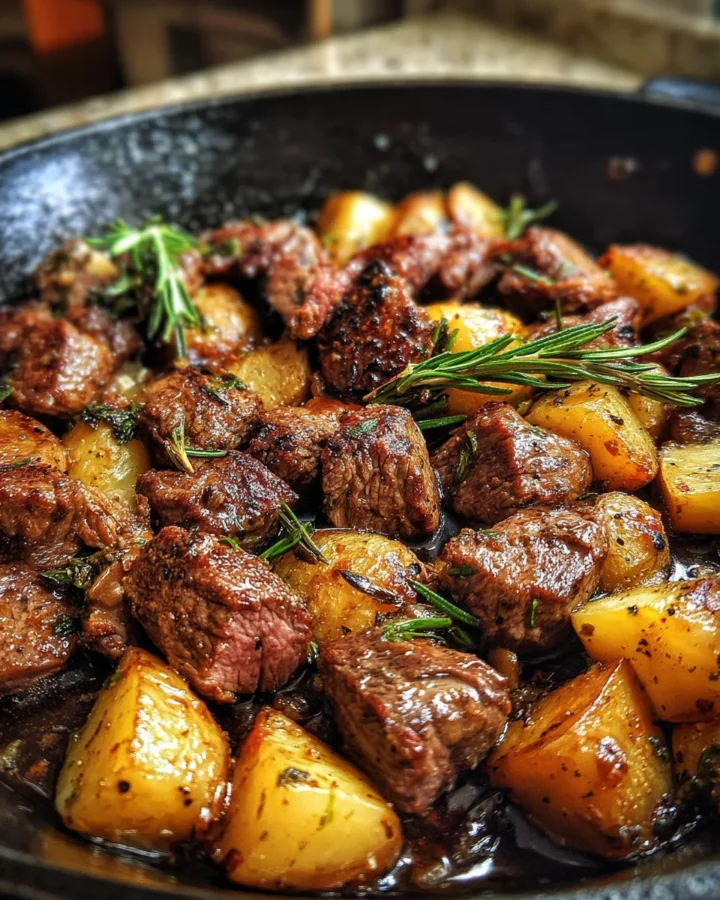
Achieving a perfect balance between a deeply browned exterior and a juicy, tender interior requires a precise sequence of cooking events. Follow these instructions step by step to ensure your dinner turns out flawless.
Parboiling the Root Vegetables
The absolute secret to creating a quick skillet meal where the vegetables are perfectly tender on the inside but crispy on the outside lies in a preliminary parboiling step. Place your one pound of halved baby potatoes into a medium saucepan and cover them completely with cold water. Place the pan over high heat and bring the liquid to a rolling boil.
Allow the vegetables to cook in the boiling water for roughly eight to ten minutes. You want to cook them only until they are just fork-tender, meaning a sharp fork can pierce the flesh with just a tiny bit of resistance. You must avoid overcooking them at this stage, or they will fall apart and turn into mashed potatoes later in the skillet. Once they reach the correct consistency, drain the hot water completely and spread the pieces out onto a clean kitchen towel. Pat them thoroughly dry with a paper towel; removing this surface moisture is absolutely critical to ensuring they crisp up properly when they hit the hot oil.
Achieving the Perfect Vegetable Crisp
Place a large, heavy skillet, preferably crafted from seasoned cast iron, over medium-high heat. Pour in two tablespoons of olive oil and allow the fat to heat up until it begins to shimmer across the surface of the pan. Carefully arrange your dried, parboiled baby potatoes in a single layer, ensuring the cut flat sides are facing directly downward against the hot metal.
Allow them to cook undisturbed for several minutes until the bottom surface forms a deep, golden-brown crust. Use a spatula to flip the pieces over, tossing them gently with one half teaspoon of salt, one half teaspoon of black pepper, one half teaspoon of garlic powder, and your one half teaspoon of dried thyme or rosemary. Continue pan-frying for a few more minutes until the skins are beautifully blistered and crispy. Use a slotted spoon to remove the vegetables from the pan and place them into a clean bowl, leaving any remaining flavorful oil behind in the skillet.
Searing the Beef Bites with Precision
Turn the heat under your skillet up slightly to ensure the pan is intensely hot. Pour in the remaining one half tablespoon of olive oil. Working quickly, add your cubed sirloin steak pieces to the pan, ensuring they sit in a single, uncrowded layer. If your pan is not large enough to accommodate all the meat comfortably, it is incredibly important that you sear the meat in separate batches. Overcrowding the pan will cause the temperature of the metal to drop rapidly, which forces the meat to steam in its own juices rather than developing a proper, deeply browned crust.
Allow the beef bites to sear completely undisturbed for two to three minutes on the first side before flipping them over to color the remaining surfaces for an additional two minutes. This rapid, intense exposure to high heat locks in the internal moisture while creating an incredible external texture.
Infusing the Garlic Butter Glaze
Once the beef cubes have developed a gorgeous sear on all sides, reduce the heat under the skillet to medium. Drop the two tablespoons of unsalted butter directly into the center of the pan along with your three cloves of minced fresh garlic. As the butter melts, it will begin to foam and combine with the garlic, releasing an incredibly potent, mouthwatering aroma.
Use a wooden spoon to stir the ingredients rapidly, coating every single piece of beef in the foaming garlic butter. Pour in the one teaspoon of ground paprika, one half teaspoon of fine salt, one half teaspoon of black pepper, and the optional teaspoon of soy sauce. Stir continuously for roughly sixty seconds, ensuring the spices dissolve completely into the liquid fat without allowing the delicate minced garlic to burn.
Combining and Reheating the Dish
With your beef perfectly seasoned and beautifully glazed, return the crispy pan-fried potatoes back into the hot skillet. Use your spoon to toss all the ingredients together vigorously, ensuring the seasoned garlic butter from the bottom of the pan is evenly distributed across both the meat and the vegetables.
Allow everything to cook together over medium heat for another one to two minutes. This brief final window allows the flavors to meld completely and ensures the vegetables are thoroughly reheated all the way through to their centers. Remove the skillet completely from the stove burner.
Finishing and Serving
Garnish the entire top surface of the bubbling dish with your one tablespoon of finely chopped fresh flat-leaf parsley. The residual heat of the pan will gently wilt the herbs, releasing a bright, fresh aroma that cuts through the intense richness of the butter and beef fat. Serve the dish immediately directly from the hot skillet, ensuring everyone receives a generous helping of both the crispy root vegetables and the juicy, garlic-kissed beef bites.
Creative Flavor Variations to Shake Up Your Routine: steak bites and potatoes skillet
While the classic combination of garlic, butter, and herbs is universally adored, this one-pan format is incredibly adaptable to different culinary profiles. Here are a few outstanding variations you can experiment with during your next kitchen session.
The Sweet and Spicy Honey Glaze
If you enjoy a flavor profile that balances deep savoriness with a hint of natural sweetness and heat, try adjusting the finishing sauce. When you add the butter and garlic to the pan, drizzle in one tablespoon of high-quality raw honey and one half teaspoon of crushed red pepper flakes alongside the paprika. The honey will caramelize slightly against the hot metal, creating a sticky, sweet, and spicy lacquer that clings beautifully to both the protein and the vegetables.
The Tangy Balsamic Reduction
For a more sophisticated, European-inspired variation that features a bright pop of acidity, consider introducing vinegar to the pan. Right after you finish searing the beef and just before you add the butter, pour two tablespoons of high-quality aged balsamic vinegar directly into the screaming hot skillet. Use your spoon to scrape up any browned bits stuck to the bottom of the pan as the vinegar bubbles and reduces into a thick, sweet, and tangy syrup. Proceed with the butter and garlic as normal for a deeply complex, restaurant-worthy finish.
The Smoky Bacon and Cheese Upgrade
If you are looking to create the ultimate game-day comfort food experience, you can easily load up your skillet with classic baked potato toppings. Before you cook the vegetables, fry three strips of chopped thick-cut bacon in the skillet until they are completely crispy. Remove the bacon pieces but keep the rendered bacon fat in the pan to fry your vegetables and sear your meat. Just before serving, toss the crispy bacon back into the pan and scatter one half cup of shredded sharp cheddar cheese across the top, covering the pan with a lid for sixty seconds until the dairy is completely melted and gooey.
Helpful Tips for Achieving the Ultimate Skillet Texture
To guarantee that your home-cooked meal yields the absolute best results possible, keep these professional kitchen tips in mind.
-
Pat the meat dry: Just like with the vegetables, excess surface moisture is the enemy of a great sear. Use a paper towel to thoroughly dry the surface of your sirloin steak before cutting it into cubes.
-
Allow the meat to rest: Even though these are small bites rather than a whole steak, letting the beef sit undisturbed for a few minutes before diving in allows the internal juices to redistribute properly, ensuring every bite is exceptionally tender.
-
Maintain high pan heat: Do not be afraid of a smoking pan. A high temperature is absolutely essential to achieving that iconic, flavorful exterior crust before the interior of the beef has a chance to overcook and become dry.
Frequently Asked Questions: steak bites and potatoes skillet
What is the best cut of beef to use besides sirloin?
If you cannot find high-quality sirloin at your local market, the absolute best alternative is a ribeye steak or a New York strip. Ribeye features a higher concentration of intramuscular marbling, which will result in an even richer, juicier bite, though you may need to trim away any excessively large pockets of hard exterior fat before cubing the meat.
Can I use large Russet potatoes for this recipe?
Yes, you can certainly use traditional large baking root vegetables if baby varieties are unavailable. Simply peel them or scrub the skins thoroughly, then chop them down into uniform one-inch cubes that match the size of your beef bites. Follow the exact same parboiling and pan-frying steps to ensure they cook through evenly.
How should I store and reheat any leftovers?
If you happen to have leftovers, transfer them into a tightly sealed airtight container and store them in your refrigerator for up to three days. To reheat them without turning the beef rubbery, avoid the microwave. Instead, place the leftovers back into a hot skillet with a tiny splash of olive oil or water over medium heat, tossing frequently until heated through.
Is steak bites and potatoes skillet suitable for a meal prep routine?
Conclusion: steak bites and potatoes skillet
Mastering the execution of a perfect steak bites and potatoes skillet is an incredibly valuable skill for any home cook looking to elevate their weeknight dinner rotation. By understanding the importance of parboiling your root vegetables to ensure an optimal crisp and respecting the high-heat mechanics required for a flawless beef sear, you can easily transform basic, accessible market staples into a deeply satisfying, luxury-tier meal. This dish stands as a perfect testament to the fact that you do not need an overly complicated list of ingredients or hours of tedious kitchen preparation to create a truly memorable, flavor-packed dining experience that far surpasses standard takeout. Gather your ingredients, heat your heavy cast iron pan until it shimmers, and enjoy the process of crafting this brilliantly simple, exceptionally savory one-pan masterpiece.
Print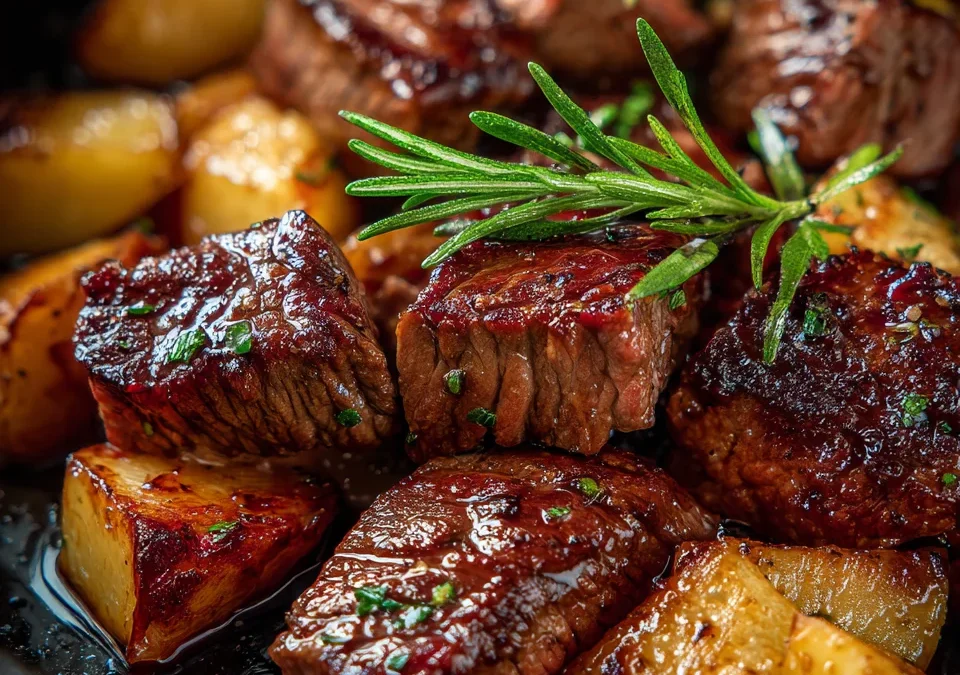
The Ultimate Steak Bites and Potatoes Skillet Recipe
- Total Time: 35 minutes
- Yield: 3–4 servings 1x
Description
To understand why this specific preparation has taken modern kitchens by storm, it helps to analyze the structural advantages of cutting beef into compact pieces. Traditional pan-searing methods involve cooking a massive, whole piece of meat, which can occasionally result in an uneven temperature gradient between the exterior crust and the cold interior center.
Ingredients
For the steak bites
- 1 lb (450 g) sirloin steak, cut into bite-sized cubes
- 1½ tbsp olive oil
- 2 tbsp butter
- 3 cloves garlic, minced
- 1 tsp paprika
- ½ tsp black pepper
- ½ tsp salt
- 1 tsp soy sauce (optional for depth)
- 1 tbsp chopped parsley (for garnish)
For the potatoes
- 1 lb (450 g) baby potatoes, halved
- 2 tbsp olive oil
- ½ tsp salt
- ½ tsp black pepper
- ½ tsp garlic powder
- ½ tsp dried thyme or rosemary
Instructions
- Boil potatoes for 8–10 minutes until just fork-tender. Drain and pat dry.
- Heat 1 tbsp olive oil in a large skillet over medium-high heat. Add potatoes and cook until golden and crispy. Remove and set aside.
- In the same skillet, add remaining olive oil and sear steak bites in a single layer for 2–3 minutes per side.
- Add butter and garlic, stirring quickly to coat the steak.
- Season with salt, pepper, paprika, and soy sauce if using.
- Return potatoes to the skillet and toss everything together.
- Cook for another 1–2 minutes until well combined and fragrant.
- Garnish with fresh parsley and serve hot.
Notes
- Don’t overcrowd the pan—sear steak in batches for better browning.
- Let steak rest briefly before serving for juicier bites.
- Use a cast-iron skillet for the best crust and flavor.
- Prep Time: 15 minutes
- Cook Time: 20 minutes
- Category: Main Course
- Method: Searing
- Cuisine: American
Nutrition
- Serving Size: 1 bowl
- Calories: 520 kcal
Keywords: garlic butter beef and potatoes, skillet steak and spuds, easy one pan steak bites
