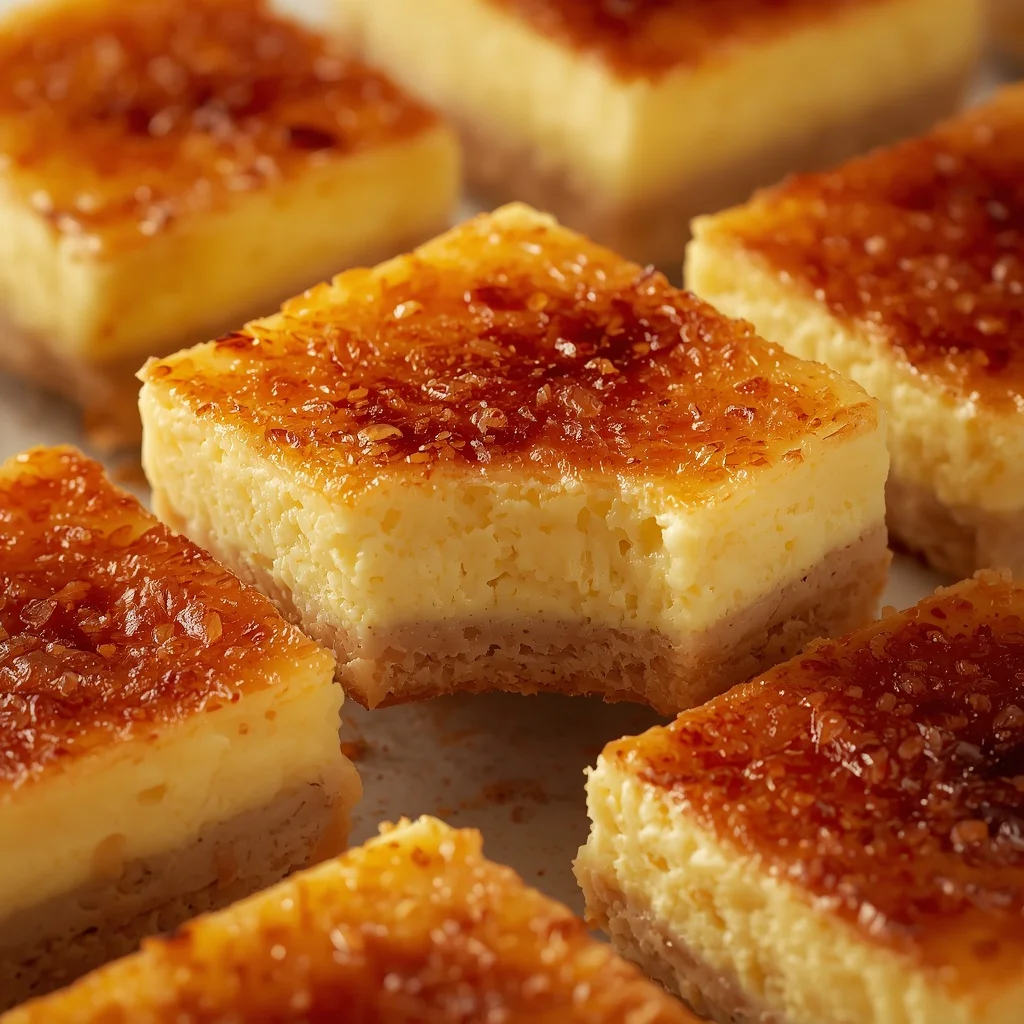
There is a brand new dessert taking over social media feeds, and it is completely redefining how we think about classic French pastry. If you spend any time browsing baking trends online, you have undoubtedly seen people tapping their spoons against a perfectly glassy, golden-amber surface to hear that signature shattering sound. We are talking about the sensational viral crack-top crème brûlée bars, a brilliant culinary crossover that transforms an elegant restaurant ramekin dessert into portable, crowd-pleasing dessert squares.
This spectacular treat captures everything people love about traditional baking while introducing a level of convenience and structural contrast that is nothing short of pure genius. In this definitive guide, we will break down absolutely everything required to master this recipe, explore its rich history, troubleshoot common baking pitfalls, and provide a comprehensive plan to recreate this social media masterpiece in your own home kitchen.
What is This viral crack-top crème brûlée bars?
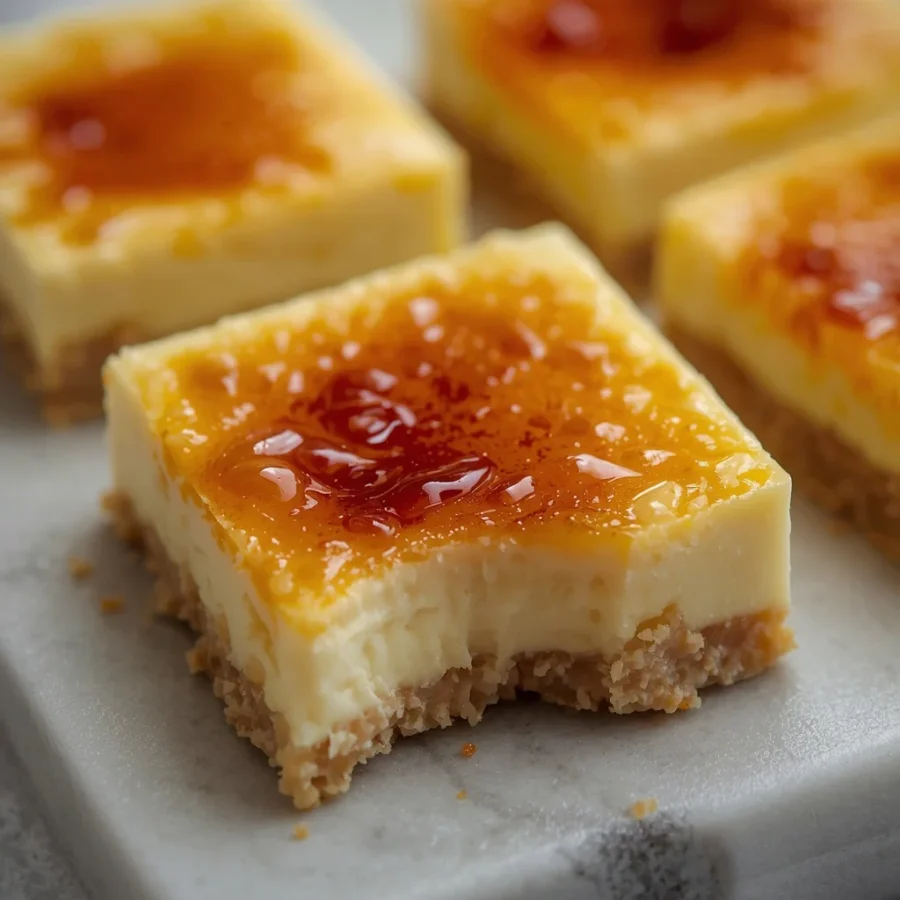
To understand why everyone is obsessing over this particular bake, we have to look closely at how it is constructed. At its core, this recipe is a three-layer architectural marvel designed to satisfy multiple textures in a single, decadent bite.
The Ultimate Texture Combination
The journey begins at the very bottom with a buttery, crumbly shortbread crust that provides a sturdy, melt-in-your-mouth foundation. On top of that sits a remarkably dense, silky vanilla custard layer that is rich with egg yolks and heavy cream.
The crown jewel, however, is the shatteringly crisp caramelized sugar shell on top. When you bring these three elements together into a neat, sliceable square, you get a beautiful interplay of textures. The buttery crunch of the base complements the smooth, velvet-like consistency of the custard, all while the brittle caramel top delivers a punchy sweetness and a delightful crunch.
It takes a dessert that used to require delicate handling and a spoon and turns it into something you can slice up for a backyard gathering or a fancy weekend dinner party.
The Origin of the Crème Brûlée Square
While the viral crack-top crème brûlée bars owe their sudden, explosive rise to modern video-sharing platforms and digital food creators, the component parts of this recipe are deeply rooted in European culinary history. Understanding where these elements come from helps us appreciate why they work so beautifully when modernized.
The Historic Custard Battle
The origins of the base dessert are fiercely contested between three European nations: England, Spain, and France.
-
The English Claim: England points to Trinity College in Cambridge, where historical documents from the late seventeenth century describe a burnt cream stamped with the college crest using a hot iron.
-
The Spanish Claim: Spain offers Crema Catalana, a delicate custard scented with citrus and cinnamon that features a identically torched sugar top.
-
The French Claim: However, it was France that cemented the name we use today. The first printed recipe for crème brûlée, which literally means burnt cream, appeared in the cookbook of a French chef named Francois Massialot in the year sixteen ninety-one.
Moving From Ramekins to Baking Pans
For centuries, this delicate dessert remained strictly confined to individual ceramic ramekins because a traditional custard is far too soft to hold its shape without walls. The modern breakthrough happened when creative pastry chefs and home bakers realized they could line a standard baking pan with a firm shortbread base.
The shortbread acts as an edible container, absorbing just enough moisture from the baking custard to stay tender while remaining structurally sound enough to be cut into clean bars. This brilliant structural evolution is exactly what allowed the recipe to go viral in recent times, transitioning from a formal white-tablecloth dessert into an innovative, shareable pastry bar.
Essential Ingredients and Precise Quantities: viral crack-top crème brûlée bars
Crafting a dessert this spectacular requires simple, high-quality ingredients used in precise amounts. Because pastry relies heavily on chemical reactions, measuring your components carefully ensures your custard sets perfectly and your crust remains wonderfully crisp.
For the Buttery Shortbread Crust
-
Unsalted Butter: One cup (or two hundred and twenty-five grams) of high-quality unsalted butter, softened entirely to room temperature so it creams smoothly.
-
Granulated Sugar: Half a cup (or one hundred grams) of white sugar to lightly sweeten the dough without making it heavy.
-
All-Purpose Flour: Two cups (or two hundred and fifty grams) of regular flour to provide the structural skeleton of your base.
-
Fine Salt: One quarter of a teaspoon of salt to balance the richness of the dairy.
Silky Vanilla Custard Layer
-
Heavy Cream: Two cups (or four hundred and eighty milliliters) of full-fat heavy cream. Do not substitute this with light milk, as the high fat content is what gives the custard its velvety stability.
-
Large Egg Yolks: Five large egg yolks, separated carefully from the whites while cold. The yolks provide the essential emulsifiers needed for a rich, set filling.
-
Granulated Sugar: Half a cup (or one hundred grams) of sugar to perfectly sweeten the custard core.
-
Vanilla Extract: One tablespoon of pure vanilla extract, or for a highly premium presentation, the scraped interior seeds from one whole fresh vanilla bean pod.
-
Fine Salt: A small pinch of salt to amplify the complex vanilla aromas.
For the Shatteringly Crisp Brûlée Layer
-
Granulated Sugar: One quarter of a cup (or fifty grams) of white sugar, though you may need a tiny bit extra depending on how evenly you sprinkle it across the surface.
Step-by-Step Direction and Preparation Method: viral crack-top crème brûlée bars
Creating the perfect viral crack-top crème brûlée bars is an exercise in patience and temperature control. By taking your time through each phase, you will ensure a smooth custard free of air bubbles and a beautifully caramelized sugar crust.
+-------------------------------------------------------------------------+
|                        BAKING & CHILLING FLOW                           |
|                                                                         |
|  1. BAKE CRUST       2. TEMPER CUSTARD      3. WATER BATH   4. TORCH TOP |
|  Press dough into    Whisk warm cream into  Bake bars in    Sprinkle the |
|  pan; bake until     egg yolks slowly to    water pan;      sugar evenly |
|  lightly golden.     prevent scrambling.    chill overnight and caramelize|
+-------------------------------------------------------------------------+
Phase One: Crafting the Perfect Shortbread Base
Begin the entire process by preheating your oven to three hundred and fifty degrees. To ensure you can remove your finished dessert easily later on, line an eight-inch square baking pan with a sheet of parchment paper, leaving a couple of inches of overhang on the sides to act as helpful lifting handles.
In a large mixing bowl, combine your softened unsalted butter and half a cup of granulated sugar. Using an electric hand mixer or a sturdy wooden spoon, cream these two ingredients together until the mixture looks smooth, light, and slightly fluffy.
Sift in your two cups of all-purpose flour and the quarter teaspoon of salt. Mix gently on low speed just until a soft, uniform dough begins to form. Do not overmix this dough, or your crust will turn out tough rather than crumbly.
Transfer the soft dough directly into your prepared square pan and use clean hands or the flat bottom of a drinking glass to press it into a perfectly flat, even layer across the entire bottom. Pop the pan into the preheated oven and bake for eighteen to twenty minutes, or until the top looks lightly golden and feels dry to the touch. Remove it from the oven and set it aside to cool down slightly while you prepare the next element.
Phase Two: Mixing and Tempering the Custard
The secret to an ultra-smooth filling lies in temperature management. Start by lowering your oven temperature to three hundred and twenty-five degrees.
Pour your two cups of heavy cream into a medium saucepan and place it over medium heat. Bring the cream to a gentle steam, watching it closely so that it never reaches a full rolling boil. While the cream is heating up, take a separate heatproof bowl and whisk together your five large egg yolks, half a cup of granulated sugar, the tablespoon of vanilla extract, and a pinch of salt until the yolks look slightly pale and smooth.
Now comes the crucial step known as tempering, which prevents your eggs from scrambling when they meet the hot dairy. While whisking the egg mixture constantly with one hand, use your other hand to slowly drizzle the warm cream into the bowl in a thin, steady stream.
Once all the cream is thoroughly incorporated, place a fine-mesh sieve over a clean bowl or large glass measuring pitcher and pour the liquid custard through it. Straining removes any tiny bits of cooked egg, ensuring an absolutely flawless mouthfeel. Carefully pour this strained liquid over your slightly cooled, baked shortbread crust.
Phase Three: The Water Bath and Baking
To prevent the delicate custard layer from cracking or curdling, you must use a baking technique known as a water bath or bain-marie. Place your square baking pan inside a larger, deeper baking dish or roasting pan.
Carefully slide the nested pans onto the middle rack of your preheated oven. Using a kettle or a pitcher, carefully pour hot water into the larger outer dish until the water level reaches about halfway up the outside walls of your square dessert pan. Be incredibly careful not to splash any water into the custard itself.
Bake at three hundred and twenty-five degrees for thirty to thirty-five minutes. You will know it is done when the edges look stable and set, but the absolute center still retains a slight, uniform wobble when the pan is gently nudged.
Carefully lift the square pan out of the hot water bath and place it on a wire cooling rack to reach room temperature completely. Once cooled, cover the pan loosely and transfer it to the refrigerator for a minimum of four hours, though letting it chill overnight is highly recommended to ensure the bars are completely firm before slicing.
Phase Four: Achieving the Viral Caramelized Crack Top
When your dessert is thoroughly chilled and completely firm, use the parchment paper handles to carefully lift the entire block out of the baking pan and place it onto a clean cutting board.
Take your quarter cup of granulated sugar and sprinkle it in an ultra-thin, completely uniform layer across the entire surface of the cold custard. If there are any thick mounds of sugar, gently shake the board or use the back of a dry spoon to smooth them out, as uneven sugar will not melt correctly.
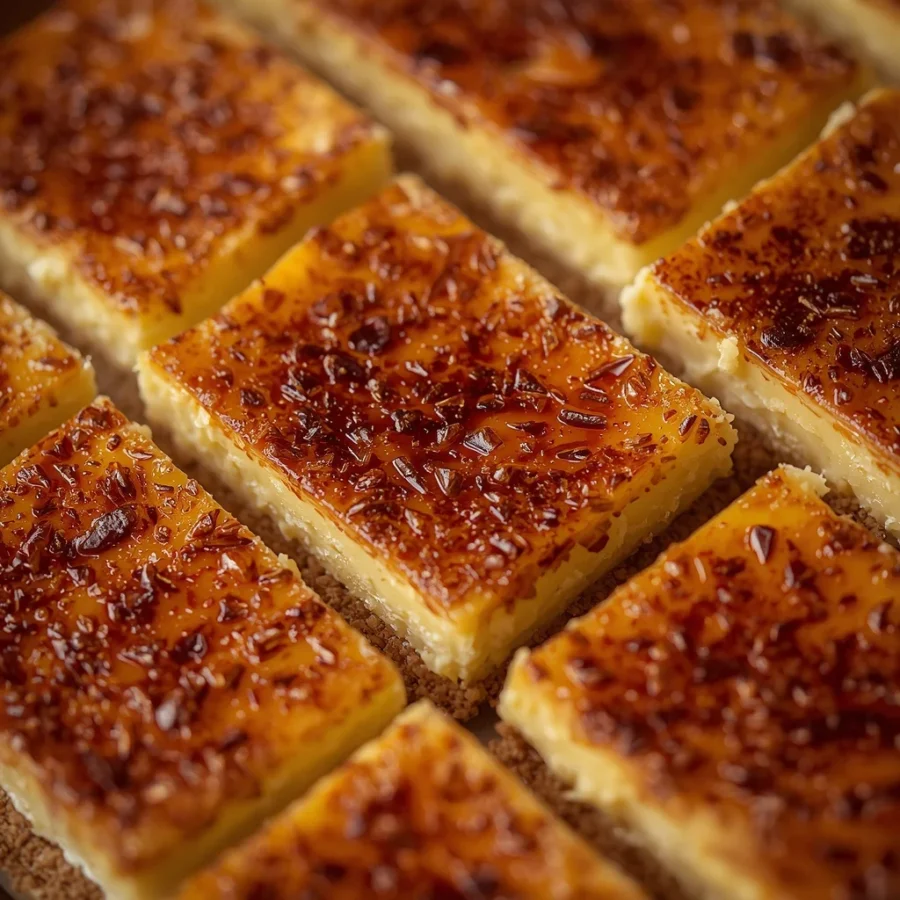
Ignite your kitchen torch and hold the flame a few inches away from the sugar surface. Move the flame in constant, slow circular motions across the top. You will watch the white crystals melt into a clear liquid, begin to bubble vigorously, and slowly transform into a deep amber, glassy shell.
Once the entire surface is caramelized to your liking, turn off the torch and let the bars sit undisturbed at room temperature for two to three minutes. During this brief window, the molten sugar will cool down and solidify into a rock-hard layer.
Take a very sharp chef’s knife, wipe it with a warm cloth, and slice the block into clean, even squares. Tap the rigid surface with the back of a spoon to experience that satisfying, famous crack sound, and serve your guests immediately.
Creative Flavor Variations to Try: viral crack-top crème brûlée bars
Once you have mastered the foundational art of the traditional vanilla viral crack-top crème brûlée bars, you can start experimenting with exciting flavor additions to put your own personal spin on this modern dessert.
Zesty Citrus and Berry Infusions
To bring a vibrant, refreshing brightness to this rich dessert, try grating the fresh zest of two large lemons or oranges directly into the heavy cream while it warms on the stove. You can also press a handful of fresh blackberries or raspberries directly into the shortbread crust before pouring the custard over the top, creating a beautiful fruit-filled surprise hidden beneath the smooth cream.
Cozy Autumn Spice and Chai
For a warm, comforting twist that is perfect for cooler seasons, whisk half a teaspoon of ground cinnamon, a quarter teaspoon of ground nutmeg, and a dash of ground cardamom into your egg yolk and sugar mixture. Alternatively, you can steep two high-quality chai tea bags directly into the hot heavy cream for ten minutes before tempering your eggs, resulting in a beautifully aromatic, spiced custard bar.
Rich Espresso and Dark Chocolate
If you love deep, robust dessert profiles, stir one tablespoon of instant espresso powder directly into the warm heavy cream until it dissolves completely. For an extra layer of indulgence, scatter a layer of miniature dark chocolate chips over the baked shortbread base right before you pour the coffee-infused custard over it, delivering a sophisticated mocha experience.
Important Success Factors For viral crack-top crème brûlée bars
Because this recipe combines delicate custard baking with high-heat sugar caramelization, achieving the best possible outcome relies on managing a few subtle details.
Achieving Clean Slices: Slicing through a hard caramel shell into a soft custard can sometimes cause the filling to squish out. To get perfectly neat squares, always use an incredibly sharp knife. Dip the blade into hot water, wipe it completely dry with a clean towel, and make a firm, decisive slice downward. Clean the blade thoroughly between every single cut.
Choosing the Right Sugar: When it comes to creating that perfect crackly top, regular granulated sugar works beautifully. However, if you can find superfine sugar or caster sugar, use it. The smaller crystal size allows the sugar to melt much faster and more evenly under the torch flame, minimizing the risk of accidentally heating up and melting the chilled custard underneath.
The Broiler Alternative: If you do not own a kitchen torch, you can still achieve a caramelized top using your oven’s broiler setting. Turn your broiler to its absolute hottest setting and place the sugar-dusted pan on the very top rack close to the heating element. Watch it with absolute concentration, as the sugar can go from perfectly golden to completely burnt in a matter of seconds.
Frequently Asked Questions: viral crack-top crème brûlée bars
Can I make viral crack-top crème brûlée bars several days in advance?
You can easily prepare the shortbread crust and the custard layer up to two days ahead of time and keep the pan covered in the refrigerator. However, you should absolutely wait to add and torch the sugar topping until right before you plan on serving them. A caramelized sugar shell is highly susceptible to humidity; if a torched bar sits inside a refrigerator for more than an hour or two, the hard sugar shell will absorb moisture, liquefy, and turn into a soft, sticky syrup, completely losing its signature crunch.
Why did my custard turn out watery or split?
A watery or separated custard is almost always the result of overbaking or skipping the water bath. When egg yolks are subjected to intense, direct heat, their proteins tighten up too much, squeezing out the trapped liquids and creating a curdled, weeping texture. Always ensure you use the water bath, keep your oven at three hundred and twenty-five degrees, and remove the bars the second the center has that slight, uniform jello-like jiggle.
Do I really need to strain the custard liquid?
While it might feel like an annoying extra dish to wash, straining your custard mixture through a fine-mesh sieve is the ultimate dividing line between an average home bake and a truly professional dessert. Even if you are incredibly careful when tempering your eggs, tiny strands of egg white or overcooked yolk will almost always form. Straining catches these imperfections, ensuring your finished bar has an incredibly luxurious, uniform consistency throughout.
How should I store any leftover squares?
If you happen to have any leftovers, store them in an airtight container inside the refrigerator for up to three days. Keep in mind that while the underlying shortbread and vanilla custard will remain absolutely delicious, the glassy caramelized sugar top will soften up significantly after a few hours in the cold environment. If you know you are only serving a few portions, consider slicing and torching only the individual bars you need, leaving the rest of the custard base plain until you are ready to enjoy them later.
Conclusion: viral crack-top crème brûlée bars
Bringing the magic of premium pastry into your home does not require years of formal culinary school training when you have a smart, adaptable recipe at your disposal. These sensational viral crack-top crème brûlée bars perfectly bridge the gap between timeless European culinary tradition and the fun, interactive nature of modern baking trends. By taking the time to bake your base smoothly in a gentle water bath and mastering the art of the perfect sugar torch, you create a dessert that is as visually spectacular to watch as it is rewarding to eat. Gather your baking pans, fire up your kitchen torch, and enjoy every single crunchy, creamy bite of this viral baking masterpiece.
Print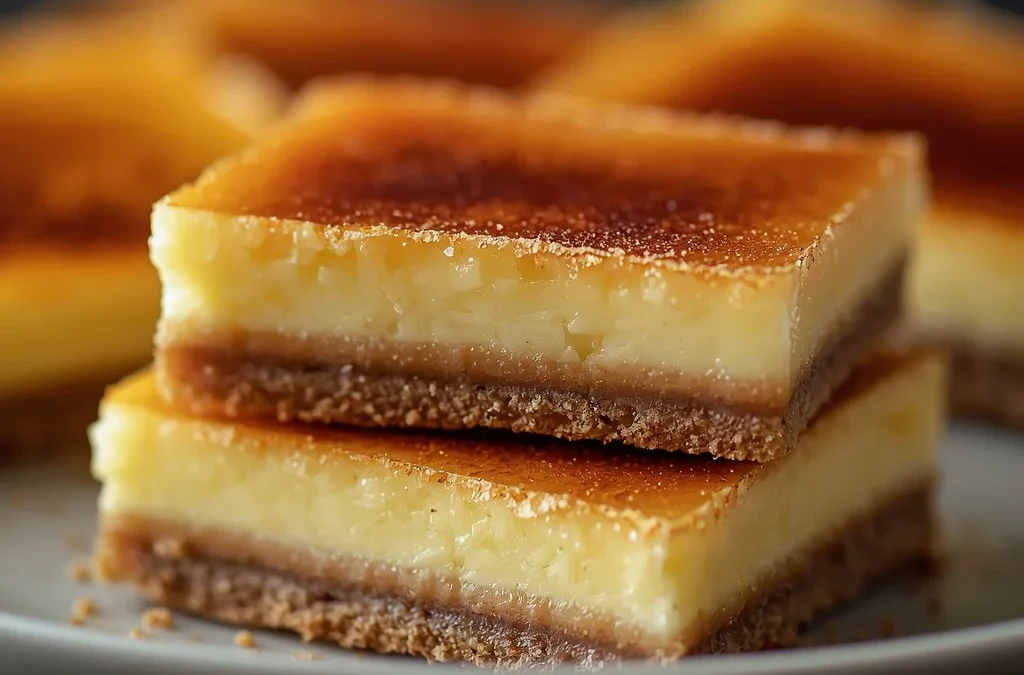
Master the Ultimate Viral Crack-Top Crème Brûlée Bars at Home
- Total Time: 5 hours 15 minutes (includes chilling time)
- Yield: 16 bars 1x
- Diet: Vegetarian
Description
To understand why everyone is obsessing over this particular bake, we have to look closely at how it is constructed. At its core, this recipe is a three-layer architectural marvel designed to satisfy multiple textures in a single, decadent bite.
Ingredients
For the Shortbread Crust
- 1 cup (225 g) unsalted butter, softened
- ½ cup (100 g) granulated sugar
- 2 cups (250 g) all-purpose flour
- ¼ tsp salt
For the Custard Layer
- 2 cups (480 ml) heavy cream
- 5 large egg yolks
- ½ cup (100 g) granulated sugar
- 1 tbsp vanilla extract (or seeds from 1 vanilla bean)
- Pinch of salt
For the Crack-Top Brûlée Layer
- ¼ cup (50 g) granulated sugar, or as needed
Instructions
1. Prepare the Crust
- Preheat the oven to 350°F (175°C).
- Line an 8-inch (20-cm) square baking pan with parchment paper.
- Cream together the butter and sugar until smooth.
- Mix in the flour and salt until a soft dough forms.
- Press evenly into the prepared pan.
- Bake for 18–20 minutes, or until lightly golden.
- Let cool slightly.
2. Make the Custard
- Lower the oven temperature to 325°F (165°C).
- In a saucepan, heat the cream until steaming but not boiling.
- In a bowl, whisk together egg yolks, sugar, vanilla, and salt.
- Slowly pour the warm cream into the yolk mixture while whisking constantly.
- Strain the custard through a fine-mesh sieve for extra smoothness.
- Pour over the baked crust.
3. Bake
- Place the pan in a larger baking dish.
- Add hot water to the larger dish until it reaches halfway up the sides of the pan (water bath).
- Bake for 30–35 minutes, or until the center is just set with a slight wobble.
- Remove from the water bath and cool completely.
- Refrigerate for at least 4 hours or overnight.
4. Create the Viral Crack Top
- Remove the chilled bars from the pan.
- Sprinkle a thin, even layer of granulated sugar over the surface.
- Use a kitchen torch to caramelize the sugar until deep amber and glassy.
- Allow the topping to cool for 2–3 minutes until hardened.
5. Serve
- Slice with a sharp knife.
- Tap the top gently with a spoon to hear the signature “crack.”
- Serve immediately for maximum crunch.
Notes
- Prep Time: 20 minutes
- Cook Time: 55 minutes
- Category: Dessert
- Method: Baking
- Cuisine: French-Inspired
Nutrition
- Serving Size: 1 bar
- Calories: 255 kcal
Keywords: social media creme brulee squares, crispy top dessert bars
