White Christmas Coconut Cake: A Festive Holiday Centerpiece

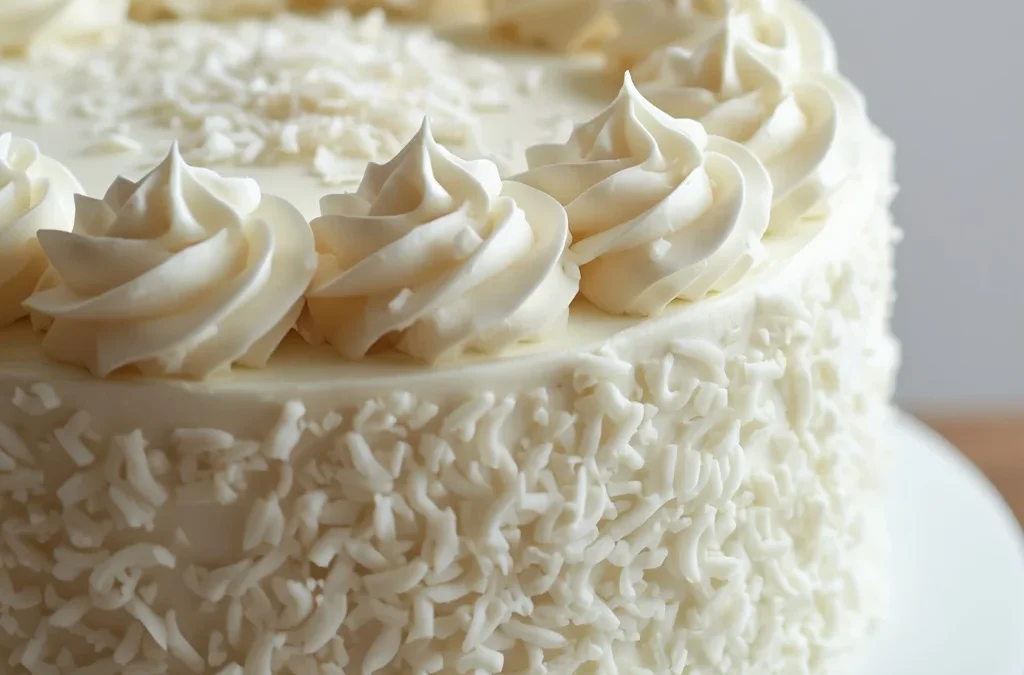
When the holiday season arrives, nothing captures the magic of a snowy winter wonderland on your dessert table quite like a White Christmas Coconut Cake. Imagine slicing into a tall, pillowy-soft white sponge layered with rich, velvety buttercream and blanketed in fluffy flakes of sweet shredded coconut that look just like freshly fallen snow. Whether you are hosting an intimate family gathering or throwing a grand festive feast, this show-stopping White Christmas Coconut Cake delivers an unforgettable combination of tropical warmth and cozy winter nostalgia. In this comprehensive guide, we will walk through everything you need to know to bake this stunning dessert from scratch, ensuring every single bite is tender, moist, and bursting with authentic coconut flavor.
White Christmas Coconut Cake

What Is a White Christmas Coconut Cake?

At its core, a White Christmas Coconut Cake is a classic layered white velvet or white butter cake infused with tropical coconut essence, stacked with a lush coconut buttercream frosting, and completely coated in shredded coconut. Unlike standard yellow cakes that rely on whole eggs, a true white cake uses only egg whites. Leaving out the golden yolks gives the crumb a pristine, snow-white color that aligns seamlessly with a winter holiday theme.
Beyond its striking visual appeal, the texture of this dessert sets it apart from ordinary holiday sweets. Because the batter incorporates rich coconut milk alongside creamed butter and whipped egg whites, the finished sponge is remarkably tender yet sturdy enough to hold generous layers of frosting. When you coat the exterior in shredded coconut and garnish it with optional white chocolate curls, silver sugar pearls, or vibrant fresh cranberries, the cake transforms into an edible snow globe that commands attention the moment you bring it to the table.

The History and Origin of the White Christmas Coconut Cake

To understand why a tropical fruit like the coconut became an iconic symbol of Christmas baking in cold climates, we have to travel back to the nineteenth century. Before modern refrigeration and rapid global shipping existed, fresh coconuts were rare, exotic luxuries in North America and Europe. Merchant ships arriving from the Caribbean and South America often unloaded their precious cargo of coconuts in late autumn, right in time for the holiday season. Because they were expensive and only available once a year, families saved them specifically for festive celebrations.
In the American South, where hospitality and elaborate holiday baking are deeply rooted traditions, coconut cake quickly became a staple of the Christmas dinner table. Bakers prized the pristine white aesthetic of shredded coconut because it mimicked the look of snow—a rare sight in many southern states during December. By the twentieth century, commercial shredded coconut became widely accessible in grocery stores, cementing the White Christmas Coconut Cake as a beloved multi-generational heirloom recipe passed down through families every holiday season.

Essential Ingredients for the Ultimate White Christmas Coconut Cake

Gathering high-quality ingredients at the proper temperature is the secret to achieving bakery-worthy results at home. Remember to avoid using numerical digits or abbreviations when measuring and prepping your kitchen station; take your time to measure everything accurately for consistent baking.

Ingredients for the White Cake Layers

  • All-purpose flour or cake flour: Two and a half cups (approximately three hundred and ten grams). Cake flour yields an even finer, more delicate crumb, while all-purpose flour provides a slightly sturdier structure.

  • Baking powder: Two and a half teaspoons to give the heavy batter a reliable, even rise.

  • Salt: Half a teaspoon of fine table salt to balance the sweetness and sharpen the coconut notes.

  • Unsalted butter: Three-quarters of a cup (about one hundred and seventy grams), softened to room temperature so it creams smoothly without leaving lumps.

  • Granulated white sugar: One and a half cups (roughly three hundred grams) for sweetness and moisture retention.

  • Large egg whites: Four egg whites, brought to room temperature so they incorporate effortlessly into the butter mixture and provide lift without yellowing the batter.

  • Vanilla extract: One tablespoon of pure vanilla extract (choose clear vanilla extract if you want the brightest possible white crumb).

  • Coconut extract: Half a teaspoon (optional, though highly recommended if you want a pronounced bakery-style coconut aroma).

  • Coconut milk or whole milk: One cup (two hundred and forty milliliters) at room temperature. Full-fat canned coconut milk will give you the richest flavor and softest crumb.

Creamy Coconut Frosting

  • Unsalted butter: One cup (two hundred and twenty-five grams), softened to room temperature.

  • Powdered sugar: Four cups (four hundred and eighty grams), sifted to prevent any gritty lumps in your buttercream.

  • Coconut milk: Three to four tablespoons, used to thin the frosting to a spreadable, cloud-like consistency.

  • Vanilla extract: One teaspoon of pure or clear vanilla extract.

  • Coconut extract: Half a teaspoon to reinforce the tropical sweetness.

  • Salt: Just a pinch to cut through the richness of the powdered sugar and butter.

Ingredients for Festive Christmas Decoration

  • Shredded coconut: Two cups of sweetened or unsweetened shredded coconut. Sweetened angel-flake coconut gives a classic snowy look and soft chew, while unsweetened offers a lighter, crisper texture.

  • White chocolate shavings: Optional, for adding an extra layer of elegance across the crown of the cake.

  • Sugar pearls: Small silver or white edible pearls (optional) to create a shimmering frost effect.

  • Fresh cranberries: A small handful (optional) to provide a pop of bright holiday crimson against the stark white coconut.

Step-by-Step Preparation and Baking Directions
White Christmas Coconut Cake

Creating a memorable White Christmas Coconut Cake is straightforward when you break the process down into manageable stages. Follow these detailed steps carefully to avoid common pitfalls like dense cake layers or runny frosting.

Step One: Prepare the White Cake Batter

Start by preheating your oven to one hundred and seventy-five degrees Celsius (or three hundred and fifty degrees Fahrenheit). While the oven heats up, grease two eight-inch round cake pans generously with butter or baking spray, and line the bottoms with rounds of parchment paper so the delicate layers release effortlessly later.
In a medium mixing bowl, whisk together your flour, baking powder, and salt. Taking thirty seconds to whisk these dry ingredients ensures the leavening agent is evenly distributed throughout the flour, preventing uneven tunnels or lopsided domes during baking.
In a separate large mixing bowl—or the bowl of a stand mixer fitted with the paddle attachment—beat the softened unsalted butter and granulated sugar together on medium-high speed for three to four minutes. Do not rush this creaming stage; you want the mixture to turn pale, aerated, and noticeably fluffy. Scrape down the sides of the bowl with a rubber spatula, then add the room-temperature egg whites one at a time, beating well after each addition until fully absorbed. Mix in the vanilla extract and coconut extract until fragrant.
Now, turn your mixer down to its lowest speed. Add the dry flour mixture in three parts, alternating with the coconut milk in two parts. Always begin and end with the flour mixture. Mix only until the last streaks of white flour disappear. Overmixing at this stage develops too much gluten, which can turn a delicate white sponge into a tough, dense loaf.

Step Two: Bake the Cake Layers to Perfection

Divide the finished batter evenly between your two prepared eight-inch cake pans, smoothing the tops gently with an offset spatula. Place the pans on the center rack of your preheated oven and bake for thirty to thirty-five minutes.
You will know the layers are ready when the edges lightly pull away from the sides of the pans, the tops spring back when gently pressed, and a wooden toothpick inserted directly into the center comes out clean or with just a few moist crumbs attached. Avoid opening the oven door during the first twenty-five minutes, as sudden drafts of cool air can cause the cake centers to sink.
Once baked, remove the pans from the oven and let the cakes cool in their pans on a countertop for ten minutes. After ten minutes, run a thin butter knife around the inside edges, invert the cakes onto a wire cooling rack, peel off the parchment paper, and allow them to cool completely to room temperature before frosting. Frosting a warm cake will melt your buttercream instantly.

Step Three: Whip Up the Coconut Frosting

While the cake layers finish cooling, prepare your frosting. Place the softened unsalted butter in a clean mixing bowl and beat on medium speed for two minutes until completely smooth and creamy.
Gradually add the powdered sugar one cup at a time on low speed so sugar does not fly out of the bowl. Once all the sugar is incorporated, pour in three tablespoons of coconut milk along with the vanilla extract, coconut extract, and pinch of salt. Increase the mixer speed to medium-high and beat for two to three minutes until the frosting becomes airy, pale, and spreadable. If the frosting feels too thick to spread easily without tearing the cake, add the fourth tablespoon of coconut milk. If it feels too soft, beat in a few extra spoonfuls of powdered sugar.

Step Four: Assemble and Frost the Cake

Place a dab of frosting in the center of your serving plate or cake stand to act as glue, then set your first cooled cake layer flat-side down on top. Scoop a generous portion of the coconut frosting onto the center of this layer and spread it evenly all the way to the edges using an offset spatula.
Carefully place the second cake layer on top, pressing down ever so slightly so it sits level. Apply a thin layer of frosting all over the top and sides of the cake to trap any loose crumbs—this is known as a crumb coat. Once coated, spread the remaining frosting smoothly over the entire exterior of the cake.
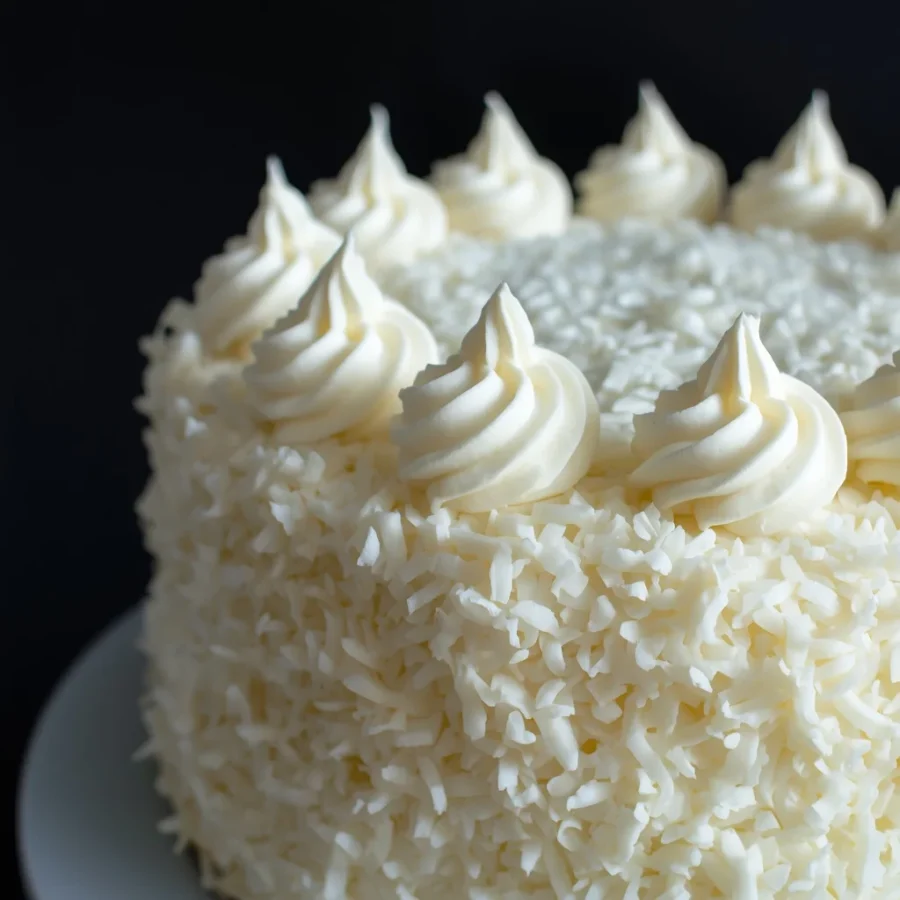
Working over a large rimmed baking sheet to catch any stray flakes, gently press the shredded coconut all over the sides and top of the frosted cake using clean hands. Patting the coconut lightly into the fresh buttercream helps it adhere uniformly, giving the entire dessert a plush, snow-covered finish.

Step Five: Add Festive Christmas Decorations

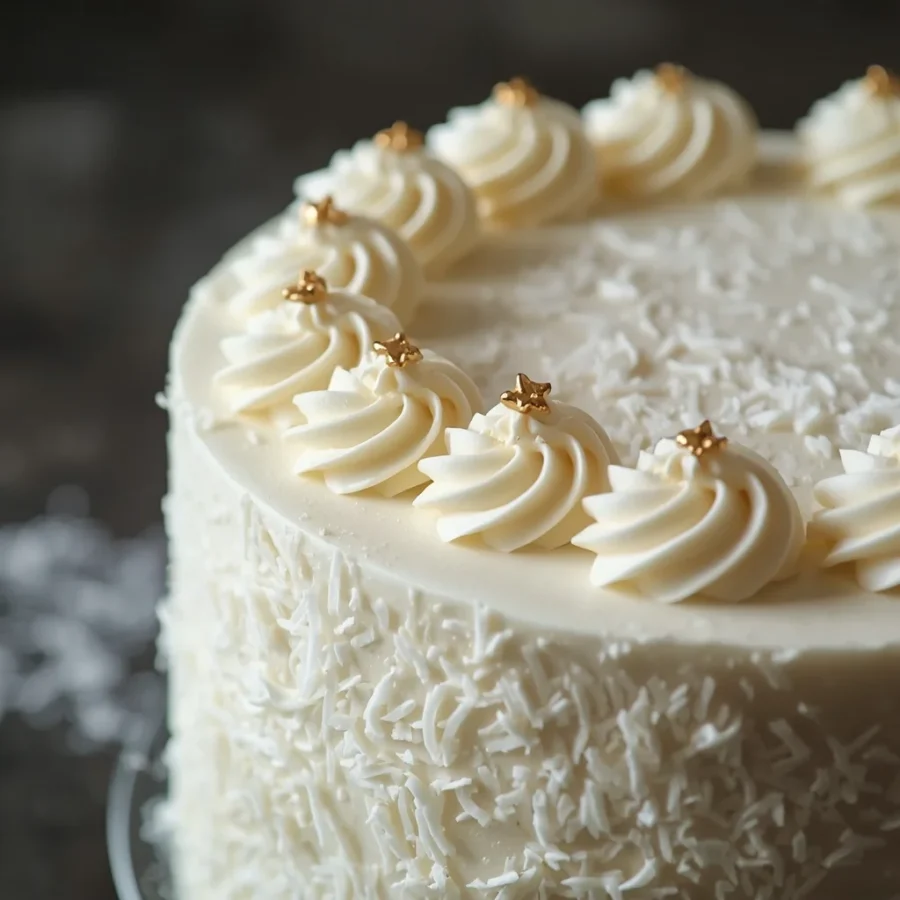
To elevate your White Christmas Coconut Cake from delicious to truly breathtaking, add a few simple holiday flourishes right on top. Scatter delicate white chocolate shavings across the crown for extra texture, and dot the surface with tiny silver or white sugar pearls to mimic glistening ice crystals. Finally, nestle a small cluster of fresh red cranberries—or sugared cranberries—in the center for a striking pop of festive color. Transfer the decorated cake to the refrigerator for twenty to thirty minutes so the frosting firms up slightly, making it much easier to slice cleanly.

Delicious Variations to Customize Your Coconut Cake

One of the best things about mastering a classic White Christmas Coconut Cake is how easily you can adapt the base recipe to suit your personal taste or dietary preferences. Here are several creative ways to switch things up:
  • Cream Cheese Coconut Frosting: If you prefer a slightly tangy frosting to balance the sweetness of the cake, swap half of the butter in the frosting recipe for four ounces of softened full-fat block cream cheese. Beat the butter and cream cheese together until silky smooth before adding the powdered sugar and coconut milk.

  • White Chocolate Raspberry Filling: Spread a thin layer of seedless raspberry jam over the bottom cake layer before adding your coconut buttercream. The bright tartness of the berries pairs wonderfully with sweet coconut and adds a jewel-toned surprise when you slice into the cake.

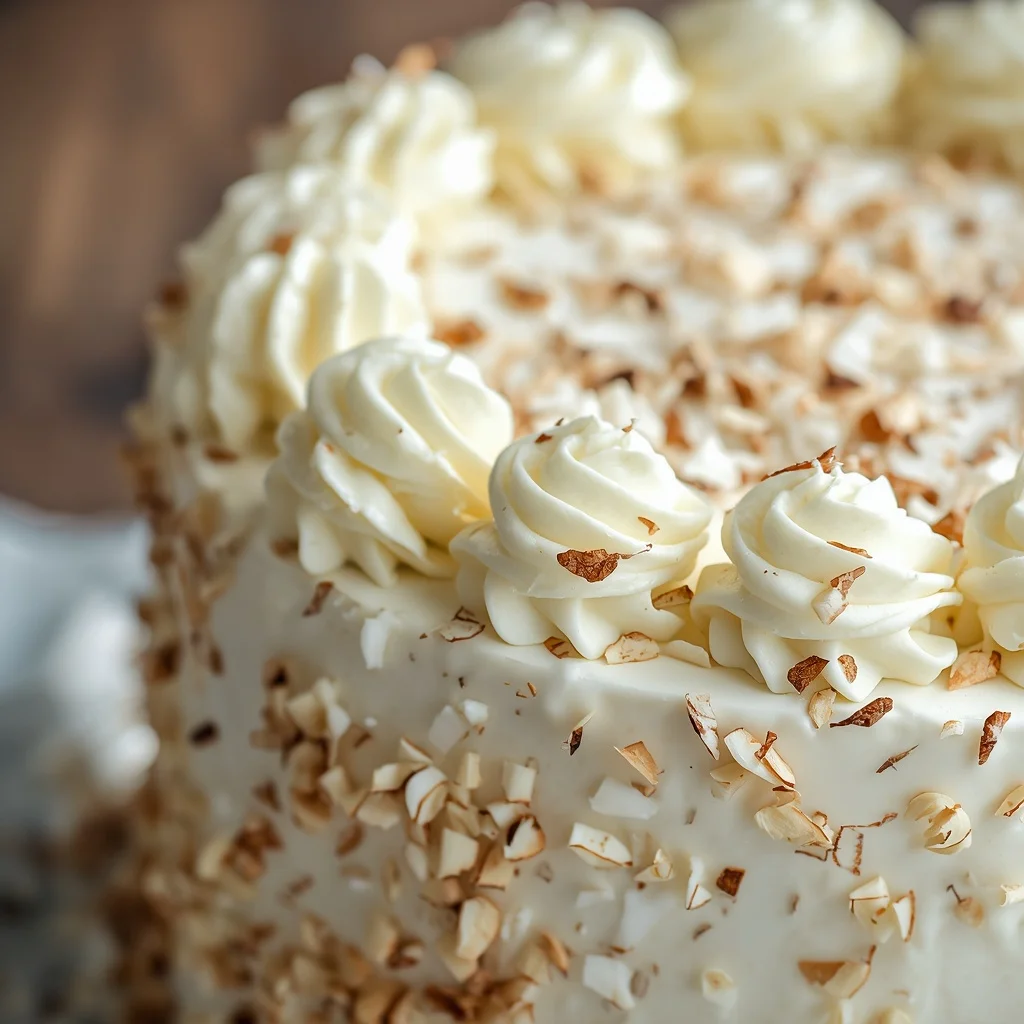
  • Toasted Coconut Crunch: For a deeper, nuttier flavor profile, toast half of the shredded coconut in a dry skillet over medium heat until golden brown, let it cool completely, and fold it directly into the frosting layer between the cakes while keeping the outside pure white.

  • Dairy-Free Holiday Cake: Because coconut milk is already the star liquid in this recipe, making the cake dairy-free is effortless. Simply replace the unsalted butter in both the cake and the frosting with high-quality plant-based vegan butter sticks, and verify that your white chocolate shavings are dairy-free.

Pro Baking Tips for Guaranteed Success

Even experienced bakers appreciate a few insider tricks when preparing a centerpiece holiday dessert. Keep these helpful guidelines in mind as you bake:
  • Lock in extra moisture: Before spreading the frosting onto your cooled cake layers, use a pastry brush to lightly brush the tops of each sponge with one or two tablespoons of plain coconut milk. This simple step guarantees an ultra-moist texture that stays fresh for days.

  • Achieve a pure snow-white crumb: Standard brown vanilla extract can tint white cake batter slightly beige. Using clear imitation vanilla extract and strictly separating your eggs so zero yolk gets into the whites ensures your interior slices look just as snowy as the outside.

  • Choose full-fat canned coconut milk: Avoid using carton coconut milk beverages intended for cereal or coffee, as they contain too much water and lack the rich fats needed to tenderize the cake. Always shake a can of full-fat coconut milk well before measuring.

  • Plan ahead for stress-free hosting: You can easily bake the cake layers one or two days in advance. Once completely cooled, wrap each layer tightly in plastic wrap and store them at room temperature, or freeze them for up to one month. Assemble and frost the cake on the morning of your celebration.

  • Store leftovers properly: Keep any remaining slices in an airtight cake carrier in the refrigerator for up to four days. Because butter-based cakes firm up in cold temperatures, let slices sit at room temperature for about twenty minutes before serving so the crumb softens back to its pillowy best.

Frequently Asked Questions About White Christmas Coconut Cake

Can I make this White Christmas Coconut Cake into a three-layer cake instead of two?

Yes, you certainly can. Divide the batter evenly among three six-inch round cake pans instead of two eight-inch pans. Because the layers will be slightly thinner, start checking them for doneness around twenty-two to twenty-five minutes. You may also want to prepare an extra half-batch of coconut frosting so you have plenty to spread between all three layers and cover the taller sides.

Why did my white cake turn out dense instead of light and fluffy?

A dense crumb usually happens for one of three reasons: overmixing the batter after adding the flour, using cold butter and cold egg whites that failed to emulsify properly, or measuring too much flour by scooping directly out of the bag with a measuring cup. Always spoon your flour lightly into the measuring cup and level it off with a knife, ensure your ingredients are at room temperature, and stop mixing as soon as the flour disappears.

Should I use sweetened or unsweetened shredded coconut for the exterior?

Both options work beautifully, so the choice comes down to personal preference. Sweetened shredded coconut is softer, moister, and clings effortlessly to buttercream, creating that classic Southern-style snowy appearance. Unsweetened desiccated or shredded coconut provides a cleaner, pure coconut taste without extra sugar and adds a delightful subtle crunch.

Can I freeze a fully frosted White Christmas Coconut Cake?

You can freeze the entire frosted and coconut-coated cake for up to two months. Place the uncovered cake in the freezer for two hours until the frosting and coconut shell are frozen solid, then wrap the whole cake snugly in two layers of plastic wrap followed by aluminum foil. Thaw it overnight in the refrigerator, then bring it to room temperature before adding fresh cranberries and serving.

Conclusion

Bringing a homemade White Christmas Coconut Cake to your holiday table is one of the most rewarding ways to celebrate the season with the people you love. From its tender, vanilla-and-coconut-scented white sponge to its cloud-like buttercream and shimmering coat of snowy coconut flakes, every detail of this dessert feels special, nostalgic, and deeply comforting. Even better, the recipe relies on straightforward pantry staples and simple techniques that any home baker can master with confidence. Whether you keep it classic with silver sugar pearls and fresh cranberries or customize it with a tangy cream cheese frosting, this White Christmas Coconut Cake is guaranteed to become a cherished holiday tradition in your kitchen for many Christmases to come.
Print
clock clock iconcutlery cutlery iconflag flag iconfolder folder iconinstagram instagram iconpinterest pinterest iconfacebook facebook iconprint print iconsquares squares iconheart heart iconheart solid heart solid icon
White Christmas Coconut Cake

White Christmas Coconut Cake: A Festive Holiday Centerpiece


  • Author: David Andersson
  • Total Time: 1 hour 5 minutes
  • Yield: 10–12 servings 1x
  • Diet: Vegetarian

Description

At its core, a White Christmas Coconut Cake is a classic layered white velvet or white butter cake infused with tropical coconut essence, stacked with a lush coconut buttercream frosting, and completely coated in shredded coconut. Unlike standard yellow cakes that rely on whole eggs, a true white cake uses only egg whites. Leaving out the golden yolks gives the crumb a pristine, snow-white color that aligns seamlessly with a winter holiday theme.


Ingredients

Scale

For the white cake

  • 2½ cups (310 g) all-purpose flour or cake flour

  • 2½ tsp baking powder

  • ½ tsp salt

  • ¾ cup (170 g) unsalted butter, softened

  • 1½ cups (300 g) granulated sugar

  • 4 large egg whites, room temperature

  • 1 tbsp vanilla extract

  • ½ tsp coconut extract (optional)

  • 1 cup (240 ml) coconut milk or whole milk

For the coconut frosting

  • 1 cup (225 g) unsalted butter, softened

  • 4 cups (480 g) powdered sugar

  • 3–4 tbsp coconut milk

  • 1 tsp vanilla extract

  • ½ tsp coconut extract

  • Pinch of salt

For decoration

  • 2 cups sweetened or unsweetened shredded coconut

  • White chocolate shavings (optional)

  • Small silver or white sugar pearls (optional)

  • Fresh cranberries for a Christmas touch (optional)


Instructions

Step 1: Prepare the cake

  1. Preheat oven to 175°C (350°F).

  2. Grease and line two 8-inch round cake pans with parchment paper.

  3. Whisk together flour, baking powder and salt.

  4. In another bowl, beat butter and sugar until light and fluffy, about 3–4 minutes.

  5. Add egg whites one at a time, beating well after each addition.

  6. Mix in vanilla and coconut extract.

  7. Add the flour mixture alternately with coconut milk, beginning and ending with flour.

  8. Mix just until combined. Do not overbeat.

Step 2: Bake

  1. Divide batter evenly between the prepared pans.

  2. Bake for 30–35 minutes, or until a toothpick inserted in the centre comes out clean.

  3. Allow cakes to cool in pans for 10 minutes.

  4. Remove and cool completely on a wire rack.

Step 3: Make the coconut frosting

  1. Beat softened butter until creamy.

  2. Gradually add powdered sugar.

  3. Add coconut milk, vanilla, coconut extract and salt.

  4. Beat for 2–3 minutes until fluffy and smooth.

  5. Adjust consistency with a little more powdered sugar or coconut milk if needed.

Step 4: Assemble the cake

  1. Place one cake layer on a serving plate.

  2. Spread a generous layer of coconut frosting over it.

  3. Place the second cake layer on top.

  4. Cover the top and sides with the remaining frosting.

  5. Gently press shredded coconut all over the cake.

Step 5: Christmas decoration

  • Sprinkle white chocolate shavings over the top.

  • Add silver sugar pearls for a snowy effect.

  • Decorate with a few fresh cranberries for festive colour.

  • Refrigerate for 20–30 minutes before serving.

Notes

Enjoy your beautiful White Christmas Coconut Cake!

  • Prep Time: 30 minutes
  • Cook Time: 35 minutes
  • Category: Dessert
  • Method: Baking
  • Cuisine: American

Nutrition

  • Serving Size: 1 slice (approximately 120 g)
  • Calories: 520 kcal

Keywords: festive coconut layer cake, holiday shredded coconut cake, snowy white coconut cake, Christmas coconut buttercream cake

Author

Leave a Comment

Recipe rating ★☆ ★☆ ★☆ ★☆ ★☆