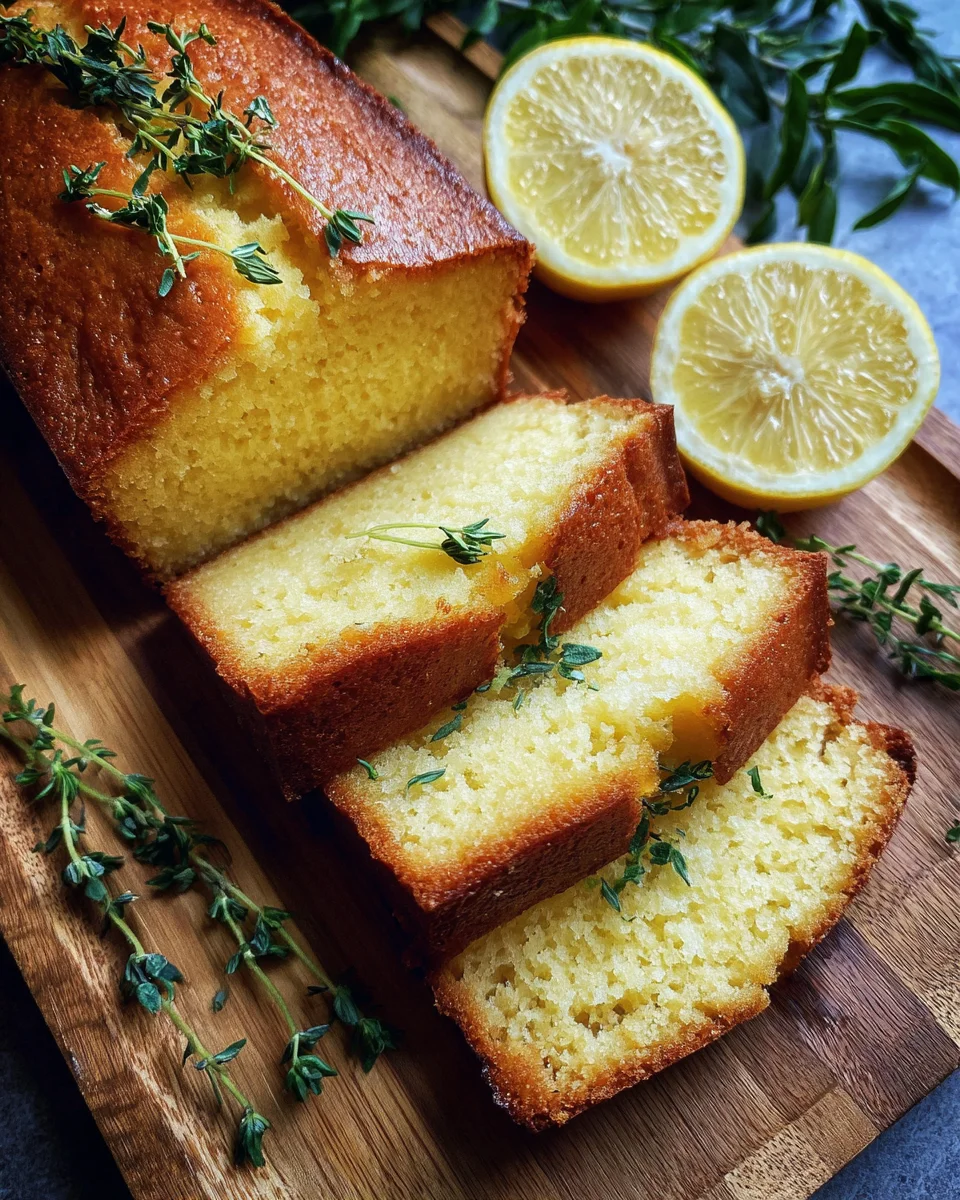
There is a distinct, undeniable pleasure in baking something that completely fills your home with a warm, comforting aroma while looking elegant enough to anchor a high-end bakery display. In the fast-paced world of modern baking, home cooks are constantly searching for treats that offer sophisticated flavor balancing acts without requiring overly complex, day-long techniques. If you are looking to elevate your morning routine, upgrade your weekend brunch table, or impress guests during an afternoon gathering, this aesthetic meyer lemon & thyme loaf cake is the absolute peak of simple culinary elegance. It perfectly blends a tender, incredibly moist crumb with a bright pop of sweet-tart citrus and a whisper of earthy herbs, providing an incredible multi-sensory experience from the first slice to the very last bite.
What is an Aesthetic Meyer Lemon & Thyme Loaf Cake?
To truly appreciate the artistry behind this baked good, it helps to take a close look at the individual components that turn a standard citrus sponge into something deeply extraordinary. This dessert is a masterclass in texture, fragrance, and taste harmony, designed specifically to satisfy those who appreciate subtle, complex nuances in their sweet treats.
The structural foundation of this recipe is a remarkably soft, close-crumbed loaf cake. By utilizing a deliberate combination of vegetable oil and plain Greek yogurt instead of relying solely on traditional creamed butter, the cake achieves an exceptional level of moisture that stays tender for days.
Infused into this base is a double dose of citrus, which includes both the aromatic essential oils found in the peel and the bright acidity of the freshly squeezed juice. Woven throughout this bright sweetness is a scatter of finely chopped fresh herb leaves, adding a subtle savory depth that prevents the dessert from feeling one-dimensional.
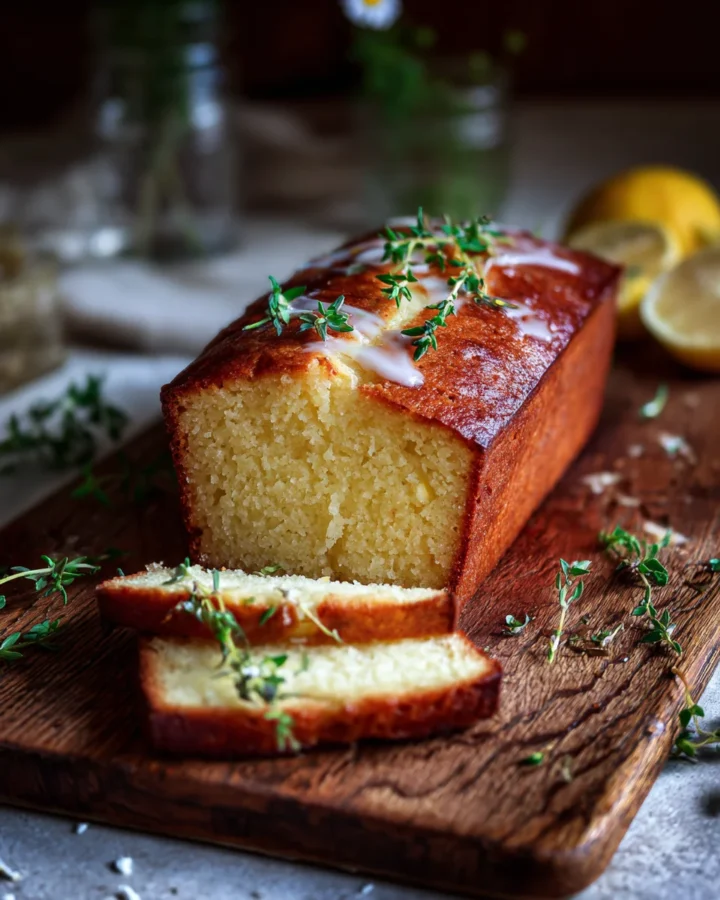
The final element is a glossy, translucent citrus sugar glaze that drapes beautifully over the crown of the cake, hardening into a delicate, sweet shell. Decorated with fresh sprigs and golden fruit wheels, it is a treat that values visual presentation just as much as it values deep, satisfying flavor.
The Origins of aesthetic meyer lemon & thyme loaf cake
While you might associate this gorgeous aesthetic meyer lemon & thyme loaf cake with modern, minimalist lifestyle aesthetics and contemporary culinary blogs, the practice of pairing bright citrus fruits with garden-fresh herbs has a rich history that spans centuries of European baking tradition.
The Magic of the Meyer Lemon
The specific star citrus fruit used in this recipe has a fascinating background. Native to China, this unique fruit was introduced to the West in the early twentieth century by an agricultural explorer named Frank Meyer.
It is widely believed to be a natural botanical cross between a traditional sour citrus fruit and a sweet mandarin or orange. As a result, its skin is remarkably thin, fragrant, and a deep golden color, while its juice is notably sweeter and significantly less sharp than a standard supermarket citrus fruit.
When culinary professionals and home cooks in California discovered its unique properties in the late twentieth century, it ignited a modern obsession with using these special fruits in delicate pastries where a smoother, less harsh acidity is desired.
The Evolution of Savory Herbs in Pastry
On the other hand, incorporating earthy garden elements like rosemary, lavender, and thyme into sweet batters traces its lineage back to historic English tea times and Mediterranean countryside kitchens. For generations, rural bakers relied on whatever fresh ingredients grew outside their back doors to flavor their daily breads and simple sponges.
Thyme, with its natural woody aroma and subtle notes of mint and grass, was frequently paired with wild honey and seasonal fruits to add interest to baked goods. In recent years, modern pastry chefs have rediscovered these historic combinations, reintroducing them to contemporary kitchens to create desserts that appeal to a more mature, less sugar-centric palate. This loaf cake represents the beautiful marriage of that ancient herbal wisdom with modern citrus cultivation.
The Ingredients and Exact Quantities: aesthetic meyer lemon & thyme loaf cake
Executing this elegant bake perfectly relies on gathering fresh, vibrant ingredients that interact seamlessly within your mixing bowl. Before you preheat your oven, ensure your workspace is fully stocked with these exact measurements.
For the Foundation of the Loaf Cake
-
All-purpose flour: One and a half cups of high-quality all-purpose flour, measured accurately to form the structural crumb of the cake.
-
Baking powder: One teaspoon of baking powder to provide a reliable, uniform rise in the oven.
-
Salt: Half a teaspoon of fine salt to balance the sugars and enhance the natural oils of the citrus.
-
Fresh thyme leaves: One tablespoon of fresh thyme leaves, stripped from their woody stems and chopped as finely as possible.
-
Granulated sugar: One cup of pure white granulated sugar to sweeten the batter and extract the citrus oils.
-
Meyer lemons: The finely grated zest of two entire organic fruits, along with one-quarter of a cup of their fresh, hand-squeezed juice.
-
Eggs: Two large whole eggs, brought to room temperature to ensure clean emulsification.
-
Plain Greek yogurt: Half a cup of full-fat plain Greek yogurt, which adds vital acidity and rich moisture to the crumb.
-
Vegetable oil: Half a cup of neutral vegetable oil to guarantee a consistently soft texture that will not dry out.
-
Vanilla extract: One teaspoon of pure vanilla extract to add a warm, comforting background note.
Glossy Sugar Glaze
-
Powdered sugar: One full cup of confectioners’ sugar, sifted carefully to eliminate any stubborn lumps.
-
Meyer lemon juice: Two to three tablespoons of fresh juice, added slowly until you achieve a smooth, pourable consistency.
For the Visual Garnish
-
Citrus slices: A few paper-thin wheels of fresh golden fruit to lay across the top of the glaze.
-
Fresh herbs: A few whole, elegant sprigs of green garden herbs.
-
Extra zest: A final light scattering of golden peel for an extra pop of color.
Step by Step Direction and Preparation Method: aesthetic meyer lemon & thyme loaf cake
The true beauty of creating an aesthetic meyer lemon & thyme loaf cake lies in its approachable, fuss-free methodology. You do not need a massive stand mixer or intricate pastry tools to achieve success. Following this deliberate sequence ensures an incredible, moist outcome every single time.
Setting the Stage and Preheating
Before you begin mixing your ingredients, prepare your baking environment to ensure a smooth workflow. Preheat your oven to a steady temperature of one hundred and seventy-five degrees Celsius, which is equivalent to three hundred and fifty degrees Fahrenheit.
Take a standard nine by five-inch metal loaf pan and grease the interior lightly with a small amount of oil or butter. Cut a sheet of parchment paper to fit the bottom and sides of the pan, leaving a slight overhang on the long edges. This clever paper sling will allow you to lift the delicate cake out of the hot pan effortlessly once it finishes baking.
Blending the Aromatics and Batter
In a medium-sized mixing bowl, combine your one and a half cups of all-purpose flour, one teaspoon of baking powder, half a teaspoon of fine salt, and your tablespoon of finely chopped fresh herb leaves. Use a dry whisk to toss these dry elements together until the green leaves are evenly distributed throughout the white flour, preventing them from sinking to the bottom of the cake during the bake.
In a separate, larger mixing bowl, pour in your one cup of granulated sugar and the freshly grated zest of your two golden citrus fruits. Using your clean fingertips, rub the citrus zest directly into the sugar crystals for about a full minute. This technique is a crucial secret, as the friction breaks open the microscopic oil glands in the peel, releasing an incredibly potent aroma that infuses the entire sugar base with intense flavor.
Once the sugar looks damp and smells intensely fragrant, whisk in your two room-temperature eggs one at a time, beating until the mixture looks pale and slightly thickened. Pour in the half cup of plain Greek yogurt, half cup of vegetable oil, one-quarter cup of fresh juice, and one teaspoon of vanilla extract. Whisk vigorously until the liquids blend into a smooth, emulsified golden wet base.
Folding, Baking, and Cooling
Pick up a flexible rubber spatula and gently dump your bowl of dry ingredients directly into the wet base. Using a slow, sweeping motion, fold the components together just until the flour disappears and a cohesive, smooth batter forms.
Be incredibly careful not to over-mix at this stage; over-working the batter develops excess gluten, which can turn your light, tender loaf into something tough and dense. Pour the glossy batter into your prepared lined loaf pan, using the spatula to smooth out the surface evenly.
Place the pan onto the center rack of your preheated oven and bake for forty-five to fifty minutes. You will know your cake is cooked perfectly when the top develops a gorgeous split down the center and a wooden toothpick inserted into the thickest part comes out clean or with a few dry crumbs attached.
Remove the pan from the oven and let the cake rest inside the metal frame for exactly ten minutes to stabilize. Then, use your parchment paper handles to lift the loaf out gently and transfer it to a wire rack to cool completely down to room temperature.
Creating the Glaze and Dressing the Loaf
While your cake cools, prepare your simple finishing glaze. In a small bowl, combine your one cup of sifted powdered sugar with two tablespoons of fresh citrus juice. Use a small whisk or fork to stir the mixture until it becomes completely smooth and glossy.
If the glaze feels a bit too thick to drizzle, add a few extra drops of juice; if it looks too runny, simply whisk in an extra spoonful of powdered sugar. Once the loaf is completely cool to the touch, place a sheet of parchment paper under your wire rack to catch any stray drops.
Slowly pour the white sugar glaze along the center ridge of the cake, letting it cascade naturally down the golden sides in beautiful, organic ribbons. While the sugar remains wet, artfully arrange your thin citrus wheels and whole fresh herb sprigs across the top, allowing them to adhere permanently as the glaze dries into a beautiful, matte shell. Let the topping set for about twenty minutes before using a sharp, long knife to cut the loaf into clean, uniform slices.
Inspiring Variations for aesthetic meyer lemon & thyme loaf cake
Once you have mastered the foundational mechanics of this bake, you can easily use it as a creative canvas to highlight different seasonal flavors or adapt the profile to match your specific household cravings.
Shifting the Citrus and Berry Elements
If you cannot find fresh Meyer lemons in your local market, you can create a fantastic approximation of their unique profile by combining equal parts of standard sharp yellow lemon juice and sweet fresh orange juice. This hybrid blend captures that wonderful mandarin-like sweetness beautifully.
For an extra burst of color and juicy flavor, consider gently folding one cup of fresh, tossed blueberries or raspberries directly into the final batter just before pouring it into the loaf pan. The pockets of baked fruit pair magnificently with the herbal undertones of the thyme.
Exploring Alternative Herb and Sugar Profiles
If you want to experiment with different aromatic profiles, fresh rosemary makes an absolute showstopping alternative to thyme. Because rosemary has a slightly stronger, more pine-like presence, reduce the quantity to one teaspoon of very finely minced leaves so it does not overwhelm the delicate cake.
You can also substitute the white granulated sugar in the batter with a high-quality light honey or pure maple syrup to add a rich, floral sweetness that rounds out the herbal components with an ancient, rustic charm.
Perfect Pairings for aesthetic meyer lemon & thyme loaf cake
An elegant loaf cake deserves to be served alongside beverages and small accompaniments that respect its delicate balance of sweet, tart, and savory notes, turning a simple slice into a true occasion.
Warm Tea and Coffee Selections
To celebrate the herbal notes woven into the crumb, pair your slice with a steaming pot of traditional Earl Grey tea. The natural bergamot oil in the tea leaves acts as a magnificent bridge to the citrus notes in the cake, while the dark tea base cuts through the sweet sugar glaze beautifully.
A bright cup of chamomile or jasmine green tea also works wonderfully, highlighting the floral notes of the Meyer lemon. If you are a coffee lover, a simple, clean pour-over light roast coffee with natural citrus notes will complement the cake without masking its delicate flavors.
Chilled and Festive Drink Options
For a weekend brunch gathering or a sunny afternoon garden party, a chilled glass of iced black tea sweetened with a touch of honey and a squeeze of fresh citrus makes an exceptionally refreshing companion. If you want to lean into a festive celebration, serve the cake alongside glasses of crisp, sparkling prosecco or a bright mimosa.
The lively bubbles and natural effervescence of sparkling wines serve to cleanse the palate between rich, moist bites, making each forkful taste just as vibrant as the very first.
Frequently Asked Questions: aesthetic meyer lemon & thyme loaf cake
What makes a Meyer lemon different from a regular lemon?
Regular lemons, often known as Lisbon or Eureka lemons, are much more acidic, sharp, and have thick, textured skins that contain intense, tart oils. Meyer lemons are physically smaller, smoother, and possess a thin, dark golden skin that smells almost floral. Because they are a hybrid with a sweet mandarin, their juice is significantly sweeter and smoother, which allows us to achieve a softer, more rounded flavor profile in delicate baked items without adding excessive amounts of extra sugar.
Why did my loaf cake turn out dense with a soggy bottom?
A dense texture or a heavy, wet bottom layer is usually caused by one of two common baking mistakes: over-mixing the batter or using expired leavening agents. When you over-mix a flour batter after the liquids have been introduced, you develop an abundance of gluten elasticity, which traps the air down and creates a heavy, rubbery texture instead of a light crumb. Additionally, always double-check that your baking powder is fresh and active, as expired powder will fail to lift the heavy oil and yogurt mixture during the baking process.
Can I use dried thyme instead of fresh leaves?
While dried herbs are wonderful staples for savory stews and sauces, using dried thyme in this delicate loaf cake is generally not recommended. Dried herbs have a much tougher, woodier texture that does not soften properly during a quick bake, which can create an unpleasant, gritty mouthfeel in an otherwise soft cake. Furthermore, dried thyme possesses a highly concentrated, medicine-like flavor profile that lacks the bright, fresh, grassy notes found in fresh garden clippings. If you must use dried, reduce the quantity to a tiny fraction of a teaspoon.
How should I store leftovers to keep them fresh?
Because this cake utilizes a highly effective moisture combination of vegetable oil and Greek yogurt, it stays soft and delicious far longer than traditional all-butter cakes. Store any remaining slices in an airtight container at room temperature for up to three days. If you live in an incredibly warm, humid environment, you can place the container inside your refrigerator for up to five days; just ensure you let your slice sit on the counter for a few minutes to shed its chill before eating, as cold temperatures temporarily mask the complex oils of the citrus and herbs.
Can I freeze this cake for long-term storage?
Yes, this loaf freezes exceptionally well, making it a brilliant option for advanced meal preparation. For the absolute best results, freeze the baked loaf completely plain, before you pour the fresh sugar glaze over the top. Wrap the cooled cake tightly in two layers of plastic wrap, followed by a sturdy layer of aluminum foil, and store it in your freezer for up to three months. When you are ready to enjoy it, thaw the cake overnight inside your refrigerator, bring it to room temperature, and whisk up a fresh batch of glaze to pour over the top just before serving.
Conclusion: aesthetic meyer lemon & thyme loaf cake
Baking an aesthetic meyer lemon & thyme loaf cake is a wonderful reminder that true culinary sophistication does not require overwhelming complexity or difficult techniques. By taking classic, approachable kitchen staples like flour, sugar, oil, and yogurt, and infusing them with the intentional, aromatic brilliance of fresh herbs and golden hybrid citrus fruits, you create a dessert that is far greater than the sum of its parts. It stands as a beautiful testament to the power of flavor balance, proving that a hint of savory depth can turn a simple sweet treat into a memorable, restaurant-quality masterpiece. Whether you are slicing it thin to enjoy alongside your morning coffee in a quiet kitchen or displaying it proudly on a festive brunch table for the people you love, this elegant loaf brings a touch of effortless beauty and comforting warmth to any moment.
Print
Aesthetic Meyer Lemon & Thyme Loaf Cake
- Total Time: 1 hour 5 minutes
- Yield: 10 slices 1x
- Diet: Vegetarian
Description
To truly appreciate the artistry behind this baked good, it helps to take a close look at the individual components that turn a standard citrus sponge into something deeply extraordinary. This dessert is a masterclass in texture, fragrance, and taste harmony, designed specifically to satisfy those who appreciate subtle, complex nuances in their sweet treats.
Ingredients
For the Loaf Cake
- 1½ cups (190 g) all-purpose flour
- 1 tsp baking powder
- ½ tsp salt
- 1 tbsp fresh thyme leaves, finely chopped
- 1 cup (200 g) granulated sugar
- Zest of 2 Meyer lemons
- 2 large eggs
- ½ cup (120 ml) plain Greek yogurt
- ½ cup (120 ml) vegetable oil
- ¼ cup (60 ml) fresh Meyer lemon juice
- 1 tsp vanilla extract
For the Lemon Glaze
- 1 cup (120 g) powdered sugar
- 2–3 tbsp Meyer lemon juice
For Garnish (Optional)
- Thin Meyer lemon slices
- Fresh thyme sprigs
- Extra lemon zest
Instructions
1. Prepare the Pan
- Preheat oven to 175°C (350°F).
- Grease and line a 9×5-inch loaf pan with parchment paper.
2. Make the Batter
- In a bowl, whisk together flour, baking powder, salt, and thyme.
- In a separate large bowl, rub the lemon zest into the sugar until fragrant.
- Whisk in eggs, yogurt, oil, lemon juice, and vanilla.
- Fold the dry ingredients into the wet ingredients until just combined.
3. Bake
- Pour the batter into the prepared loaf pan.
- Bake for 45–50 minutes, or until a toothpick inserted in the center comes out clean.
- Cool in the pan for 10 minutes, then transfer to a wire rack.
4. Make the Glaze
- Whisk powdered sugar and lemon juice until smooth.
- Drizzle over the cooled loaf cake.
5. Garnish and Serve
- Decorate with lemon slices, thyme sprigs, and extra zest if desired.
- Allow the glaze to set before slicing.
Notes
- Prep Time: 15 minutes
- Cook Time: 50 minutes
- Category: Cake
- Method: Baking
- Cuisine: European
Nutrition
- Serving Size: 1 slice
- Calories: 295 kcal
Keywords: lemon thyme glazed loaf cake, moist meyer lemon herb bread, sweet citrus thyme tea cake
