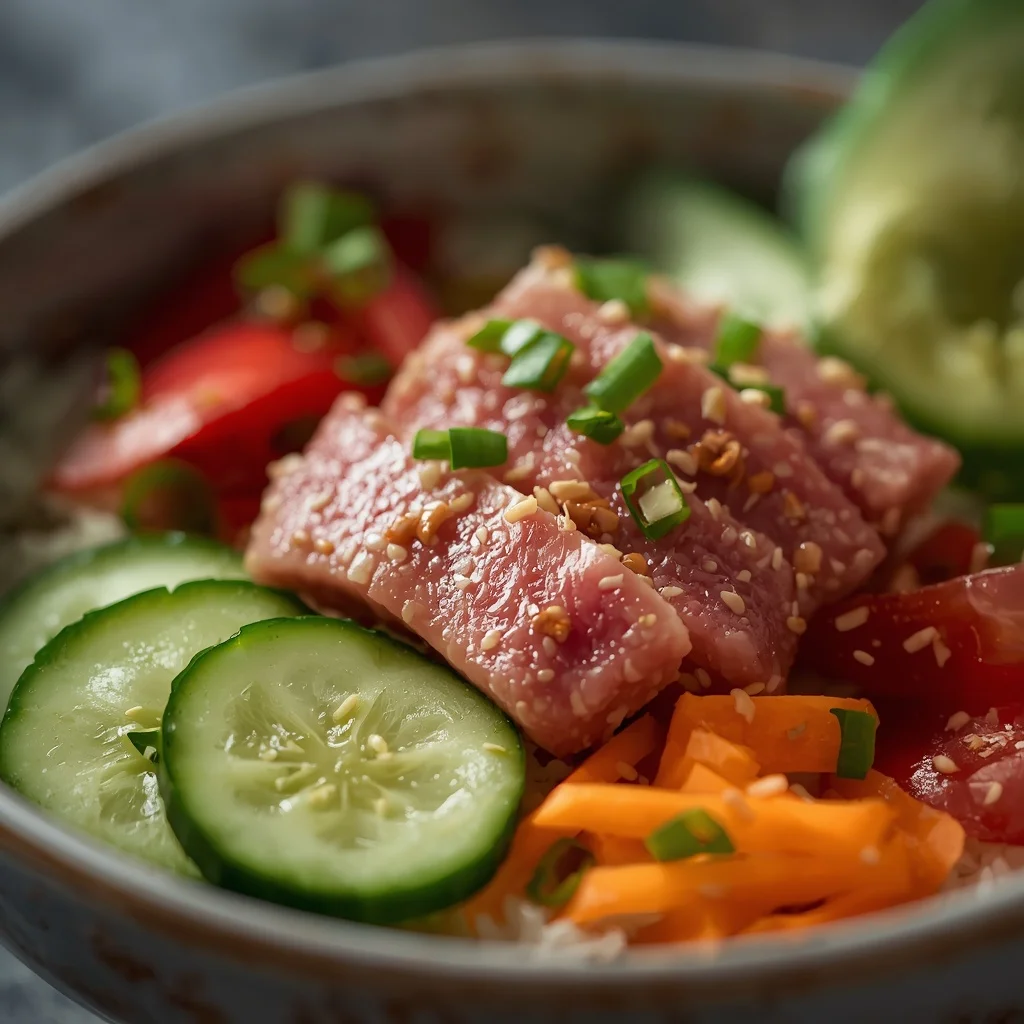
Imagine craving the bright, clean, complex flavors of a traditional Hawaiian raw fish bowl, but your schedule or budget demands something significantly more accessible. You want that perfect balance of savory soy sauce, nutty sesame, crisp vegetables, and tender grain, but you do not want to hunt down expensive sushi-grade fish or spend hours prepping in the kitchen. Enter the ultimate solution for effortless weekday dining: the Canned Tuna Poke Bowl Salad with Sesame Cucumber. This delicious dish bridges the gap between high-end seafood dining and convenient pantry staples. By transforming simple canned tuna with a vibrant Umami marinade and pairing it with a crunchy, quick-pickled sesame cucumber salad, you create a satisfying, protein-packed lunch or dinner that feels genuinely luxurious.
Whether you are seeking a reliable meal-prep recipe for your busy workweek or simply want to elevate a humble tin of pantry seafood, this Canned Tuna Poke Bowl Salad with Sesame Cucumber delivers maximum flavor with minimal effort. In this detailed guide, we will explore everything that makes this recipe a standout success, from its fascinating culinary origins to exact preparation methods, flavor variations, and key tips for getting the texture just right every single time.
What Is a Canned Tuna Poke Bowl Salad with Sesame Cucumber?
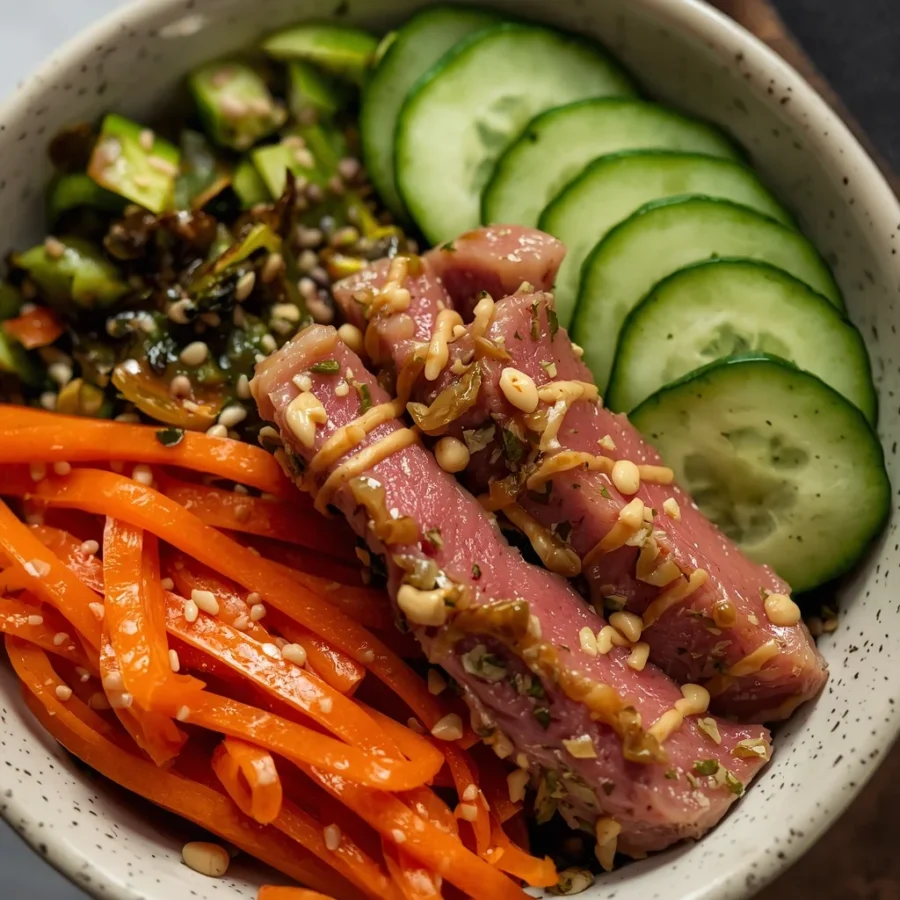
To appreciate this dish fully, it helps to break down its essential components. At its heart, a Canned Tuna Poke Bowl Salad with Sesame Cucumber is an accessible, cooked-pantry spin on the classic Hawaiian poke bowl. Poke, pronounced poh-kay, traditionally features bite-sized pieces of raw, marinated fish tossed with seaweed, sea salt, and local seasonings, served over a bed of warm rice.
In this modern kitchen variation, shelf-stable canned tuna replaces raw ahi tuna, making the meal accessible, affordable, and safe for everyone to prepare at home without special seafood sourcing. The tuna is flaked and tossed in a rich dressing of soy sauce, toasted sesame oil, mild rice vinegar, sweet honey, fresh grated ginger, and crisp green onions.
To complement the rich tuna, thinly sliced cucumbers are tossed in a matching sesame-soy dressing, giving them a bright, quick-pickled crunch. The components are then artfully assembled over a base of cooked rice along with vibrant vegetables like shredded carrots, steamed edamame, creamy avocado, and pepper radishes. The end result is a multi-textured, colorful salad bowl that balances savory, sweet, tangy, and nutty notes in every forkful.
Why Canned Tuna Works Surprisingly Well
Many people assume poke requires raw fish, but canned tuna offers several distinct advantages that make it a incredible everyday alternative:
-
Convenience and Accessibility: You can keep canned tuna in your pantry for months, allowing you to whip up a fresh bowl whenever hunger strikes without making a special trip to a fish market.
-
Cost Effectiveness: High-grade raw tuna can be extremely expensive, whereas canned tuna provides an affordable source of high-quality lean protein.
-
Texture Absorption: Drained canned tuna acts like a sponge, soaking up the savory soy, fresh ginger, and rich sesame oil far more deeply than dense raw fish cubes often do.
-
Food Safety: Because the fish is already cooked and shelf-stable, there is zero worry regarding raw seafood handling, making it an ideal choice for work lunches and meal prepping.
The Origin and Evolution of Poke Bowls
To understand how this pantry-friendly bowl came to be, we must look at the fascinating history of poke itself. The origins of poke trace back to ancient Hawaii, long before Western contact. Native Hawaiian fishermen would freshly catch reef fish, gut and skin them, and cut the raw flesh into small, thick pieces using sharp shells or stone tools. They seasoned the raw fish with sea salt, crushed roasted candlenuts known as inamona, and limu, a type of local wild seaweed. It was a simple, nourishing meal designed to sustain workers on the water.
During the nineteenth and twentieth centuries, waves of immigrants arrived in Hawaii from Japan, China, Korea, and the Philippines to work on sugarcane and pineapple plantations. These workers brought their own culinary traditions, ingredients, and techniques, which forever transformed local Hawaiian food. Japanese laborers introduced soy sauce, toasted sesame oil, and short-grain rice, while Chinese immigrants brought fresh ginger and green onions. The fusion of these cultures turned traditional Hawaiian poke into the soy-marinated dish we recognize today.
+-----------------------------------------------------------------------+
|                       THE EVOLUTION OF THE POKE BOWL                  |
+-----------------------------------------------------------------------+
|  Ancient Hawaii: The Foundation                                       |
|  • Fresh raw reef fish chopped into thick cubes                       |
|  • Seasoned simply with sea salt, crushed candlenuts, and limu seaweed|
+-----------------------------------------------------------------------+
                                   │
                                   ▼
+-----------------------------------------------------------------------+
|  1900s Plantation Era: Asian Fusion Influence                         |
|  • Introduction of Japanese soy sauce, sesame oil, and short-grain rice|
|  • Fresh ginger, garlic, and green onions become standard seasonings  |
+-----------------------------------------------------------------------+
                                   │
                                   ▼
+-----------------------------------------------------------------------+
|  Modern Kitchen Era: Pantry Accessibility                             |
|  • Canned tuna replaces costly sushi-grade raw fish                   |
|  • Paired with fresh sesame cucumber, avocado, edamame, and carrots   |
+-----------------------------------------------------------------------+
As poke traveled to the continental United States and across the globe, creative home cooks began adapting the format to suit everyday ingredients. The creation of the Canned Tuna Poke Bowl Salad with Sesame Cucumber represents the ultimate modern evolution of this dish: honoring the classic flavor profile of Hawaiian-Asian fusion while adapting it for busy home cooks who want healthy, delicious food on a budget.
Ingredients You Will Need
Creating a magnificent bowl relies on using fresh, high-quality ingredients that bring contrast in color, temperature, and texture. Here is the full list of everything required to serve four full portions.
For the Seasoned Tuna Base
-
Two cans (five ounces each) tuna: Drained thoroughly. Water-packed or oil-packed both work, depending on your rich preference.
-
Two tablespoons soy sauce: Provides the essential salty, savory Umami base.
-
One tablespoon sesame oil: Adds a deep, nutty aroma and richness.
-
One tablespoon rice vinegar: Brings a gentle, mild acidity to balance the oils.
-
One teaspoon honey: Offers a touch of natural sweetness to round out the sharpness.
-
One teaspoon grated fresh ginger: Delivers a zesty, warm bite.
-
One teaspoon sesame seeds: Adds texture and visual appeal.
-
One tablespoon finely chopped green onion: Brings mild, crisp onion flavor.
Sesame Cucumber Salad
-
Two medium cucumbers: Thinly sliced into delicate rounds.
-
One tablespoon rice vinegar: Pickles the cucumbers slightly for a crisp tang.
-
One teaspoon sesame oil: Coats the cucumber slices in subtle nuttiness.
-
One teaspoon soy sauce: Enhances the natural vegetable flavor with saltiness.
-
One teaspoon sesame seeds: Provides extra crunch throughout the salad.
-
One green onion: Thinly sliced for freshness.
For Building the Complete Bowls
-
Three cups cooked white or brown rice: Serves as the warm, hearty grain base.
-
One avocado: Sliced smoothly for rich, creamy texture.
-
One cup shredded carrots: Adds bright orange color and fresh crunch.
-
One cup edamame: Cooked and cooled for extra plant protein and bite.
-
One-half cup sliced radishes: Brings a peppery snap and vibrant red hue.
-
Two green onions: Sliced for garnish.
-
One tablespoon sesame seeds: Sprinkled across the top.
-
Nori strips: Optional dried seaweed for authentic sea flavor.
-
Sriracha or spicy mayo: Optional drizzle for a warm, spicy kick.
Ingredient Checklist and Component Breakdown
To help you organize your prep work efficiently, here is how each component contributes to the final dish:
| Ingredient Component | Quantity for Four Servings | Primary Culinary Role |
| Marinated Canned Tuna | Two five-ounce cans + seasonings | Rich, savory lean protein center |
| Sesame Cucumber Salad | Two medium cucumbers + dressing | Crisp, refreshing, acidic contrast |
| Grain Base | Three cups cooked rice | Comforting, warm, filling starch |
| Creamy Avocado | One whole sliced avocado | Smooth fat contrast against crisp veggies |
| Color & Crunch Veggies | Carrots, edamame, and radishes | Fiber, vibrant color, and fresh bite |
| Garnish & Finishes | Nori, sesame seeds, spicy mayo | Visual flair, Umami, and customizable heat |
Step-by-Step Direction and Preparation Method: Canned Tuna Poke Bowl Salad
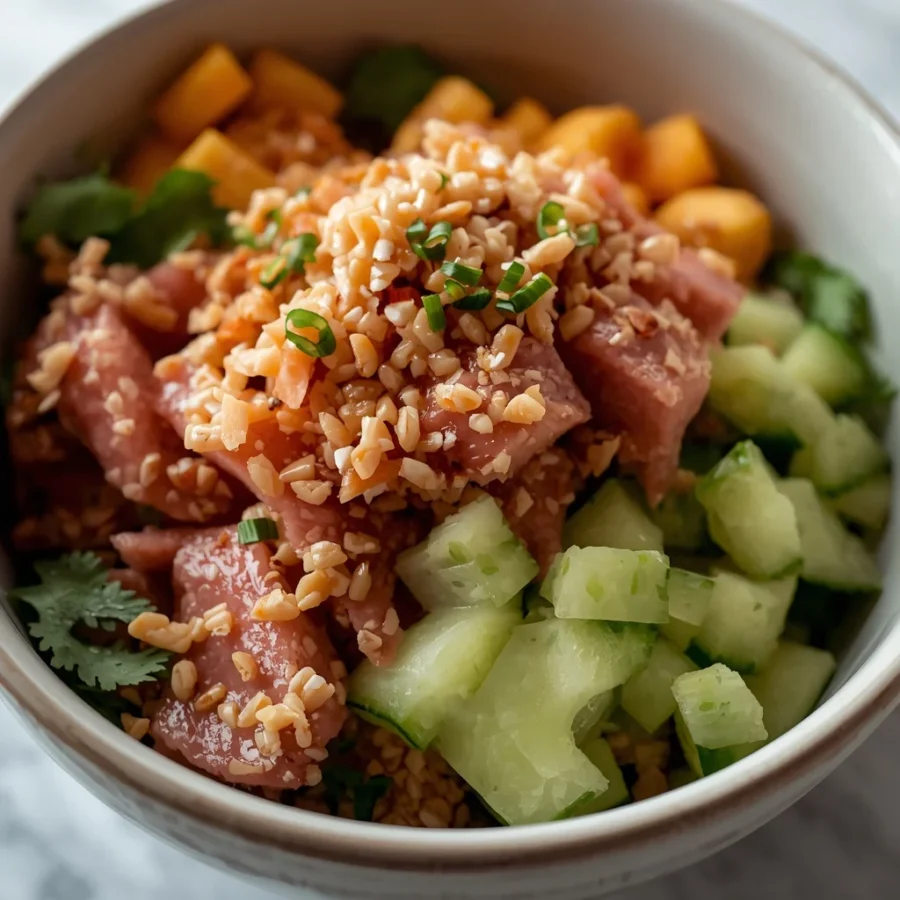
Assembling this Canned Tuna Poke Bowl Salad with Sesame Cucumber is quick and straightforward. Follow these steps sequentially to build a perfectly balanced meal.
Step One: Marinate the Canned Tuna
Begin by opening your two five-ounce cans of tuna and draining them completely. Removing excess liquid prevents your marinade from becoming watery and diluted. Place the drained tuna into a medium mixing bowl. Add two tablespoons of soy sauce, one tablespoon of sesame oil, one tablespoon of rice vinegar, one teaspoon of honey, one teaspoon of finely grated fresh ginger, one teaspoon of sesame seeds, and one tablespoon of finely chopped green onion. Using a fork, gently flake the tuna and toss everything together until the seasonings are evenly distributed. Taste the mixture and set it aside to marinate while you prepare the remaining elements.
Step Two: Prepare the Sesame Cucumber Salad
Take your two medium cucumbers and slice them thinly into delicate rounds. If you prefer extra delicate crunch, use a Japanese mandoline slicer. Place the cucumber slices into a separate bowl. Add one tablespoon of rice vinegar, one teaspoon of sesame oil, one teaspoon of soy sauce, one teaspoon of sesame seeds, and one thinly sliced green onion. Toss the mixture thoroughly so every cucumber slice is coated in dressing. Let the cucumbers sit at room temperature for five to ten minutes to marinate slightly and soften just enough to absorb the flavors.
Step Three: Prepare the Bowl Bases
Divide your three cups of cooked, warm white or brown rice evenly among four large, wide serving bowls. Warm rice creates a delightful temperature contrast against the chilled toppings, but room temperature or cold rice works equally well if you are assembling meal-prep containers for later.
Step Four: Arrange the Toppings Artfully
Instead of dumping all ingredients together in a heap, section your bowl components to create a visually stunning presentation. Place a portion of the marinated tuna mixture in one corner of the bowl over the rice. Next to it, spoon a generous portion of the sesame cucumber salad. Continue around the bowl, adding a fan of sliced avocado, a mound of shredded carrots, a spoonful of cooled edamame, and a handful of sliced radishes. Keeping each ingredient distinct turns the meal into a restaurant-quality feast for the eyes.
Step Five: Garnish and Finish
Finish each completed Canned Tuna Poke Bowl Salad with Sesame Cucumber by sprinkling toasted sesame seeds and fresh sliced green onions across the top. If you enjoy authentic sushi flavors, add thin strips of nori dried seaweed. For those who love a bit of heat, finish with a light drizzle of spicy mayo or a squeeze of Sriracha sauce. Serve immediately while all the textures are exceptionally fresh.
Creative Variations and Custom Substitutions: Canned Tuna Poke Bowl Salad
One of the absolute best qualities of this recipe is its high degree of adaptability. You can easily modify the ingredients to suit various dietary preferences, pantry limits, or taste cravings.
Low-Carb and Grain-Free Variations
If you are watching your carbohydrate intake or following a paleo diet, you can easily swap out the white or brown rice base:
-
Cauliflower Rice Base: Use fresh or frozen riced cauliflower sautéed lightly with a touch of sesame oil for a low-carb alternative that absorbs sauce beautifully.
-
Mixed Salad Greens: Turn this dish into a pure salad bowl by serving the tuna and sesame cucumbers over a bed of crisp Romaine lettuce, tender spinach, or shredded Napa cabbage.
-
Zucchini Noodles: Spiralized zucchini spirals offer a light, refreshing noodle base that pairs naturally with sesame and soy dressings.
Protein Variations
While canned tuna is the star of this particular dish, you can substitute other pantry or pre-cooked proteins using the exact same delicious marinade:
-
Canned Salmon: Canned wild salmon offers rich, flaky protein packed with healthy omega-three fats.
-
Cooked Shrimp: Chilled, peeled, cooked cocktail shrimp make a fantastic seafood alternative.
-
Baked Tofu: Extra-firm cubed tofu, pressed and baked until golden, provides a superb plant-based option that absorbs the ginger-soy marinade wonderfully.
Flavor and Spice Adjustments
Customize the heat level and dressing profiles according to your personal palate:
-
Spicy Crunch Variant: Mix a teaspoon of chili crisp oil or chili garlic sauce directly into the canned tuna marinade for a smoky, spicy kick.
-
Citrus Ponzu Twist: Replace the rice vinegar in both the tuna and cucumber dressings with fresh lime juice or Japanese ponzu sauce for a bright, sunny citrus profile.
Tips for Meal Prepping and Storage: Canned Tuna Poke Bowl Salad
If you enjoy preparing meals ahead of time for work or busy weeknights, this recipe is a dream come true. However, keeping components stored properly ensures everything stays crisp and fresh.
How to Store Components Separately
-
The Tuna Mixture: Keep the marinated canned tuna in an airtight container in the refrigerator for up to three days. As it sits, the tuna will continue absorbing the soy and ginger flavor.
-
The Sesame Cucumbers: Store the sliced cucumbers in a separate sealed container in the fridge for up to two days. Because cucumbers release natural water over time, drain off excess liquid before adding them to your bowl.
-
The Rice Base: Keep cooked rice stored separately. When ready to serve, warm the rice slightly in the microwave before topping with cold ingredients.
-
Avocado Handling: Slice your avocado fresh right before serving to prevent browning. If you must slice it ahead of time, toss the avocado slices in a splash of fresh lemon or lime juice and store them tightly wrapped in plastic film.
Frequently Asked Questions: Canned Tuna Poke Bowl Salad
Can I use tuna packed in oil instead of tuna packed in water?
Yes, absolutely. Tuna packed in water yields a lighter, leaner bowl with a cleaner finish, whereas tuna packed in oil provides a richer, silky texture. If using oil-packed tuna, drain it thoroughly, and you may wish to reduce the sesame oil in the tuna marinade by a small splash to maintain balanced richness.
Is this recipe gluten-free?
This dish can be made completely gluten-free with one simple modification: replace standard soy sauce with certified gluten-free tamari or coconut aminos. Coconut aminos also add a lovely mild sweetness that works exceptionally well with fresh ginger and sesame.
Can I make the sesame cucumbers ahead of time?
You can prepare the sesame cucumbers up to twenty-four hours in advance. Keep in mind that as the cucumber slices sit in the vinegar and salt marinade, they will soften and release natural juices. For maximum crunch, assemble and slice them within one to two hours of eating.
What is the best type of rice to use for poke bowls?
Short-grain or medium-grain Japanese sushi rice is the gold standard because its natural stickiness makes it easy to scoop up alongside toppings. However, long-grain jasmine rice, nut-flavored brown rice, or even cooked quinoa make wonderful, nutritious bases for this meal.
Conclusion: Canned Tuna Poke Bowl Salad
The Canned Tuna Poke Bowl Salad with Sesame Cucumber proves that creating a gourmet, vibrant, and health-conscious meal does not require expensive ingredients or hours of intensive kitchen prep. By pairing simple pantry canned tuna with a zesty ginger-soy dressing, crisp quick-pickled sesame cucumbers, creamy avocado, and colorful fresh vegetables, you transform basic kitchen staples into an exciting feast. It is a flexible, budget-friendly, and nutrient-dense dish that fits seamlessly into any weekly routine, whether you are dining solo on a busy weeknight or preparing nutritious lunches ahead of time. Gather your ingredients, flake that tuna, slice your fresh cucumbers, and enjoy a fresh taste of island-inspired dining right from the comfort of your own home.
Print
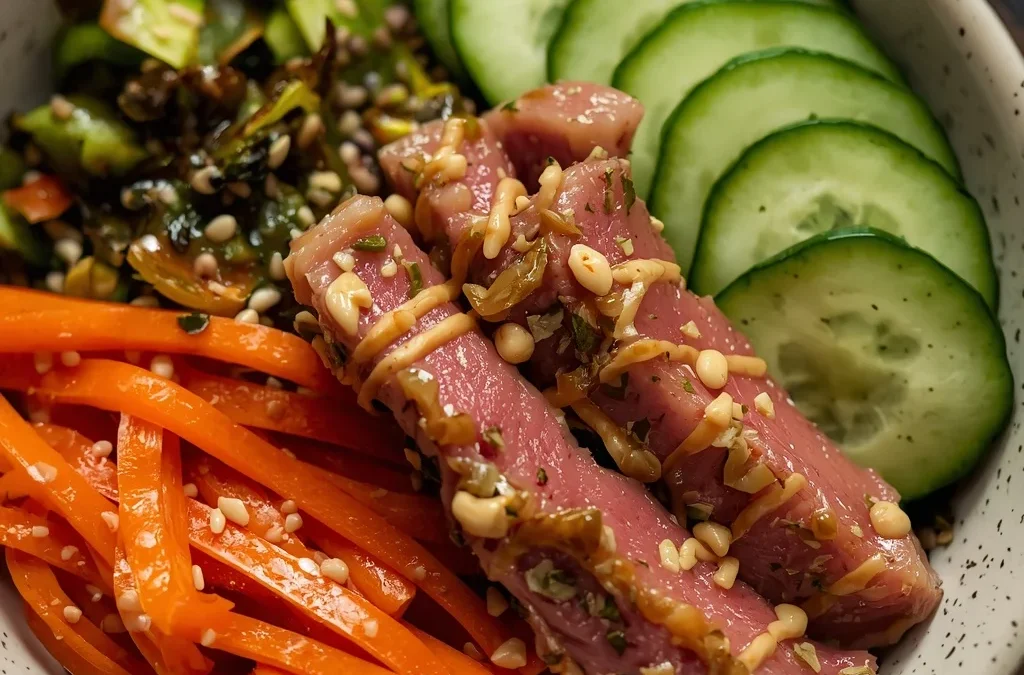
Canned Tuna Poke Bowl Salad with Sesame Cucumber: A Fast, Nutritious, and Flavorful Meal
- Total Time: 15 minutes
- Yield: 4 servings 1x
Description
To appreciate this dish fully, it helps to break down its essential components. At its heart, a Canned Tuna Poke Bowl Salad with Sesame Cucumber is an accessible, cooked-pantry spin on the classic Hawaiian poke bowl. Poke, pronounced poh-kay, traditionally features bite-sized pieces of raw, marinated fish tossed with seaweed, sea salt, and local seasonings, served over a bed of warm rice.
Ingredients
Scale
For the Tuna
- 2 cans (5 oz each) tuna, drained
- 2 tbsp soy sauce
- 1 tbsp sesame oil
- 1 tbsp rice vinegar
- 1 tsp honey
- 1 tsp grated fresh ginger
- 1 tsp sesame seeds
- 1 tbsp finely chopped green onion
For the Sesame Cucumber
- 2 medium cucumbers, thinly sliced
- 1 tbsp rice vinegar
- 1 tsp sesame oil
- 1 tsp soy sauce
- 1 tsp sesame seeds
- 1 green onion, thinly sliced
For the Bowls
- 3 cups cooked white or brown rice
- 1 avocado, sliced
- 1 cup shredded carrots
- 1 cup edamame, cooked and cooled
- ½ cup sliced radishes
- 2 green onions, sliced
- 1 tbsp sesame seeds
- Nori strips, optional
- Sriracha or spicy mayo, optional
Instructions
- Make the tuna mixture: In a bowl, combine drained tuna, soy sauce, sesame oil, rice vinegar, honey, ginger, sesame seeds, and green onion. Mix gently until combined.
- Prepare the sesame cucumber: Add sliced cucumbers to a bowl with rice vinegar, sesame oil, soy sauce, sesame seeds, and green onion. Toss well and let sit for 5–10 minutes.
- Assemble the bowls: Divide the cooked rice among four bowls.
- Add the toppings: Arrange the tuna, sesame cucumber, avocado, carrots, edamame, and radishes over the rice.
- Garnish: Sprinkle with sesame seeds and green onions. Add nori strips and a drizzle of spicy mayo or Sriracha if desired.
- Serve: Enjoy immediately while the ingredients are fresh.
Notes
For the best texture, choose tuna packed in water or oil according to your preference and drain it thoroughly. The sesame cucumber can be prepared ahead and refrigerated for up to 1 day.
- Prep Time: 15 minutes
- Cook Time: 0 minutes
- Category: Salad
- Method: No-Cook
- Cuisine: Asian-Inspired
Nutrition
- Serving Size: 1 bowl
- Calories: 480 kcal
Keywords: healthy pantry tuna recipe, quick tuna poke bowl, budget friendly poke bowl, sesame cucumber salad poke, tuna avocado rice bowl
