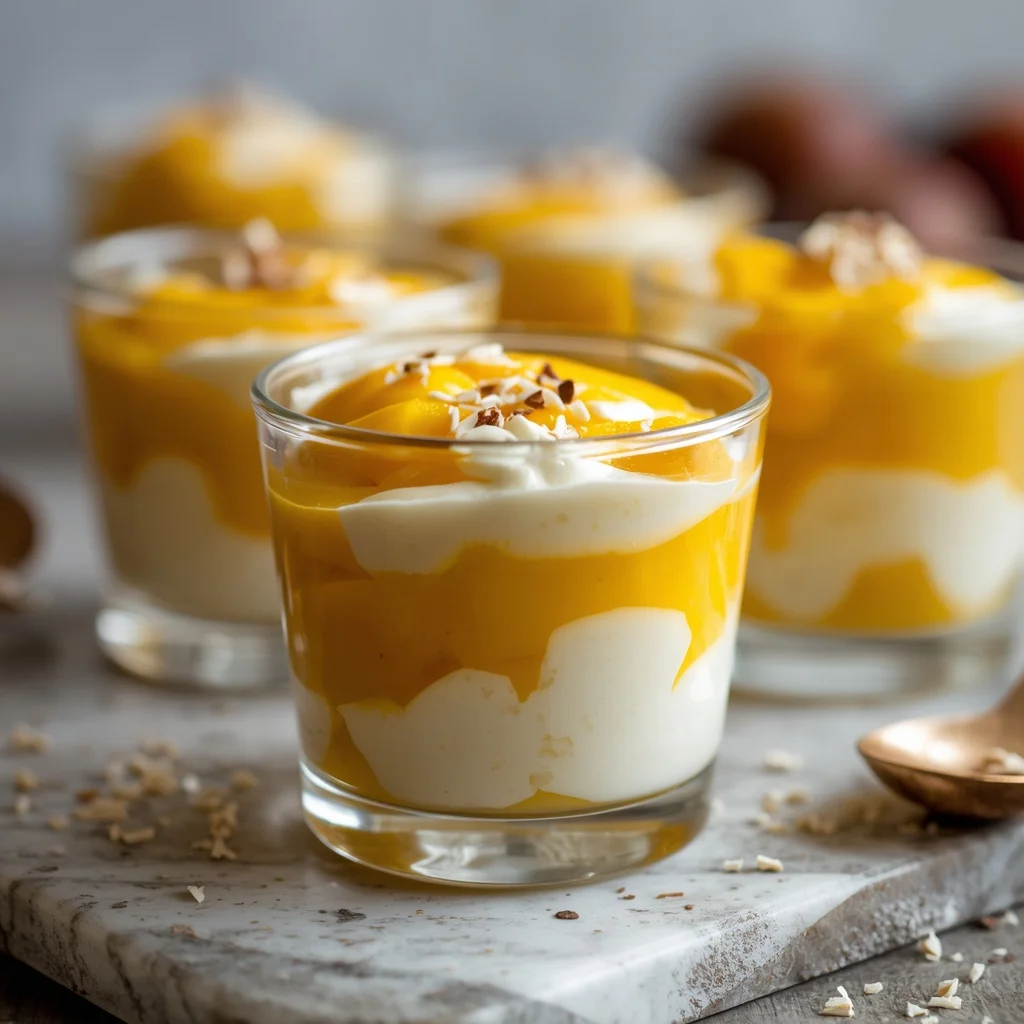
Imagine stepping inside on a sweltering summer afternoon and reaching into the refrigerator for a treat that feels like a breeze from a tropical island. You lift out a chilled glass filled with striking, sunshine-yellow fruit jelly and luscious ivory cream. The first spoon glides through a silky, sun-ripened tropical fruit layer into a velvety, aromatic coconut cream base. If you are looking for an elegant, stress-free dessert that impresses guests without turning on your oven, the No-Bake Mango Coconut Jelly Layered Cups recipe is your absolute dream solution.
This vibrant individual dessert pairs the bright, citrusy tang of real fresh mangoes with the rich, soothing fat of sweet coconut milk and heavy cream. Because it relies on unflavored gelatin rather than baked flour or heavy batters, every single bite feels remarkably light, cool, and airy. In this comprehensive guide, we will break down everything you need to know to create pristine, restaurant-quality No-Bake Mango Coconut Jelly Layered Cups right in your own home kitchen. We will cover its cultural roots, exact step-by-step assembly methods, scientific tips for setting gelatin, creative variations, and storage advice.
What Is a No-Bake Mango Coconut Jelly Layered Cup?
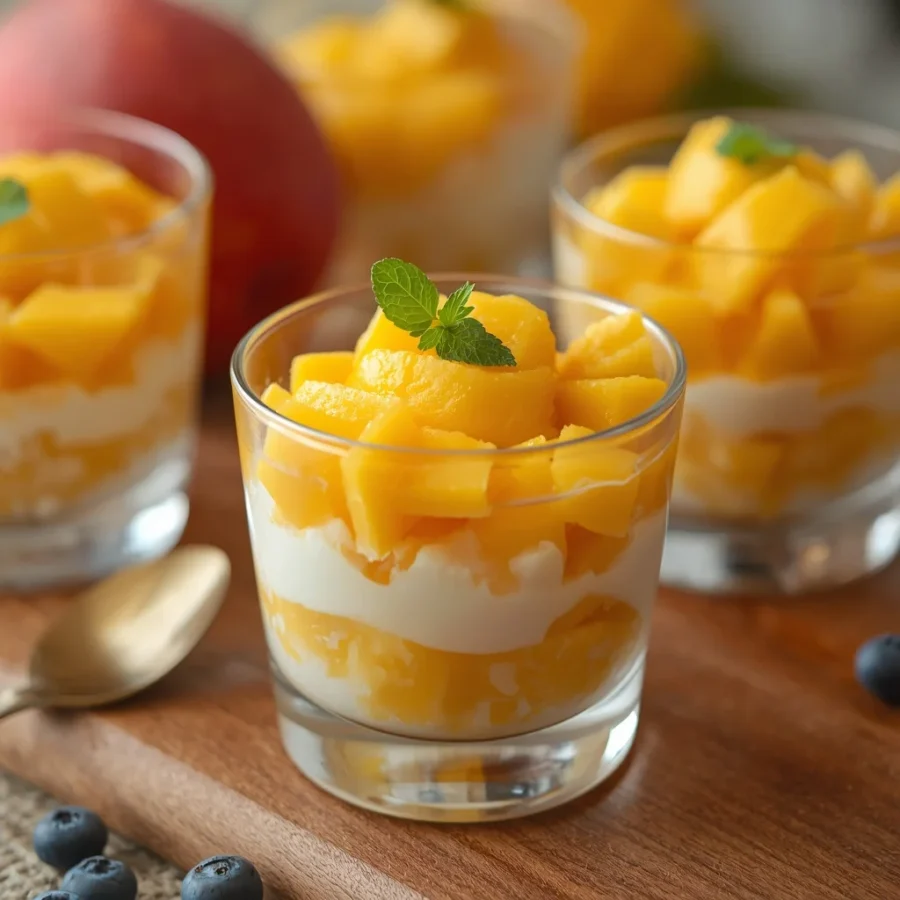
To understand why this dessert is so captivating, it helps to examine its structural composition. A No-Bake Mango Coconut Jelly Layered Cup is a layered cold dessert served in individual clear glasses. It features two distinct, complementary flavor elements: a sweet, tangy fruit jelly layer made from pureed ripe mangoes and a smooth, creamy panna cotta-style coconut layer.
Instead of baking with eggs or starch, this dessert uses unflavored gelatin powder to turn fruit puree and coconut milk into soft, delicate gels. When poured carefully into glass cups and chilled, the contrast between the sunny yellow mango layer and the snow-white coconut layer creates a clean, stunning visual stripe. It is an ideal dessert for warm weather, dinner parties, holiday gatherings, or advance meal prep because it requires zero oven heat and must be made ahead of time.
The Magic of Flavor and Texture Balance
Great culinary creation is all about balance, and this dessert achieves harmony across several sensory categories:
-
Acid and Cream: The natural tartness of fresh mango puree combined with a splash of lime juice cuts directly through the rich dairy and plant fats in the coconut layer.
-
Firmness and Melt: The gelatin creates a clean, spoonable structure that holds its shape gracefully in the glass, yet dissolves smoothly on your tongue the moment you taste it.
-
Temperature Contrast: Served thoroughly chilled, every bite provides immediate cooling relief on hot days.
The Origin and Culinary History of Mango Coconut Jelly
The pairing of mango and coconut is not a modern invention; it is rooted deeply in the culinary heritage of Southeast Asia and southern coastal regions across the globe. For centuries, countries such as Thailand, the Philippines, Vietnam, India, and Malaysia have celebrated the natural bounty of wild mango trees and coconut palms.
In Thailand, the iconic street food known as mango sticky rice relies on the exact same flavor pairing: sweet, juicy mango slices laid alongside warm rice cooked in sweetened, salted coconut milk. In Hong Kong and southern China, chilled mango sago soup—a creamy dessert soup made with mango puree, coconut milk, and tiny tapioca pearls—became a classic staple in dim sum houses during the late twentieth century. Meanwhile, across the Philippines, coconut-based gelatin desserts known as maja blanca and fruit-based gulaman jellies have graced celebration tables for generations.
+-----------------------------------------------------------------------+
|                 TRADITIONAL SOUTHEAST ASIAN HERITAGE                  |
+-----------------------------------------------------------------------+
|  • Thailand: Mango Sticky Rice (Sweet Mango + Salted Coconut Milk)    |
|  • Hong Kong: Mango Sago (Puréed Mango + Coconut Cream + Tapioca)      |
|  • Philippines: Coconut Gulaman & Maja Blanca (Cold Layered Jellies)   |
+-----------------------------------------------------------------------+
                                   │
                                   ▼
+-----------------------------------------------------------------------+
|                     MODERN GLOBAL WESTERN ADAPTATION                  |
+-----------------------------------------------------------------------+
|  • Italian Panna Cotta techniques applied to tropical plant milks     |
|  • Individual portioned glass cups replace large family gel-molds     |
+-----------------------------------------------------------------------+
                                   │
                                   ▼
+-----------------------------------------------------------------------+
|             NO-BAKE MANGO COCONUT JELLY LAYERED CUPS                  |
+-----------------------------------------------------------------------+
|  • Clean, striking horizontal color contrast                          |
|  • Unflavored gelatin yielding a soft, melt-in-your-mouth texture     |
|  • Fresh fruit puree layered with velvety vanilla coconut cream       |
+-----------------------------------------------------------------------+
As European culinary techniques traveled globally, French and Italian cold dessert traditions—specifically panna cotta and fruit aspics—began merging with tropical Asian ingredients. Chefs recognized that the fats in coconut cream and the natural sugars in tropical fruit purees were perfect candidates for cold gelatin setting. The modern No-Bake Mango Coconut Jelly Layered Cups recipe represents the perfect fusion of traditional tropical flavors and modern European cold pastry assembly.
Ingredients You Will Need: No-Bake Mango Coconut Jelly Layered Cups
Creating these picturesque dessert cups requires simple, wholesome ingredients. Because there is no baking involved to alter or hide flavors, using ripe, high-quality ingredients makes a noticeable difference in your final dish.
For the Vibrant Mango Layer
-
Two cups ripe mango: Peeled and diced. Look for mangoes that yield gently to soft thumb pressure and smell sweet near the stem end, such as Ataulfo, Kent, or Alphonso varieties.
-
Two tablespoons sugar: Adjust the quantity slightly higher or lower based on the natural sweetness of your fresh fruit.
-
One tablespoon lemon or lime juice: Freshly squeezed juice adds a bright citrus punch that balances the natural sugars.
-
One teaspoon unflavored gelatin powder: Acts as the natural gelling agent that sets the puree softly.
-
Two tablespoons cold water: Required to bloom the gelatin powder for the fruit layer.
-
One-half cup water: Blended directly into the fruit puree to achieve a smooth, pourable consistency.
Velvety Coconut Layer
-
One cup coconut milk: Use full-fat canned coconut milk for the richest flavor and smoothest texture.
-
One-half cup heavy cream: Adds a dairy creaminess that softens the coconut taste into a custard-like finish.
-
Two tablespoons sugar: Sweetens the cream layer gently without overpowering the fruit.
-
One teaspoon vanilla extract: Adds a warm, fragrant undertone that complements the coconut aroma.
-
One teaspoon unflavored gelatin powder: Sets the coconut milk mixture into a soft cream.
-
Two tablespoons cold water: Used to bloom the gelatin powder for the coconut mixture.
For the Final Garnish
-
Diced fresh mango: Adds a fresh texture burst on top of the smooth jelly.
-
Toasted coconut flakes: Provides a nutty, crunchy top contrast.
-
Fresh mint sprigs: Optional green garnish that brings a fresh aroma to every glass.
Complete Ingredient Breakdown and Quantity Guide: No-Bake Mango Coconut Jelly Layered Cups
To keep your kitchen organized before starting, review the complete measurement breakdown below:
| Layer Component | Ingredient | Quantity (Four Servings) | Purpose in Recipe |
| Mango Layer | Fresh Ripe Mango | Two cups diced | Primary fruit base and bright color |
| Granulated Sugar | Two tablespoons | Enhances natural fruit sweetness | |
| Fresh Lime Juice | One tablespoon | Adds necessary acid balance | |
| Unflavored Gelatin | One teaspoon | Sets mango puree into a soft gel | |
| Cold Water | Two tablespoons | Blooms the fruit gelatin | |
| Pure Water | One-half cup | Adjusts puree pouring consistency | |
| Coconut Layer | Full-Fat Coconut Milk | One cup | Primary creamy plant milk base |
| Heavy Cream | One-half cup | Delivers velvety richness and body | |
| Granulated Sugar | Two tablespoons | Sweetens the cream base | |
| Vanilla Extract | One teaspoon | Infuses a warm dessert aroma | |
| Unflavored Gelatin | One teaspoon | Sets the coconut cream base | |
| Cold Water | Two tablespoons | Blooms the cream gelatin | |
| Garnish Finish | Fresh Mango & Coconut | As desired | Adds texture, crunch, and visual beauty |
Step-by-Step Preparation Method
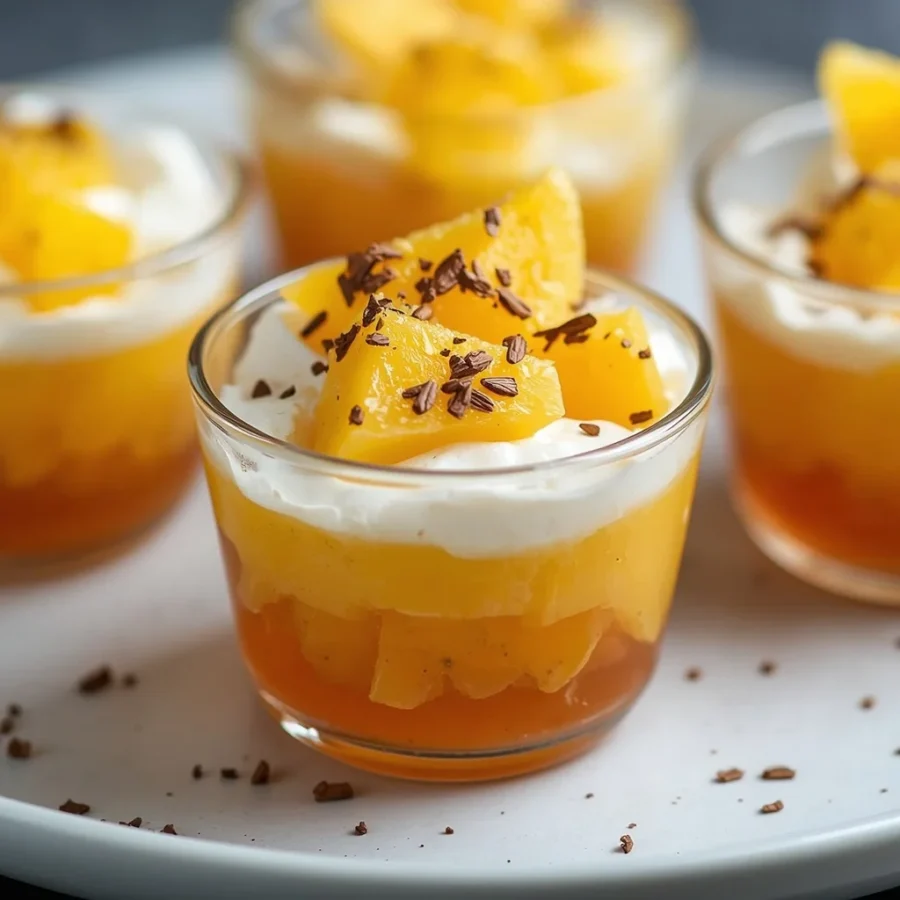
Assembling No-Bake Mango Coconut Jelly Layered Cups is an easy, stress-free process, but achieving clean, sharp horizontal lines between the layers requires patience and correct temperature management. Follow these detailed steps sequentially for flawless results.
Step One: Puree the Fresh Mango Base
Place your two cups of diced ripe mango, two tablespoons of sugar, one tablespoon of freshly squeezed lime juice, and one-half cup of water into a high-speed blender or food processor. Blend on high speed for sixty to ninety seconds until the mixture is completely smooth with no remaining fruit chunks. If your mangoes are fibrous, strain the puree through a fine mesh sieve into a bowl to ensure a smooth, velvety finish.
Step Two: Bloom and Dissolve Fruit Gelatin
Sprinkle one teaspoon of unflavored gelatin powder evenly over two tablespoons of cold water in a small heat-safe bowl. Let it stand undisturbed for about five minutes. This process, known as blooming, allows the dry gelatin granules to absorb water and swell evenly.
Once bloomed, gently warm the bowl over a small pot of simmering water or heat it gently in short bursts until the gelatin turns into a clear, smooth liquid. Pour this warm liquid gelatin directly into your prepared mango puree and stir thoroughly with a whisk to distribute it evenly.
Step Three: Pour and Chill the First Mango Layer
Arrange four clear glass cups or dessert jars on a small tray. Carefully divide the warm mango mixture among the four glasses, pouring gently to avoid splashing the sides of the glass. Place the tray into your refrigerator and allow the mango layer to chill for thirty to forty-five minutes. You want the top of the mango layer to become firm enough to support the weight of the second liquid layer without mixing.
Step Four: Bloom Gelatin for the Coconut Layer
While your mango layer is setting in the refrigerator, prepare the creamy second layer. Sprinkle the remaining one teaspoon of unflavored gelatin powder over two tablespoons of cold water in a small bowl and let it bloom undisturbed for five minutes.
Step Five: Heat the Coconut Cream Mixture
In a small saucepan, combine one cup of full-fat coconut milk, one-half cup of heavy cream, and two tablespoons of sugar. Place the saucepan over medium-low heat and stir gently until the sugar dissolves completely. Do not let the liquid come to a rolling boil, as excessive heat can break the fats in coconut milk. Remove the warm pan from the heat, stir in your bloomed gelatin until completely melted and smooth, then add one teaspoon of vanilla extract. Allow this coconut mixture to cool down on your counter until it reaches room temperature.
Step Six: Layer the Coconut Cream and Final Chill
Take your chilled glasses out of the refrigerator and check that the top surface of the mango layer is set. Carefully spoon or pour the cooled coconut mixture over the firm mango layer using the back of a spoon to break the fall of the liquid. Returning the coconut liquid to room temperature before pouring prevents it from melting the set mango underneath.
Place the glasses back into the refrigerator and chill them for at least two to three hours, or until both layers are completely firm and set.
Step Seven: Garnish and Serve
Right before serving, retrieve your chilled No-Bake Mango Coconut Jelly Layered Cups from the refrigerator. Top each glass with a spoon of extra diced fresh mango, a sprinkle of toasted coconut flakes, and a fresh green mint leaf. Serve cold with long dessert spoons.
Important Gelatin Science and Setting Tips
Working with gelatin is straightforward once you master a few fundamental rules of culinary science.
                               GELATIN HANDLING RULES
                                         │
        ┌────────────────────────────────┴────────────────────────────────┐
        ▼                                                                 ▼
Bloom in Cold Water First                                         Avoid Boiling Gelatin
• Dry powder must absorb cold water.                             • Temperatures above boiling destroy protein bonds.
• Ensures smooth melting with zero lumps.                        • Gentle heat creates a reliable, firm set.
Understanding Gelatin Blooming
Never drop dry gelatin powder directly into warm liquid. The outer edges of the granules will hydrate immediately, trapping dry powder inside and creating rubbery lumps that never dissolve. Always sprinkle dry powder over cold water first and let it hydrate fully before applying heat.
Temperature Control and Enzyme Awareness
Certain raw tropical fruits—most notably raw pineapple, papaya, kiwi, and mango—contain natural protease enzymes that break down protein chains, including gelatin proteins. If you use raw fruit with very high enzyme levels, gelatin may fail to set firmly.
Standard ripe cultivated mangoes typically have lower enzyme levels that allow gelatin to set, but if you ever encounter issues with a soft set, heating your blended fruit puree to a gentle simmer for two minutes destroys these enzymes, allowing your jelly to set firmly every time.
Creative Variations and Recipe Adaptations: No-Bake Mango Coconut Jelly Layered Cups
This recipe serves as an adaptable template that can be modified to suit various dietary needs and flavor cravings.
Fully Vegan and Plant-Based Adaptation
To make this dessert completely vegan, replace the unflavored animal-based gelatin with agar-agar powder, an alga-based gelling agent widely used in Asian cooking.
-
Replace heavy dairy cream with an equal amount of thick canned coconut cream.
-
Use one-half teaspoon of agar-agar powder per layer in place of gelatin powder.
-
Remember that agar-agar must be boiled gently in liquid for two minutes to activate its gelling properties, and it sets much faster at room temperature.
Diagonal Angle Layering Technique
For an impressive presentation, tilt your empty serving glasses at a forty-five-degree angle inside a muffin tin lined with kitchen towels before pouring the first mango layer. Chill the glasses while tilted. Once set, stand the glasses upright and pour the coconut layer on top. This creates a striking diagonal color split down the center of each glass.
Alternative Tropical Fruit Swaps
You can replace or combine the mango puree with several other tropical fruit purees:
-
Passion Fruit Mango: Mix one-quarter cup of tart passion fruit pulp into the mango puree for extra tropical acidity.
-
Guava Cream: Replace the mango puree entirely with sweet pink guava puree for a soft coral and white color pairing.
-
Peach Coconut: Use sweet yellow summer peaches in place of mangoes during peak peach season.
Storage and Make-Ahead Advice: No-Bake Mango Coconut Jelly Layered Cups
This dessert is an exceptional choice for hosting because it tastes best when made ahead of time.
-
Refrigeration: Store prepared jelly cups covered tightly with plastic wrap in the refrigerator for up to three days. Keep the garnishes separate and add them right before serving so toasted coconut stays crisp and mint stays fresh.
-
Freezing Notice: Do not freeze gelatin-based desserts. Freezing damages the delicate protein matrix holding the liquid, causing the jelly to weep water and lose its smooth texture upon thawing.
Frequently Asked Questions: No-Bake Mango Coconut Jelly Layered Cups
Can I use frozen mangoes instead of fresh mangoes?
Yes, frozen mango chunks work wonderfully in this recipe. Allow the frozen mango pieces to thaw completely at room temperature, then process them in your blender along with any released natural fruit juices. Frozen mangoes are often picked at peak ripeness, making them an excellent choice when fresh mangoes are out of season.
Why did my coconut layer mix into my mango layer?
This happens if the mango layer was not set long enough in the refrigerator, or if the warm coconut liquid was poured directly onto the first layer while still too hot. Ensure the mango layer is firm to the touch, and allow your coconut liquid to cool down to comfortable room temperature before pouring it slowly into the glasses.
Can I use low-fat light coconut milk from a carton?
You can use light coconut milk from a carton, but your coconut layer will taste less creamy and will have a lighter texture similar to fruit jelly rather than a rich cream panna cotta. Full-fat canned coconut milk provides the necessary fat solids for a velvety, opaque white finish.
How do I toast coconut flakes for the garnish?
Spread unsweetened coconut flakes in a single layer in a dry skillet over medium-low heat. Stir constantly for two to three minutes until the flakes turn golden brown and fragrant. Remove them immediately from the hot pan to prevent scorching.
Conclusion: No-Bake Mango Coconut Jelly Layered Cups
The No-Bake Mango Coconut JellyLayered Cups recipe offers a cool, delicious blend of rich coconut cream and bright tropical fruit juice without requiring any baking. By building layers of homemade mango jelly and velvety vanilla coconut cream in individual serving glasses, you transform simple ingredients into an elegant, restaurant-style dessert. Whether you are hosting a summer party, planning a make-ahead holiday treat, or simply treating your family to a refreshing sweet bite, these cold dessert cups deliver bright tropical flavors in every single spoon. Gather your ripe fruit, chill your glasses, and enjoy creating this delicious tropical dessert right at home.
Print
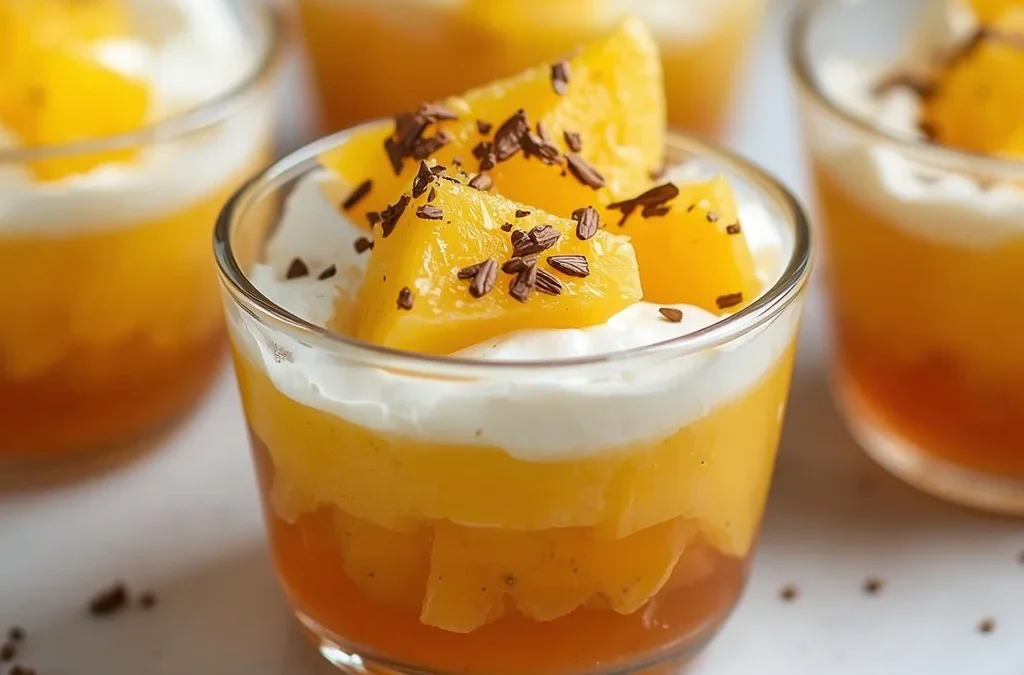
No-Bake Mango Coconut Jelly Layered Cups: The Ultimate Summer Dessert
- Total Time: 3 hours 20 minutes
- Yield: 4 servings 1x
- Diet: Vegetarian
Description
To understand why this dessert is so captivating, it helps to examine its structural composition. A No-Bake Mango Coconut Jelly Layered Cup is a layered cold dessert served in individual clear glasses. It features two distinct, complementary flavor elements: a sweet, tangy fruit jelly layer made from pureed ripe mangoes and a smooth, creamy panna cotta-style coconut layer.
Ingredients
Scale
Mango Layer
- 2 cups ripe mango, peeled and diced
- 2 tbsp sugar, adjust to taste
- 1 tbsp lemon or lime juice
- 1 tsp unflavored gelatin powder
- 2 tbsp cold water
- ½ cup water
Coconut Layer
- 1 cup coconut milk
- ½ cup heavy cream
- 2 tbsp sugar
- 1 tsp vanilla extract
- 1 tsp unflavored gelatin powder
- 2 tbsp cold water
For Garnish
- Diced fresh mango
- Toasted coconut flakes
- Fresh mint, optional
Instructions
- Prepare the mango layer: Blend the diced mango, sugar, lime juice, and ½ cup water until smooth.
- Bloom the gelatin: Sprinkle 1 tsp gelatin over 2 tbsp cold water and let it sit for about 5 minutes.
- Dissolve the gelatin: Gently warm the bloomed gelatin until completely dissolved. Stir it into the mango mixture.
- Make the first layer: Divide the mango mixture among 4 serving glasses. Refrigerate for about 30–45 minutes, or until set.
- Prepare the coconut layer: Sprinkle 1 tsp gelatin over 2 tbsp cold water and let it bloom for 5 minutes.
- Gently warm the coconut milk, heavy cream, and sugar until the sugar dissolves. Do not boil. Remove from the heat and stir in the dissolved gelatin and vanilla.
- Add the coconut layer: Carefully spoon or pour the coconut mixture over the set mango layer.
- Chill: Refrigerate for at least 2–3 hours, or until completely firm.
- Garnish and serve: Top with fresh mango, toasted coconut flakes, and mint before serving.
Notes
For clean, distinct layers, make sure the first layer is completely set but still chilled before adding the second layer. You can prepare these cups a day ahead and keep them refrigerated until serving.
- Prep Time: 15 minutes
- Cook Time: 5 minutes
- Category: Dessert
- Method: No-Bake
- Cuisine: Tropical / Asian-Inspired
Nutrition
- Serving Size: 1 cup
- Calories: 280 kcal
Keywords: Mango coconut jelly cups, no-bake mango coconut dessert, layered mango coconut jelly
