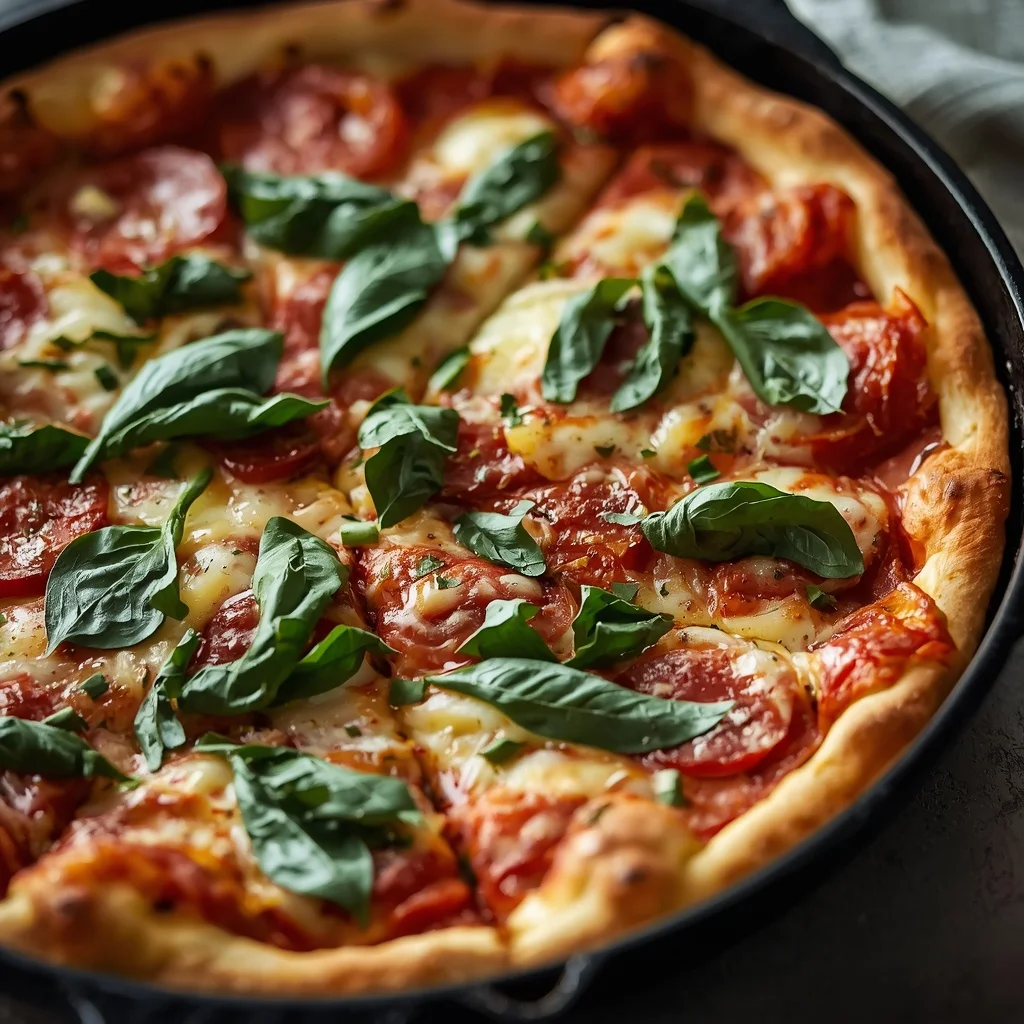
If you have ever craved a thick, comforting pizza with a crust that is perfectly golden and crispy on the outside yet beautifully tender on the inside, you are in the right place. Creating an authentic restaurant-quality meal at home is much easier than you think, especially when you leverage the incredible heat retention of classic cookware. In this comprehensive guide, we are going to dive into the ultimate cast iron skillet deep dish pizza recipe. This particular style of pizza brings the iconic, satisfying indulgence of a Chicago-style pizzeria right into your own home kitchen, allowing you to control every single fresh ingredient that goes into it.
Many home cooks feel intimidated by the idea of making thick-crust pizzas from scratch, worrying that the middle will turn out doughy or the bottom will get soggy. Fortunately, using a heavy skillet solves all of these common baking problems naturally. By following this carefully crafted cast iron skillet deep dish pizza method, you will achieve an incredible, reliable crunch every single time you bake. Let us explore exactly what makes this recipe so special, where it comes from, and how you can master it in your own kitchen.
What is a Cast Iron Skillet Deep Dish Pizza?
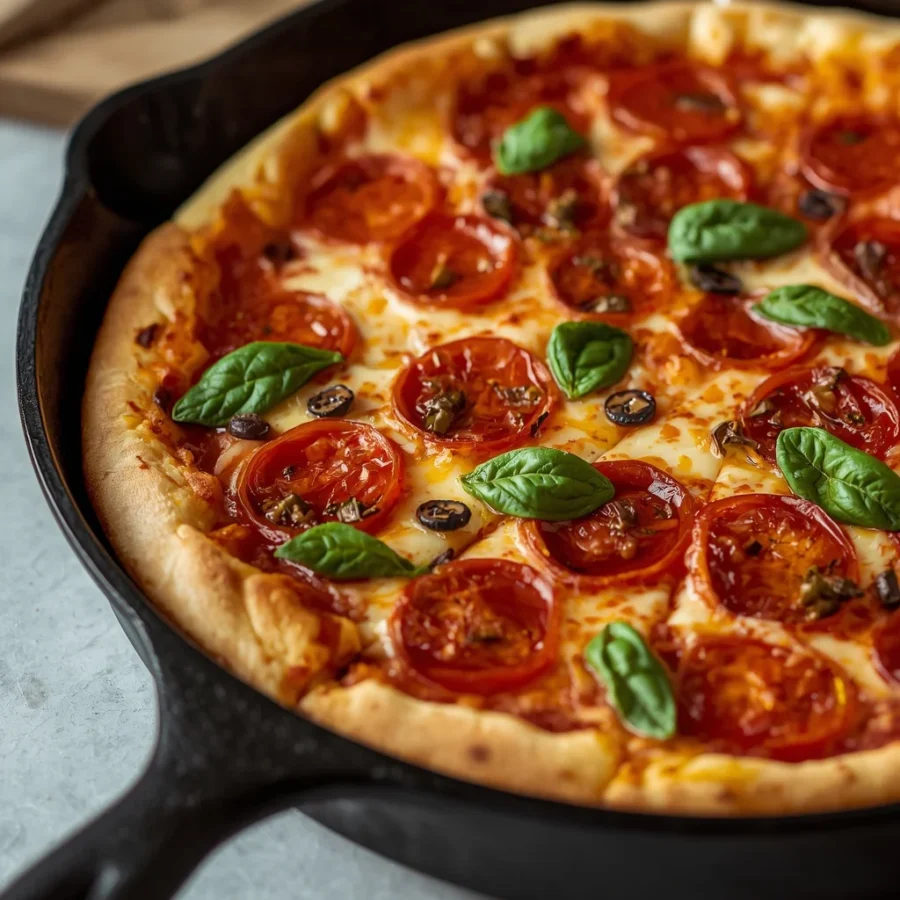
To put it simply, a cast iron skillet deep dish pizza is a thick-crust pizza baked inside a heavy, seasoned iron pan. Unlike thin-crust styles that are stretched thin and baked quickly on a flat stone, this deep dish version features a substantial dough that is pressed gently into the bottom and up the high sides of the skillet. This structure creates a deep, sturdy basin designed specifically to hold an abundance of delicious fillings.
The assembly of this pizza is unique because it is entirely reversed compared to standard pies. Instead of putting sauce down first, you place a thick layer of sliced or shredded cheese directly against the raw dough. The toppings go on next, and the entire creation is finished with a rich, robust tomato sauce spread across the top layer. This reversed order is essential because a deep dish pizza requires a longer baking time in the oven. Putting the cheese underneath the sauce prevents it from burning, while simultaneously creating a barrier that keeps the crust from becoming soggy from the moisture of the tomatoes.
Origin of Cast iron skillet deep dish pizza
The concept of the deep dish pizza famously originated in the city of Chicago during the early nineteen-forties. Creative culinary minds wanted to adapt traditional, thin Italian flatbreads into something much more substantial, hearty, and uniquely American. They turned to high-sided cake pans and deep metal dishes to accommodate a much larger volume of dough, cheese, and meats, turning a simple snack into a complete, filling meal.
While commercial pizzerias use specialized steel pans, home cooks quickly discovered that a seasoned iron skillet is actually the superior choice for home kitchens. Iron distributes heat with incredible uniformity and retains that heat beautifully when placed into a hot oven. This mimics the intense environment of a commercial brick oven, giving the dough an exceptional, fried-like crispiness along the bottom edge that standard baking sheets simply cannot replicate. Over the decades, making a cast iron skillet deep dish pizza has become a favorite tradition for home bakers looking to replicate authentic Midwestern comfort food.
Ingredients You Will Need: Cast iron skillet deep dish pizza
Before you begin cooking, it is important to gather your ingredients and measure them out carefully. Using high-quality items will drastically improve the flavor of your final dish. Here is everything required to make a spectacular pizza that serves four to six people.
For the Dough
-
Two and one-quarter teaspoons of active dry yeast, which is equivalent to one standard paper packet
-
One cup of warm water, ideally kept between one hundred and five to one hundred and ten degrees Fahrenheit
-
Two teaspoons of granulated white sugar
-
Two and one-half cups of all-purpose flour
-
One-half cup of fine yellow cornmeal
-
One and one-half teaspoons of fine table salt
-
One-quarter cup of high-quality olive oil, plus a little extra to grease your bowls and pan
Sauce
-
Two tablespoons of olive oil
-
Two cloves of fresh garlic, finely minced
-
One can, roughly fourteen to fifteen ounces, of premium crushed tomatoes
-
One teaspoon of dried oregano
-
One teaspoon of dried basil
-
One-half teaspoon of salt
-
One-quarter teaspoon of ground black pepper
-
A small pinch of crushed red pepper flakes for an optional touch of warmth
For the Toppings
-
Ten to twelve ounces of shredded low-moisture mozzarella cheese
-
Three to four ounces of your favorite toppings, such as pepperoni, cooked Italian sausage, or pre-cooked vegetables
-
One-quarter cup of freshly grated Parmesan cheese
-
One tablespoon of unsalted butter, which is completely optional but highly recommended for brushing onto the crust
Step by Step Direction and Preparation Method: Cast iron skillet deep dish pizza
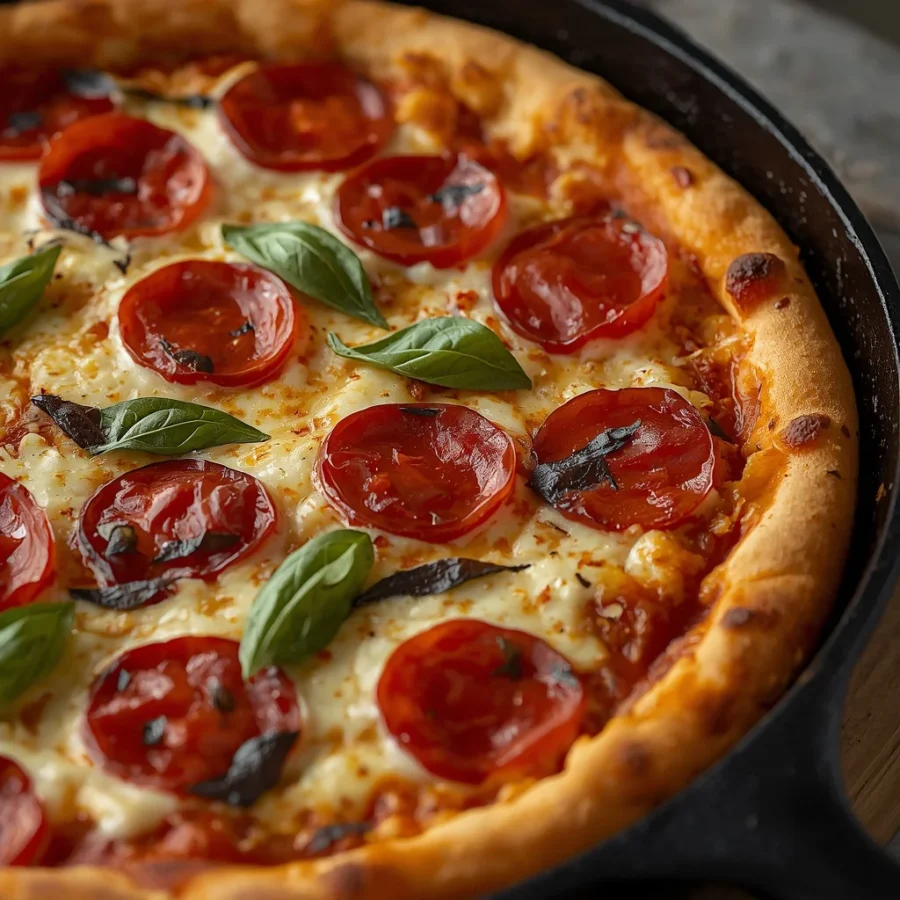
Now that your counter is stocked with ingredients, it is time to build your masterpiece. Follow these detailed steps closely to ensure your cast iron skillet deep dish pizza turns out absolutely flawless.
Preparing the Homemade Dough
Step One
In a large mixing bowl, combine your warm water, sugar, and active dry yeast. Give it a very gentle stir and then let it sit undisturbed for five to ten minutes. You will know your yeast is alive and ready when a thick, frothy foam forms across the surface of the water. If the mixture remains completely flat, your water may have been too hot or your yeast might be expired, meaning you should start over with fresh yeast.
Step Two
Once the yeast mixture is beautifully foamy, pour in your one-quarter cup of olive oil and give it a quick stir. In a separate bowl, whisk together your all-purpose flour, fine yellow cornmeal, and salt. The addition of cornmeal here is a classic secret, as it adds a wonderful color, an authentic texture, and an extra crunch to the final crust.
Step Three
Gradually add the dry flour mixture into the wet ingredients. Stir with a sturdy spoon until a shaggy, cohesive dough begins to form and pull away from the sides of the bowl.
Step Four
Turn the dough out onto a lightly floured countertop. Knead the dough firmly with your hands for eight to ten minutes. You are looking to develop the gluten structure, which gives the crust its chewiness. Keep kneading until the dough becomes smooth, elastic, and slightly tacky but not overly sticky to your fingers.
Step Five
Form the dough into a smooth ball. Lightly coat the inside of a large bowl with a splash of olive oil, place the dough inside, and turn it over once so the top is lightly oiled as well. Cover the bowl tightly with a clean kitchen towel or plastic wrap. Place it in a warm, draft-free spot in your kitchen and let it rise for one hour to one hour and thirty minutes, or until the dough has completely doubled in physical size.
Cooking the Rich Tomato Sauce
Step One
While your pizza dough is rising peacefully, you can easily whip up the savory, thick sauce. Place a medium saucepan over medium heat on your stove and add two tablespoons of olive oil.
Step Two
Add your minced fresh garlic to the hot oil. Cook it for just about thirty seconds, stirring constantly. You want the garlic to become incredibly fragrant without turning brown, as burnt garlic will impart a bitter taste to your entire sauce.
Step Three
Carefully pour the crushed tomatoes into the pan along with the dried oregano, dried basil, salt, black pepper, and optional red pepper flakes. Stir all the ingredients together thoroughly.
Step Four
Turn the heat down to low and let the tomato sauce simmer gently, uncovered, for fifteen to twenty minutes. Stirring occasionally will prevent it from sticking to the bottom. As the moisture evaporates, the sauce will thicken into a rich, paste-like consistency that is perfect for holding up on top of a heavy pizza. Once thickened, remove it from the heat and let it cool down slightly.
Assembling and Baking the Pizza
Step One
Position an oven rack in the center of your oven and preheat the oven to four hundred and twenty-five degrees Fahrenheit. While the oven is heating up, take a ten-inch or twelve-inch heavy cast iron skillet and generously coat the inside bottom and sides with olive oil. For an extra crispy crust, you can optionally place the empty, oiled skillet into the heating oven for five minutes to get it nice and hot before assembling.
Step Two
Gently punch down your risen dough to release any large air bubbles. Transfer the dough directly into your prepared skillet. Using your fingertips, gently press and stretch the dough out across the bottom of the pan, working it steadily up the high sides of the skillet by about one to one and a half inches.
Step Three
Begin the reversed assembly by spreading your shredded low-moisture mozzarella cheese evenly across the raw dough. Remember, putting the cheese on the bottom protects the crust from getting soggy.
Step Four
Layer your chosen toppings, like pepperoni or cooked sausage, evenly over the cheese layer.
Step Five
Spoon your cooled, thickened tomato sauce smoothly over the top of the toppings, spreading it out to cover everything evenly. Finally, sprinkle your grated Parmesan cheese generously across the very top of the sauce.
Step Six
Place the heavy skillet into your preheated oven and bake for twenty-five to thirty-five minutes. Keep a close eye on it during the final minutes. You are looking for a deep golden-brown crust, bubbling cheese along the edges, and a hot, steaming sauce. If you notice the top layer browning too quickly before the crust looks fully cooked, simply cover the top of the skillet loosely with a piece of aluminum foil during the last ten minutes of baking.
Step Seven
Carefully remove the hot skillet from the oven using thick oven mitts. Let the pizza rest undisturbed in the pan for ten minutes before attempting to slice it. This resting period allows the cheese and sauce to set, ensuring your slices hold their shape beautifully. If you want a luxurious finish, melt a tablespoon of butter and brush it gently along the exposed edges of the golden crust just before serving.
Delicious Recipe Variations: Cast iron skillet deep dish pizza
One of the greatest joys of making a homemade cast iron skillet deep dish pizza is that you can easily customize the fillings to match your personal cravings. Here are a few incredible variations to try once you master the base recipe:
The Supreme Meat Lovers Pizza
If you prefer a deeply savory, protein-packed meal, you can layer a combination of cooked Italian sausage, crispy chopped bacon, and spicy pepperoni over the cheese layer. Just make sure to drain any excess grease from the meats before putting them into the skillet so your pizza does not become oily.
The Garden Vegetarian Delight
For a lighter, vegetable-forward option, try adding a mix of sliced bell peppers, diced onions, earthy mushrooms, and fresh baby spinach. A crucial tip for a veggie deep dish is to lightly sauté your vegetables in a separate pan beforehand. This cooks off their natural water content, ensuring your pizza remains perfectly thick and crisp rather than watery.
The Ultimate Four Cheese Blend
If you are a true cheese lover, replace a portion of the mozzarella with a rich blend of provolone, creamy fontina, and sharp asiago cheese. This combination creates an incredibly gooey, flavorful cheese pull that contrasts beautifully with the robust, acidic tomato sauce on top.
Pro Tips for the Absolute Best Results: Cast iron skillet deep dish pizza
To ensure your homemade pizza easily surpasses anything you can order from a local restaurant, keep these expert kitchen tips in mind:
-
Always use low-moisture mozzarella: Fresh mozzarella contains a massive amount of water which will pool up in a deep dish pan. Low-moisture blocks that you grate yourself melt beautifully and keep the interior of your pizza structured and intact.
-
Preheat your cast iron: Getting that skillet slightly warm before pressing the dough in gives the crust an immediate head start in the oven, resulting in a remarkably crispy, fried texture on the exterior.
-
Reheat leftovers in a skillet: If you happen to have any slices left over, avoid the microwave, which makes the dough rubbery. Instead, place the cold slice into a dry skillet over medium-low heat, cover it with a lid, and let it warm through. The lid traps heat to melt the cheese, while the hot pan completely restores the bottom crust to its original crunchy glory.
Frequently Asked Questions: Cast iron skillet deep dish pizza
Can I make the Cast iron skillet deep dish pizza ahead of time?
Yes, you can absolutely prepare the dough in advance. After kneading it, place it in an oiled bowl, cover it tightly with plastic wrap, and store it in your refrigerator for up to twenty-four hours. The cold environment slows down the yeast, allowing the dough to ferment slowly, which actually develops an even deeper, more complex flavor. Just let it sit on your kitchen counter for about thirty minutes to come to room temperature before stretching it into your skillet.
What size skillet is best for Cast iron skillet deep dish pizza?
A ten-inch or twelve-inch seasoned cast iron skillet works perfectly for these measurements. If you use a ten-inch skillet, your crust will turn out slightly thicker and deeper. If you opt for a twelve-inch skillet, the pizza will be slightly wider and a bit thinner, meaning you may want to check on it a few minutes early during the baking process since it will cook through a bit faster.
Why do we put the sauce on top of the cheese?
This traditional layout is highly functional. Because a thick deep dish pizza takes around thirty minutes to bake completely through, placing cheese on top would cause it to burn to a crisp long before the dough finishes cooking. Putting the sauce on top shields the cheese and toppings, keeping them perfectly melted and juicy, while the cheese below acts as a shield to keep the crust from absorbing moisture.
Can I use store-bought pizza dough for this?
You can certainly use store-bought dough if you are short on time. However, standard store-bought dough often lacks the cornmeal and the specific oil content that gives a true deep dish crust its signature texture. If you do use store-bought dough, try pressing a tablespoon of cornmeal directly into the bottom of your oiled skillet before laying the dough down to help mimic that authentic crunch.
Conclusion: Cast iron skillet deep dish pizza
Mastering the art of making a homemade cast iron skillet deep dish pizza is a deeply rewarding culinary project that transforms a simple weeknight into a special occasion. By utilizing a heavy iron pan, reversing the traditional order of layers, and allowing your dough to rise beautifully with a touch of cornmeal, you create a texturally superior pizza with a profoundly satisfying crunch. This meal stands completely on its own as a showstopping dinner, though it pairs wonderfully with a simple, crisp green salad or warm garlic bread. Skip the delivery fees and enjoy the process of creating a thick, cheesy, and utterly spectacular masterpiece right in the comfort of your own home kitchen.
Print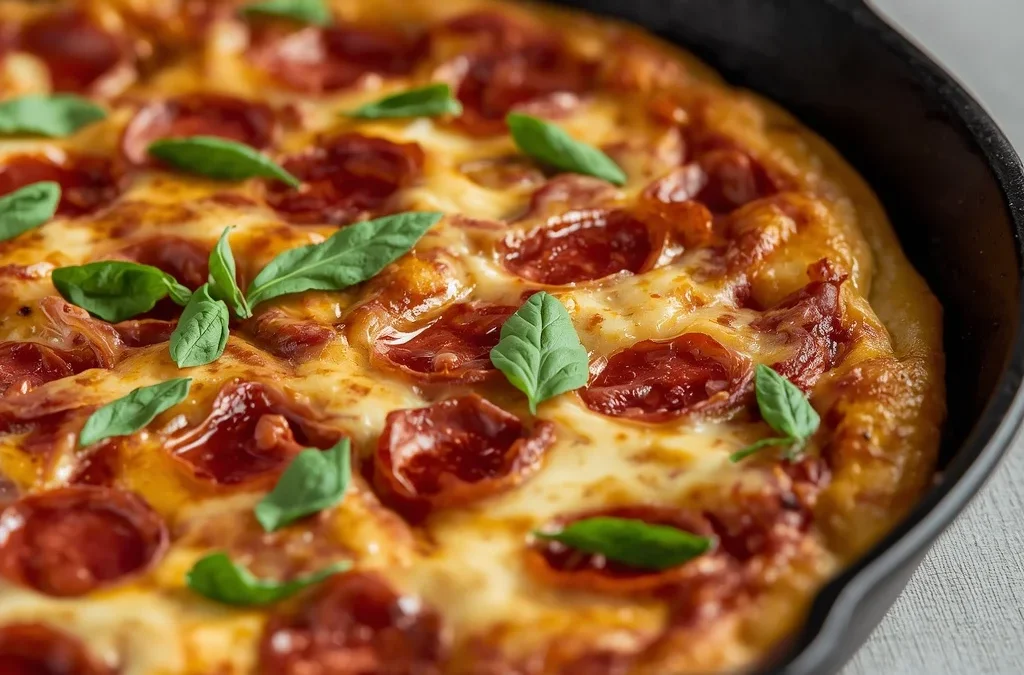
Ultimate Cast Iron Skillet Deep Dish Pizza Recipe
- Total Time: 1 hour 50 minutes (includes dough rising time)
- Yield: 6 servings 1x
- Diet: Vegetarian
Description
To put it simply, a cast iron skillet deep dish pizza is a thick-crust pizza baked inside a heavy, seasoned iron pan. Unlike thin-crust styles that are stretched thin and baked quickly on a flat stone, this deep dish version features a substantial dough that is pressed gently into the bottom and up the high sides of the skillet. This structure creates a deep, sturdy basin designed specifically to hold an abundance of delicious fillings.
Ingredients
Dough
- 2¼ tsp (1 packet) active dry yeast
- 1 cup (240 ml) warm water (about 105–110°F / 40–43°C)
- 2 tsp sugar
- 2½ cups (315 g) all-purpose flour
- ½ cup (65 g) yellow cornmeal
- 1½ tsp salt
- ¼ cup (60 ml) olive oil, plus extra for the pan
Sauce
- 2 tbsp olive oil
- 2 cloves garlic, minced
- 1 can (14–15 oz / 400–425 g) crushed tomatoes
- 1 tsp dried oregano
- 1 tsp dried basil
- ½ tsp salt
- ¼ tsp black pepper
- Pinch of red pepper flakes (optional)
Toppings
- 10–12 oz (280–340 g) shredded low-moisture mozzarella
- 3–4 oz (85–115 g) pepperoni, cooked sausage, vegetables, or your favorite toppings
- ¼ cup grated Parmesan
- 1 tbsp butter (optional, for brushing crust)
Instructions
1. Make the dough
- Mix warm water, sugar, and yeast. Let sit for 5–10 minutes until foamy.
- Stir in olive oil.
- Add flour, cornmeal, and salt.
- Knead for 8–10 minutes until smooth.
- Place in an oiled bowl, cover, and let rise for 1–1½ hours, until doubled.
2. Make the sauce
- Heat olive oil in a saucepan.
- Cook garlic for about 30 seconds.
- Add tomatoes and seasonings.
- Simmer for 15–20 minutes until slightly thickened.
- Cool slightly.
3. Prepare the skillet
- Heat oven to 425°F (220°C).
- Generously oil a 10- or 12-inch cast iron skillet.
4. Assemble
- Press dough into the skillet, pushing it up the sides about 1–1½ inches.
- Add mozzarella first (this helps protect the crust).
- Add toppings.
- Spoon sauce over the top.
- Sprinkle Parmesan over everything.
5. Bake
- Bake for 25–35 minutes, until:
- crust is deep golden brown,
- cheese is bubbling,
- sauce is hot.
If the top browns too quickly, loosely cover with foil during the last 10 minutes.
6. Finish
- Let the pizza rest for 10 minutes before slicing.
- Brush the crust with melted butter if desired.
Notes
Store leftovers in an airtight container in the refrigerator for up to 3 days. Reheat slices in a cast iron skillet over medium-low heat to bring back the crispy crust.
- Prep Time: 20 minutes
- Cook Time: 30 minutes
- Category: Main Course
- Method: Baked
- Cuisine: American
Nutrition
- Serving Size: 1 slice (1/6 pizza)
- Calories: 520 kcal
Keywords: Skillet deep dish pizza, cast iron pan pizza, homemade thick crust pizza
