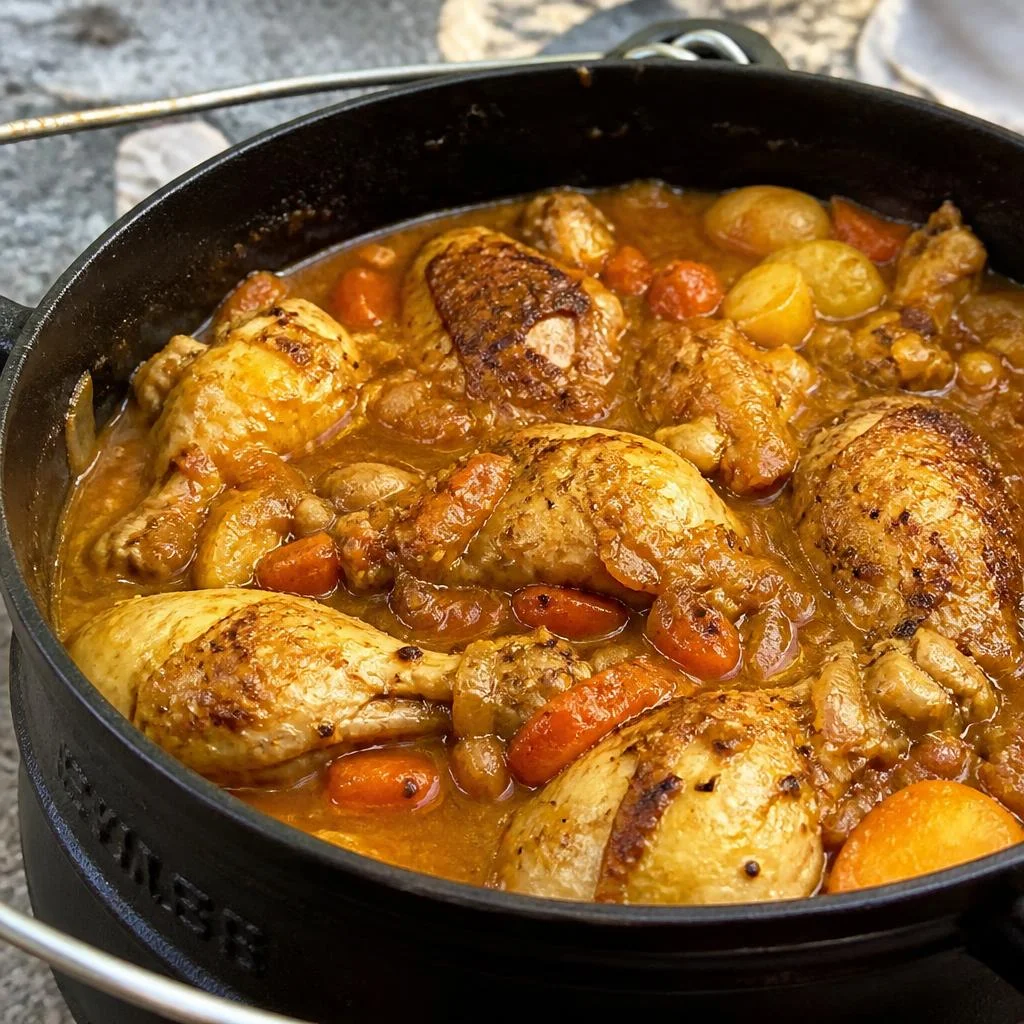
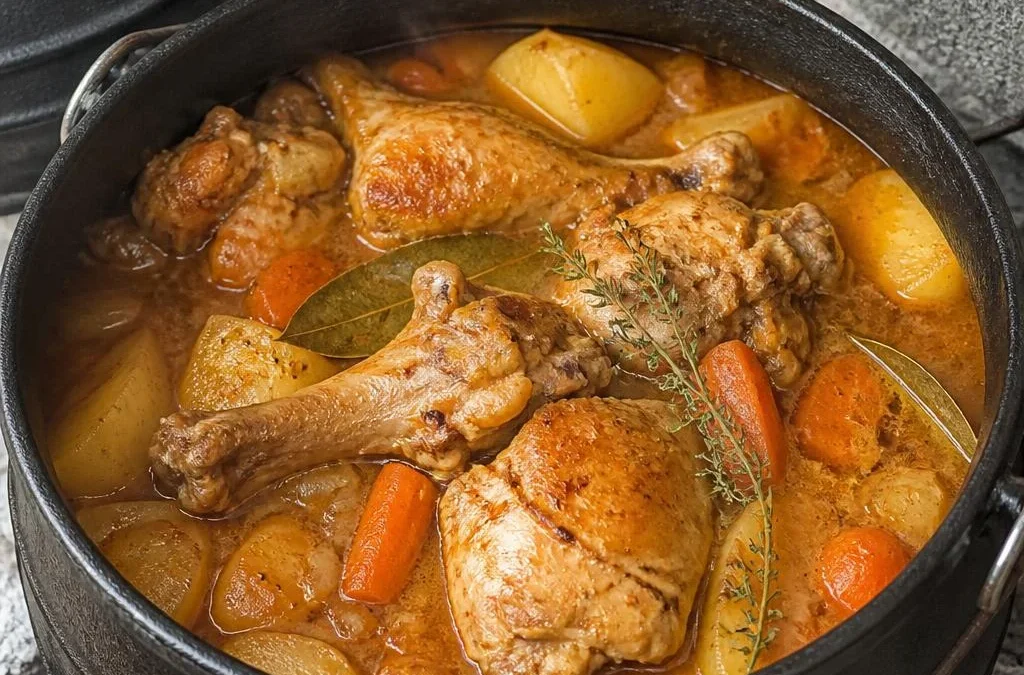
Few culinary traditions bring people together quite like a traditional
South African chicken potjie simmered slowly over glowing coals in the great outdoors. This
iconic dish combines tender bone in poultry, vibrant garden vegetables, warm aromatic spices, and a deeply rich savory broth into a truly unforgettable single pot feast. If you want to master an authentic
South African chicken potjie that delivers unbelievable depth of flavor while honoring time tested outdoor cooking techniques, this comprehensive guide will take you through every essential step. From layering ingredients correctly to maintaining gentle heat, you will discover how to recreate this beloved celebration stew in your own backyard or kitchen.
What is a South African Chicken Potjie?
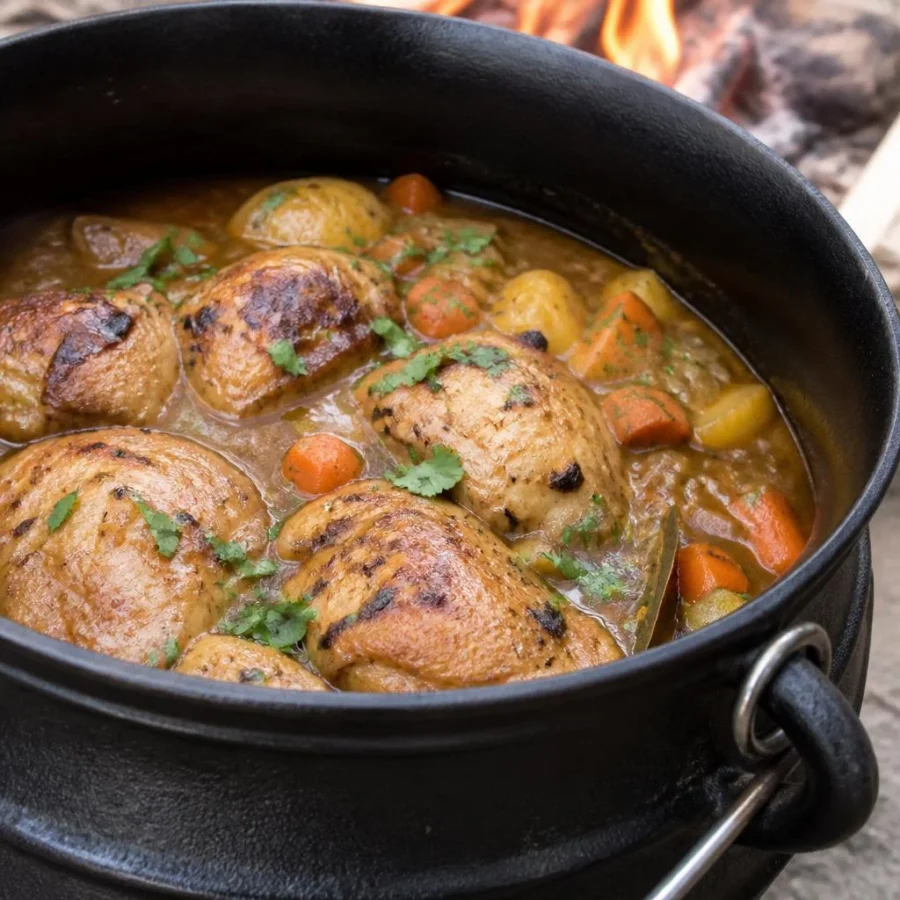
A South African chicken potjie is a slow cooked layered stew prepared inside a round, three legged cast iron cauldron known locally as a potjie. Pronounced as poy key, the word translates directly to small iron pot in Afrikaans. Unlike standard Western stews where cooks stir ingredients together continuously throughout the simmer, a genuine South African chicken potjie relies on a strict non stirring philosophy. Meat sears first at the bottom to establish a deeply caramelized flavor foundation, followed by liquid aromatics and carefully stacked tiers of fresh vegetables arranged according to their individual cooking times.
As heat builds gently inside the heavy cast iron vessel, steam circulates upward, condensing against the heavy lid and basting the ingredients continuously. Hard root vegetables like potatoes and carrots soften near the middle, while delicate greens and sweet corn steam gently near the top layer. The result is an extraordinary harmony of textures, where every component retains its distinct shape and natural taste while absorbing the rich, spiced steam rising from the bottom broth.
Origin of South African chicken potjie
To truly appreciate the heart of this
dish, one must trace its roots back to early European settlement and indigenous trade routes across Southern Africa. During the seventeenth century, Dutch settlers brought heavy Dutch ovens to the Cape. As migratory farmers known as Voortrekkers traveled across vast wilderness landscapes on ox wagons, three legged cast iron pots became essential survival gear. These iron cauldrons could easily sit directly over open wood embers without requiring iron grills or complex cooking stands.
Over generations, this rustic outdoor cooking method evolved into potjiekos, which means small pot food. Local indigenous populations, Asian spice traders, and European settlers all contributed to the evolving flavor profiles of these slow cooked dishes. Malay spices such as ground coriander, sweet paprika, and fruity fruit chutneys were integrated into savory broths, creating a uniquely South African culinary identity. Today, gathering around a crackling fire while a South African chicken potjie simmers for hours remains a cherished social event centered on warmth, patience, and hospitality.
Ingredients with Quantity: South African chicken potjie
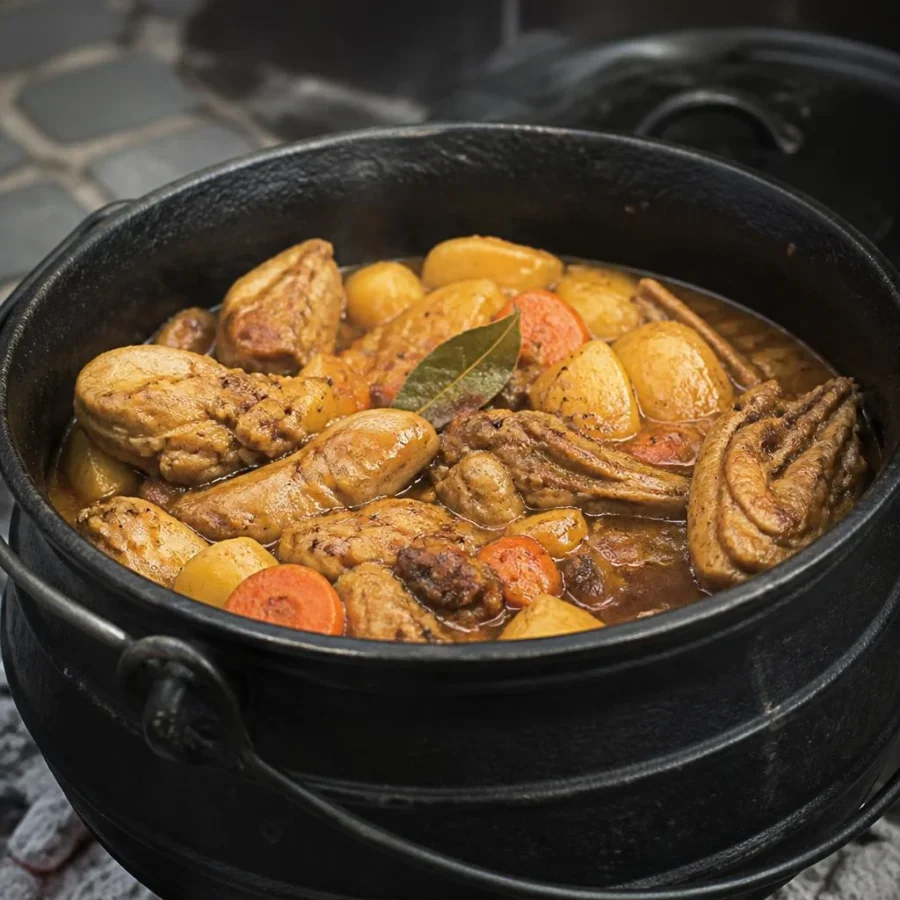
Preparing a memorable meal requires fresh, wholesome ingredients measured with precision. Gather the following items to yield six hearty portions:
-
Two pounds chicken thighs or drumsticks, bone in and skin on
-
Two tablespoons vegetable oil
-
One large yellow onion, thinly sliced
-
Three cloves fresh garlic, finely minced
-
Two teaspoons grated fresh ginger root
-
Two teaspoons sweet paprika
-
One teaspoon ground coriander
-
One teaspoon dried thyme leaves
-
One-half teaspoon ground black pepper
-
One teaspoon sea salt, adjusted according to taste
-
Two cups rich chicken stock
-
One cup chopped ripe tomatoes
-
Two tablespoons concentrated tomato paste
-
Three medium russet potatoes, peeled and quartered
-
Three large carrots, cut into thick circular coins
-
Two medium bell peppers, sliced into thick strips
-
One cup fresh green beans, trimmed
-
One cup button mushrooms, sliced
-
One cup sweet corn kernels
-
Two tablespoons Worcestershire sauce
-
One tablespoon fruit chutney or apricot jam
-
One-half cup heavy whipping cream or full fat coconut milk
-
Fresh flat leaf parsley or coriander sprigs, chopped for garnish
Step by Step Direction and Preparation Method: South African chicken potjie
Cooking a great potjie demands patience, proper order, and careful temperature management. Follow these detailed steps to build maximum flavor without scorching your meal.
Step One: Season and Brown the Poultry
Set your three legged cast iron pot or a thick Dutch oven over medium heat. Pour in two tablespoons of vegetable oil and allow it to shimmer. Pat your bone in chicken pieces completely dry using paper towels to ensure a golden brown crust. In a small bowl, combine sweet paprika, ground coriander, black pepper, and sea salt. Rub this aromatic spice blend evenly over all sides of the meat.
Place the seasoned chicken skin side down into the hot oil. Sear each piece without moving it for four to five minutes until a rich, golden brown crust forms. Flip the pieces over and brown the opposite side for three minutes. Once browned, transfer the chicken to a clean plate and set it aside temporarily.
Step Two: Build the Fragrant Aromatic Base
Reduce your heat source slightly to medium low. Add the sliced onions into the hot rendered fats left in the bottom of the pot. Cook slowly for three to four minutes until the onions soften and turn translucent, stirring continuously to scrape up any flavorful browned bits stuck to the bottom.
Add the minced garlic and grated fresh ginger. Stir these aromatics constantly for about sixty seconds until they release a powerful, sweet scent. Be careful not to scorch the garlic, as burnt garlic will introduce harsh bitterness into your base sauce.
Step Three: Construct the Savory Simmering Liquid
Stir two tablespoons of concentrated tomato paste directly into the cooked aromatics, allowing it to cook for two minutes until it turns a deep brick red color. Next, pour in one cup of chopped tomatoes alongside two cups of rich chicken stock.
Add the Worcestershire sauce, fruit chutney, and dried thyme leaves into the liquid. Stir everything together thoroughly, bringing the broth to a gentle simmer. Taste your simmering liquid now, adding a small pinch of extra salt if needed.
Step Four: Layer the Meat and Fresh Vegetables
Return the browned chicken pieces along with any accumulated juices into the bubbling broth, arranging them in a flat layer at the bottom. From this point onward, remember the golden rule of potjiekos: do not stir the pot.
Carefully layer the vegetables on top of the chicken based on their hardness and required cooking times:
-
Arrange the quartered potatoes and thick carrot coins directly above the meat.
-
Layer the sliced bell peppers, button mushrooms, and trimmed green beans over the root vegetables.
-
Scatter the sweet corn kernels over the very top as your final vegetable layer.
Step Five: Slow Cook Under Covered Pressure
Place a tight fitting lid onto your cast iron pot. Reduce your heat to low if cooking on a stove, or move the pot further away from direct flames if using wood embers outside. You want only a few glowing coals beneath the pot to maintain a very gentle, steady simmer.
Allow the pot to cook covered for one and one-half to two hours without lifting the lid unnecessarily. Trapped steam cooks the layered vegetables to tender perfection while driving flavor downward into the chicken. If you hear loud boiling, remove coals immediately to cool the pot down.
Step Six: Enrich and Finish the Sauce
During the final ten minutes of cooking, carefully lift the heavy lid. Pour one-half cup of heavy whipping cream or full fat coconut milk down the inside edges of the pot. Gently tilt or shake the iron vessel using oven mitts to distribute the cream into the bottom broth without disrupting the vegetable layers.
Check that the potatoes are fork tender and the chicken meat pulls away easily from the bone. Allow the pot to simmer uncovered for five additional minutes so the rich sauce thickens slightly.
Step Seven: Garnish and Serve
Remove the pot completely from your heat source. Scatter freshly chopped parsley or coriander across the top layer for a bright green flourish. Scoop deep into the pot using a large serving ladle, capturing meat, layered vegetables, and rich sauce in every portion. Serve smoking hot alongside warm maize meal pap, steamed white rice, or thick crusty bread.
Creative Recipe Variations: South African chicken potjie
While this classic chicken preparation remains wildly popular, you can customize the dish to suit different dietary preferences and seasonal produce.
Seafood Potjie Variation
Replace the bone in chicken with firm white fish fillets, calamari rings, and large prawns. Because seafood cooks rapidly, add the seafood during the last twenty minutes of cooking over gentle heat. Use a fragrant white wine and garlic stock base enriched with coconut milk for an incredible coastal experience.
Creamy Curry Spice Twist
Transform the flavor profile by replacing sweet paprika with mild South African Durban curry powder or garam masala. Add a handful of golden raisins or dried sultanas into the sauce alongside the fruit chutney. The sweet and spicy contrast pairs exceptionally well with chicken thighs and buttery potatoes.
Hearty Vegetarian Mushroom Option
Omit the poultry entirely and create a rich vegetarian feast using chunky portobello mushrooms, brown lentils, sweet potatoes, butternut squash, and baby marrow. Use a rich roasted vegetable stock infused with fresh rosemary and thyme to ensure the meatless version delivers deep satisfaction.
Frequently Asked Questions: South African chicken potjie
Why is stirring strictly forbidden when making a potjie?
Refraining from stirring is essential because different ingredients require varying heat intensity and cooking durations. Stacking meat at the bottom ensures thorough browning and cooking, while delicate vegetables steam gently at higher levels. Stirring breaks soft vegetables into mush, turns the broth cloudy, and can cause dense ingredients to stick and burn against the bottom iron surface.
Can I prepare this recipe inside a standard kitchen oven?
Yes, you can easily adapt this
dish for indoor baking. Follow all browning and layering instructions inside a heavy Dutch oven, cover with a tight lid, and place it into an oven preheated to three hundred twenty five degrees Fahrenheit. Bake slowly for roughly two hours until the poultry and root vegetables reach tender perfection.
How do I clean and maintain a cast iron potjie?
Never use harsh dish soap or abrasive scouring pads on seasoned cast iron. After serving, rinse the pot with hot water and scrub gently using a soft sponge or stiff brush. Dry the iron thoroughly over warm heat to remove all moisture, then rub a thin layer of vegetable oil across the entire interior to prevent rust formation during storage.
Conclusion: South African chicken potjie
Mastering a traditional
South African chicken potjie is more than just learning a new culinary technique; it is an invitation to slow down and enjoy the art of slow cooked
comfort food. By layering quality ingredients inside a heavy iron vessel and letting gentle heat work its magic over several hours, you create a deeply satisfying meal bursting with rich, authentic flavor. Gather your friends and family around the hearth, prepare your cast iron pot, and savor every bite of this extraordinary South African treasure.